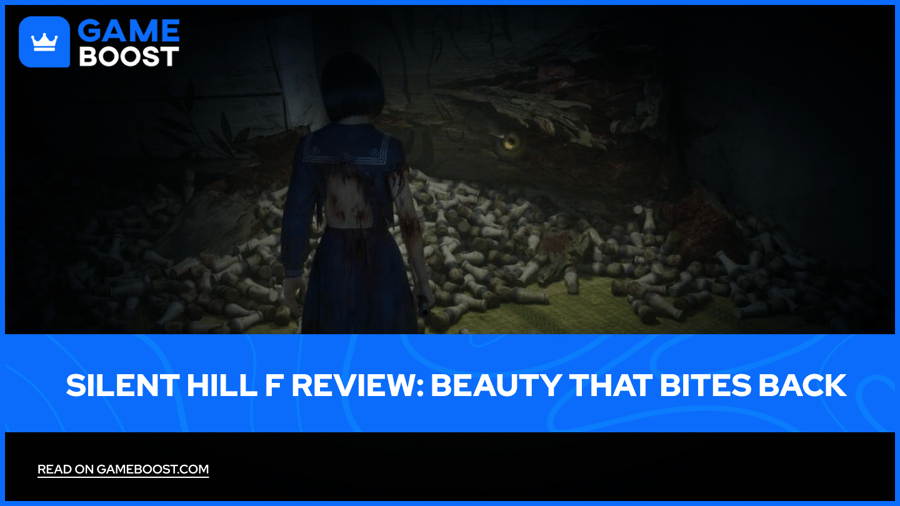

Silent Hill f Review: Beauty That Bites Back
This game is reviewed on:
Graphics Card | GigaByte Geforce RTX4080 |
Processor | AMD Ryzen 7 9800X3D |
Memory | Kingston Fury Beast White RGB EXPO 64GB RAM |
This Silent Hill f review starts with an admission: I went in expecting another foggy American town, got 1960s rural Japan, and needed an hour to stop resisting it. Konami handed the series to NeoBards and to Ryukishi07, the writer behind Higurashi When They Cry, then dropped the pistol, the flashlight, and the radio static. In their place sit a steel pipe, a sanity meter, and a village called Ebisugaoka I still think about.
I picked it up a few weeks after launch and have gone back twice since, once for a second ending and once after the big combat patch landed. That is enough time to know which parts hold up on a replay and which ones I started skipping.
Below, you will find my read on the town, the writing, the combat that split the player base, the endings, and the PC build.
Silent Hill f Summary
Silent Hill f trades the American small town for Ebisugaoka, a fictional 1960s village modelled on Kanayama in Gero, and the new setting is the best thing about it
Hinako Shimizu is the strongest protagonist the series has written since the PS2 era, and Ryukishi07 keeps her story about small town pressure
Silent Hill f combat is melee only, built on stamina, dodges and focus attacks that eat your sanity, and it repeats itself early
There are five Silent Hill f endings, three locked to New Game Plus, and the replay is short enough to be worth it
Konami confirmed two million units shipped by May 2026, so the experiment earns a sequel
Ebisugaoka And Hinako Carry It
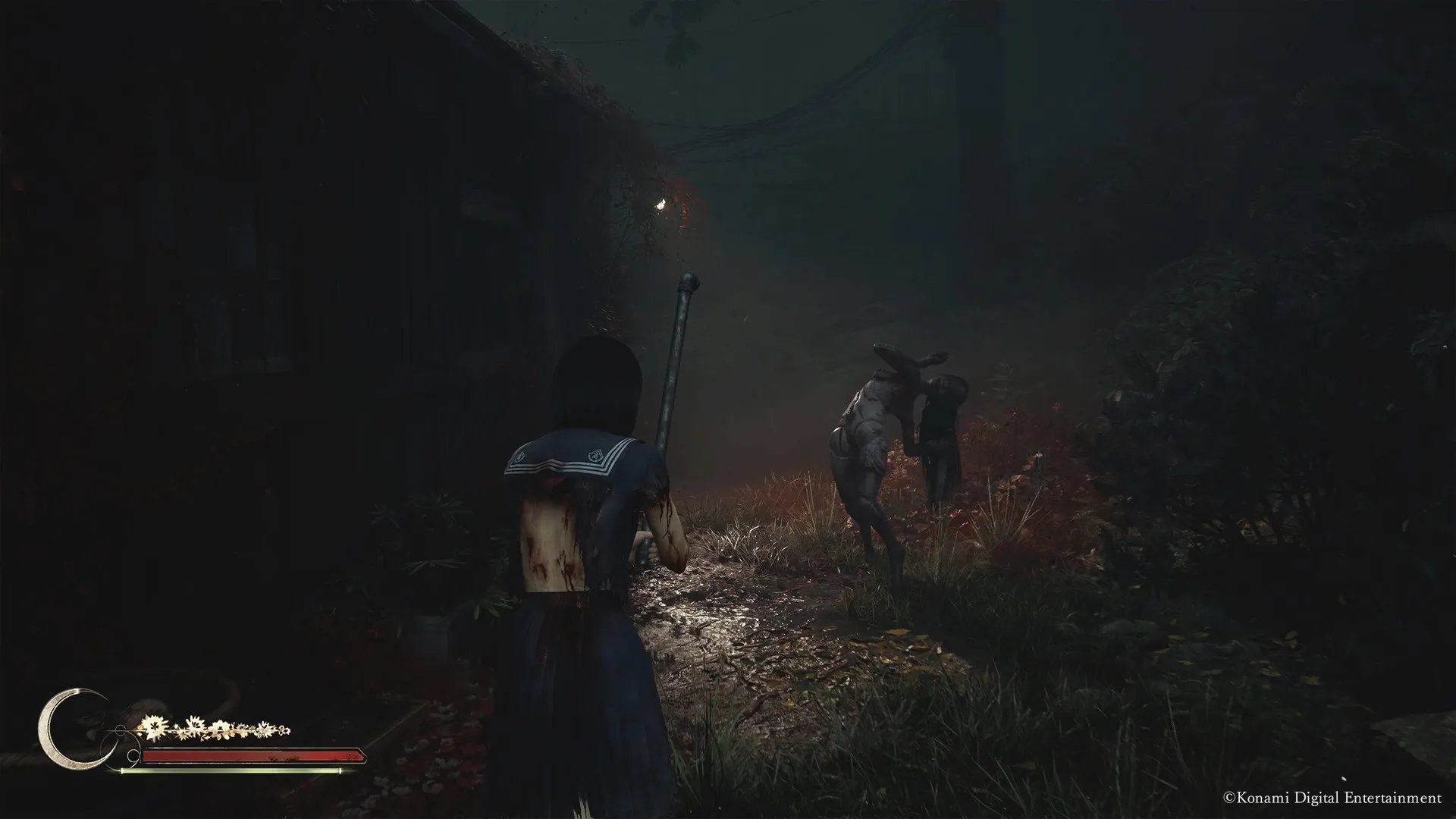
Ebisugaoka feels lived in before it turns. Shutters, vending machines, school corridors, a shrine up the hill, red spider lilies creeping over all of it as the fog thickens. The flowers do the scaring here, and I spent my first hour reading noticeboards rather than swinging anything.
Sound does as much of the scaring as the art. Akira Yamaoka scored the fog world and Kensuke Inage handled the Otherworld, and the split works better than one composer would have. Hinako also carries no flashlight and no radio, so losing the warning cue most entries hand you left me reading the fog itself. A silhouette at twenty metres might be an Ayakakashi with a sickle, or a scarecrow.
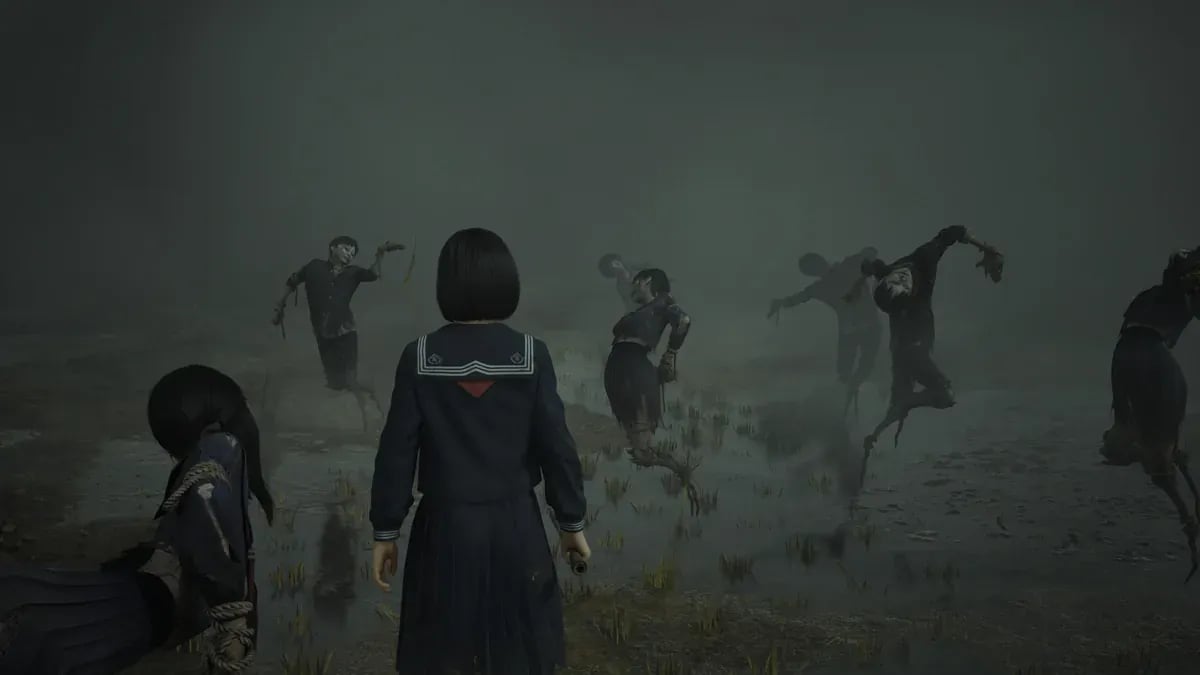
Hinako Shimizu is why this stayed with me. She is a high school student in a town that has already decided what her life will be, and the monsters read as that pressure long before anyone explains them. Ryukishi07 writes her friends with the same care, so the Sakuko and Rinko scenes land as friendship under strain. Konatsu Kato's Japanese performance is the one I would pick.
Shiromuku, the faceless bride in white wedding garments, is a monster and an argument at once, and the fight is better for it. When Hinako's parents turn up contorted into things that attack her, the game doesn't stop to underline what it means. Some symbolism gets heavy around the fox imagery and the three rituals, and I rolled my eyes once on my first pass. If you want the background on everything the game tells you about Hinako, pick it up before you start.
The Combat Is The Weak Link
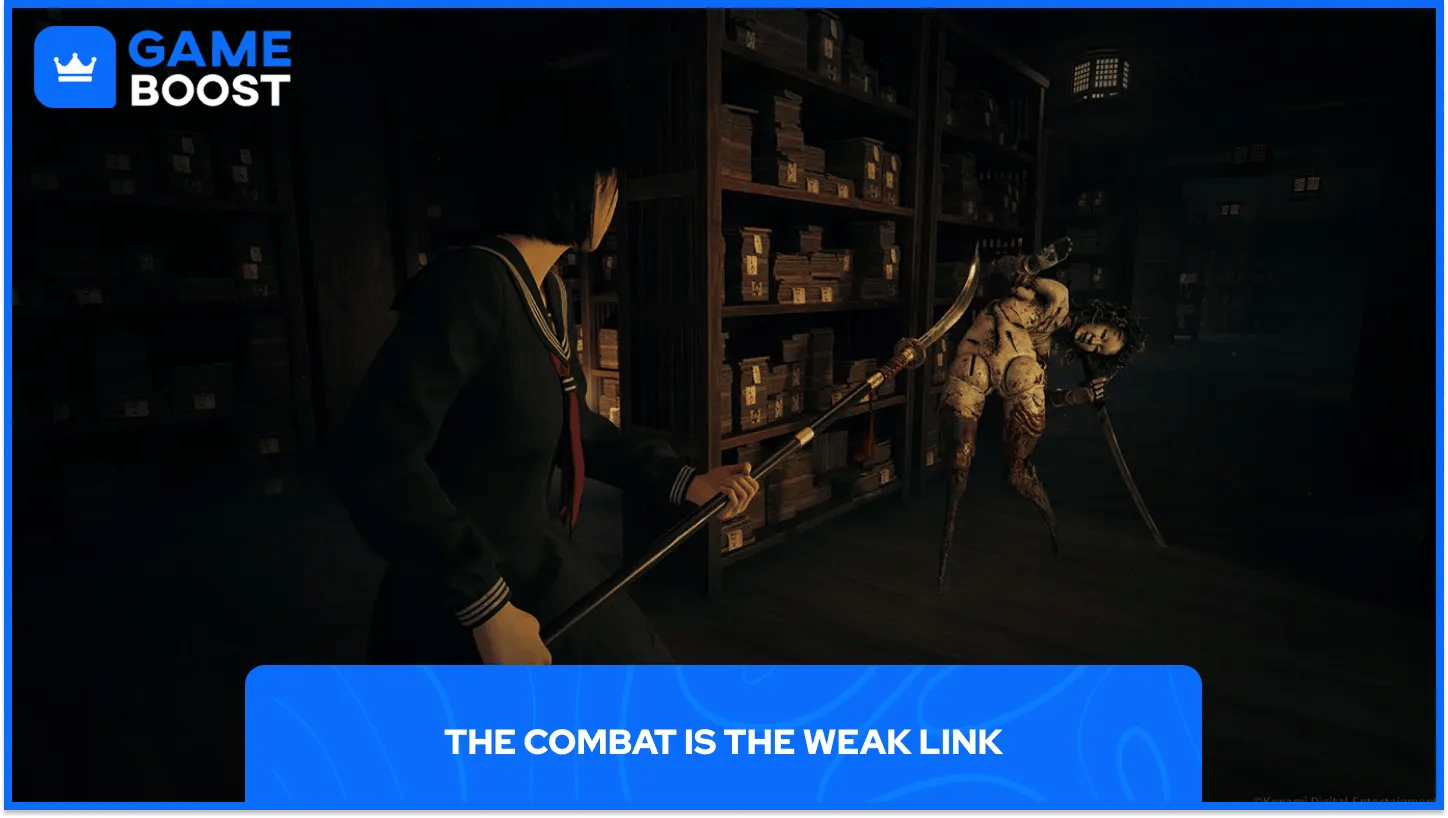
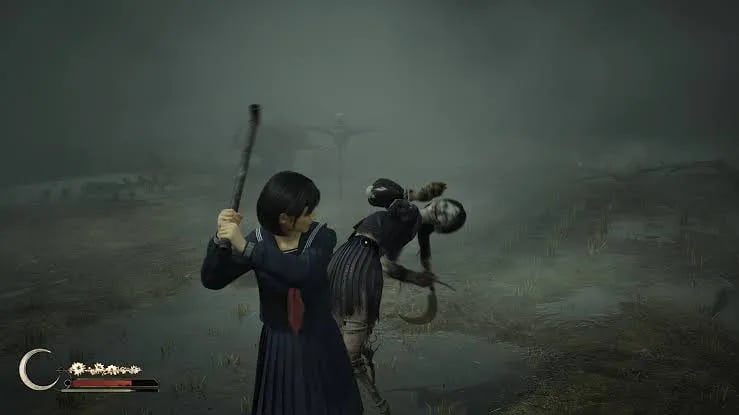
The combat is why my score is an 8 and not higher. There are no guns and no unarmed option. Every encounter runs the same loop: dodge, punish, watch stamina, hold focus for a heavy hit that drains the sanity you need in the next room. By the halfway mark I could read every Kashimashi swing on sight, and the game kept sending more of them.
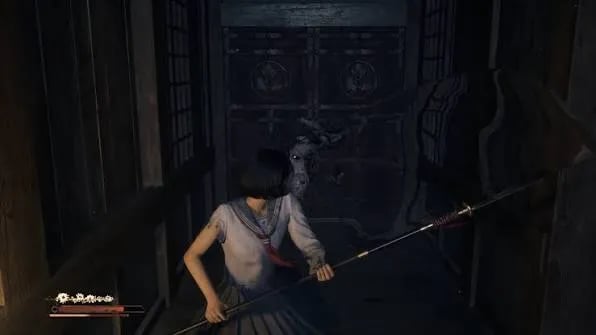
Weapon durability makes it worse. A sickle, a steel pipe or a baseball bat degrades as you swing it and needs a tool kit, so an unwanted fight costs you twice. I started running past enemies wherever the level allowed, and my play improved the moment I stopped fighting. The Dark Shrine weapons, the naginata and the kaiken, carry no durability, and those stretches are more fun for it.
Konami did respond with patch 1.10. Released on 13 November 2025, it added a Casual action difficulty, cut unskippable encounters, thinned enemy placement and sped up stamina recovery. You can pick Casual from a new game or a New Game Plus save, and it opens up on higher settings once you've seen the Game Over screen enough times. That is how I would tell a first timer to play it. The patch smoothed the roughest hours without adding the variety the fighting lacks.
Five Endings Reward A Second Run
Five endings exist, and only Coming Home to Roost is available on a first playthrough. Fox's Wedding, The Fox Wets its Tail and the joke UFO route called The Great Space Invasion are New Game Plus material, and Ebisugaoka in Silence opens after two others. A second run takes a fraction of the first once I knew the puzzle solutions, so it never turned into a grind.
My first playthrough ran a little over eleven hours, which lines up with how long a full run takes for most players. New Game Plus carries progress forward depending on your choices, and patch 1.10 added a section skip after the mural door. Skipped areas hand out no items and three achievements stay locked, so I used it once and left it alone.
The Silent Hill f endings are worth the return trip. They reframe what you thought happened, and the diary notes you missed do real work. One evening on a second run shows most of what the first hid. I rate the replay value above everything in the series except Silent Hill 2, and that's a comparison I don't make lightly.
The PC Build Needs Headroom
Silent Hill f PC performance is fine without being exemplary. This is an Unreal Engine 5 game and it behaves like one. Shader compilation stutter is mostly absent, and traversal stutter turns up when you move between areas fast. Nothing here approaches the state the Silent Hill 2 remake launched in, and I never lost a fight to a stutter.
The game supports DLSS 4 and FSR, skips Intel XeSS and offers no frame generation, so the frame rate the settings menu gives you is the one you keep. The graphics options cover global illumination, shadows, textures and effects. The default maximum preset isn't the true top tier, which makes the highest visible setting more forgiving than it looks. Dropping global illumination one notch bought me the most headroom for the smallest visual cost.
Set your expectations by resolution and not by preset name. A current midrange card holds 60 at 1440p with upscaling on quality, and native 4K at maximum asks for the top of the GPU stack. Check whether your PC can handle it before you buy, since the fog and the volumetric lighting are the last things you want to turn down in a horror game.
Is Silent Hill f Worth Buying Right Now?
Yes, with one condition: I would come for the story and the town, and treat the fighting as the toll. Anyone who wants survival horror built around combat will run out of patience by the Dark Shrine. Anyone who came for what Silent Hill used to do, which is dread, place and a character study with monsters, gets the best version since the PS2.
The game is in a good state. Patch 1.10 handled the launch complaints, and Konami kept updating it after that, through a Fatal Frame II costume collaboration in patch 1.20. Konami confirmed two million units shipped and sold in May 2026, up from a million on day one. A publisher doesn't walk away from numbers like that, and the manga adaptation says Ebisugaoka has more coming.
Who should wait? Anyone with a GPU below the recommended tier, and anyone who bounces off soulslike stamina management. Compare the Silent Hill f editions first. Steam gift cards cover the top up if your wallet runs short.
FAQs About Sillent Hill f
Final Words
This game is confident about being Japanese horror instead of an imitation of the old American formula, and that confidence is the achievement. The fox imagery, the shrine rituals and the marriage pressure come from one cultural well, and the result has a coherence the series lost somewhere around the fourth game. Konami took a real risk with an outside studio and a visual novel writer, and the risk paid.
My reservations haven't moved since the first run. Melee combat built for repetition doesn't belong in a game this interested in mood, and durability fights the exploring the town invites. Patch 1.10 proves the developers heard that, and a difficulty slider is a workaround for a design problem.
The open question is what NeoBards does with the sequel those two million units all but guarantee. Keep the eye for place, keep Ryukishi07 on the script, and either commit to the fighting or get out of its way. Either answer produces a great game.
GameBoost Products
All Silent Hill Games Collection
View all GameBoost Accounts
View all GameBoost Boosting Services
View all GameBoost Currencies
View all GameBoost Gift Cards
View all GameBoost Top Ups
View all GameBoost Items