


•Hamza Rashid• 9 min read
Valorant
Uninstalling Valorant on PC takes more than one click, since the game also installs Riot Vanguard, an anti-cheat program that runs deep inside Windows and stays on the computer after the game disappears. Removing Vanguard first and the game second clears the full install and stops the anti-cheat from running in the background.
The steps for how to uninstall Valorant on PS5 and Xbox stay much shorter, since consoles skip Vanguard and the Riot Client completely.
Every Valorant install on PC comes with Riot Vanguard and the Riot Client, and each part needs removing on its own.
Closing the game first matters, since players have to exit Vanguard from the system tray before Windows can remove it.
Windows Settings and Control Panel both work for removing Valorant from a PC, as long as Vanguard goes first and the game goes second.
Leftover files sit in the Riot Games and AppData folders, and deleting them finishes a clean Valorant uninstall.
Two short Command Prompt commands and a restart delete a stubborn Vanguard install that Windows refuses to remove.
Console players remove Valorant from the game library on PS5 or from My games and apps on Xbox.
Valorant install on PC is three separate programs that work together. Windows lists them separately, so removing the game alone leaves the other two behind.
Valorant on PC includes the following parts:
Valorant is the game itself: All maps, agents and game files live in this part, and it takes up most of the storage space.
Riot Client is the launcher: Players sign in and start Valorant through this app, and it also downloads game updates.
Riot Vanguard is the anti-cheat: Vanguard runs at the deepest level of Windows to catch cheating programs, and it starts with the computer even when Valorant stays closed.
Vanguard sits behind most failed Valorant uninstalls on PC. Windows refuses to remove files that Vanguard keeps in use, which is why the anti-cheat always comes off first.
Windows Settings gives the quickest route on both Windows 10 and Windows 11. The menu names differ a little between the two versions, and the steps below cover both.
Removing Valorant through Settings follows these steps:
Close Valorant and the Riot Client: Exit the game, then open the system tray (the small up arrow on the right side of the taskbar), right-click the Riot Client icon and choose to exit.
Exit Riot Vanguard: In the same system tray, right-click the red Vanguard icon, select Exit Vanguard and confirm the pop-up.
Open the app list: Press Windows key + I to open Settings, then select Apps. On Windows 11, select Installed apps next.
Uninstall Riot Vanguard: Type "Riot Vanguard" in the search bar of the app list. On Windows 11, click the three dots next to it and pick Uninstall. On Windows 10, click the app and pick Uninstall.
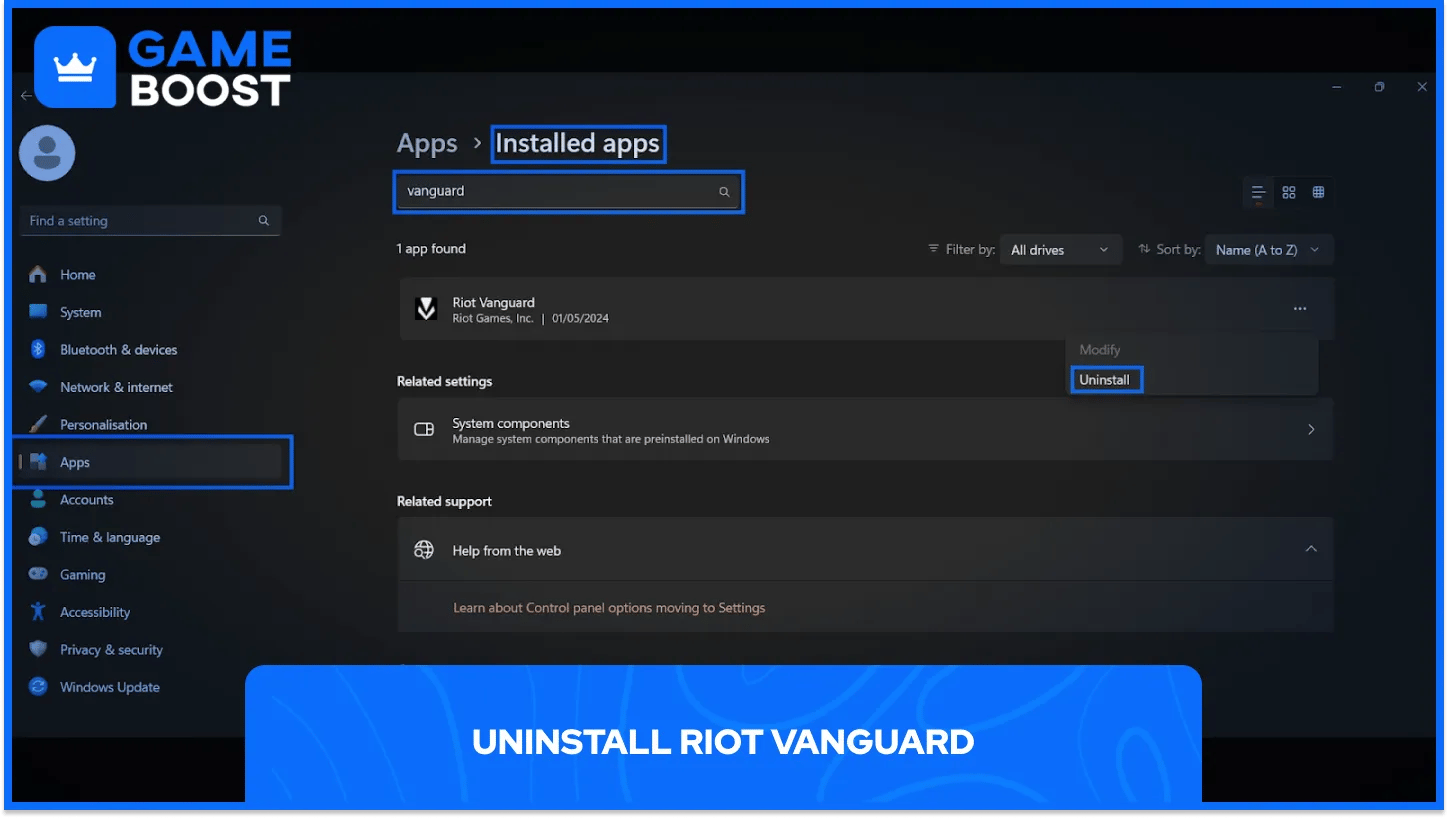
Uninstall Valorant the same way: Search for "Valorant" in the same list and remove it.
Restart the computer: Open the Start menu, click the power icon and choose Restart so Windows clears every locked file.
Vanguard also has its own shortcut for removal. Right-clicking the Vanguard icon in the system tray and picking Advanced, then Uninstall Vanguard, removes the anti-cheat without opening Settings at all.
Control Panel works as a backup when Settings fails to remove the game. The order stays the same, with Vanguard first and Valorant second.
Removing Valorant through Control Panel follows these steps:
Exit the game and Vanguard: Close Valorant and the Riot Client, then exit Vanguard from the system tray.
Open Control Panel: Press Windows key + S, type "control panel" and press Enter.
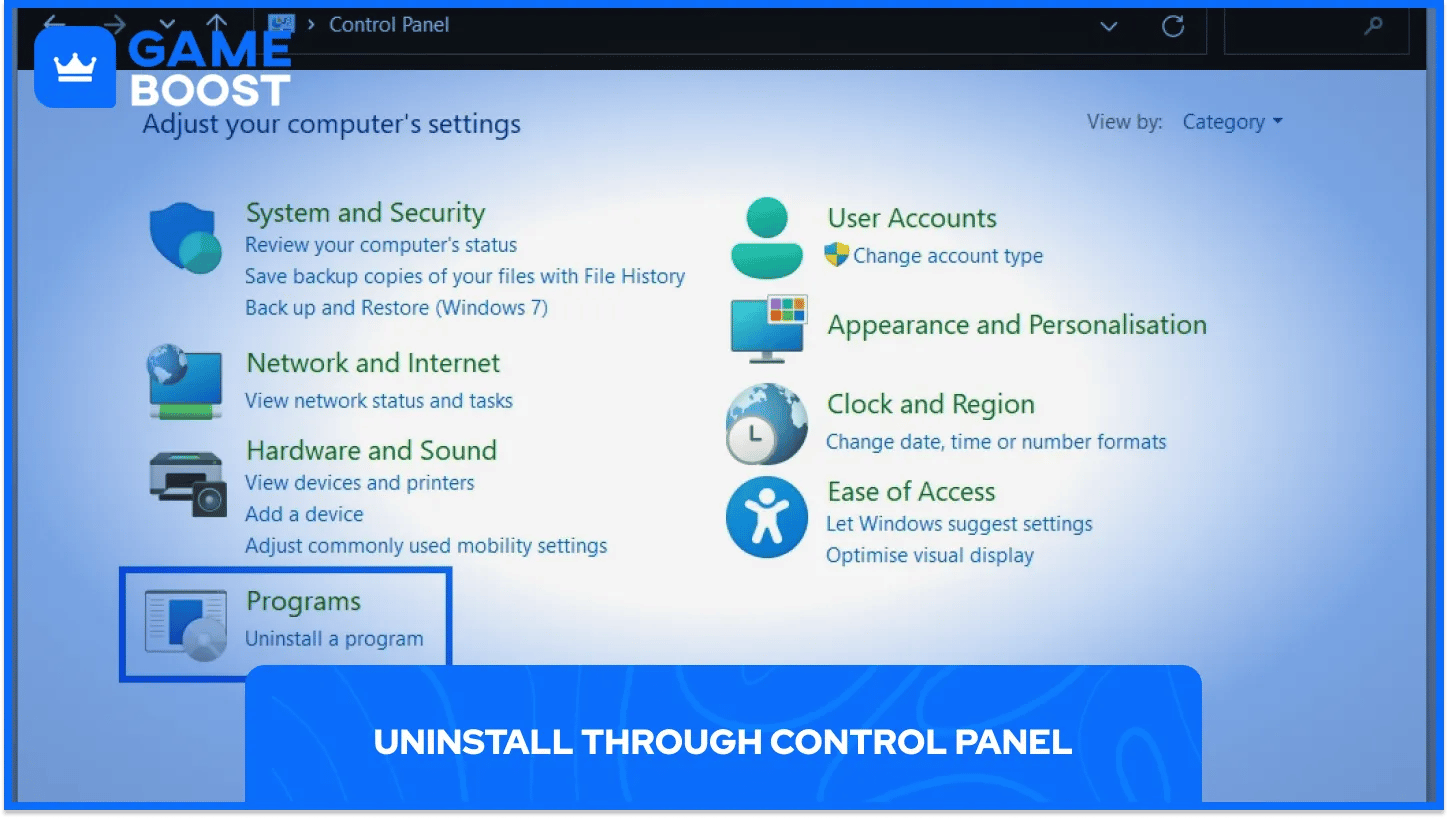
Find the Programs list: Under the Programs and Features category, click Uninstall a program.
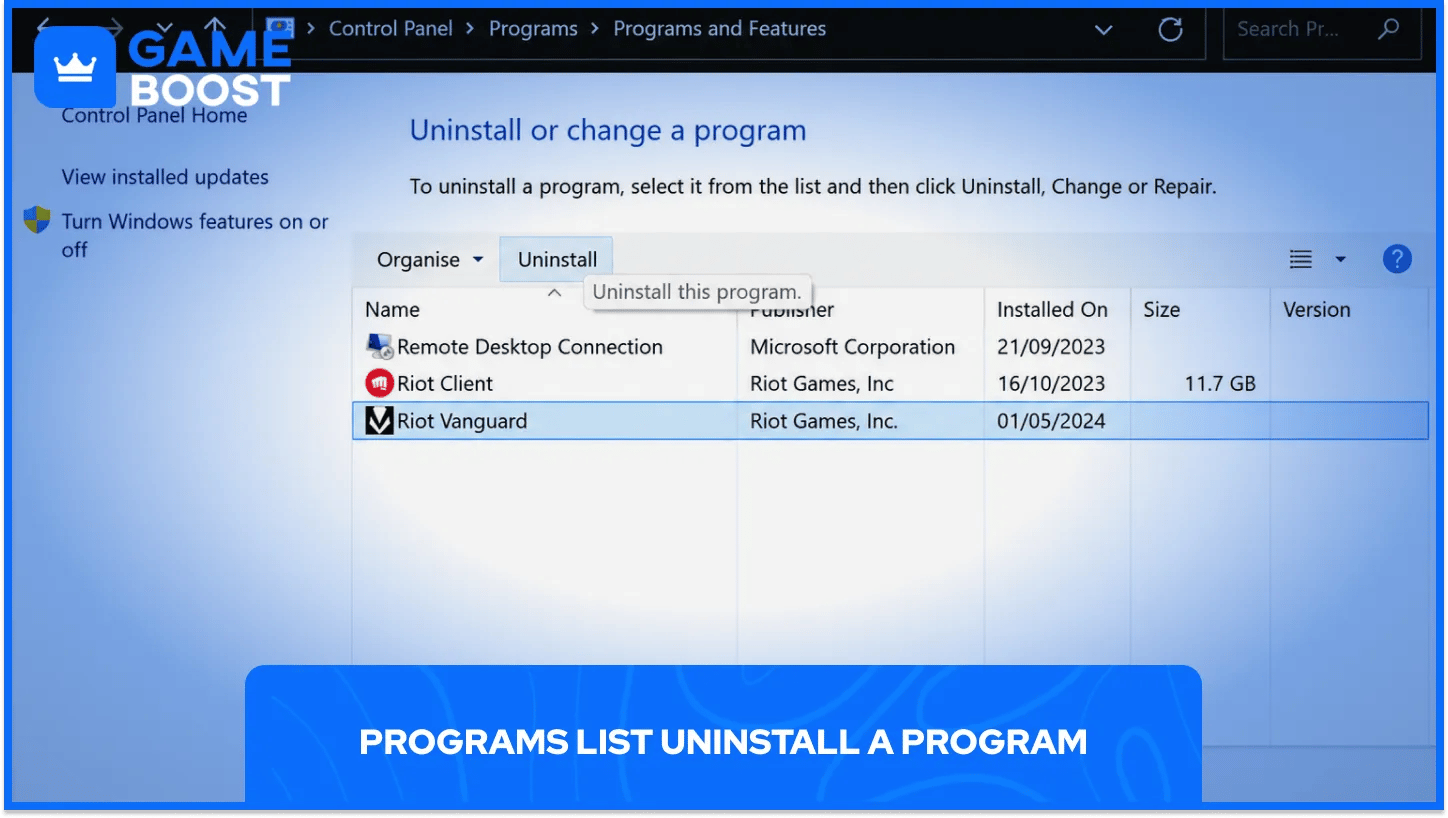
Remove both programs: Select Riot Vanguard and click Uninstall, then select Valorant and uninstall it the same way.
Restart the computer: A restart clears the last locked files from both programs.
Players who still see Valorant in the list after a restart can move on to the leftover file cleanup or the Command Prompt fix further down.
Uninstalling through Windows often leaves folders behind, including the Riot Client. Riot calls removing them a clean uninstall and suggests it for game troubleshooting, since it cleans up the cache for the game.
Riot's clean uninstall for Valorant follows these steps:
Open the Riot Games folder: Go to C:\Riot Games in File Explorer.
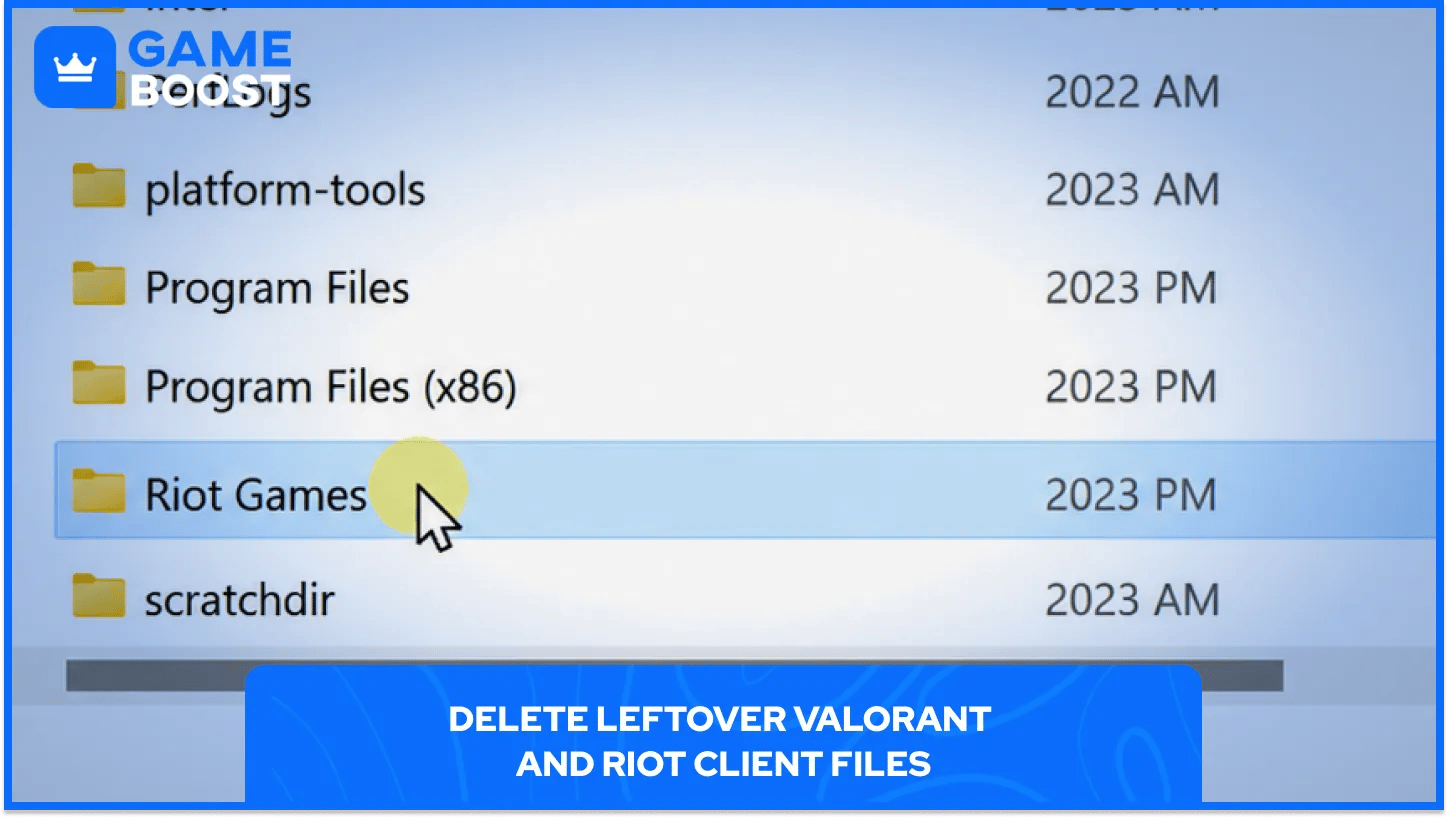
Delete the VALORANT and Riot Client folders: Removing the Riot Client folder takes the launcher off the computer along with the game files.
Empty the Recycle Bin: Deleted folders keep taking up storage until the bin gets emptied.
Open the AppData folder: Press Windows key + R, type %localappdata% and press Enter.
Delete the Riot Games and VALORANT folders: Both folders sit inside AppData\Local and go in the same way.
Restart the computer: A restart finishes the clean uninstall.
Launching the Riot Client again later reinstalls Vanguard on its own, so the anti-cheat only stays gone as long as the client stays uninstalled.
Riot notes that Vanguard can be stubborn and stay on some computers even after a normal uninstall through the system tray or Windows Settings. Riot's manual steps remove it for good, as long as every Riot Games program is closed first.
Riot Games lists a manual fix for a stubborn Vanguard install, and it needs a Windows account with admin access:
Close every Riot Games program: Exit any game launched from the Riot Client, then right-click the Riot Client in the system tray and select Exit (or shut down through Task Manager=
Open Command Prompt as administrator: Press the Windows key, type cmd, right-click Command Prompt and select Run as administrator.
Delete the first Vanguard service: Type sc delete vgc in the black Command Prompt window and press Enter.
Delete the second Vanguard service: Type sc delete vgk in the same window and press Enter.
Restart the computer: Reboot Windows before touching the leftover Vanguard folder.
Open the Program Files folder: Press the Windows key, type File Explorer, press Enter and go to C:\Program Files.
Delete the Riot Vanguard folder: Right-click the Riot Vanguard folder and delete any remaining files.
Vanguard counts as fully uninstalled once it no longer shows in the system tray after a restart. Riot also notes that removing Vanguard often fixes errors caused by corrupted Vanguard files.
Console versions skip Vanguard and the Riot Client completely. Removing the game takes a few button presses from the home screen.
Each console removes Valorant in the following way:
PS5 players delete Valorant from the game library: Highlight Valorant, press the Options button and select Delete, then confirm.
Xbox players uninstall Valorant from My games and apps: Highlight Valorant, press the Menu button and choose Uninstall, then confirm.
Console progress stays on the Riot account linked to the PlayStation or Xbox profile. Downloading Valorant again from the console store brings back the same agents and skins.
Removing Valorant the right way does more than free storage. Vanguard starts with Windows and keeps running in the background, so leaving it installed after the game goes means an anti-cheat sits on the computer with nothing to protect. A clean uninstall also gives a fresh start for players fighting errors. Problems such as the Valorant Secure Boot error tie back to Vanguard, and wiping every leftover folder before a reinstall rules out broken files as the cause.
“ Muhammad Nagi is a gamer-turned-organic growth hacker with a passion for performance, strategy, and persistence. With over 8,000 hours in CS:GO, he knows what it means to grind — and he applies that same energy to digital growth. Drawing from years of in-game experience, Muhammad now uses his deep understanding of gamer behavior to educate others, build visibility for gaming brands, and deliver actionable content that resonates with real players.”