

Onimusha Way of the Sword Review: Musashi Earns His Name
My Onimusha: Way of the Sword review comes down to one feeling: the sound of a perfect Issen landing on a Genma a split second before its claw lands on me. Capcom's first new-gen Onimusha since Dawn of Dreams in 2006 puts Miyamoto Musashi in a demon-choked Kyoto, and its sword fights are some of the best in any action game I've touched. Thebosses alone justify the trip.
It also has a padded middle, and I felt it. I picked it up the weekend it launched and have been in it most evenings since, through the credits and into the harder mode that opens afterward.
If you're about to start Onimusha: Way of the Sword, this page covers the combat, the bosses, the Kyoto hub, how long it takes to finish, and how it runs on each platform.
Onimusha: Way of the Sword Review Summary
Verdict: a brilliant sword-duel game carrying a dull open-world hub on its back.
Combat: the Issen counter, parries and deflects make one-on-one fights feel like real swordplay.
Bosses: Sasaki Ganryu, Greater Nue and Shuten Doji are the high points of the year for me.
Weak spot: regular Genma rarely fight back, and repeat boss encounters pad the middle chapters.
Length: about 20 hours for the story across 22 chapters, around 33 for everything.
Platforms: PS5, Xbox Series X|S, Nintendo Switch 2 and PC, with a 60 fps performance mode on PS5 and Xbox.
PC: a GTX 1660 and 16 GB RAM is the floor, and the port avoids shader stutter.
The Issen Makes Every Duel Sing
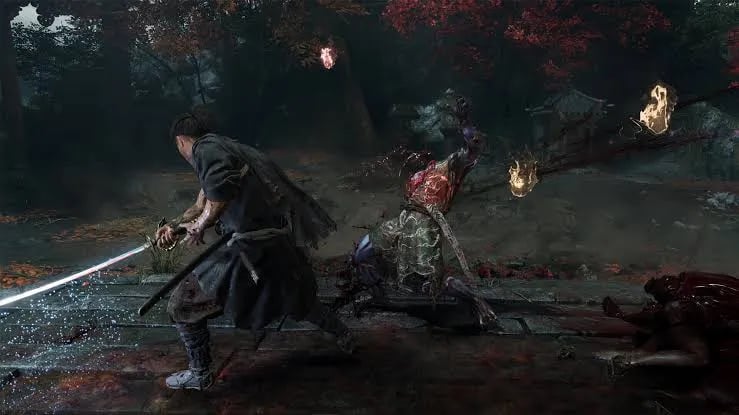
Combat in Onimusha: Way of the Sword starts from simple basics: light and heavy attacks, a guard, deflects and a dodge. The Issen sits on top of those. Press attack in the tiny window just before an enemy's blow connects, and Musashi cuts through it in one flash that deals huge damage and spills extra souls. I missed it constantly in the first chapter. By Windswept Kennin-ji I was baiting attacks on purpose just to see that flash again.
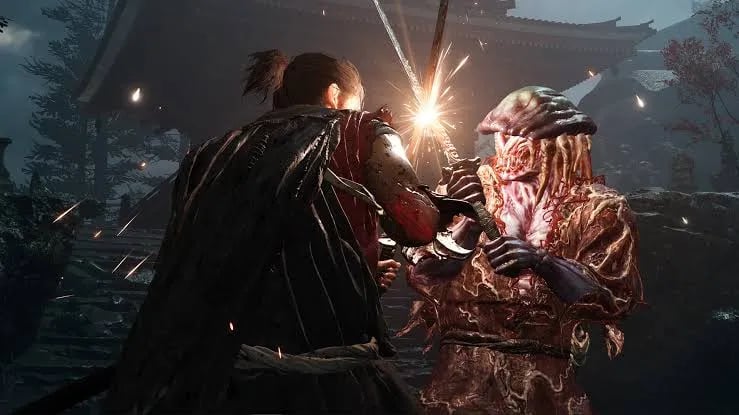
Around it is a layered defense. Parry at the exact moment and the enemy staggers in a burst of sparks. Deflects knock projectiles away, and enemies carry a stamina gauge that opens a devastating finisher once it empties. The gauntlet on Musashi's arm absorbs what falls out of the dead: yellow souls heal, red souls pay for upgrades and blue souls feed the special weapons. Pulling them in takes a moment of stillness, so the middle of a crowded fight turns into a small gamble over whether I can afford to heal.
The Oni Armaments add variety, with seven to find. The Wind-Whipper naginata arrives with the story and throws wide whirlwinds, and the Earth-Shakers hammers tear through enemy stamina and armor. I kept the Oni Bow on a quick slot for distant seals. They work as side pieces more than full playstyles. My sword did nearly all the work, and the armaments came out for one heavy hit and went straight back.
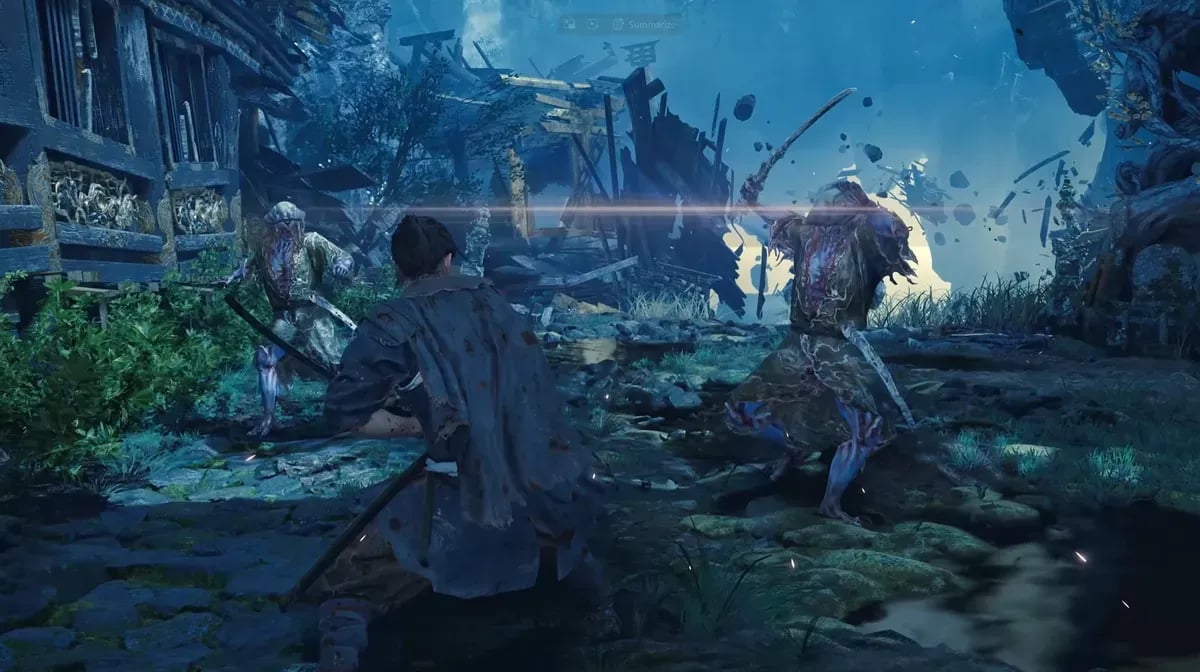
Regular Genma undercut all of it. They stand around, circle and wait their turn. In the side districts, most grunts I met died before they even tried to swing at me. The system is built for an opponent who pushes back, and outside boss rooms very few do.
Onimusha Boss Fights Steal The Show
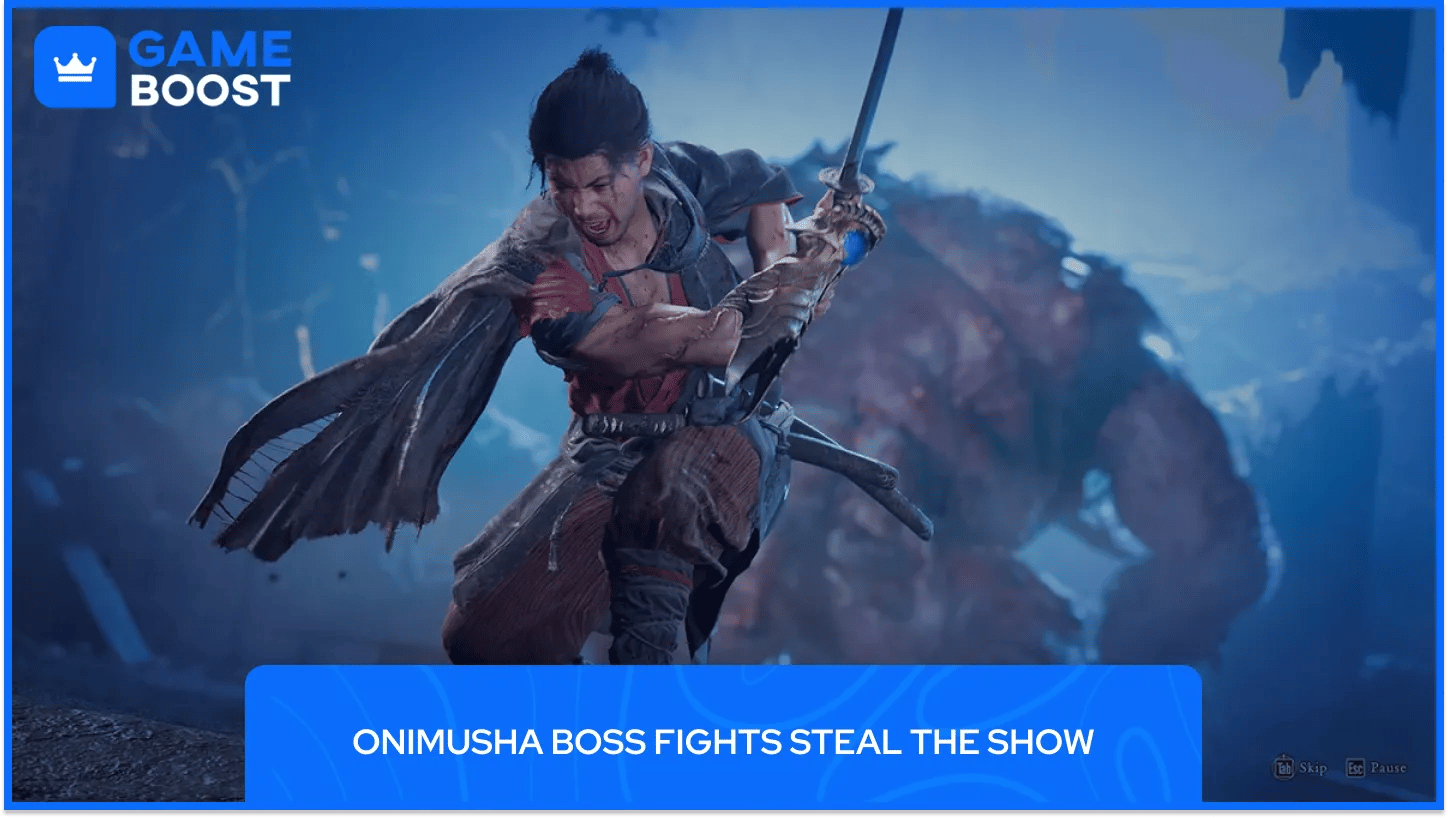
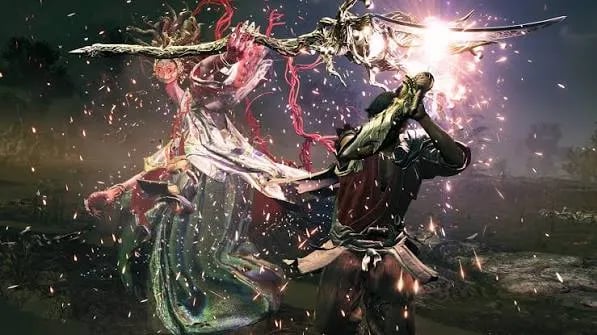
Every major fight gets its own moveset and its own trick to learn.Greater Nue is quick and throws lightning around the arena, so I had to stop panic-dodging and start reading its wind-up. Ifuu at Kennin-ji fights with wind and Burai swings a polearm charged with lightning. Later the two come for you together, and that duo fight felt like a final exam.
Sasaki Ganryu is the heart of it. He's Musashi's rival from the opening duel, brought back by his own Oni Gauntlet, and he keeps turning up with new tricks as the story darkens. His late altered form was the one fight where I put the controller down, walked away and came back an hour later. When the Issen finally clicked against him, the whole game made sense to me.
Late in the story the fights get huge. Daidara is an enormous Genma with a club the size of a house, and Shuten Doji on Mount Oe is as dangerous as the legend suggests. Capcom's RE Engine sells the grotesque creature design here, and a couple of these monsters made my skin crawl.
Some sub-bosses and a few named ones return again and again, and a few felt like they showed up in every other chapter. I didn't keep a tally, but I did groan at yet another rematch with a sub-boss I'd already beaten twice. The fights are good enough that rematches still land, just with less punch each time.
Kyoto's Open Zone Drags The Pacing
The game alternates between hand-built story levels and an open Kyoto hub. The story levels are tight, atmospheric and paced by the fights. Kyoto starts as an oppressive grayscale city and gains color as you clear corruption, which is a lovely touch the first few times it happens.
Kyoto fills up with lore-driven mystery quests about real local myths, lion dog statues that hold mythological texts, treasure spots and a stack of combat encounters. Only the mystery quests felt worth my time, mostly for the folklore. The encounters exist to hand out upgrade materials, and they're where the passive enemy problem hurts most, since a side mission is often just another group of Genma waiting their turn. Why clear a camp of demons that barely swing back?
Hand-holding adds to the drag. The spirit in the gauntlet talks through fights and explains mechanics I'd already worked out, and NPCs sometimes solve environmental puzzles before I can. It gives away mechanics far too often for a game this good at teaching through combat. By the midpoint I was hurrying through the hub to reach the next story chapter.
I ended up doing side content only when I needed materials for a specific upgrade. Played that way, the pacing holds up. If you try to clear every map marker, the middle stretch gets long.
Onimusha Takes About 20 Hours To Beat
The main story takes roughly 20 hours across 22 chapters, from The Ruckus at Rendaino to The Clash at Rendaino. That lines up with how long my first run took, with some side content along the way. Add the mystery quests and a healthy share of the hub and you're closer to 25 hours.
Completionists need around 33 hours for a single run with every collectible and Oni Armament. Beyond that is the Carnage difficulty, the hardest setting, which only opens after you finish the game once. Several rewards sit behind Carnage, and counting that second run the total climbs past 60 hours.
Your own number depends on the bosses. A player who learns the Issen quickly will breeze through, and one who stalls on altered Ganryu can add a couple of evenings. For me, the story length is right. The padding sits in the hub rather than the chapters, so skipping side content is the easiest way to get a tighter game.
Playstyle | Roughly how long |
|---|---|
Main story | 20 hours |
Story plus side content | 25 hours |
Completionist, one run | 33 hours |
Everything, including Carnage | 60+ hours |
System Requirements Are Kind
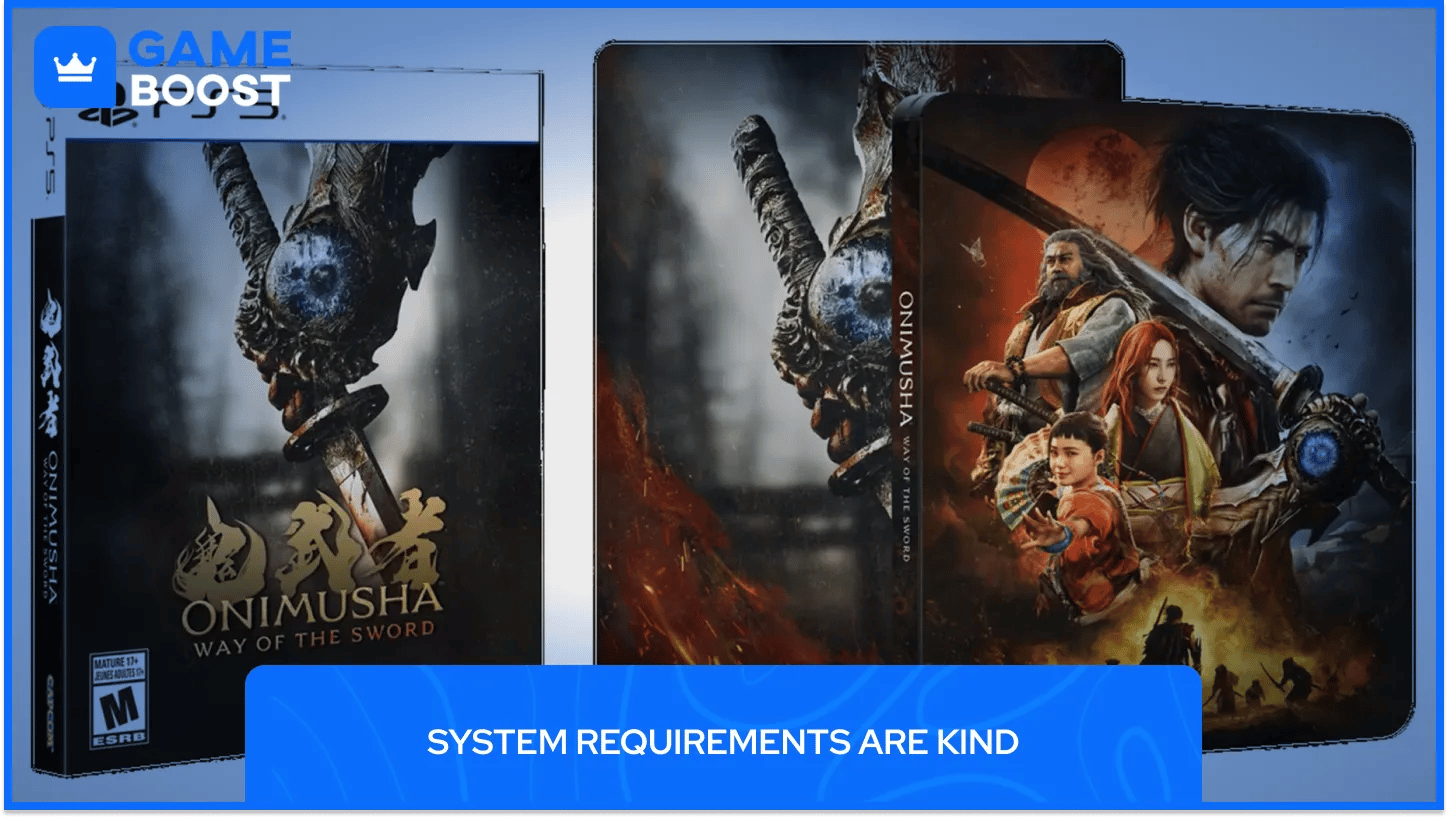
Onimusha: Way of the Sword released on September 4, 2026 on PS5, Xbox Series X|S, Nintendo Switch 2 and PC. Every console version offers a quality mode at 30 fps and a performance mode aimed at 60 fps, which can run higher on PS5 and Series X with the frame rate uncapped. On base PS5 and Series X I'd pick performance with ray tracing off. The PS5 Pro keeps ray tracing on in performance mode and upscales with PSSR, which makes it the best-looking console version.
Switch 2 is the surprise. Docked, it runs up to 1080p and can dip to 720p in heavy scenes, and the 30 fps cap gives the steadiest result there. Handheld tops out at 900p, and the uncapped frame rate on the VRR screen feels smoother. Hair and image sharpness take a visible hit, but the combat timing survives, which is what matters for a game about the Issen.
PC needs Windows 11 and an SSD on both tiers, with 50 GB free. The port has a dedicated shader compilation step before play, and I never hit a shader stutter. DLSS, FSR and frame generation are all in, though Intel XeSS is absent. There's no FOV slider in the options, and I missed a wider camera in the crowded hub fights.
PC spec | Minimum | Recommended |
|---|---|---|
CPU | Intel Core i5-8400 / AMD Ryzen 3 3100 | Intel Core i5-10400 / AMD Ryzen 5 3600 |
RAM | 16 GB | 16 GB |
GPU | GTX 1660 6 GB / RX 5500 XT 8 GB | RTX 2060 Super 8 GB / RX 6600 8 GB |
Target | 1080p, 30 fps, Low, upscaling | 1080p, 60 fps, Medium, upscaling |
Is Onimusha Way of the Sword Worth Buying Right Now?
Yes, if sword duels are what you play action games for. The Issen and the boss roster put this among the best action games I've played in years. Newcomers get an accessible entry, and series fans get a Musashi who deserves the name.
The launch build runs well and I hit no serious bugs. The weakness is design, since the hub content and repeat bosses are baked into how the game is built. Go in planning to mainline the chapters and the flaws shrink a lot.
Anyone who hates a soft middle act should wait for a sale, since the side content will feel heavier at full price. The same goes for players who want a brutal challenge from the first hour, as the real test only arrives with Carnage after the credits.
FAQs About Onimusha: Way of the Sword
Final Words
After the credits, I kept thinking about how much better this game gets when it narrows. Put Musashi in a room with one opponent who fights back and it's close to perfect. Spread him across a city of passive Genma and map markers and it turns into a chore.
Learn the Issen early and on purpose. Everything good in the game flows from it, and players who skip learning it will find the bosses a wall and the grunts a bore.
A tougher enemy AI option or a trimmed hub would lift this a full point. As it stands, it's the comeback Onimusha fans waited years for, with a fat middle I'd happily cut.
GameBoost Products
Onimusha: Way of the Sword Game Key
View all GameBoost Game Keys
View all GameBoost Accounts
View all GameBoost Boosting Services
View all GameBoost Currencies
View all GameBoost Gift Cards
View all GameBoost Top Ups
View all GameBoost Items