


•Hamza Rashid• 9 min read
Valorant

If you've ever wanted to know exactly where the enemy is in any Valorant map before they even get close, Cypher is your agent. He doesn't frag out; he does something far sneakier. He turns the whole map into his personal security system, and the enemy team never sees it coming until it's too late.
As you can imagine, this agent requires more than just a bit of practice to get him to click. That’s why this guide exists, and if that doesn’t work, you could purchase a Valorant account to give yourself a boost, or you could play the game and practice, the slowest, but also best way to master this agent and climb up the ranks.
This guide covers everything you need to know about playing Cypher: his abilities, how to actually use him well, and whether he's worth picking in ranked. Let's get into it.
Also Read: Valorant: Chamber Abilities and Guide
Cypher is a Sentinel focused on information gathering and map control
He wins rounds through setups, patience, and denying enemy movement
Strongest on defense, especially when locking down sites and controlling flanks
Trapwires slow, reveal, and punish enemies pushing through key choke points
Neural Theft reveals every living enemy and can completely swing late rounds
Strong setup knowledge and unpredictable utility placement are key to mastering Cypher
Best suited for players who prefer strategy, positioning, and smart rotations
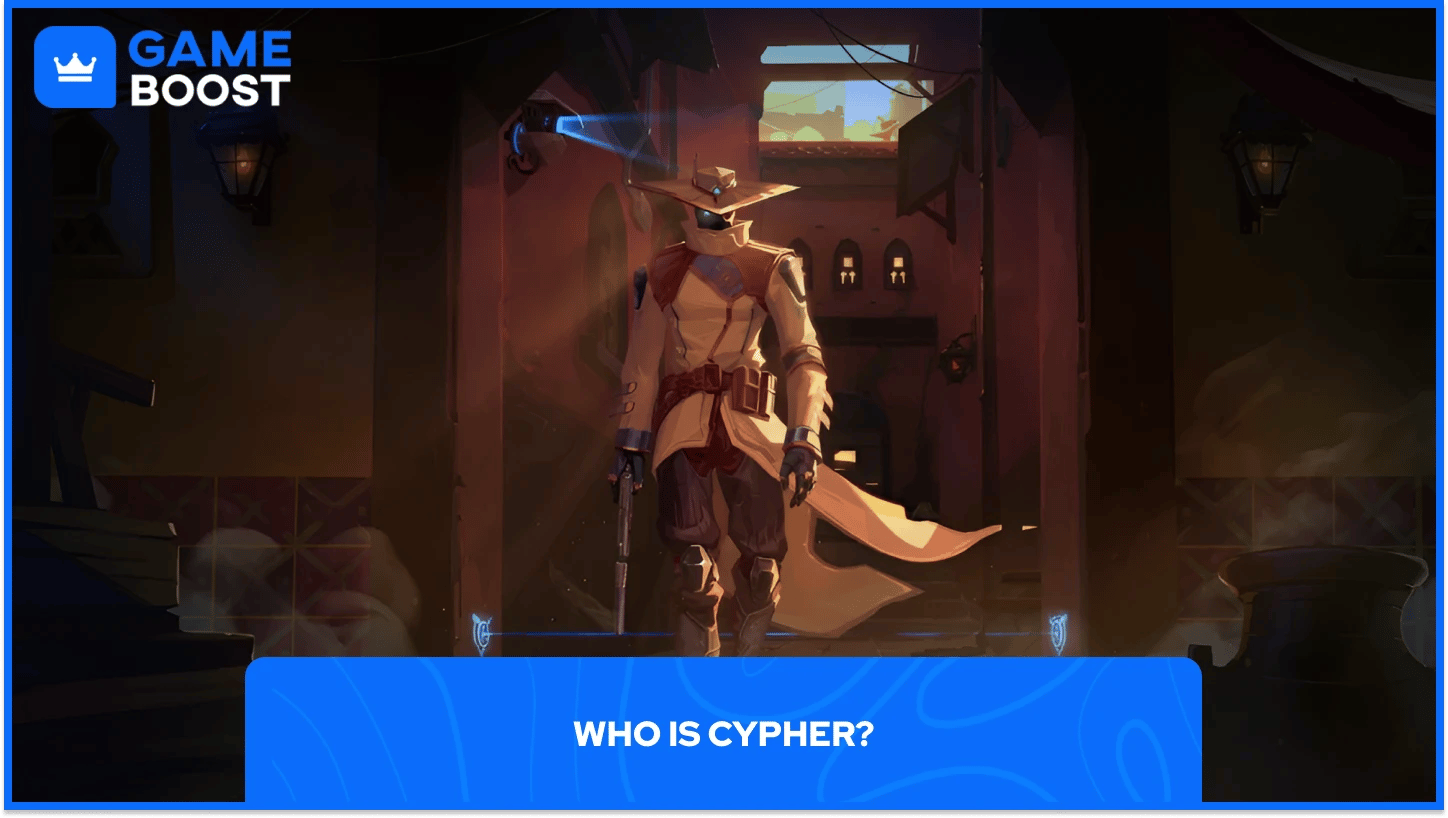
Cypher is a Moroccan information broker and one of Valorant's original agents. He's classified as a Sentinel, the defensive anchor of any team comp. His in-game description says it all: "No secret is safe. No maneuver goes unseen. Cypher is always watching."
Lore-wise, Cypher is portrayed as a secretive, almost paranoid spy who sells information to the highest bidder. He keeps his face hidden, speaks in cryptic one-liners, and seems to trust no one fully, not even his own teammates. There's a mystery about who he is and what he actually wants, which makes him one of the more compelling characters in the Valorant universe.
On the battlefield, that translates directly into his playstyle. Cypher plays alone, controls a flank, and feeds his team information from the shadows. He's not meant to rush in. He's meant to make sure nobody rushes you.
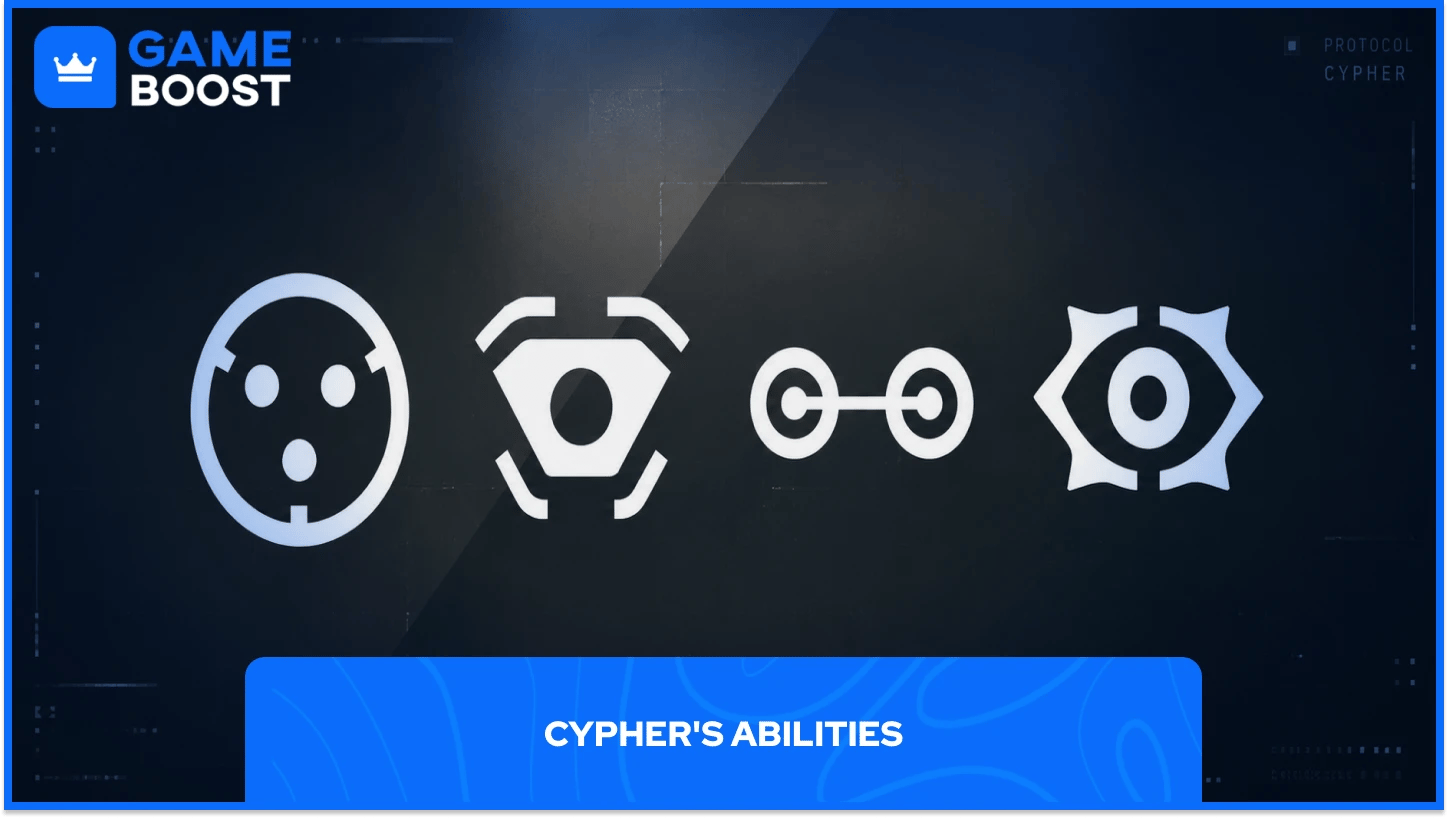
Cypher's kit is built around one idea: know everything so the enemy knows nothing. Every ability he has either tags an enemy, blocks their vision, slows their push, or reveals exactly where they are. None of them requires him to be standing in the open to work. The whole game with Cypher is about placement, patience, and reading what the information tells you before anyone else does.
Cypher throws out a covert trapwire that stretches between two walls. Any enemy who walks through it and doesn’t destroy the wire in time gets tethered, dazed, and revealed for several seconds.
The wire can be picked back up and redeployed at any point during the round, which is huge. That means you're never wasting a trap by placing it somewhere and then rotating. Just pick it up and move it. The most important habit to build is placing wires at crouch height. Enemies can't just duck under them, and most players won't think to jump over them either.
Varying your placements every round matters too. If you put a wire in the same spot every game, enemies will know exactly where to shoot before they even get there. The deadliest combo of all is pairing a trapwire with a cyber cage directly on top of it. When they trip the wire, they're slowed inside a smoke they can't see through, and you're already on the other side of it.
Cypher tosses a small device in front of him. He can then activate it remotely to create a short-lived zone, around 7 seconds, that blocks vision and applies the slow status effect on enemies who walk through it.
Pre-placing cages at choke points before the round starts is one of the best habits you can develop. You can activate them remotely at any time, so dropping one at a tight doorway early and triggering it the moment you hear footsteps gives you a huge advantage.
There's also a floating cage trick worth knowing. Find a ledge on an elevated surface like a box, sign, or window edge, then jump and throw the cage so it lands right on that edge. The cage's cylindrical shape extends both above and below whatever surface it's placed on, so when activated on a raised ledge, the bottom half of the cylinder hangs in open air, creating a hovering smoke effect. Enemies looking through the bottom of the cage have their vision cut off, while defenders on lower ground can still spot enemy feet moving past the top of it.
The corner cage trick is another one to add to your rotation. Throw the cage through a wall corner so it covers a section of the map you're not physically holding. It cuts off enemy vision while you stay undetected in a completely different position.
Cypher throws a small camera that sticks to any flat, vertical surface. From anywhere on the map, he can remotely access the camera's view and watch enemy movements. He can also fire a tracking dart while in camera mode. The dart marks an enemy and reveals their position. The camera can be picked up and redeployed, but it can also be destroyed by the other team.
The golden rule with the Spycam is to never stay in camera mode for too long in one stretch. You're completely defenseless while watching, so always make sure you're in cover before you pop into the feed. Placement is everything here too. The camera should go somewhere enemies won't naturally look while still providing you with a clear view, for example, above door frames, tucked into corners, or wedged behind props.
On defense, use it to watch the lane you're not physically holding. Your eyes can't be in two places at once, so let the camera cover one side while you hold the other. The tracking dart is also worth prioritizing whenever you get a clear shot. It shows up on your team's minimap, so one well-placed dart tells your entire squad exactly where an enemy is, even through walls. On maps like Bind and Haven, there are camera spots that cover both main lanes at once, and learning two or three of those spots per map pays off massively over time.
Cypher uses the corpse of a recently dead enemy to extract the location of every living opponent on the other team. The ability reveals their positions twice in quick succession.
This is one of the best ultimates in the game for pure information value. It can swing a round completely. Knowing where all other active enemies are, even for a few seconds, lets your team retake a site, reset a push, or make calculated trades with real confidence.
Use it immediately after an enemy dies. Waiting too long means losing the window entirely. Neural Theft hits hardest late in rounds when numbers are even, in a 3v3 or 2v2, where positioning is everything, and one wrong peek loses the round. Even if your team doesn't act on the information right away, the callouts you can make from it are genuinely priceless. And don't sleep on what it reveals. It's showing you all living enemies, including the one who's quietly sneaking up your flank while everyone else is watching the site.
Also Read: Valorant Astra Agent Guide: Abilities, Tips & Strategies
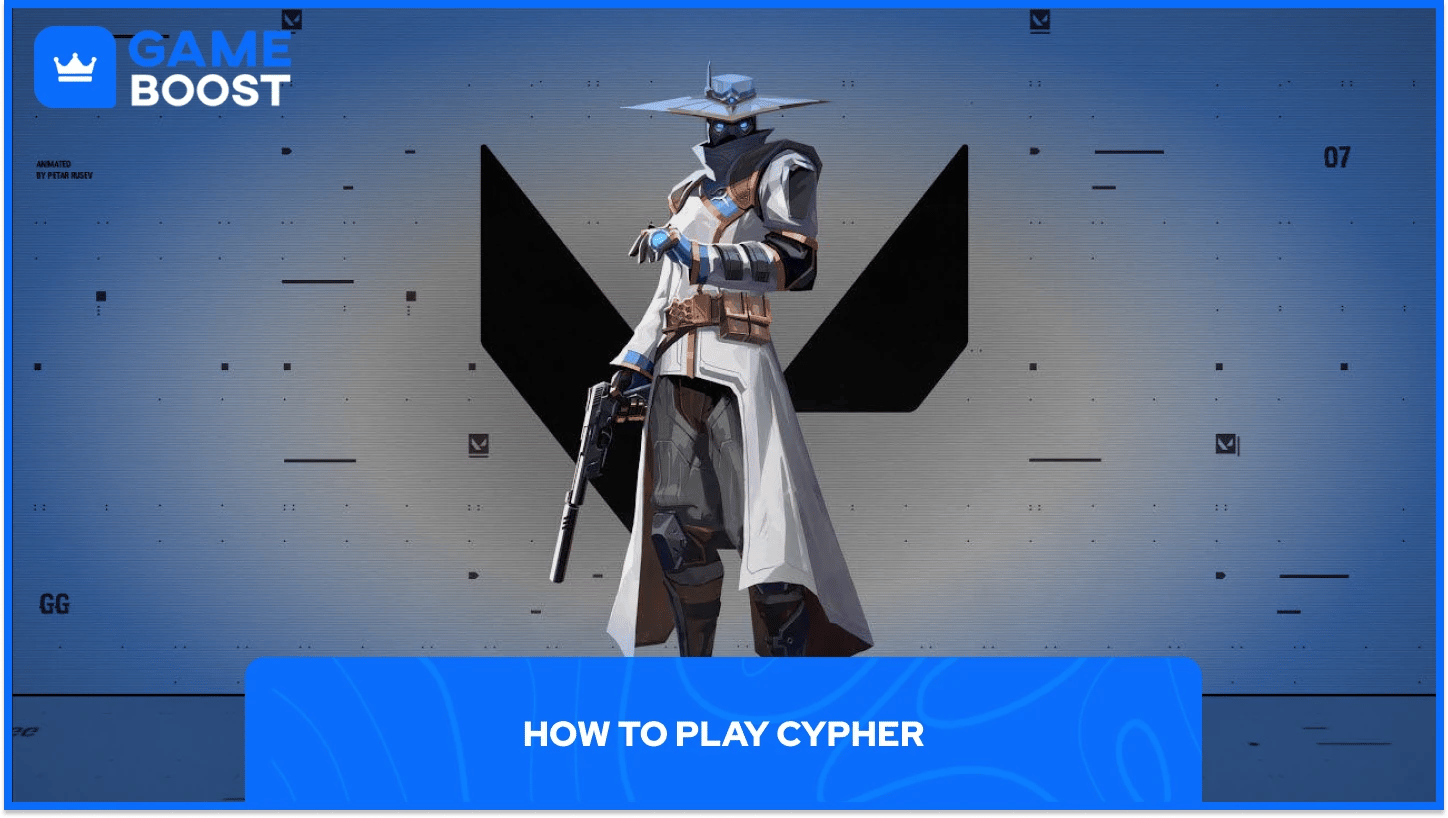
Cypher doesn't play like most agents. There's no rushing in, no trading frags with the enemy's duelist, no flashy outplays. His value comes from the web of information he builds before a fight even starts. Get your setup right, and you're not just playing well, you're making it genuinely difficult for the other team to do anything without you knowing about it first.
Cypher's defense game is all about choosing one area, setting it up properly, and giving your team the information advantage for the whole half. Pick a site or a flank route at the start of each round. Place both trapwires before the round begins. Common spots are main hallways, connector doors, and typical rush paths. Drop your camera somewhere with a good view of the area you're not physically watching. Then hold your angle.
The key is not to leave your setup. Cypher's traps are only valuable if you're nearby to follow up when they trigger. A trapwire that slows an enemy buys you a second or two, more than enough time to get a kill if you're already positioned there. Rotating to a completely different part of the map means abandoning your setup and removing your team's anchor.
If the enemy team is hitting a different site and the round is moving fast, pick up your wires and rotate. Don't throw away your utility for no reason.
On attack, Cypher's job is to watch flanks and lock down retake routes. While your team pushes a site, drop a trapwire on the rotation path from the other site. Place your camera somewhere that covers the flank route or a common off-angle defenders like to play. If someone rotates early, you'll see it before they see you.
The Spycam is also useful on attack for checking corners before your team commits to a push. Throw it into a site at the start of the round. Even if the enemy destroys it quickly, you've confirmed their position for a few seconds, and that's enough to give your team the green light.
Cypher currently sits at A-tier, or B-tier in competitive play, depending on who you ask, with a ~50.3% win rate and a ~3.3% pick rate. He's not as popular as he once was, with sentinels like Killjoy and Chamber pulling more attention in the current agent pool. That said, Cypher still has a dedicated player base who swear by him, and his pick rate being lower doesn't mean he's weak. It just means fewer people have put in the time to learn him properly.
In ranked Cypher's biggest asset is map control. His Spycam and Trapwires cover key areas in a way that no other agent can replicate, and flank watch is where he genuinely has no equal. Drop a wire on the rotation path, and you'll hear about it the second someone tries to sneak around. His ultimate is another massive selling point. Neural Theft gives you real-time positions on every living enemy, which sets up plays that should've been impossible. And his ability to stall pushes through Cyber Cage and Trapwire combos means even a fast rush buys you a few extra seconds, which is often all your team needs.
The biggest issue with Cypher is that experienced players will actively hunt down his setups. Once your wires and camera are gone, a significant chunk of your value disappears with them. He also has zero mobility. No escape dash, no teleport, no get-out-of-jail ability. If you get caught out of position, that's on you. On top of that, Cypher needs time before a round to be at his best. Drop him into a fast-paced game where there's no room for pre-round setup, and he can feel like half an agent. Agents like Sova, ISO, and Omen pair well with him since they build on his recon and give the team more to work with around the information he generates.
Also Read: The Ultimate Guide to Valorant Ranks
A: Cypher specializes in constant information and flank control. Unlike agents like Killjoy or Chamber, his utility focuses more on vision, tracking enemies, and controlling rotations across the map.
A: Yes, Cypher is still a strong ranked agent thanks to his information-gathering abilities and map control. He works especially well for players who prefer smart positioning and strategy over aggressive aim duels.
A: Cypher is strongest on defense because his setup can completely slow down enemy pushes. However, he is also valuable on attack by protecting flanks and gathering information during site executes.
A: Cypher struggles when enemies destroy his setups early or force extremely fast rounds. He also lacks mobility, meaning poor positioning is heavily punished.
A: Many players consider Neural Theft his strongest ability because it reveals the location of every living enemy. This gives teams massive advantages during retakes, rotations, and late-round situations.
Cypher isn't for everyone. If you want to hard carry through aim alone, there are better options. But if you like thinking two steps ahead, getting kills through setup and patience, and being the person who always knows what's coming, Cypher is one of the most satisfying agents in the entire game.
His skill ceiling is genuinely high. Learning good camera spots, solid trapwire placements, and how to clutch with limited resources takes real time. But once it clicks? You'll start winning rounds that should be unwinnable, and your team will always know where the enemy is.
That's the Cypher experience. Not flashy. Not loud. Just effective.
Valorant Accounts For Sale
Buy Valorant Points
Valorant Boosting Service
View all GameBoost Accounts
View all GameBoost Boosting Services
View all GameBoost Currencies
View all GameBoost Game Keys
View all GameBoost Gift Cards
View all GameBoost Items
View all GameBoost Top Ups
Counter-Strike 2 Skins
“ As a lifelong gamer with interests in multiple genres, Mario has a wide variety of knowledge when it comes to gaming, except, ironically, Super Mario. Using his experience and passion for games, Mario aims to create engaging and useful articles.”