


•Hamza Rashid• 10 min read
League of Legends

UPDATE (August 17, 2026): New season dates were added in this update.
League of Legends has operated on a seasonal structure since 2010, with each season bringing fresh ranked ladders, meta shifts, and exclusive rewards. Riot Games follows a consistent yearly cycle, though the timing has shifted over the years due to major updates and competitive schedules.
Pre-season periods fill the gap between seasons, letting players test experimental changes before ranked play resets. If you're trying to figure out when a specific season ran or what to expect from the current cycle, this breakdown covers every season from the original launch.
League of Legends began its season format in 2010; Season 1 ran 13 months.
Since 2025, one ranked year covers three separate seasons instead of one long grind, each lasting roughly three to four months.
The split system began in Season 13 (2023), giving players two reward checkpoints a year instead of one.
Your MMR carries a soft reset between seasons; you land close to your old rank, not back at zero.
Pre-season runs six to eight weeks between ranked years and tests big changes before they lock in.
Patches land every two weeks during an active season, and the May–June patches usually carry the biggest meta shifts.
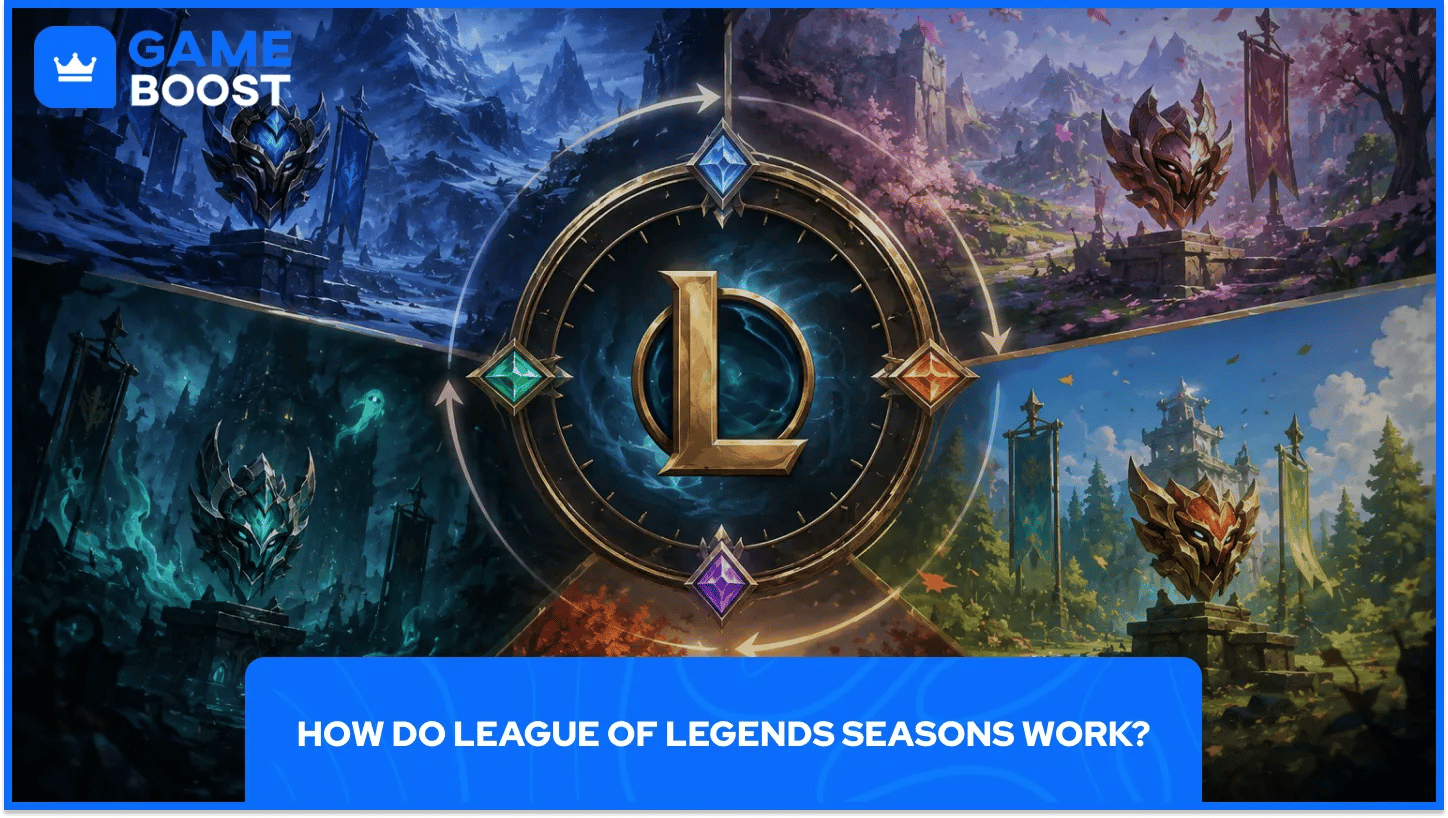
League of Legends seasons are yearly competitive cycles that reset the ranked ladder and introduce major gameplay changes. Each LoL season runs for approximately 10-11 months, starting in January and ending in November, with a pre-season period filling the gap between cycles.
The ranked system resets at the start of every season, placing all players through fresh placement matches regardless of their previous rank. Your MMR (matchmaking rating) carries over with a soft reset, meaning you'll start slightly lower than where you finished but not from scratch. This gives everyone a chance to climb again while maintaining some consistency for skilled players.
Seasons are divided into two splits, each lasting around 5 months. Riot introduced the split system in Season 2023 to give players multiple checkpoints throughout the year. At the end of each split, you'll earn rewards based on your highest rank achieved during that split, and the ladder performs a mini-reset before the next split begins.
Pre-season is when Riot tests major changes before locking them in for ranked play. This period typically lasts 6-8 weeks and includes experimental updates to items, champions, and core systems. Your rank still exists during pre-season, but most players treat it as a testing ground since the ladder will reset soon anyway.
Major patches drop every two weeks during the active season, bringing champion balance changes, bug fixes, and occasional new content. Mid-season patches (around May-June) often introduce larger systemic changes that reshape the meta without waiting for a full season rollover.

Season 1 ran significantly longer than any other season because Riot was still figuring out the competitive structure. Season 7 started in December instead of the typical pattern, making it one of the longest overlaps between competitive years.
The split system didn't exist until Season 13, when Riot decided to break each year into two competitive periods. Before that, seasons were a single continuous ranked grind with a single reward distribution at the end.
Here's every League of Legends season with start and end dates, including notable changes that defined each cycle.
Season | Start Date | End Date | Duration | Notable Changes |
|---|---|---|---|---|
Season 1 | July 13, 2010 | August 23, 2011 | 13 months | First ranked system, Elo rating introduced |
Season 2 | November 29, 2011 | November 12, 2012 | 11.5 months | New Summoner's Rift, draft pick added |
Season 3 | February 1, 2013 | November 11, 2013 | 9 months | League system replaced Elo, divisions introduced |
Season 4 | January 15, 2014 | November 11, 2014 | 10 months | Jungle overhaul, trinket system added |
Season 5 | January 21, 2015 | November 11, 2015 | 10 months | New map textures, Baron and Dragon reworks |
Season 6 | January 20, 2016 | November 8, 2016 | 10 months | Dynamic queue experiment, elemental drakes |
Season 7 | December 8, 2016 | November 7, 2017 | 11 months | Plant system, honor rework, 10 bans in draft |
Season 8 | January 16, 2018 | November 12, 2018 | 10 months | Rune system overhaul, removal of old masteries |
Season 9 | January 23, 2019 | November 19, 2019 | 10 months | Positional ranks tested and removed, Iron tier added |
Season 10 | January 10, 2020 | November 10, 2020 | 10 months | Elemental rift changes, new dragon souls |
Season 11 | January 8, 2021 | November 15, 2021 | 10 months | Mythic items introduced, shop overhaul |
Season 12 | January 7, 2022 | November 14, 2022 | 10 months | Objective bounties, chemtech and hextech drakes |
Season 13 | January 11, 2023 | January 9, 2024 | 12 months | Split system introduced, jungle pets added |
Season 14 | January 10, 2024 | January 8, 2025 | 12 months | Map adjustments, Vanguard anti-cheat implementation |
Season 2025, Season 1 | January 9, 2025 | April 28, 2025 | 4 months | New multi-season yearly format introduced, ranked structure adjusted, new epic monster objectives added |
Season 2025, Season 2 | April 29, 2025 | August 12, 2025 | 3 months | Themed seasonal gameplay focus, new permanent game mode introduced, role and champion select improvements |
Season 2025, Season 3 | August 26, 2025 | January 7, 2026 | 4 months | Quality-of-life updates, objective system refinements, competitive tools, and map systems were polished |
Season 2026 Season 1 | January 8, 2026 | April 28, 2026 | 3 months | Overhauled the game with Role Quests providing unique late-game rewards, significantly faster game starts, and a major rework to turret plates and vision systems. |
Season 2026 Season 2 | April 29, 2026 | July 28, 2026 | 3 months | Rollout of WASD controls for Ranked play, the return of the Deathfire Touch and Stormraider’s Surge keystones, a new game-termination system |
2026 Season 3 | July 29, 2026 | TBD (expected early Jan 2027) | Ongoing | Ranked climb continues with no ladder reset; League of Legends Classic launches as a separate mode; Bel'Veth reworked and return of duo queue for Master-tier players. |
Also Read: How to Counter Zaahen in League of Legends?
Season 2026 Season 3 opened on July 29, 2026, with patch 26.15. Unlike Season 2, this one didn't reset your ranked climb. Riot kept LP and progression running straight through the transition. The 15-win Victorious mission still refreshed, so the skin grind starts over even though your rank doesn't.
The patch also carried a full Bel'Veth rework, balance changes to about ten other champions, a change to Aegis of Valor (wins now grant double LP with no mastery requirement, but the it no longer softens LP loss on a defeat), and the return of duo queue for Master-tier players.
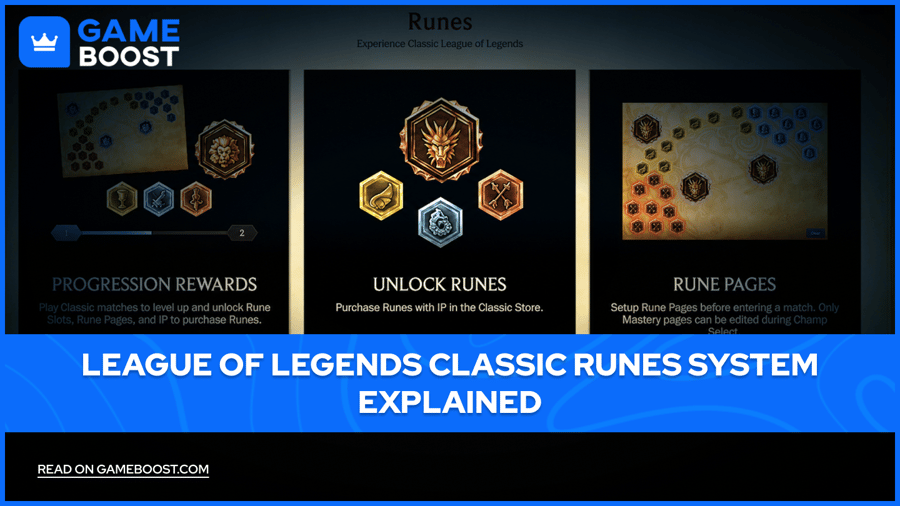
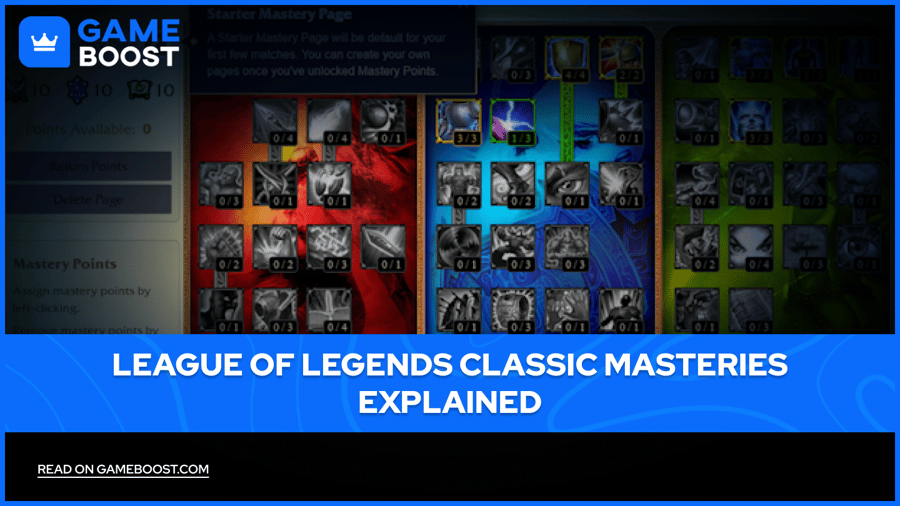
Alongside all that, Riot launched League of Legends Classic. Classic recreates early-era League: 60 pre-rework champions, the old rune and mastery system, legacy items, and the original Summoner's Rift. It runs alongside normal ranked and normal queues, so you can dip into it without touching your Season 3 progress.
A: No. Rank only resets once a year, in January, when a new ranked year opens. The three seasons inside that year work as checkpoints, not full resets.
A: Around three to four months. Riot splits the ranked year into three seasons instead of the old single-season format.
A: Every two weeks, covering champion balance and bug fixes. Patches between May and June tend to carry the biggest systemic changes, since Riot times larger reworks to land mid-cycle rather than waiting for the next reset.
A: 15 wins in Solo/Duo, Flex, or a mix of both, plus Honor Level 3. The mission resets at the start of each new season.
League of Legends seasons keep the ranked grind moving without wiping your progress every few months. Track the split dates, plan around the pre-season test window, and you'll know exactly when a new reward cycle or a mode like Classic is about to land. This page gets updated again once Riot locks in the Season 3 end date and the next Victorious skin.
Buy LoL Skins
Buy Riot Points
League of Legends Boosting Service
LoL Accounts
View all GameBoost Accounts
View all GameBoost Boosting Services
View all GameBoost Currencies
View all GameBoost Game Keys
View all GameBoost Gift Cards
View all GameBoost Top Ups
View all GameBoost Items
“ Kristina joined GameBoost in 2024 as an SEO specialist and quickly became the go-to writer for third-person shooter and competitive games. She covers titles like Fortnite, Valorant, League of Legends, GTA 5, and Roblox, focusing on how-to guides, practical tips, and updates.”