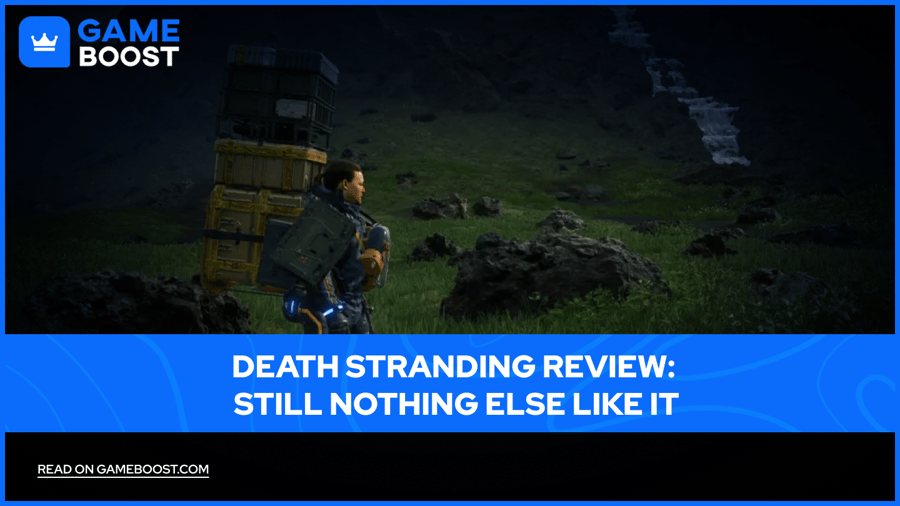
Death Stranding Review: Still Nothing Else Like It
This game is reviewed on:
Graphics Card | GigaByte Geforce RTX4080 |
Processor | AMD Ryzen 7 9800X3D |
Memory | Kingston Fury Beast White RGB EXPO 64GB RAM |
Two hours was all it took me to write Death Stranding off the first time. The pitch got me curious enough to buy it long after launch: a man carrying boxes across a dead America. That first session handed me Death Stranding gameplay built out of tripping over pebbles, and I put the controller down. So this Death Stranding review comes from someone who lost the game early and won back later.
Then I went back, took a delivery I did not have to take, and walked it north into the mountains. Somewhere on that slope the game stopped being a joke about parcels and turned into the most absorbing thing I played that year.
Below, you'll find what the walking feels like once it clicks, where the game loses me, and who I would point at it.
Summary
Death Stranding released on November 8, 2019 and has since landed on PS5, PC, Mac, iPhone, Xbox Series X and S, and Amazon Luna.
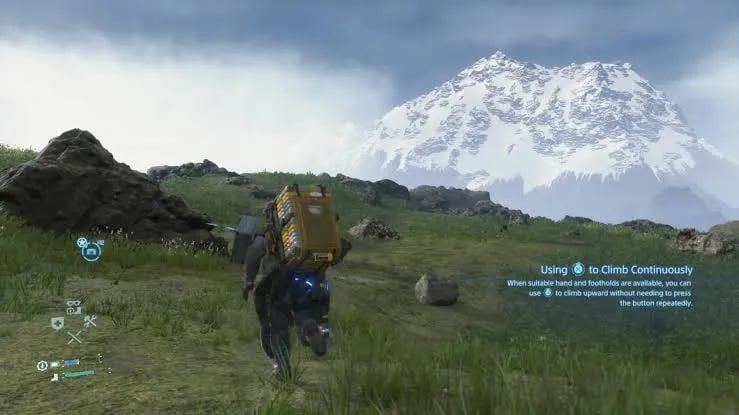
The traversal is the game: weight, balance, footing and route planning turn a hill into a puzzle nothing else has copied properly.
Other players build your world. Their ladders, ropes and bridges appear in your save, and the likes economy stays friendly throughout.
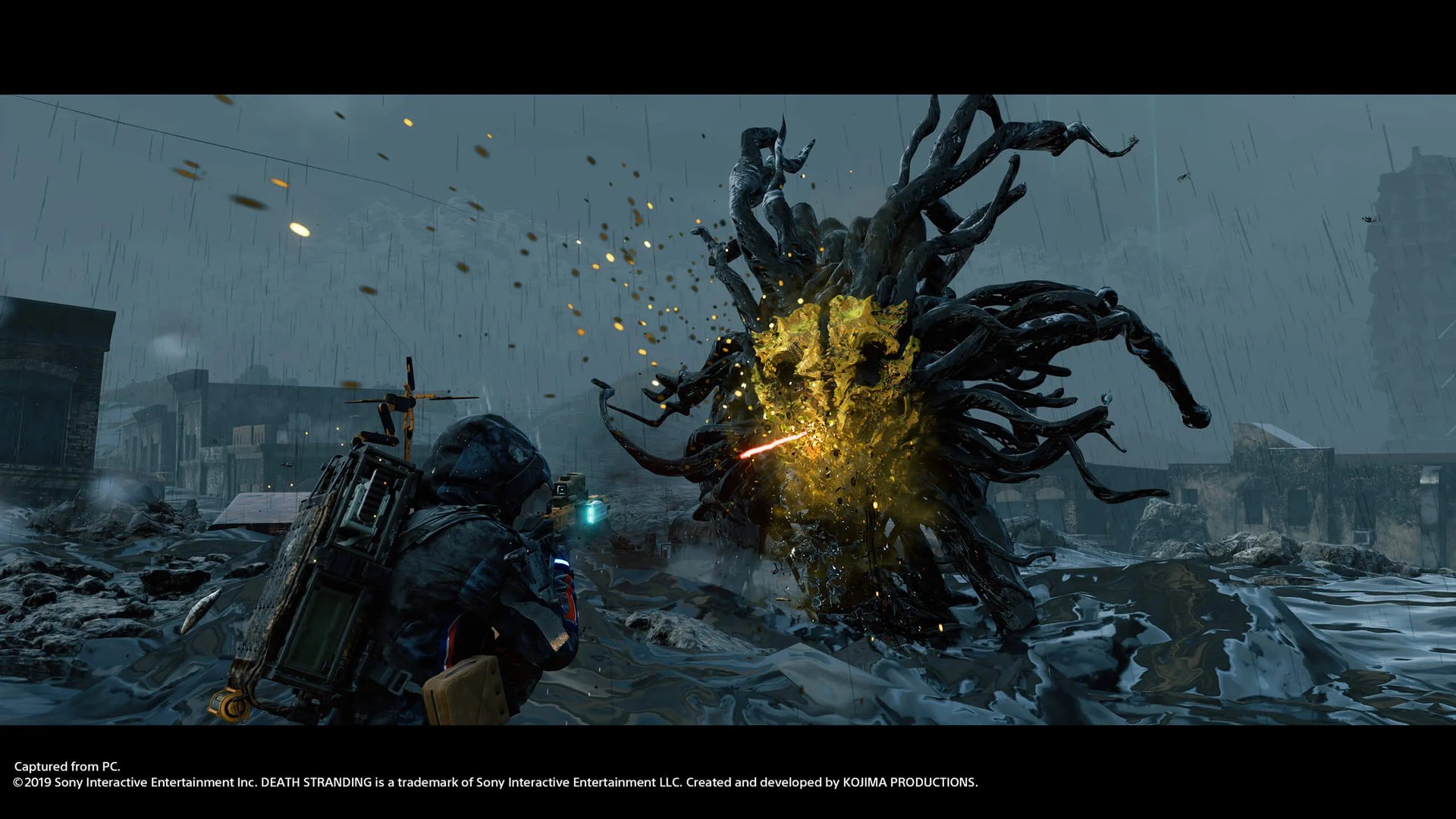
Combat is the weakest part. BTs terrify you for about six hours, then become a stealth chore you have the tools to skip.
The Death Stranding story overexplains itself, with long cutscenes and a villain who never matches the rest of the cast.
Worth playing if you want a game about effort. Sit it out if you need a fight every ten minutes.
Death Stranding Nails The Walking
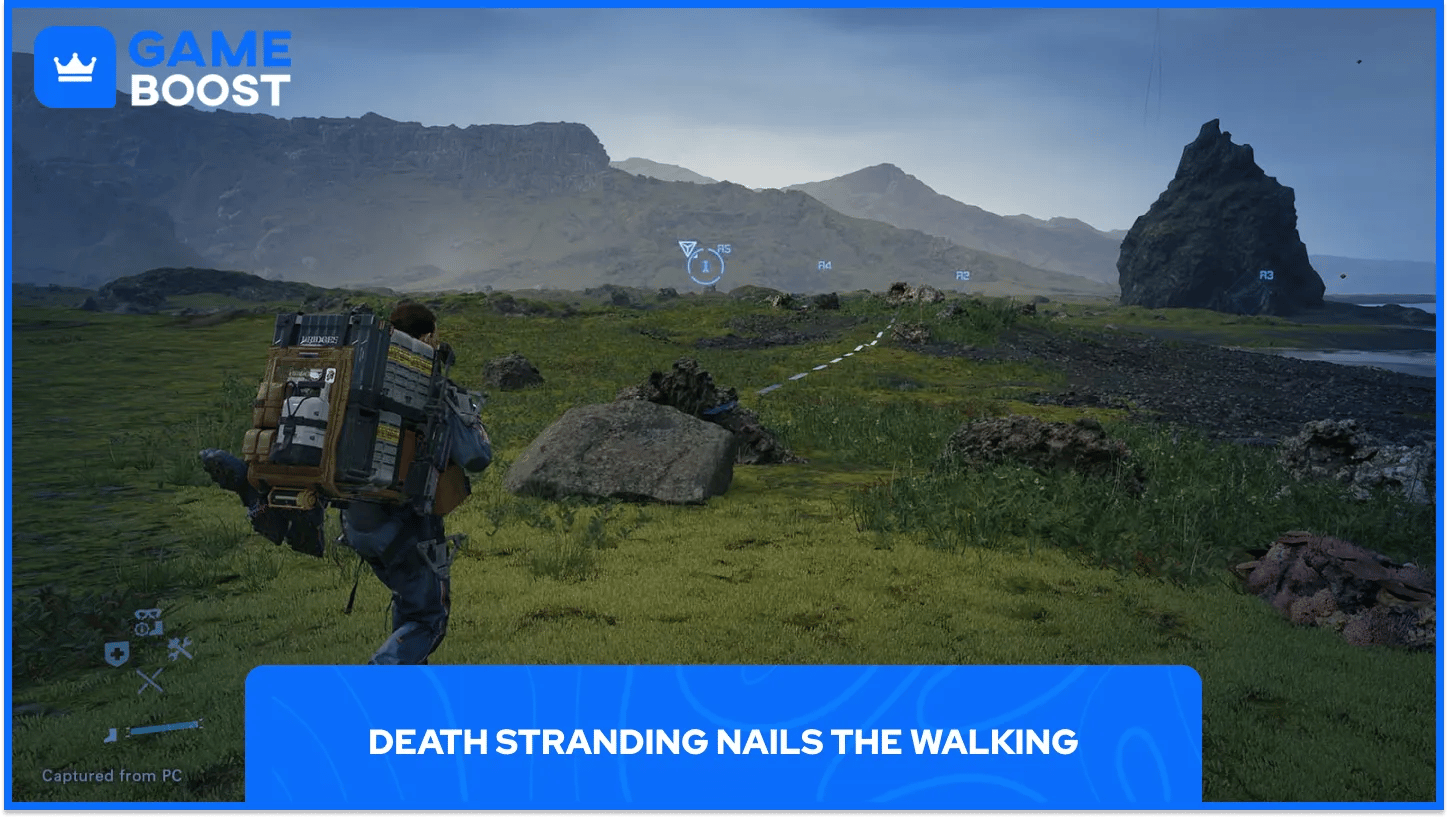
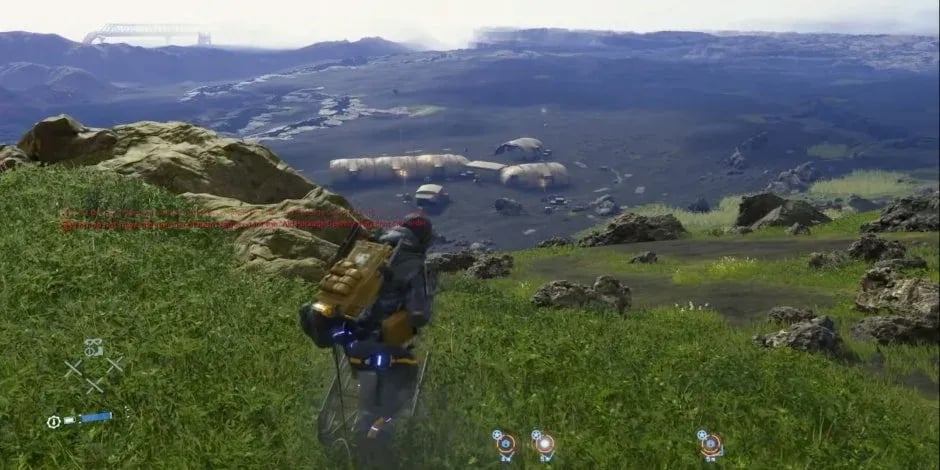
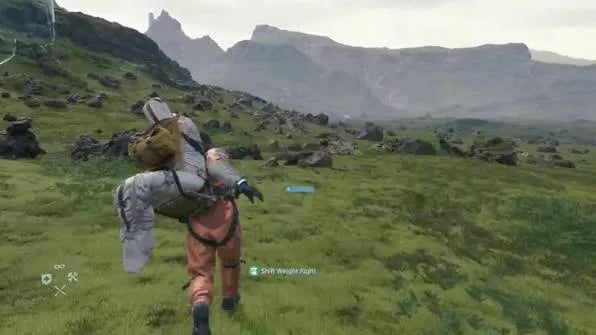
The core of it is that Sam carries too much, and his body knows it. Cargo stacks above his head, the weight shifts as he moves, and the shoulder triggers let you brace the straps by hand when the load starts to swing. I spent my first hours yanking both triggers in a panic on every downhill. By my second session I was reading the ground instead, picking the shallow side of a riverbed, and the panic-bracing stopped.
Terrain in this game has opinions. Loose rock spills you, and a river deep enough to reach your waist will pull a case off your back and float it downstream. Timefall, the rain that ages whatever it touches, eats your containers and your boots, so a long haul in bad weather becomes a maintenance problem before it becomes a delivery. I lost a full load of medical supplies in the eastern region to nothing more dramatic than a slope and my own impatience.
Out of all that grows a planning habit I have not felt in another game. I would stand at the terminal and work backwards from the destination: where the ladders go, which slope gets the climbing anchor, whether the truck makes it or the bike dies on the first ridge. Getting a delivery in at full condition after forty minutes of that gave me more satisfaction than any boss here.
Other Players Build The Roads
The online layer is the best idea in here, and it needs no friends and no schedule. You never see another player. Their gear arrives instead: a ladder bridging the exact gap that stopped you, a rope down a cliff you were about to walk around, a generator parked where your bike ran flat. You leave yours behind the same way, and the only currency is likes, which buy you nothing and feel good anyway.
I built a zipline chain through the mountains around Mountain Knot City over several evenings, purely so the climb I hated would stop being a climb. Likes came in for weeks afterwards, and that is the whole reward. Roads are the grander version: auto-pavers demand more materials than one porter can carry, so strangers finish them in loads over days, and then a truck run across the central region takes minutes.
A well-connected world is also a softer game. By the back half of my playthrough the terrain I had learned to read was flattened under tarmac and cable, and the deliveries turned into a commute. I take that as the point, and I missed the mountain anyway.
The Story Overexplains Itself
Sam and BB are the reason the plot lands at all. The pod on his chest starts as a sensor and ends as the only relationship here I cared about, and rocking it after a bad fall did more work on me than any monologue. Norman Reedus plays him tired and unheroic, which suits a man whose job is carrying things.
Supporting characters are strong in isolation. Deadman, Heartman, Fragile, Die-Hardman and Mama each get a hook and a scene that pays it off. Cliff's war zones, where the fighting drops into trenches and later a jungle, are the most striking sequences in the game. Higgs is the weak link, a villain with a mask and a lot of volume, and every hour he gets is an hour taken from someone more interesting.
My real complaint is the talking. The systems already say what the script says: that effort connects people, that infrastructure is care. A twenty-minute cutscene then says it again with diagrams. The last stretch runs well past an hour of exposition with the controller in my lap, and I would rate the ending higher with a third of it gone.
Is Death Stranding Worth Buying Right Now?
Yes, with one condition: you have to want a game about effort rather than a game about violence. If your reason for picking it up is the Kojima name and you expect Metal Gear pacing, the first six hours will bore you and the middle will bury you. For anyone who likes the sound of a hiking simulator with a storm coming, this is the only game that delivers on it.
The state of it is settled. Death Stranding is finished and patched, and it sells on PS5, PC, Mac and iPhone, plus Xbox Series X and S and Amazon Luna since November 7, 2024. The Director's Cut is the build I would point anyone at, and what theDirector's Cut added is mostly quality of life: a Buddy Bot that hauls cargo, a cargo catapult, a mid-range exoskeleton, a firing range and a racetrack south of Timefall Farm. The maser gun and the ruined factory mission are worth an hour. The racing I tried twice.
Timing matters more than platform. The sequel launched on PS5 on June 26, 2025 and then reached PC on March 19, 2026, and the first game reads better as its setup than as a standalone curio, so playing them close together is the move. Anyone with a backlog of long games should wait, since this asks for forty hours before it becomes the thing people rave about. On any sale it is an easy call.
FAQs About Death Stranding
Final Words
I did not expect how much of this game would live in my memory as geography. I can picture the riverbed I always crossed, the ridge where the bike gave up, the spot where somebody else's ladder saved me twenty minutes. Games that hand me traversal as a solved problem do not leave that behind.
Go in braced for the structure. Death Stranding front-loads its worst hours and back-loads its best ones, which is brutal for a game this long, and the plot explains its themes out loud after the mechanics have already made the argument beautifully. Anyone who quits in hour four quits before the game has started. Both are real flaws, and neither moved my score much.
My open question is whether the idea survives outside Kojima Productions. Nobody else has tried to build a game where terrain is the antagonist and strangers are the solution, and the studio has now done it twice. A third attempt from somebody else would tell us whether this is a genre or a signature.
GameBoost Products
View all GameBoost Game Keys
Buy Death Stranding Game Key
View all GameBoost Accounts
View all GameBoost Boosting Services
View all GameBoost Currencies
View all GameBoost Gift Cards
View all GameBoost Top Ups
View all GameBoost Items