


•Hamza Rashid• 9 min read
Valorant
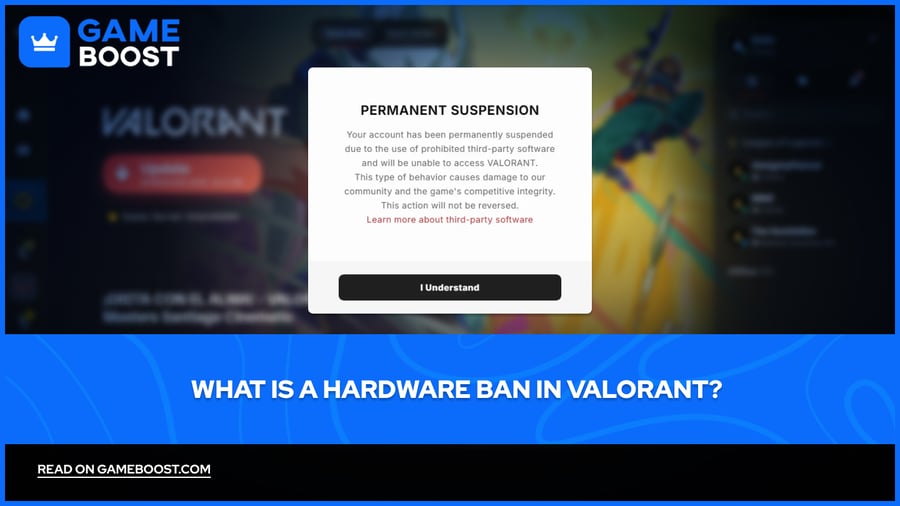
Valorant uses Vanguard, Riot Games' proprietary anti-cheat system, to keep the game fair. When a player gets caught cheating or severely violating the terms of service, Riot doesn't just ban the account, they ban the hardware itself. This is known as a hardware ban, or HWID ban.
Unlike a regular account ban, a hardware ban ties the punishment to your physical machine. In this article, we'll explore what a hardware ban in Valorant is, how it works, what triggers it, and what your options are if you find yourself on the receiving end of one.
Also Read: Can You Have Multiple Accounts in Valorant?
A hardware ban, also referred to as an HWID ban, is the most severe penalty Riot Games can issue for a Valorant account. Unlike a standard account ban, which only blocks a specific Riot account, a hardware ban targets the physical machine itself.
When you install Valorant, Vanguard collects identifying information from your hardware, things like your processor, graphics card, motherboard, and storage drives, and uses it to generate a unique Hardware ID (HWID) for your system. Once that ID is flagged, every account launched from that machine gets blocked immediately, regardless of whether it's a new account or an old one.
Reinstalling the game or deleting the banned account does nothing to remove the ban, because the restriction is tied to the physical components of the computer, not the software or account credentials. If a friend or family member logs into their account on a hardware-banned PC, their account will also be restricted from accessing Riot Games products on that device and will be banned for a set period, as the system assumes it's an attempt to bypass the original ban.
Hardware bans are not handed out lightly. Riot typically reserves them for repeated or serious violations that go beyond a standard account ban. The most common trigger is cheating. Vanguard monitors all game files for third-party software and tracks hardware activity, since most cheats like aimbots, ESP hacks, and wall hacks tap into graphical data. Getting caught using any of these will get your HWID flagged.
Third-party skin applications, VPNs, and game boosters are also recognized as triggers, as Vanguard may flag them as potentially harmful software. These don't always result in a full hardware ban, but they can cause a VAN error and get your account flagged during the process.
Also Read: All Released Valorant Bundles
The first step is to make sure it's actually a hardware ban and not a software conflict. Close any VPNs, game boosters, or third-party applications running in the background and restart your PC. If the VAN 152 error persists, it's likely a genuine HWID ban.
If you haven't violated the terms of service, the best course of action is to contact Riot directly by submitting a support ticket explaining your situation. If the ban was issued for behavior violations, you'll need to wait at least one year from the date of the ban before submitting a request for re-evaluation. That request must include a list of all accounts used while the ban was active, and Riot will investigate before deciding whether to lift or extend it.
If the hardware ban was the result of a verified threat of harm against a player or Rioter, Riot will not consider lifting it under any circumstances. As for bypassing the ban, hardware swaps and spoofers circulate online, but most spoofers are unreliable, short-lived, or risky, and many "guaranteed unban" services are outright scams. The only legitimate path back is through Riot's official appeal process.
Also Read: Best Crosshair Color Codes in Valorant
A hardware ban in Valorant is Riot's harshest punishment, and there's no easy way around it. If you've been hit with one, your only legitimate option is waiting out the year and submitting an appeal through Riot's official support. Avoid third-party bypass tools — they rarely work and aren't worth the risk.
Valorant Accounts For Sale
Buy Valorant Points
Valorant Boosting Service
View all GameBoost Accounts
View all GameBoost Boosting Services
View all GameBoost Currencies
View all GameBoost Game Keys
View all GameBoost Gift Cards
View all GameBoost Items
View all GameBoost Top Ups
Counter-Strike 2 Skins
“ Mustafa Atteya has been writing about gaming and esports since 2023, specializing in competitive game content and player improvement guides. At 25, he brings both hands-on gaming experience and professional SEO writing expertise to the GameBoost team.”