

1666 Amsterdam Review: The Cat Steals the Show
This game is reviewed on:
Graphics Card | GigaByte Geforce RTX4080 |
Processor | AMD Ryzen 7 9800X3D |
Memory | Kingston Fury Beast White RGB EXPO 64GB RAM |
1666: Amsterdam is the new game from Panache Digital Games, the studio led by Patrice Désilets, creative director of the original Assassin's Creed. Its 1666 Amsterdam early access build went live on PC on August 25, 2026. You play Noa, a witch who hunts people who made pacts with dark forces long ago and now hide behind ordinary faces.
You investigate by day, fight by night, and share the work with a cat who has a man from the future trapped inside him. That cat ended up being my favorite thing in the game. Some of what I found in this city is the most interesting stealth design I've played in years, and some of it feels like it showed up a year too early.
Below, you'll find how Aaron, the investigations, the Esbat nights, the combat and the PC performance hold up in the Early Access build, plus who should buy in and who should wait.
1666: Amsterdam Review Summary
1666 Amsterdam is a PC Early Access release covering the first campaign chapter, with roughly 15 hours of content and about a year of development planned before the full game.
Aaron the cat is the highlight, turning guarded buildings into puzzles through rooftop routes and NPC possession.
Daytime investigations come close behind: no quest markers, actual clues, and targets you have to name yourself.
Esbat nights raise the stakes, and dying on one wipes the coffer abilities you picked up that night.
1666 Amsterdam combat is the weak point, built on a broom, a three-hit combo and a dodge with no parry.
Frame drops and crashes are common, and the game needs hardware ray tracing to run at all.
Panache says patch 0.2.2 targets combat responsiveness, character movement, subtitles and crashes.
Aaron the Cat Opens Every Door

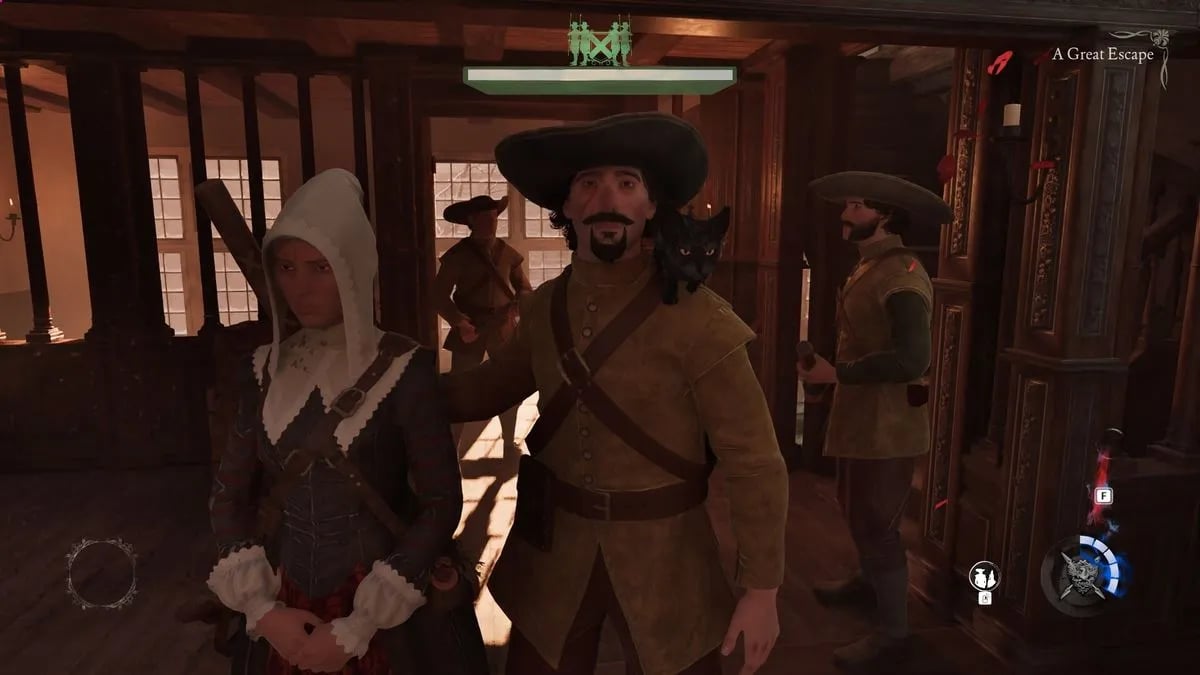
Aaron is the strangest idea in 1666: Amsterdam and the one that works best. He's a man from the future whose last memory is falling asleep in an Amsterdam hotel with his wife, and he wakes up inside Noa's familiar. I switch to him when a street gets too watched. Who looks twice at a cat on a windowsill?
His toolkit is small but smart. Aaron climbs onto rooftops, slips through gaps Noa can't fit through and opens doors that stay shut to her from the street. His best trick is possession: he scratches a frightened NPC, takes over their body and walks Noa past the guards as if she belongs there. Half the infiltrations I solved came down to finding the right servant and borrowing them for a few minutes.
Controlling him gets fiddly. Jumps only trigger from set points, so I often lined Aaron up on a ledge, pushed the stick and got nothing until I found the exact angle the game wanted. Invisible walls blocked rooftops that looked reachable, and on stairs he floats along with the same walking animation he uses on flat ground. None of it broke a hunt, but it drags down the part of the game I enjoyed most.
The time travel mystery runs through him too. I wanted to know how a modern man ended up in a 17th-century cat long before I cared about Noa's coven. His side of the story kept me going through the slower stretches. If Panache tightens his controls, Aaron could become the reason people remember this game.
Witch Hunts Reward Real Detective Work
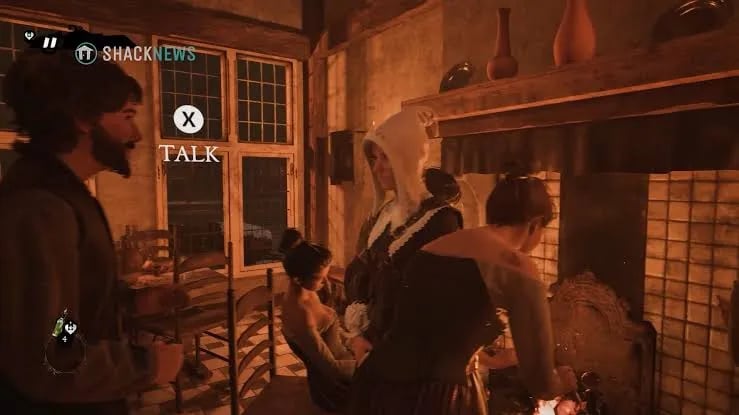
Every Original starts as a rumor. I question tavern regulars, sneak into houses, read the documents I find and slowly pin a real name onto a target living under a new one. There are no quest markers pointing at the answer, so a hunt only moves forward when I work out where to go next.
It clicked for me during the Eloquent Fox hunt. Adriaan gave me the first lead in the courtyard of Noa's home, and I got into the Athenaeum Illustre through the ceiling to pull documents from the second floor. Those led me to the House of the Balance on the Voorburgwal, where a possessed servant got Noa past the guarded floors and up to the attic. The Original's buried name was waiting there, and finding each link on my own felt like real detective work.
Noa's two looks drive the stealth. In her black dress and white bonnet she blends into the crowd. Her red witch form gives her magic, at the cost of a suspicion meter that fills fast in public. Let it max out and the witch hunters come for you. By my second evening I'd stopped walking around revealed, and I used the safehouse to drain the meter between outings.
When a hunt stalls, the game refuses to help. More than once I spent a whole session wandering between districts with no idea which building mattered. The final fight of the Eloquent Fox hunt gave me nothing but a beam of moonlight to follow. Guards noticed me inconsistently, missing Noa right behind them one minute and spotting her across a square the next. A light hint system would save a lot of players from quitting on a hunt they were close to solving.
Esbat Nights Punish Every Mistake
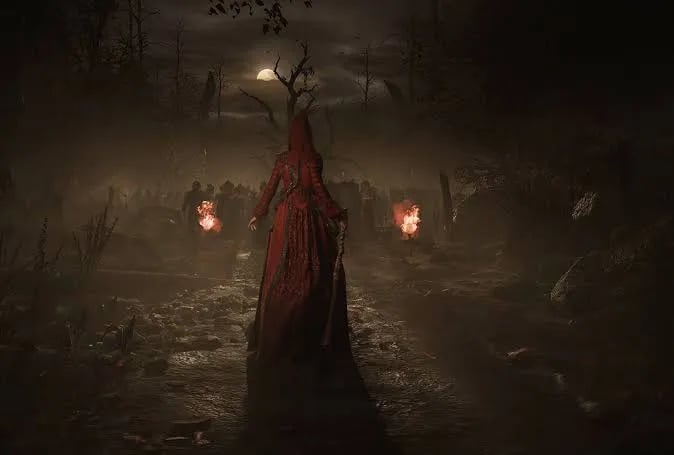
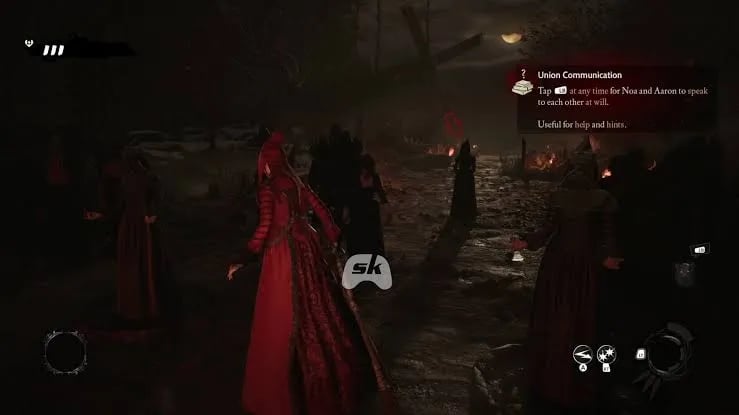
Esbats are the nights when a hunt ends. Once I had enough on an Original, the investigation shifted into a night hunt where I tracked the target down and fought them. The Eloquent Fox turned into something far less human before that fight. An Esbat is a closed loop, so there's no slipping back to the safehouse until the night is won or lost.
Coffers keep those nights tense. They're hidden across the city and each one offers a pick of three random abilities, shown as jewelry and gems that appear on Noa's outfit. One of my favorites was Travel, which lets Noa leap onto rooftops the way Aaron does. Die during an Esbat, though, and every coffer I collected that night is gone, along with my progress on that night's objectives.
That turned my preparation into its own mini game. Before any Esbat I spent time at the safehouse alchemy station, brewing healing potions, suspicion potions and Nux potions from ingredients looted around the city. Lux, the red essence, handles environmental tricks, and Nux feeds combat spells with a limited number of charges.
I came around on the roguelike layer. Losing a great ability stings, and the random picks meant my Esbats played out differently. The long walk back after a death frustrated me more, turning every failed boss attempt into dead time before I could try again.
1666 Amsterdam Combat Is the Weak Link
The Early Access label shows most in 1666 Amsterdam combat. Noa fights with a broomstick, with a basic three-hit combo, a finisher and a dodge on a cooldown. There's no parry. Her swings can take out up to three enemies at once, and Panache built the fights around rhythm and avoidance.
In practice that rhythm rarely held for me. Street fights against pike and club soldiers came down to the same combo and the same dodge, and the camera lost track of enemies whenever more than two closed in. A few dodges didn't come out when I pressed the button, and Noa goes down in a handful of hits, so one missed input often ended the encounter. Beating demonic Originals with a broom undercuts the witch fantasy the rest of the game builds so carefully.
My frustration peaked in the boss fights. The Originals hit hard, chain three-strike patterns and fire ranged attacks, and every attempt I lost reset that night's coffers. The first proper boss took me several tries. Nux spells help, but the charges run dry quickly, and aiming them felt slower than the fight around me.
Panache's community message on September 22, 2026, listed combat responsiveness and character movement among the fixes planned for patch 0.2.2, with no release date attached. If that patch makes dodges reliable and gives Noa more to do with her magic, the combat could go from a chore to something I look forward to.
The Story Hooks Before It Explains
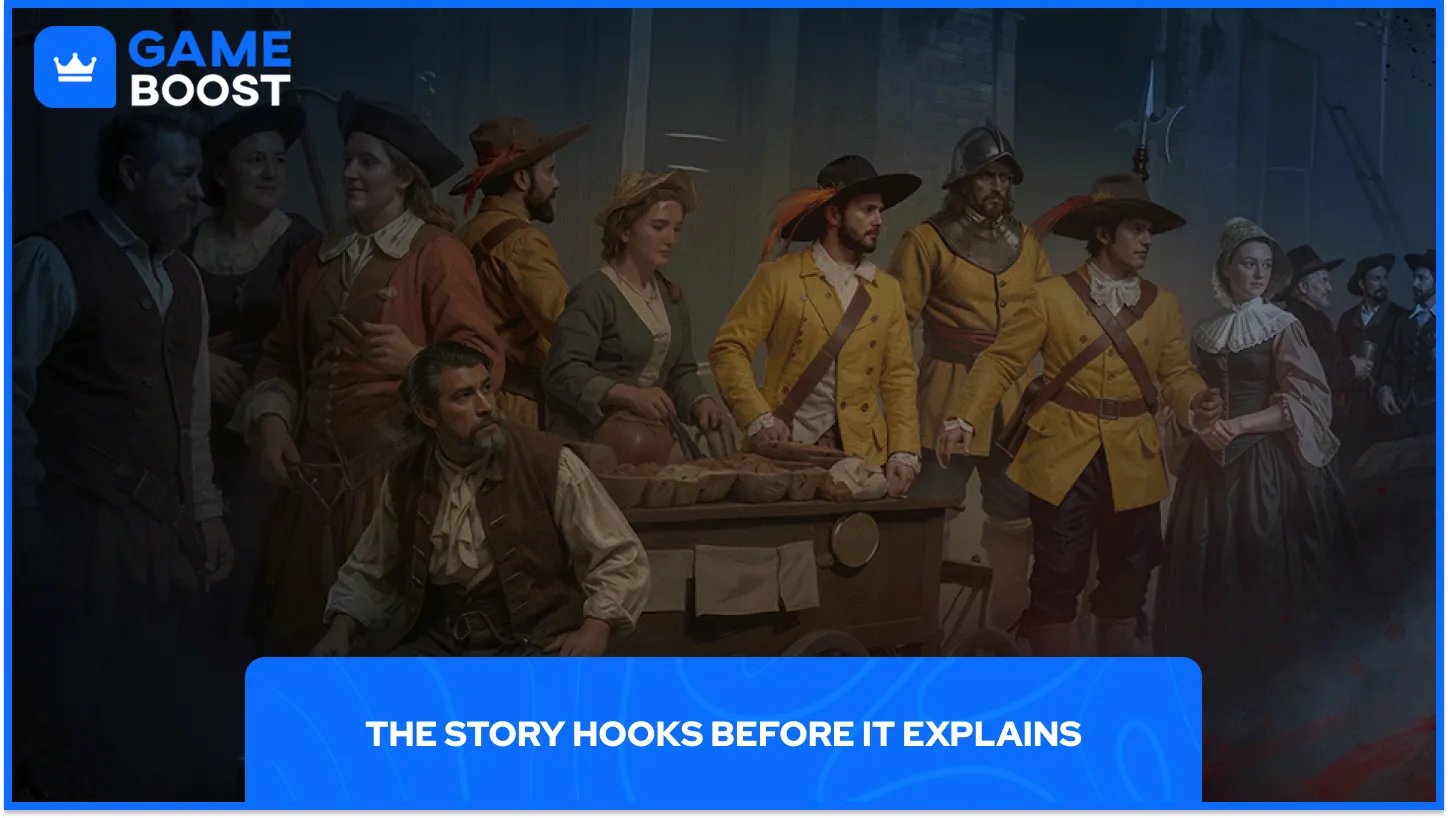
Three centuries and three viewpoints make up the story. Noa is the Collector of the Zaindaris, raised to take back the gifts the Originals refused to return. Aaron is stuck in her cat, far from his own time, and Clio pieces together what happened to her father centuries later from what he left behind.
The jumps between them are abrupt. The game cut from Noa's opening ritual to Clio's timeline without warning, and I spent my first few hours unsure how the threads connected. It came together after my first Esbats, and by then I badly wanted to know what happens next.
Presentation is uneven. Cutscene faces carry genuine feeling, and the city itself is gorgeous, with canals, tall narrow houses and interiors I could walk into. Out on the street, NPCs repeat the same few models and conversations play out with stiff faces and flat delivery. English is the only voice track. Panache's launch post says Désilets conceived the project 15 years ago, and the ideas feel that old in the best way, even when the execution feels rushed.
Panache also had to deal with an AI problem before launch. On June 9, 2026, the studio acknowledged that early AI-made versions of some assets had slipped into the prologue demo's in-game portraits and marketing. It called that an oversight, promised human-made replacements and said neither Early Access nor the full game would include AI-made assets. Some players haven't forgiven it, and you should weigh that for yourself.
Performance Still Trails the Art
1666: Amsterdam asks a lot of a PC. The minimum spec on Steam calls for hardware ray tracing, 16 GB of RAM, an SSD with 50 GB free and a graphics card at the RTX 2060 Super or RX 6600 level. The recommended tier jumps to an RTX 3080 Ti or RX 7700 with 12 GB of video memory. Panache has said upcoming patches will keep the ray tracing requirement, so cards without ray tracing support stay locked out.
Even on my mid-range rig, the frame rate dipped in the busiest streets and sank further during boss fights, right when I needed it steady. Short freezes hit during a few cutscenes, and I had a couple of crashes in my first week. A crash mid-Esbat hurts most, since losing a night means losing its coffers.
Panache moved quickly on the worst of it. The Crash Fixes patch on August 27, 2026 fixed a crash in the Codex tutorial and one that sometimes happened after combat. The September 22 community message also promised more crash fixes and repairs for subtitles in languages other than English.
The game looks its best in still screenshots, and it will take a few more patches before it plays as smoothly as it looks.
Is 1666: Amsterdam Worth Buying Right Now?
Yes, if you want a slow, thoughtful stealth game and can live with rough combat. 1666: Amsterdam suits players who like Hitman-style infiltration or Dishonored's sneaking, who read every document on a desk and enjoy working out a target without a marker. For that player, the first chapter already offers about 15 hours of hunts unlike anything else I've played.
You get the first campaign chapter, with Panache planning several major content updates across roughly a year before the full release. The official Early Access announcement says the studio wants to build the rest of the game with player feedback. The Steam page adds that the price will rise gradually during development, so early buyers pay the least.
Wait if you came for combat, if your PC lacks a ray tracing card, or if you play on console. The Early Access release is PC only, through Steam and the Epic Games Store, and Panache has promised consoles later without naming platforms or a date. Anyone who can't forgive clunky fights should hold off until patch 0.2.2 lands and shows how far Panache can push the combat. You can check the current edition on the 1666: Amsterdam store page.
FAQs About 1666: Amsterdam

Final Words
The image I'll keep from 1666: Amsterdam is a cat on a ledge above a guarded door, waiting for the right servant to walk past. Aaron turns every building into a small puzzle, and when a borrowed servant finally walks Noa up to an attic and a buried name, the city suddenly makes sense. Very few games let you earn that feeling, and this one does it with no markers and no hand-holding.
Everything around those moments is still under construction. The broom combat, the cat's jumps and the frame rate all need work, and the Esbat death penalty magnifies every one of those flaws. Whether this becomes a great game depends almost entirely on how much patch 0.2.2 and the updates after it can fix.
Watch the combat changes first. If dodges become reliable and Noa gets proper spells to fight with, Aaron and the investigations are already strong enough to carry the rest. If they don't, 1666: Amsterdam risks becoming a brilliant detective game trapped inside a frustrating action game.
GameBoost Products
1666: Amsterdam Game Key
View all GameBoost Game Keys
View all GameBoost Accounts
View all GameBoost Boosting Services
View all GameBoost Currencies
View all GameBoost Gift Cards
View all GameBoost Top Ups
View all GameBoost Items