


•Patrik Mršnik• 16 min read
Game Keys
Lining up the Castlevania games in order is harder than it looks. Konami has been sending Belmonts into Dracula's castle since 1986; the official Castlevania timeline jumps across nine centuries, and a handful of entries were later left off the official timeline. The Lords of Shadow reboot adds a second continuity with its own story.
Most of the classics are easy to play today, since Konami has packed them into four modern collections, and you can pick up Castlevania keys for them on GameBoost. Below, you'll find all 27 major releases in release order, each with its developer, platforms, players, protagonist and a short verdict.
# | Game | Released | Type | Set in | Story order |
|---|---|---|---|---|---|
1 | 1986 | Main series | 1691 | 7th | |
2 | Castlevania II: Simon's Quest | 1987 | Main series | 1698 | 8th |
3 | Castlevania: The Adventure | 1989 | Main series | 1576 | 5th |
4 | Castlevania III: Dracula's Curse | 1989 | Main series | 1476 | 2nd |
5 | Castlevania II: Belmont's Revenge | 1991 | Main series | 1591 | 6th |
6 | Super Castlevania IV | 1991 | Main series | 1691 | 7th (retelling) |
7 | Castlevania: Rondo of Blood | 1993 | Main series | 1792 | 10th |
8 | Castlevania: Bloodlines | 1994 | Main series | 1917 | 13th |
9 | Castlevania: Symphony of the Night | 1997 | Main series | 1797 | 11th |
10 | Castlevania Legends | 1997 | Side story (non-canon) | 1450 | Not in official order |
11 | Castlevania (Nintendo 64) | 1999 | Side story (canon disputed) | 1852 | Not in official order |
12 | Castlevania: Legacy of Darkness | 1999 | Side story (canon disputed) | 1844 | Not in official order |
13 | 2001 | Side story (canon disputed) | 1830 | Not in official order | |
14 | Castlevania: Harmony of Dissonance | 2002 | Main series | 1748 | 9th |
15 | Castlevania: Aria of Sorrow | 2003 | Main series | 2035 | 15th |
16 | Castlevania: Lament of Innocence | 2003 | Main series | 1094 | 1st |
17 | 2005 | Main series | 2036 | 16th | |
18 | Castlevania: Curse of Darkness | 2005 | Main series | 1479 | 3rd |
19 | Castlevania: Portrait of Ruin | 2006 | Main series | 1944 | 14th |
20 | Castlevania: Order of Ecclesia | 2008 | Main series | 19th century | 12th |
21 | Castlevania Judgment | 2008 | Spin-off (fighting) | Outside the timeline | None |
22 | Castlevania: Harmony of Despair | 2010 | Spin-off (co-op) | Outside the timeline | None |
23 | 2010 | Reboot | 1047 | Lords of Shadow 1st | |
24 | 2013 | Reboot | Before 1047 to about 1073 | Lords of Shadow 2nd | |
25 | 2014 | Reboot | Medieval era and modern day | Lords of Shadow 3rd | |
26 | Castlevania: Grimoire of Souls | 2019 | Spin-off (mobile, service ended) | Outside the timeline | None |
27 | 2026 | Main series | 1499 | 4th |
The Story order column follows Konami's official Castlevania chronological order. Konami left Legends, the two Nintendo 64 games and Circle of the Moon off its 2002 timeline, and series producer Koji Igarashi later explained that their own teams saw them as side projects. Legends stays out for good, as Lament of Innocence rewrote the Belmont origin, and the status of the other three has been unclear ever since. We give all four their story year and leave them out of the numbering. Lords of Shadow counts separately, and the three crossovers sit outside the timeline entirely. Konami's own Castlevania history page lists most main releases with their European launch dates.
All Castlevania Games Collection on Gameboost
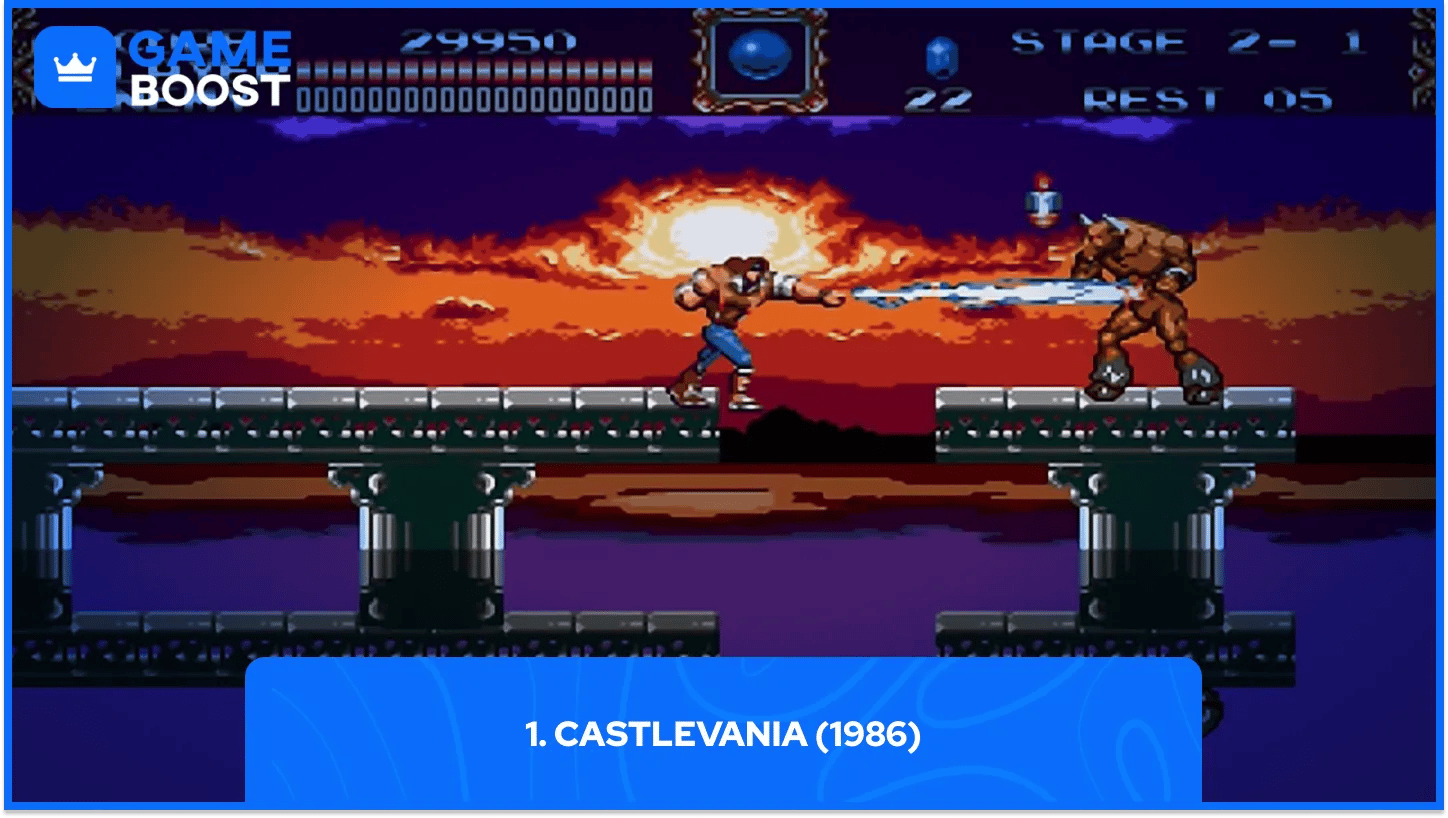
Developer | Konami |
|---|---|
Release Date | September 26, 1986 (Japan, Famicom Disk System), 1987 (North America, NES) |
Players | Single-player |
Platforms | Famicom Disk System, NES, Castlevania Anniversary Collection (Switch, PS4, Xbox One, PC) |
Protagonist | Simon Belmont |
Simon Belmont walks into Dracula's castle in 1691 with the Vampire Killer whip, and the series template is in place from the first screen. You fight through 18 stages split into six blocks, each one capped by a boss, and spend hearts on sub-weapons such as the axe, the dagger, holy water and the stopwatch. The NES cartridge reached North America in 1987, and the game went on to sell over one million copies.
The controls are stiff by modern standards. Simon can't steer mid-jump, every hit knocks him backward (often into a pit), and the Death fight still ends a lot of runs. The soundtrack by Kinuyo Yamashita and Satoe Terashima carries plenty of the appeal, and its opening theme Vampire Killer has been remixed in almost every entry since. The easiest way to play it today is the Castlevania Anniversary Collection, which bundles eight classic games.
My Verdict: Punishing, short and still the cleanest look at where the series began. Play it once for the history, and expect to die on the stairs.
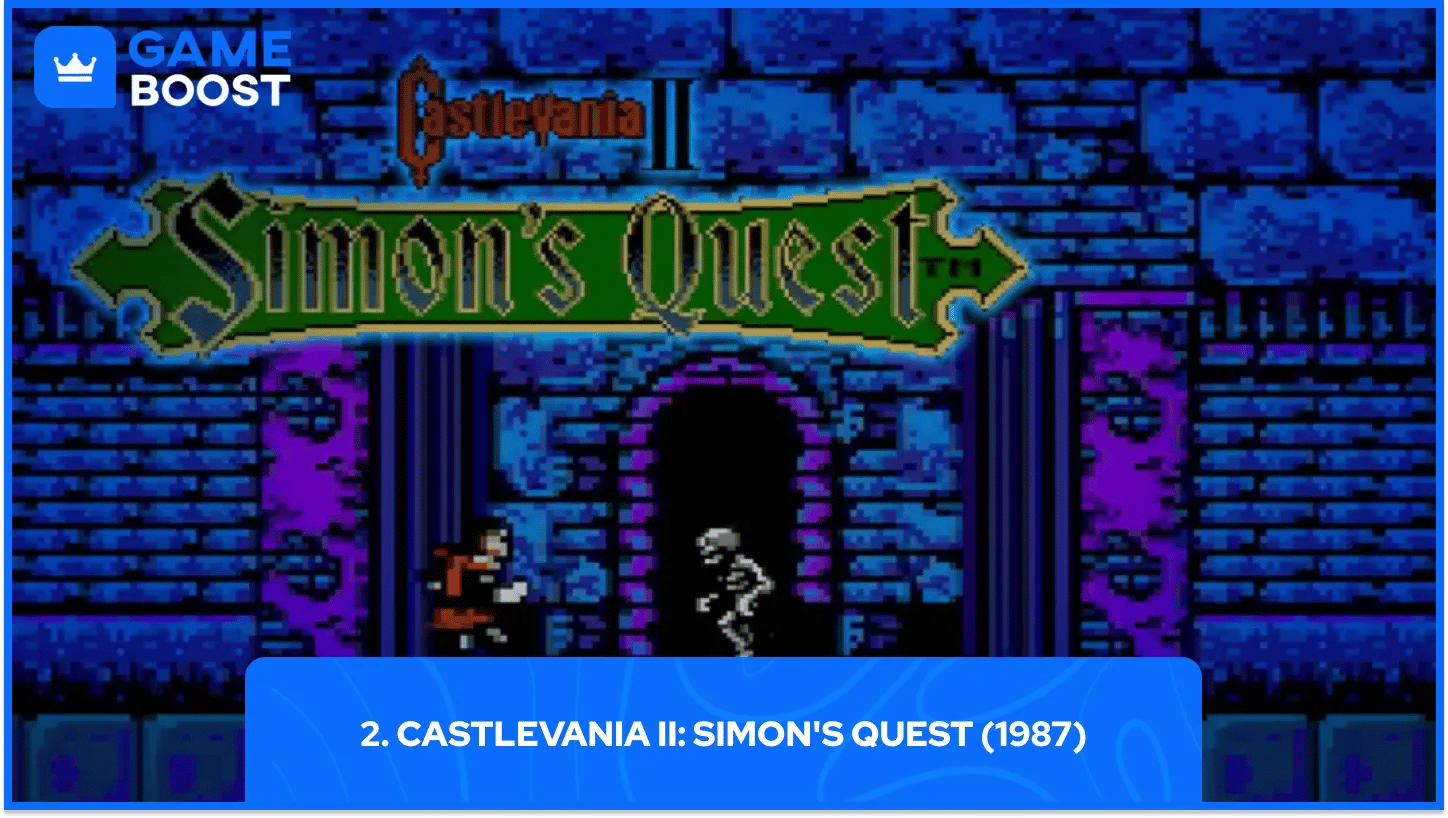
Developer | Konami |
|---|---|
Release Date | August 28, 1987 (Japan, Famicom Disk System), 1988 (North America, NES) |
Players | Single-player |
Platforms | Famicom Disk System, NES, Castlevania Anniversary Collection (Switch, PS4, Xbox One, PC) |
Protagonist | Simon Belmont |
Seven years after the first game, a cursed Simon has to collect Dracula's five body parts and burn them to lift the curse. Konami swapped the linear stages for an open map with towns, merchants and an experience system, and hearts double as currency. A day and night cycle changes the world as you play: enemies hit harder after dark, and the towns fill with zombies. This is also where the track Bloody Tears made its debut.
The villagers are infamous. Their hints range from vague to plainly wrong, and Koji Igarashi has said some of them were written to lie to you. There are three endings, and the best one asks you to finish in seven in-game days or fewer. Clunky as it is, Simon's Quest gets regular credit as an early blueprint for the exploration style the series adopted a decade later.
My Verdict: A fascinating experiment that has aged badly. Keep a guide open, or skip it and read a plot summary.
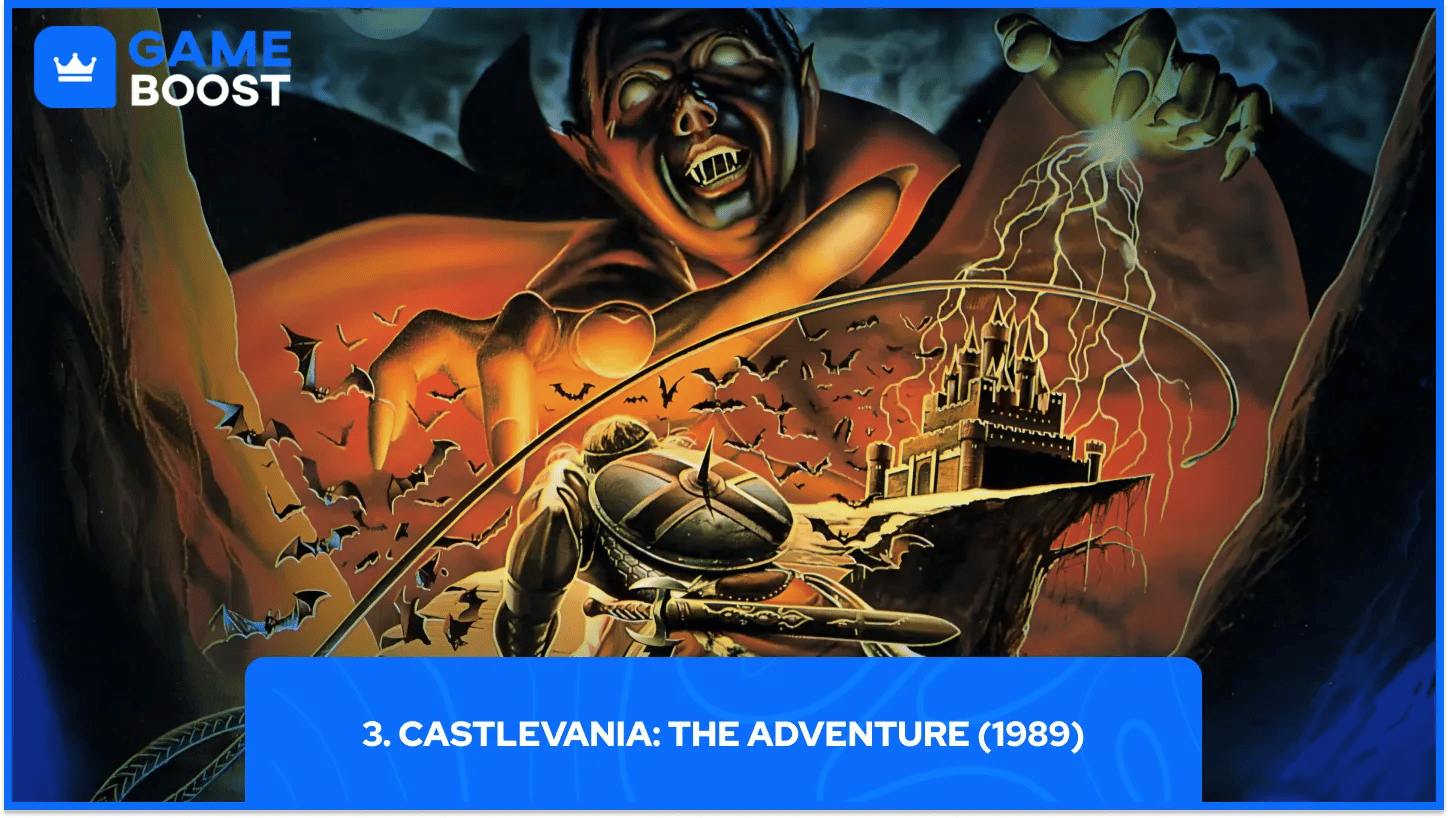
Developer | Konami |
|---|---|
Release Date | October 27, 1989 (Japan), December 1989 (North America) |
Players | Single-player |
Platforms | Game Boy, Castlevania Anniversary Collection (Switch, PS4, Xbox One, PC) |
Protagonist | Christopher Belmont |
The first handheld Castlevania stars Christopher Belmont, who faces Dracula in 1576, more than a century before Simon. It's a stripped-down game with only four stages, strict time limits, no stairs and no sub-weapons. Christopher climbs ropes instead, and his whip loses its upgrades whenever he takes damage.
Slow movement and sparse levels make it the weakest of the early entries. Programmer Masato Maegawa, who later co-founded Treasure, said in a 1997 interview that he didn't think the game was good. Konami remade it in 2009 as Castlevania: The Adventure ReBirth for WiiWare, a far better game that is no longer sold anywhere since the Wii Shop closed.
My Verdict: The one Game Boy entry you can skip. Treat it as a museum piece inside the Anniversary Collection.
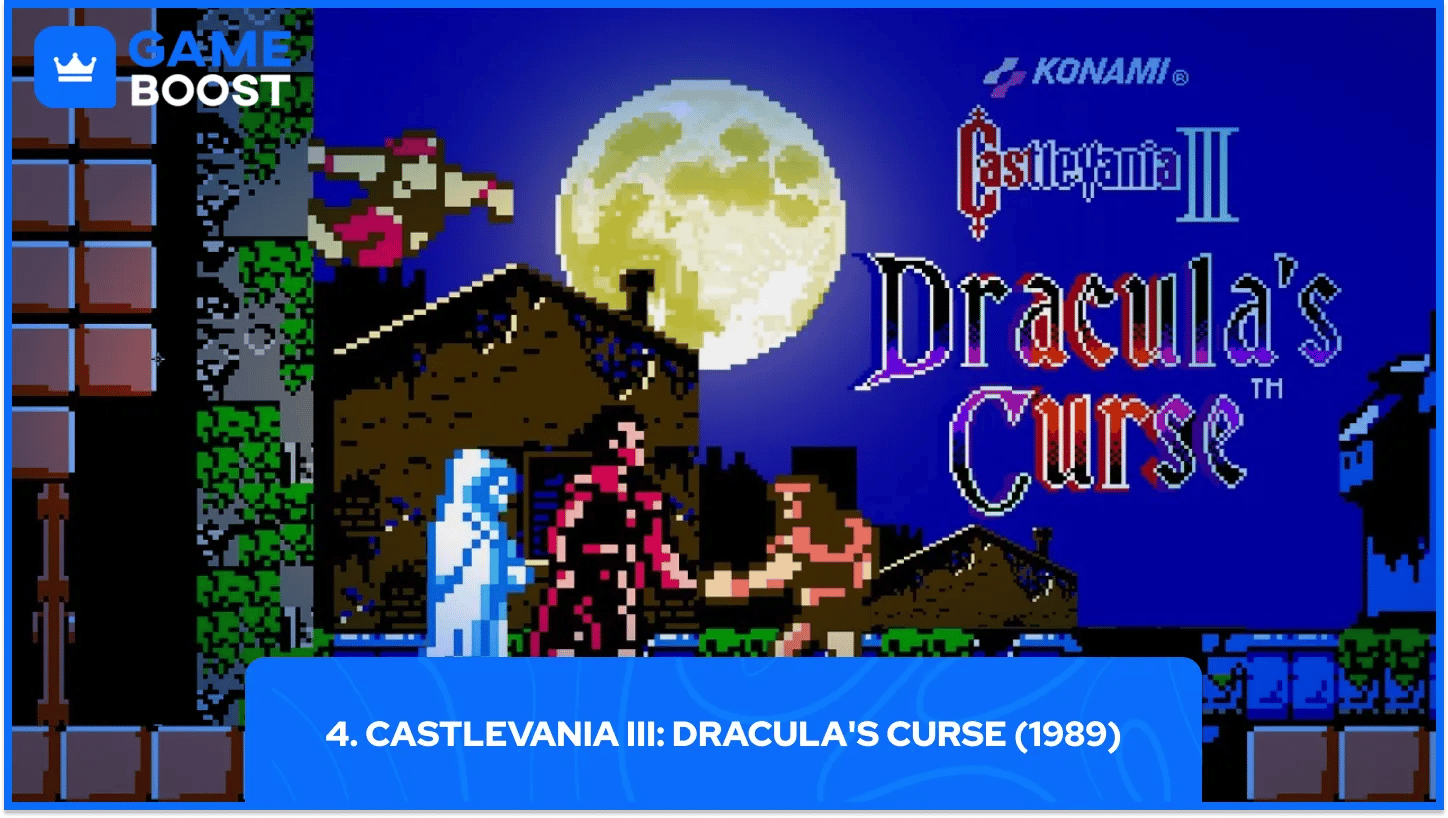
Developer | Konami |
|---|---|
Release Date | December 22, 1989 (Japan), September 1990 (North America) |
Players | Single-player |
Platforms | Famicom, NES, Castlevania Anniversary Collection (Switch, PS4, Xbox One, PC) |
Protagonist | Trevor Belmont, with Sypha Belnades, Grant Danasty and Alucard |
Dracula's Curse jumps back to 1476 and Trevor Belmont, the earliest hero the series had at the time. Konami returned to linear stages but added branching routes across 16 levels and three recruitable partners. Sypha casts elemental spells, Grant climbs walls, and Alucard, making his first appearance, turns into a bat. You can only carry one partner at a time, and your choice changes the ending.
The Japanese cartridge packs an extra sound chip with three more audio channels, and plenty of fans prefer its fuller soundtrack to the Western one. The Anniversary Collection includes both versions, with the Japanese release added in a post-launch update. Igarashi has named it his favorite Castlevania, and Netflix's animated Castlevania series adapted its story for seasons one and two.
My Verdict: The best of the NES trilogy and the game to play if you only try one 8-bit Castlevania. Pick the Japanese version for the music.
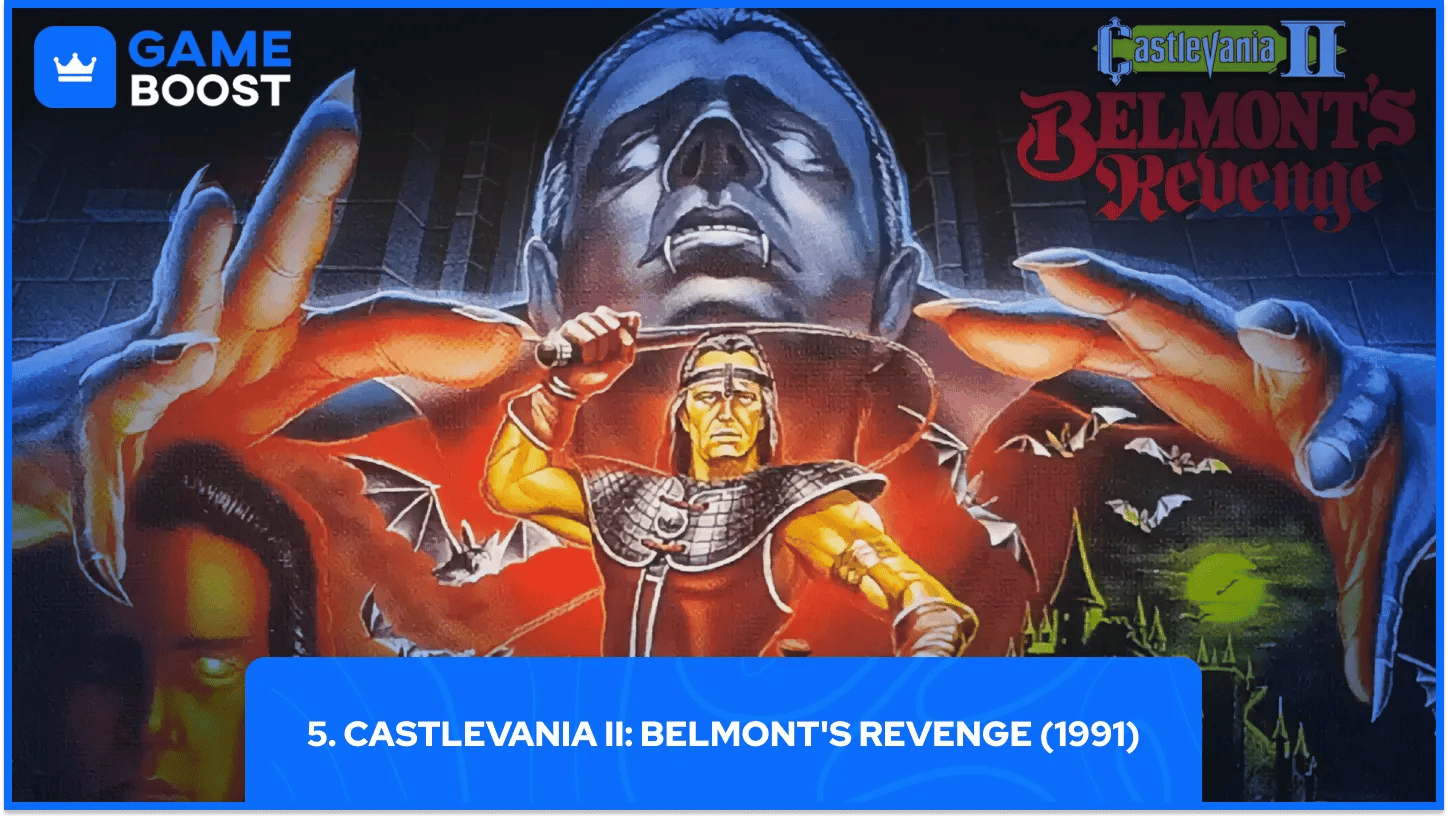
Developer | Konami |
|---|---|
Release Date | July 12, 1991 (Japan), 1991 (North America) |
Players | Single-player |
Platforms | Game Boy, Castlevania Anniversary Collection (Switch, PS4, Xbox One, PC) |
Protagonist | Christopher Belmont |
Fifteen years after The Adventure, Dracula kidnaps Christopher's son Soleil and turns him against his father. The sequel fixes almost everything the first Game Boy game got wrong. Sub-weapons return, the pace is quicker, and the opening section offers four themed castles (plant, crystal, cloud and rock) that you can clear in any order.
That stage-select structure gives it a Mega Man feel the series rarely tried again. The music is a highlight of the Game Boy library, and you can beat it in an evening. It sits between The Adventure and the 1691 games in the story, as the last stop before Simon's era.
My Verdict: My pick of the Game Boy trio and the strongest portable entry before the Game Boy Advance. Worth an hour of your time in the Anniversary Collection.
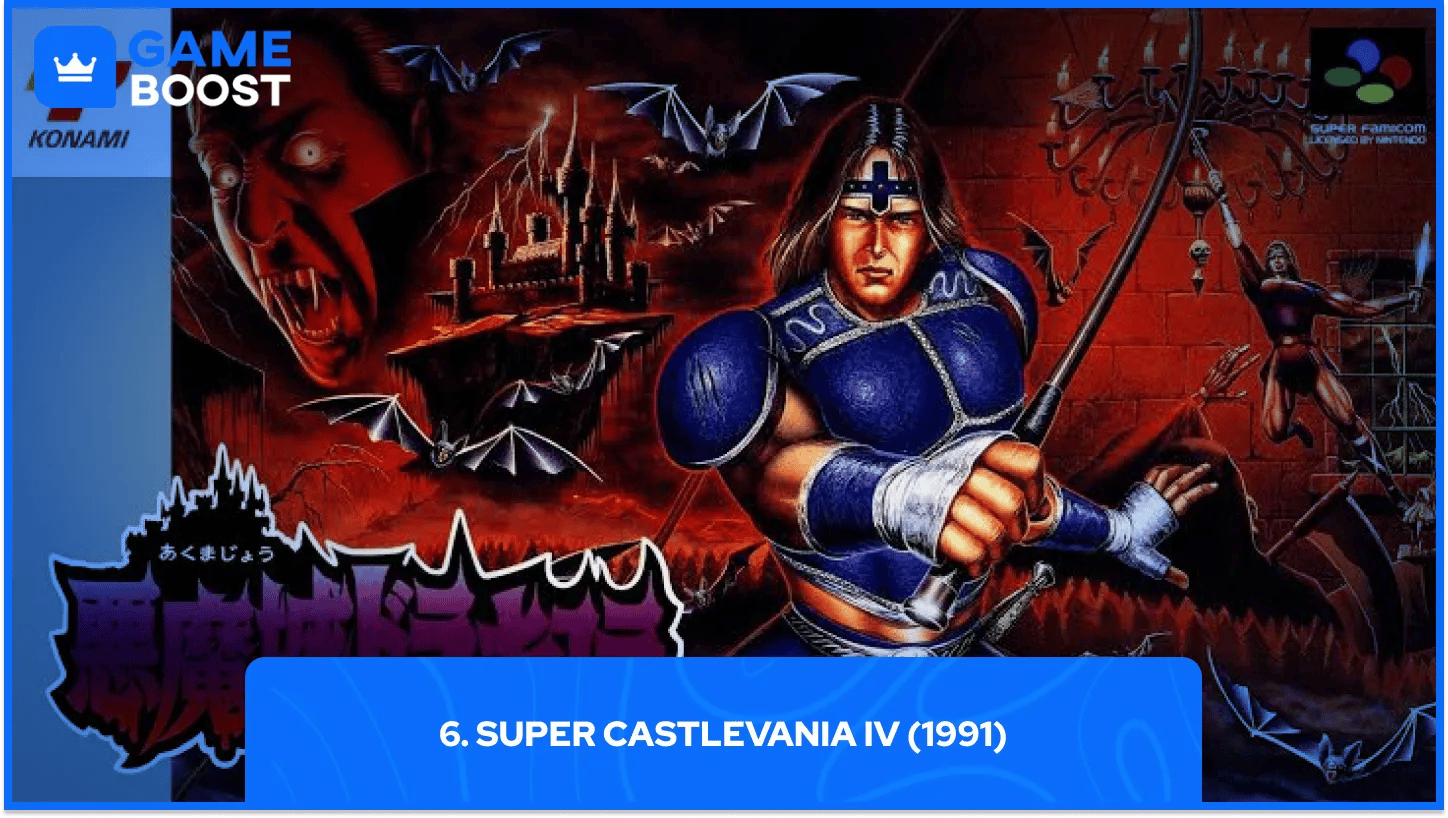
Developer | Konami |
|---|---|
Release Date | October 31, 1991 (Japan), December 1991 (North America) |
Players | Single-player |
Platforms | SNES, SNES Classic Edition, Castlevania Anniversary Collection (Switch, PS4, Xbox One, PC) |
Protagonist | Simon Belmont |
Super Castlevania IV retells Simon's 1691 hunt with 16-bit hardware and far better controls. Simon can whip in eight directions, swing from grapple rings, and dangle the whip to hit nearby enemies. Konami used the SNES Mode 7 effects for its rotating rooms, and the 11 stages feel like a demo reel for the console.
The flexible whip makes it the most forgiving of the classic games, and the soundtrack by Masanori Adachi and Taro Kudo is one of the darkest on the system. It sold around 800,000 copies. Story-wise, it covers the same events as the 1986 original, so you can play either one and get the same chapter of the timeline.
My Verdict: My favorite entry point for the classic style. If the NES games feel too rigid, start here.
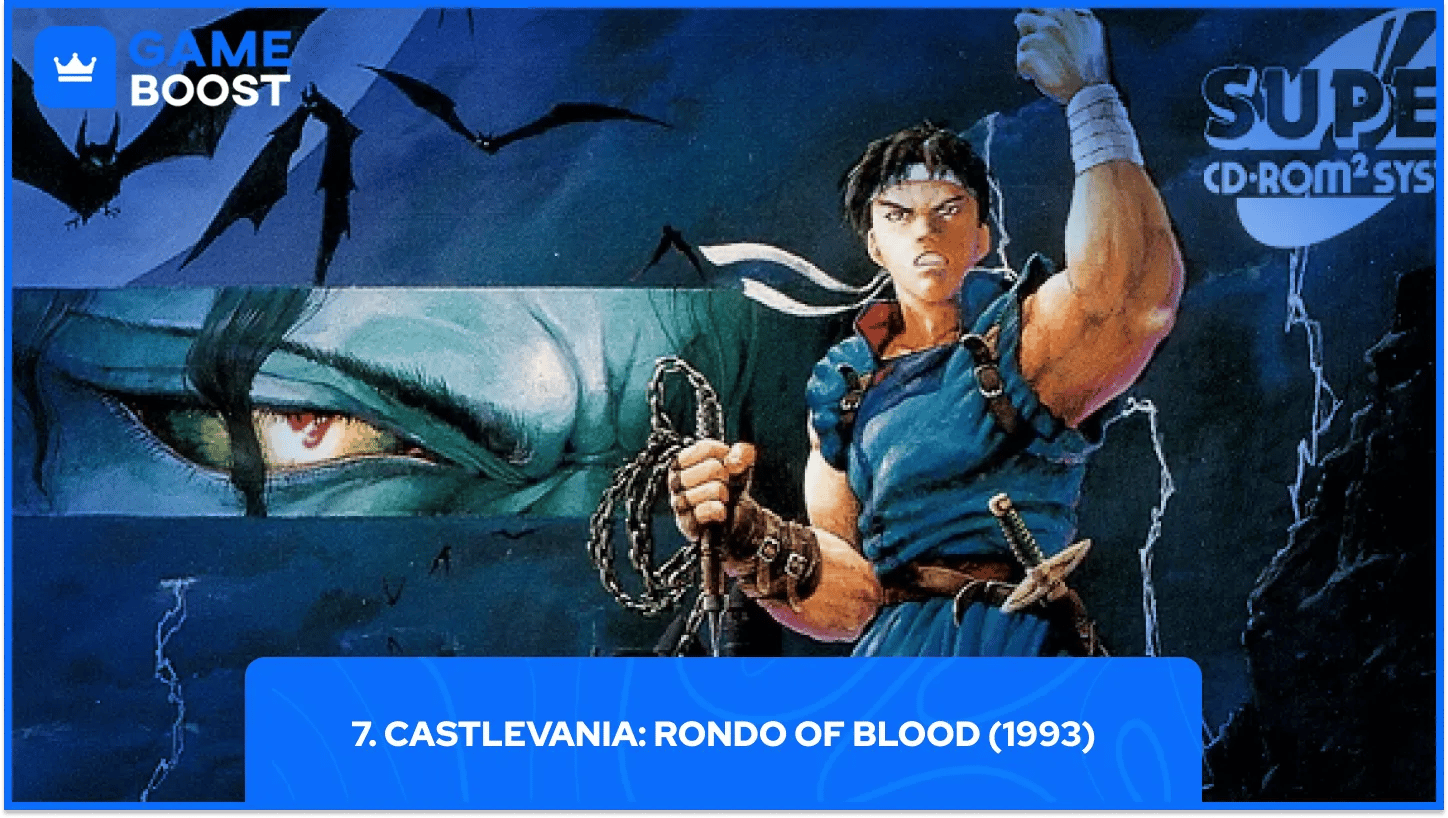
Developer | Konami |
|---|---|
Release Date | October 29, 1993 (Japan only), October 23, 2007 (North America, in Castlevania: The Dracula X Chronicles) |
Players | Single-player |
Platforms | PC Engine Super CD-ROM², PSP, Wii Virtual Console, PS4 (Castlevania Requiem) |
Protagonist | Richter Belmont, with Maria Renard unlockable |
Richter Belmont storms Dracula's castle in 1792 to rescue Annette and three other captive women, and Rondo of Blood is widely seen as the peak of the stage-based formula. The nine stages hide alternate exits that lead to four alternate routes, and freeing the young Maria Renard makes her a playable character. Richter's Item Crash, a super attack built on sub-weapons, returned in later games such as Symphony of the Night.
The game stayed in Japan for 14 years. Western players got a reworked SNES version called Castlevania: Dracula X in 1995, with new levels, and that version is now in the Castlevania Advance Collection. The original finally arrived in English in 2007, inside Castlevania: The Dracula X Chronicles for PSP, and again in 2018 on PS4 as part of Castlevania Requiem alongside Symphony of the Night. Netflix's Castlevania: Nocturne draws on its cast.
My Verdict: Must-play classic Castlevania and the direct prequel to Symphony of the Night. Castlevania Requiem on PS4 is the easiest way in.
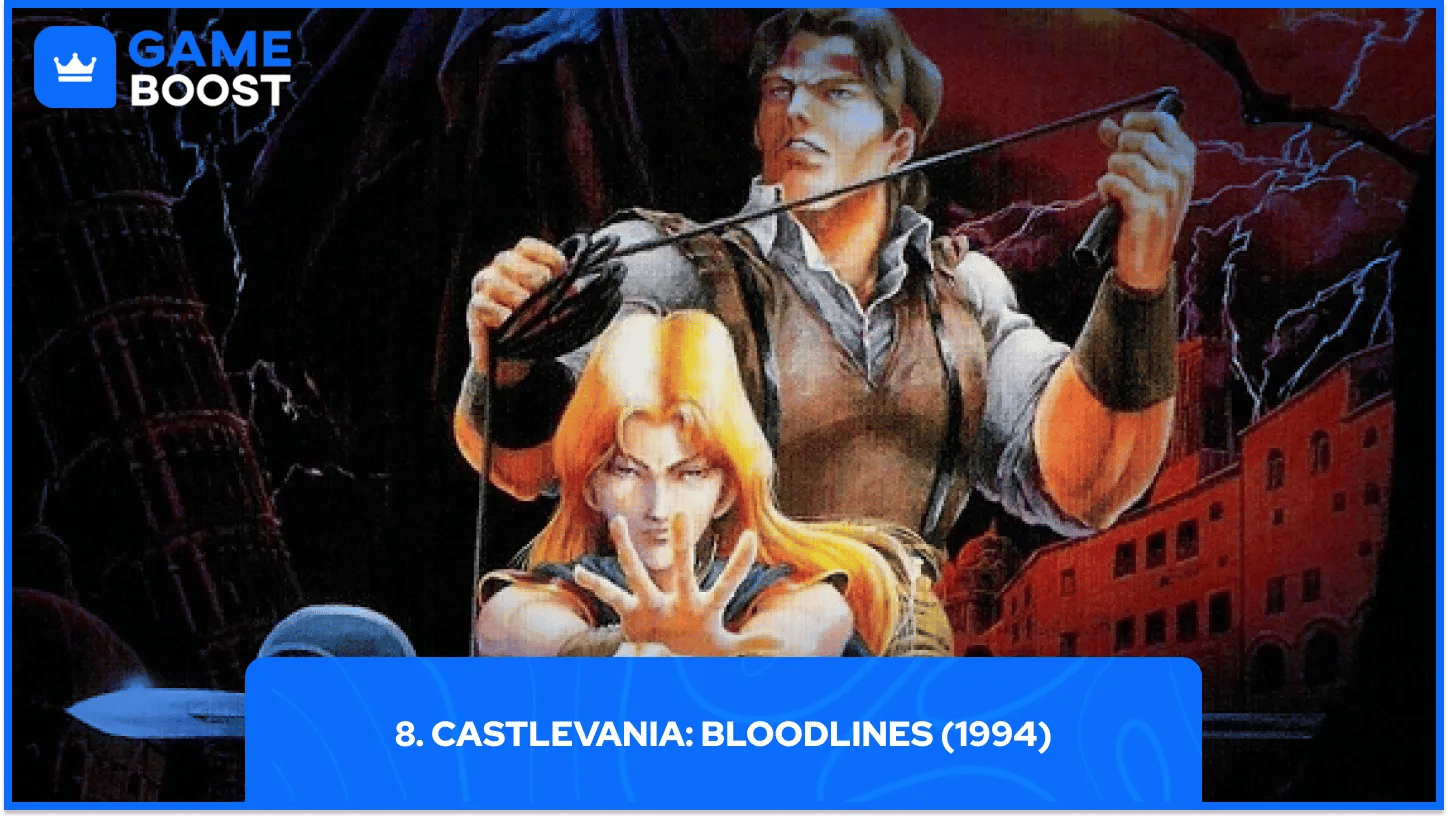
Developer | Konami |
|---|---|
Release Date | March 17, 1994 (North America), March 18, 1994 (Japan), March 20, 1994 (Europe) |
Players | Single-player |
Platforms | Sega Genesis, Sega Genesis Mini, Nintendo Switch Online, Castlevania Anniversary Collection (Switch, PS4, Xbox One, PC) |
Protagonist | John Morris and Eric Lecarde |
Konami's lone Genesis entry moves the action to 1917, with World War I raging across Europe. John Morris, son of Quincey Morris from Bram Stoker's novel, carries the Vampire Killer. Eric Lecarde fights with a spear and a high jump that opens up different routes through each stage. Europe got the game as Castlevania: The New Generation, with the blood removed.
It was also Michiru Yamane's first Castlevania score, and she went on to write Symphony of the Night. Bloodlines plays fast, throws mid-stage bosses at you and runs a little harder in the West than in Japan. Its story continues decades later in Portrait of Ruin, where John's son takes over the whip.
My Verdict: Underrated and slick. If you grew up with a Genesis, this is the one you missed.
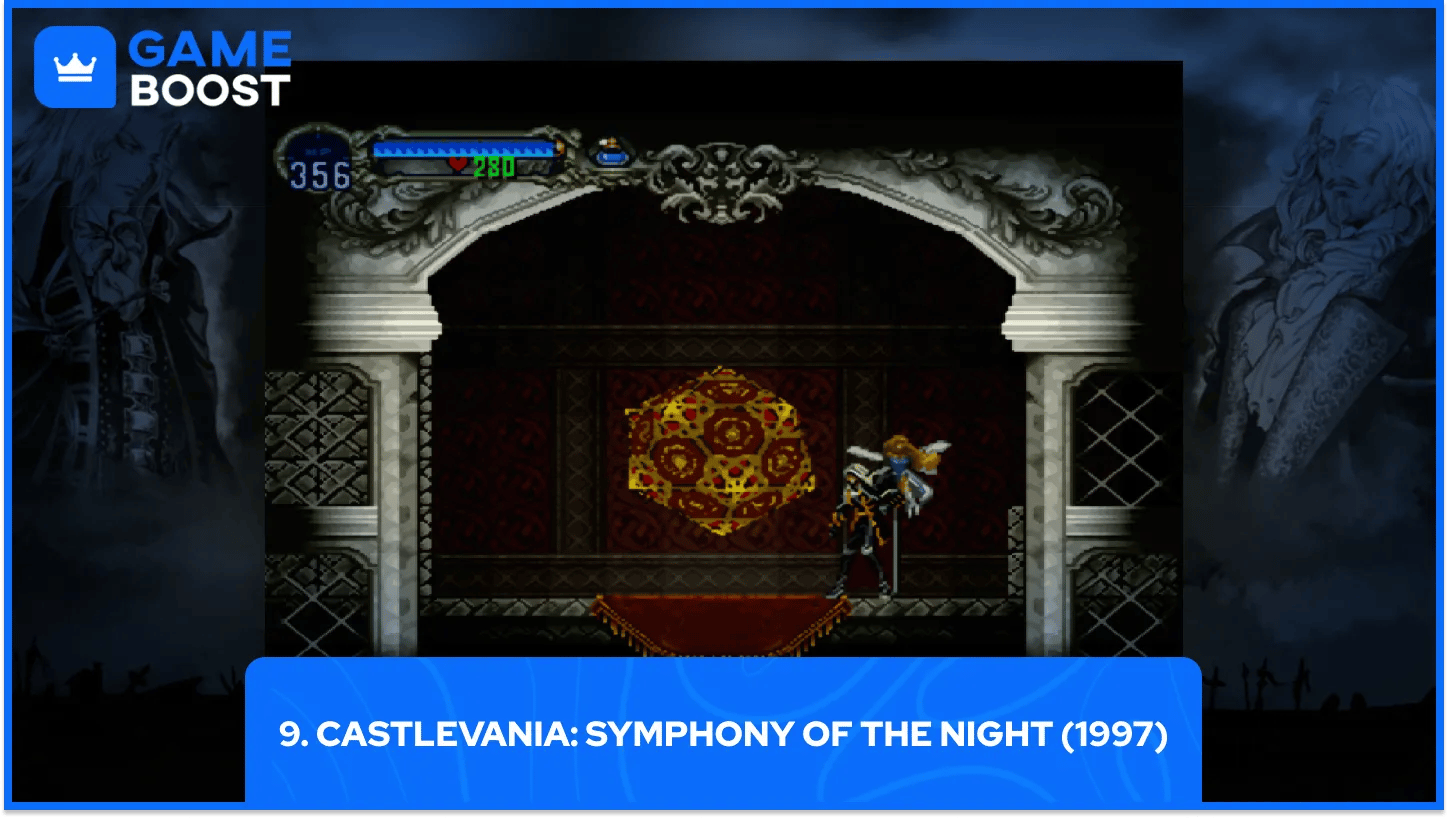
Developer | Konami Computer Entertainment Tokyo |
|---|---|
Release Date | March 20, 1997 (Japan), October 1997 (North America) |
Players | Single-player |
Platforms | PlayStation, Sega Saturn (Japan), Xbox 360, PSP, PS4 (Castlevania Requiem), iOS, Android |
Protagonist | Alucard, with Richter Belmont unlockable |
Set in 1797, five years after Rondo of Blood, Symphony of the Night hands the lead to Alucard and rebuilds the series around one huge interconnected castle. New abilities open new areas, and the game adds levels, equipment, spells, familiars and bat, wolf and mist forms. Assistant director Koji Igarashi, composer Michiru Yamane and artist Ayami Kojima shaped the gothic look the series kept for years afterward.
It launched quietly in the West and built its reputation over years, and the game gave half its name to the Metroidvania genre. The famous Inverted Castle opens a full upside-down second castle once you think you're done. Finishing the game lets you start a new file as Richter, and the Saturn, PSP and Requiem versions add Maria too.
My Verdict: The finest Castlevania and one of the greatest games ever made. If you play one entry on this list, make it this one.
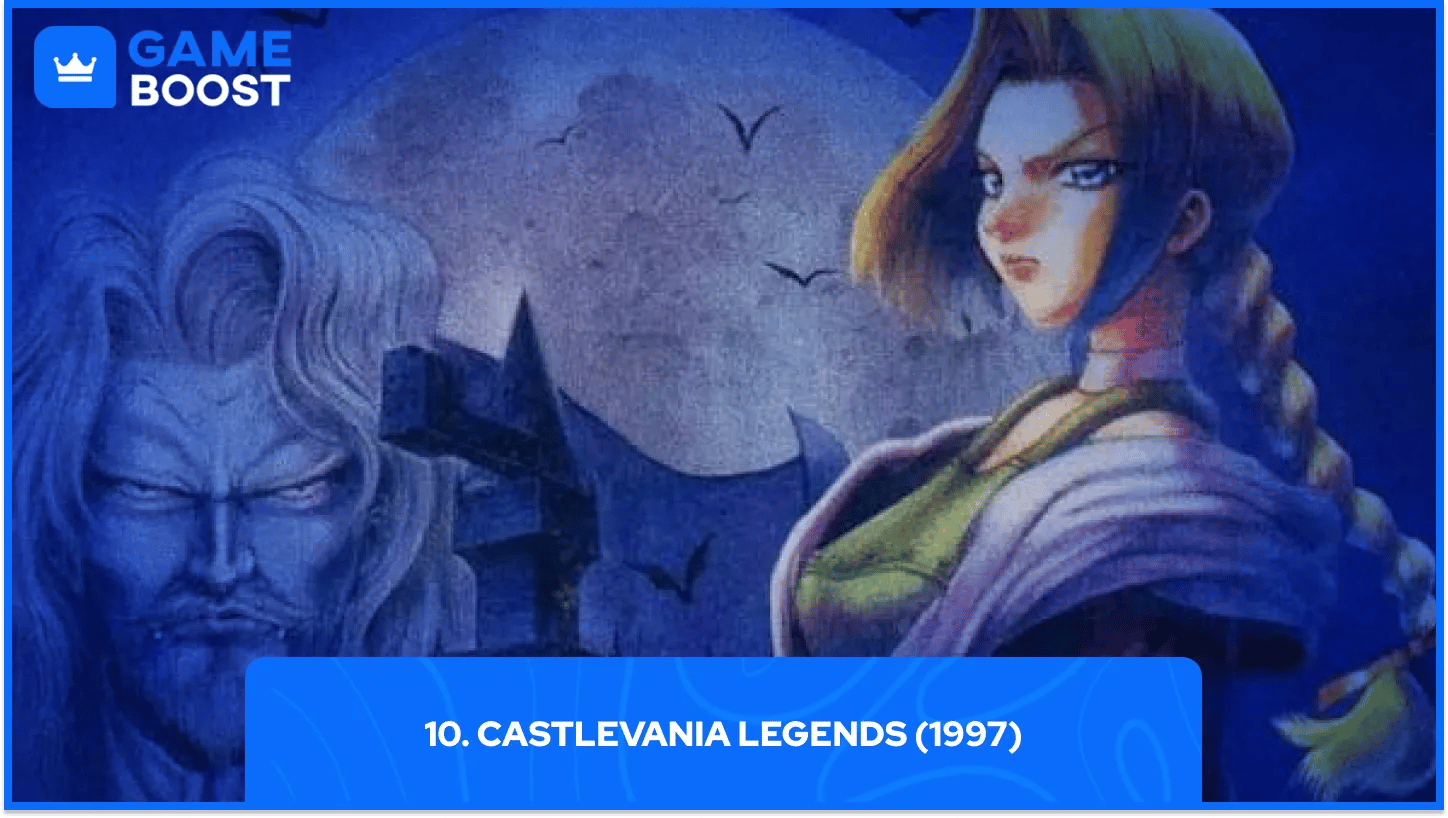
Developer | Konami Computer Entertainment Nagoya |
|---|---|
Release Date | November 27, 1997 (Japan), March 11, 1998 (North America) |
Players | Single-player |
Platforms | Game Boy, Nintendo Switch Online (Game Boy library) |
Protagonist | Sonia Belmont |
Legends introduced Sonia Belmont as the first vampire hunter of the clan, set in 1450, and it gives Alucard an early role in the story. It plays like the classic Game Boy entries across five stages, with mini-bosses dropping Soul Weapons and a once-per-stage Burning Mode that grants a few seconds of invincibility and extra speed.
Konami left it off the 2002 timeline, and Lament of Innocence later made Leon Belmont the founder of the bloodline, which keeps Sonia out of canon. Reviews were mixed to negative, with complaints about the short length and low difficulty. Sonia never got a sequel, though she turned up again years later as a playable character in Vampire Survivors.
My Verdict: A curiosity for completionists. Try it on Nintendo Switch Online if you already pay for it.
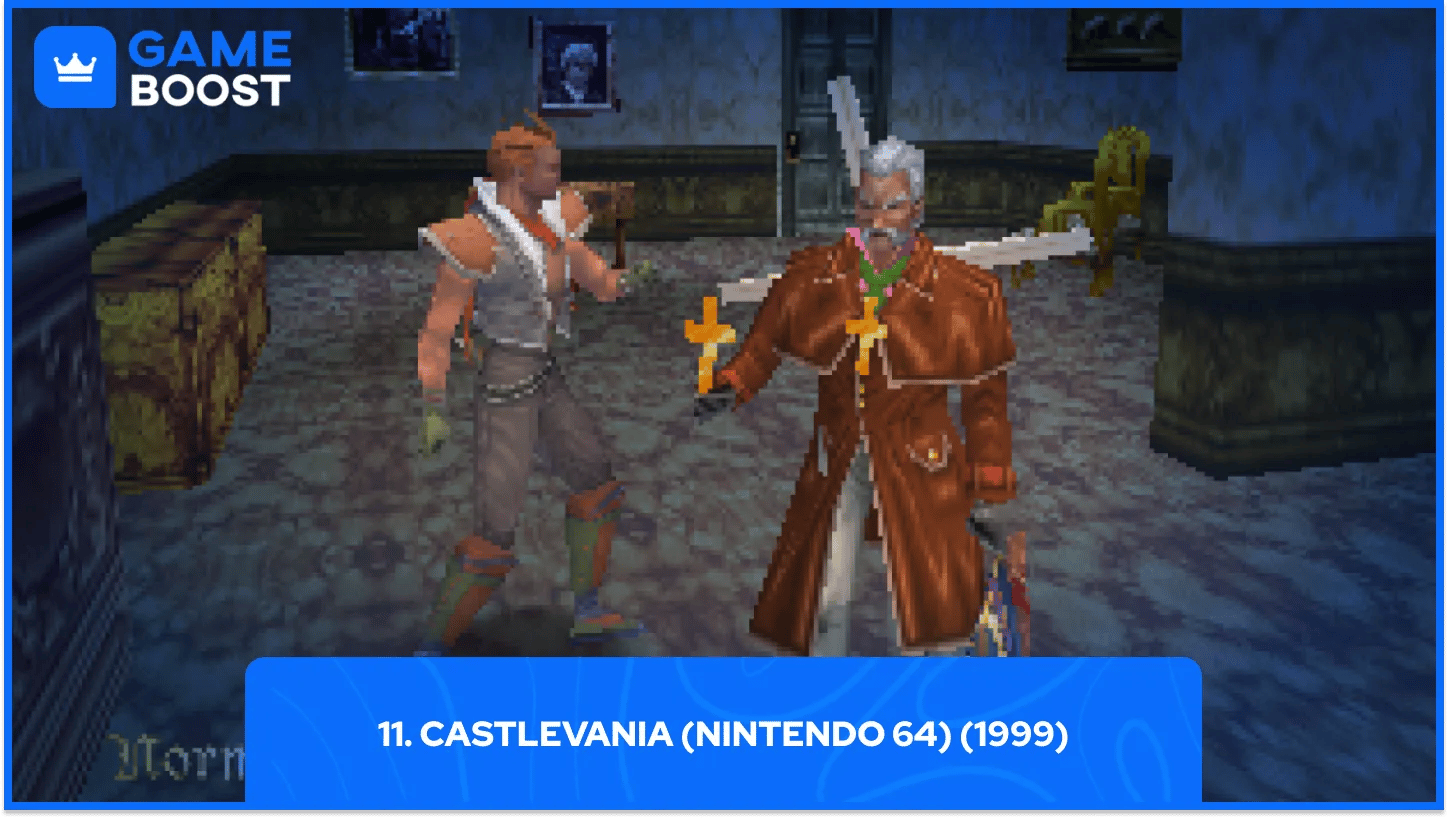
Developer | Konami Computer Entertainment Kobe |
|---|---|
Release Date | January 26, 1999 (North America) |
Players | Single-player |
Platforms | Nintendo 64 |
Protagonist | Reinhardt Schneider and Carrie Fernandez |
The first 3D Castlevania sends whip-wielding Reinhardt Schneider and the young sorceress Carrie Fernandez into Dracula's castle in 1852. A day and night cycle changes enemies, doors and events, and taking too many in-game days locks you into the bad ending. Saving happens at White Jewels, and the North American and European cartridges need a Controller Pak to store saves.
Its atmosphere and boss fights have aged well. The camera and the stiff animation have not, and falling off narrow ledges is part of the experience. Konami never re-released it, so original hardware is the only legal way to play it. It was also left off the 2002 timeline, and its canon status has stayed unclear since.
My Verdict: Ambitious, janky and hard to find. Play Legacy of Darkness instead, which contains this story and more.
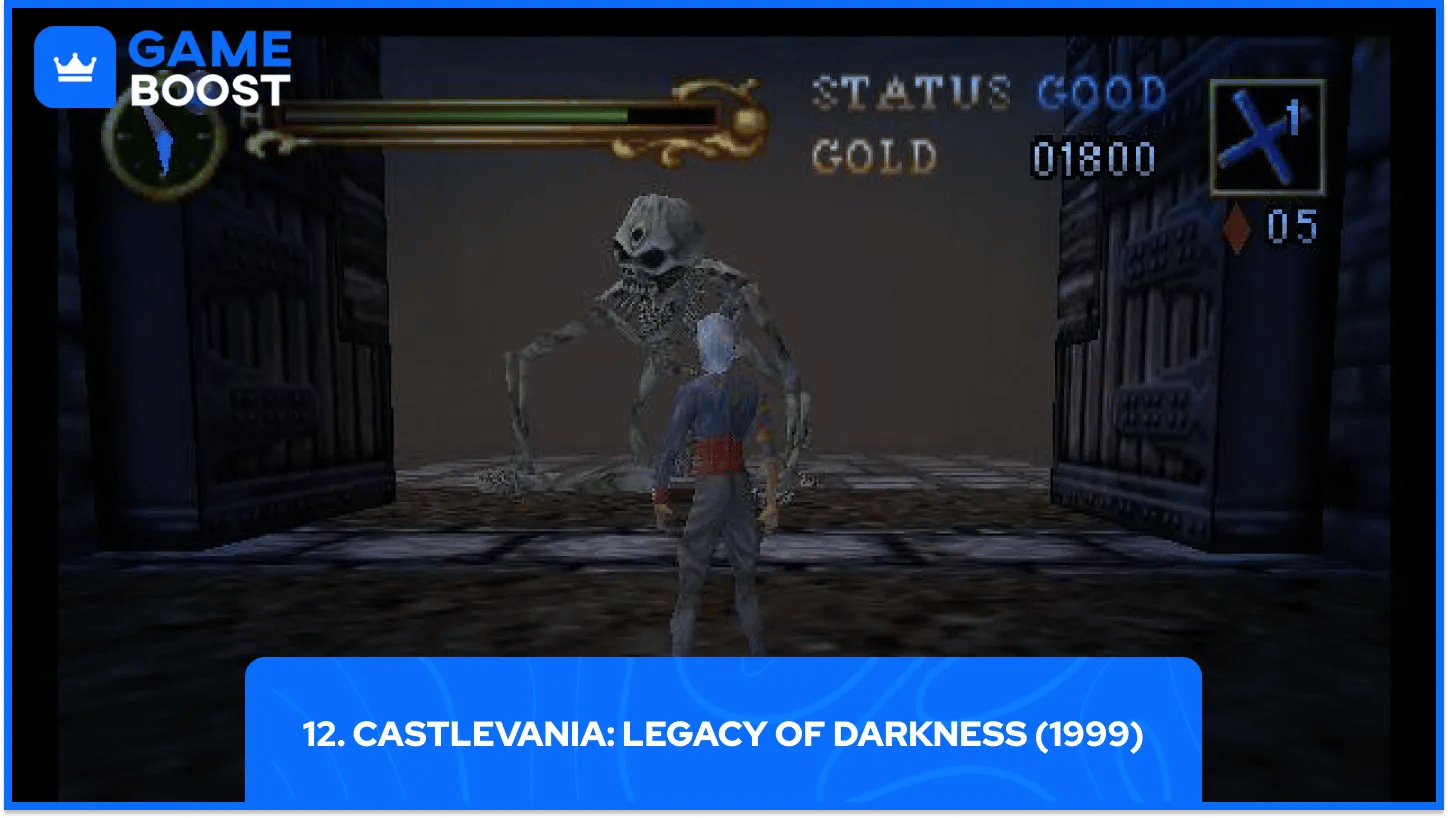
Developer | Konami Computer Entertainment Kobe |
|---|---|
Release Date | December 8, 1999 (North America) |
Players | Single-player |
Platforms | Nintendo 64 |
Protagonist | Cornell, with Henry Oldrey, Reinhardt Schneider and Carrie Fernandez unlockable |
Legacy of Darkness is an expanded take on Castlevania 64 that adds a prequel story. Cornell, a man who can turn into a wolf, hunts Dracula's cult in 1844 to save his sister. Finishing his quest unlocks Henry Oldrey, who gets seven in-game days to rescue six children, and later remixed versions of Reinhardt's and Carrie's campaigns.
With the Expansion Pak plugged in, the game runs in a higher resolution at the cost of frame rate. It fixes some of the original's pacing problems and keeps most of its camera trouble. Like its predecessor, it has an unclear place in the official timeline and has never been re-released.
My Verdict: The definitive 3D Castlevania of its era, which says more about the era than the game. For N64 collectors only.
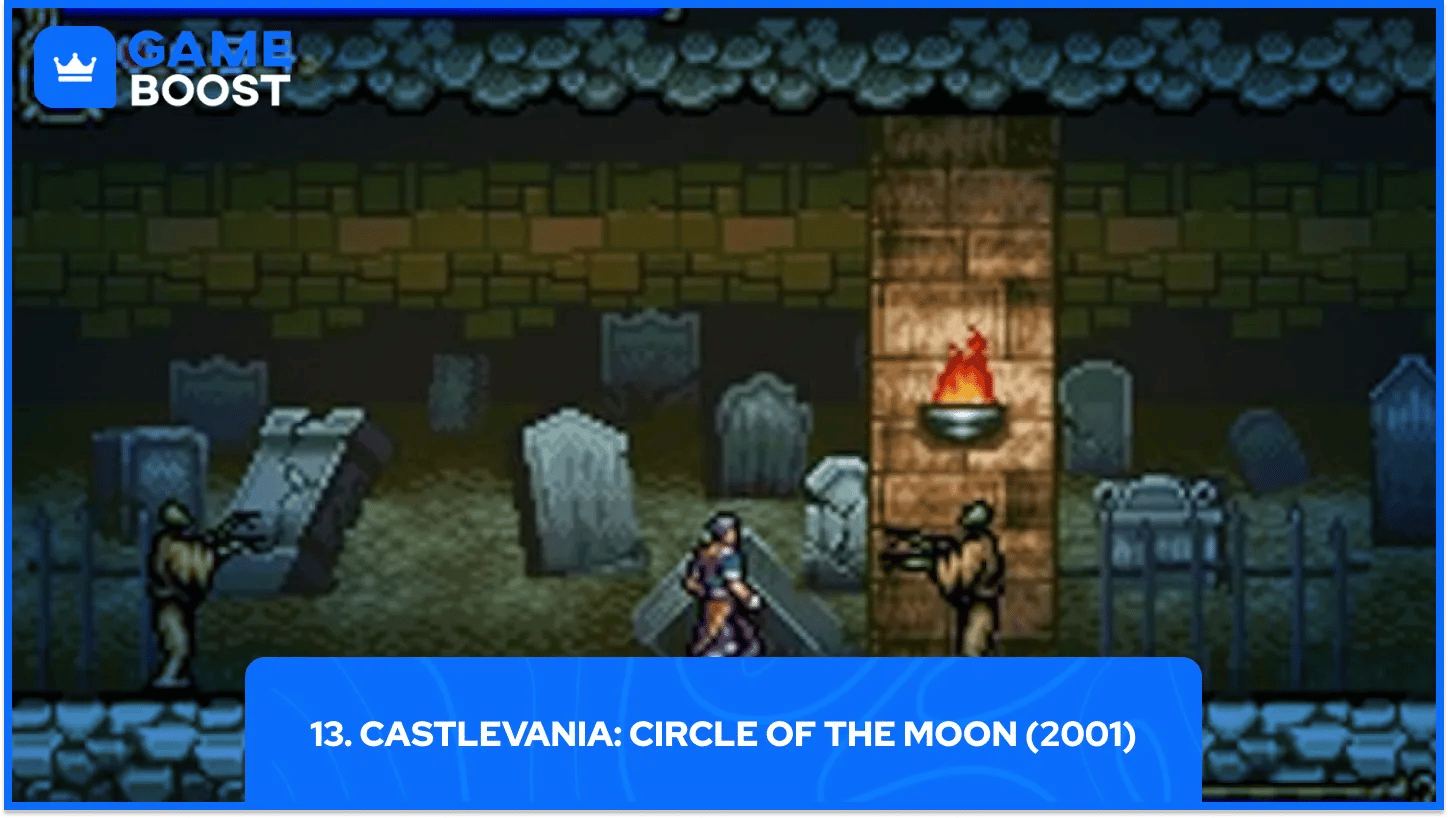
Developer | Konami Computer Entertainment Kobe |
|---|---|
Release Date | March 21, 2001 (Japan), June 11, 2001 (North America) |
Players | Single-player |
Platforms | Game Boy Advance, Wii U Virtual Console, Castlevania Advance Collection (Switch, PS4, Xbox One, PC) |
Protagonist | Nathan Graves |
Circle of the Moon launched with the Game Boy Advance and brought Symphony-style exploration to a handheld for the first time. Nathan Graves chases Dracula's servant Camilla through a castle in 1830, and the Dual Set-Up System lets you pair 10 Action cards with 10 Attribute cards for 100 combinations. Enemies drop those cards at random, which makes collecting them a grind.
It sold over 500,000 copies by July 2001. The dark color palette was hard to see on the original unlit Game Boy Advance screen. Konami left it off the 2002 timeline, and Igarashi later said its team had made it as a standalone game. It's still a strong Metroidvania, and I'd call it the toughest of the GBA trio. You can play it today in the Castlevania Advance Collection.
My Verdict: Tough, rewarding and better than its canon status suggests. Ignore the card grind and enjoy the castle.
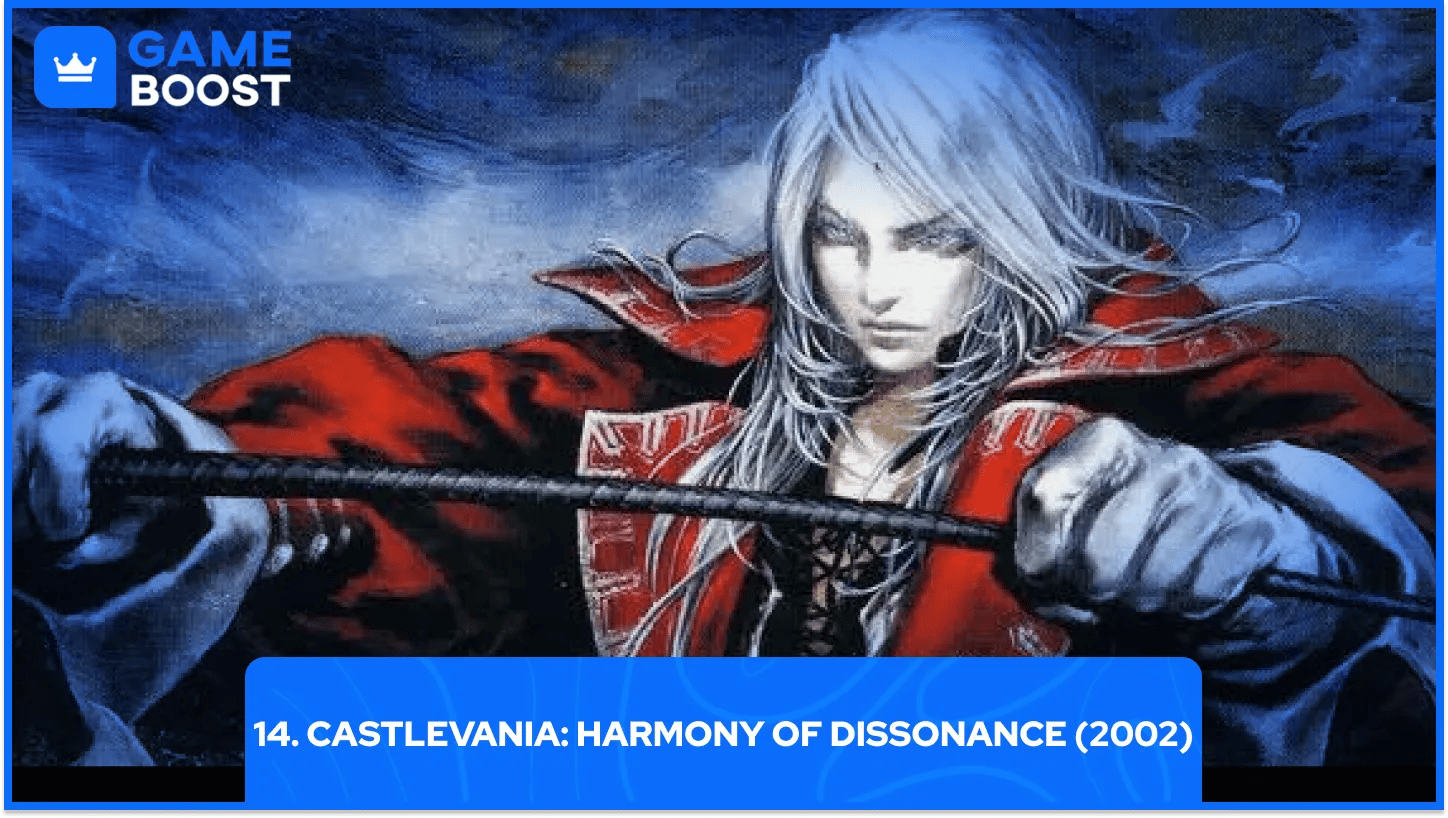
Developer | Konami Computer Entertainment Tokyo |
|---|---|
Release Date | June 6, 2002 (Japan), September 17, 2002 (North America) |
Players | Single-player |
Platforms | Game Boy Advance, Wii U Virtual Console, Castlevania Advance Collection (Switch, PS4, Xbox One, PC) |
Protagonist | Juste Belmont |
Igarashi produced and wrote Harmony of Dissonance, which stars Simon's grandson Juste Belmont in 1748. Juste searches for his kidnapped childhood friend Lydie with his best friend Maxim Kischine, and the map hides two parallel castles that you switch between. Combining a sub-weapon with one of five spell books gives you fused magic attacks.
The sprites are big and bright, so Circle of the Moon's dark-screen problem is gone. The soundtrack is the weak spot, with thin, buzzy music that critics flagged at launch. The best ending unlocks Maxim Mode, and the Konami Code gives you an 8-bit Simon in Boss Rush.
My Verdict: Quick, flashy and easy. A good warm-up before Aria of Sorrow, but turn the music down.
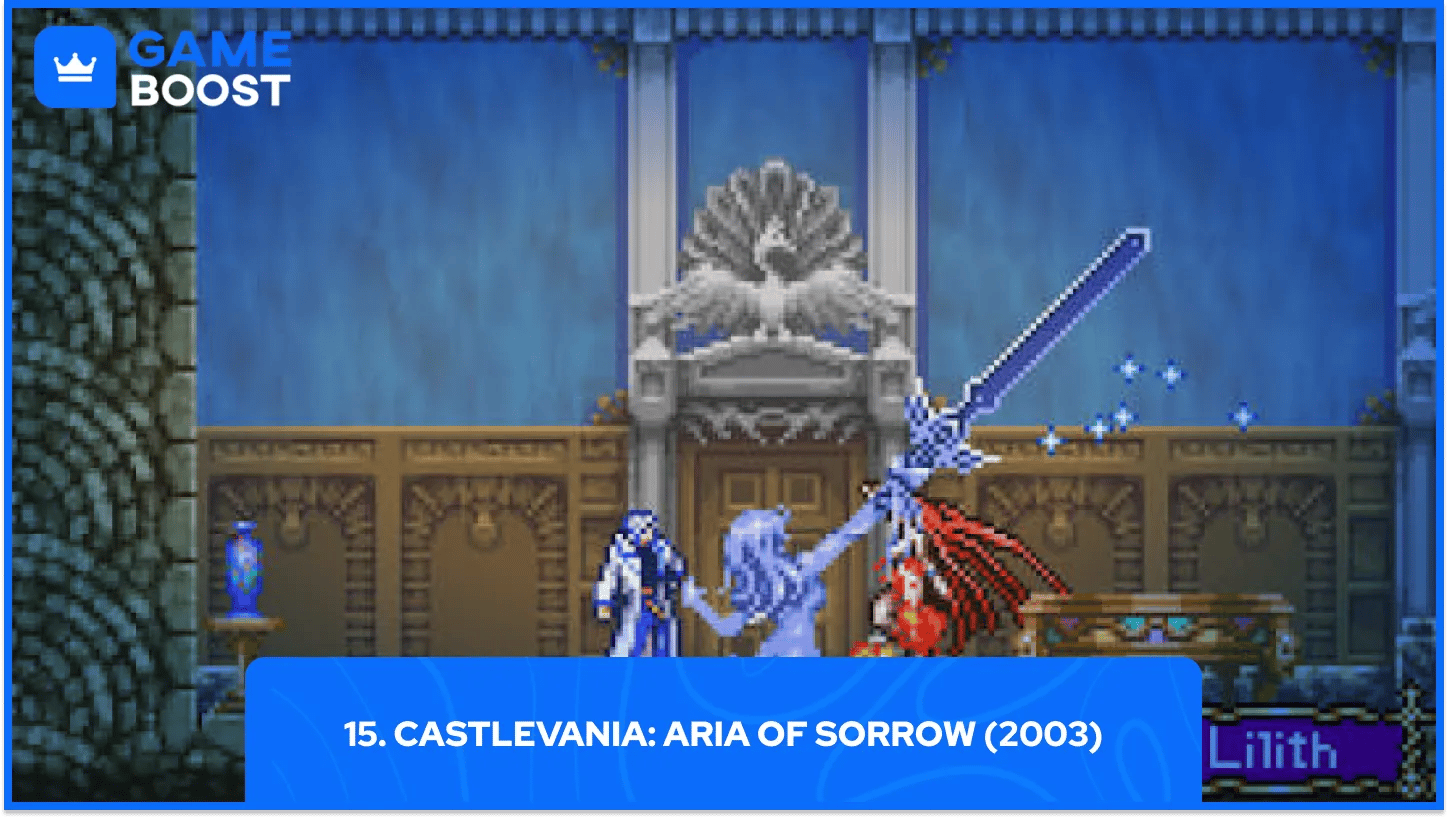
Developer | Konami Computer Entertainment Tokyo |
|---|---|
Release Date | May 6, 2003 (North America) |
Players | Single-player |
Platforms | Game Boy Advance, Castlevania Advance Collection (Switch, PS4, Xbox One, PC) |
Protagonist | Soma Cruz, with Julius Belmont unlockable |
Aria of Sorrow jumps to 2035, decades after Dracula's final defeat, when transfer student Soma Cruz is pulled into the castle during a solar eclipse in Japan. The Tactical Soul system lets Soma absorb enemy souls and equip them as attacks, guardians and passive abilities. With around a hundred souls to collect, every enemy is worth fighting again.
The game earned 36 out of 40 from Famitsu, the highest score any Castlevania has received from the magazine. The story carries one of the series' best twists, and clearing the game unlocks Julius Mode. It's the strongest game in the Castlevania Advance Collection, and in my book second only to Symphony of the Night.
My Verdict: The handheld Castlevania to beat. Buy the Advance Collection for this one alone.
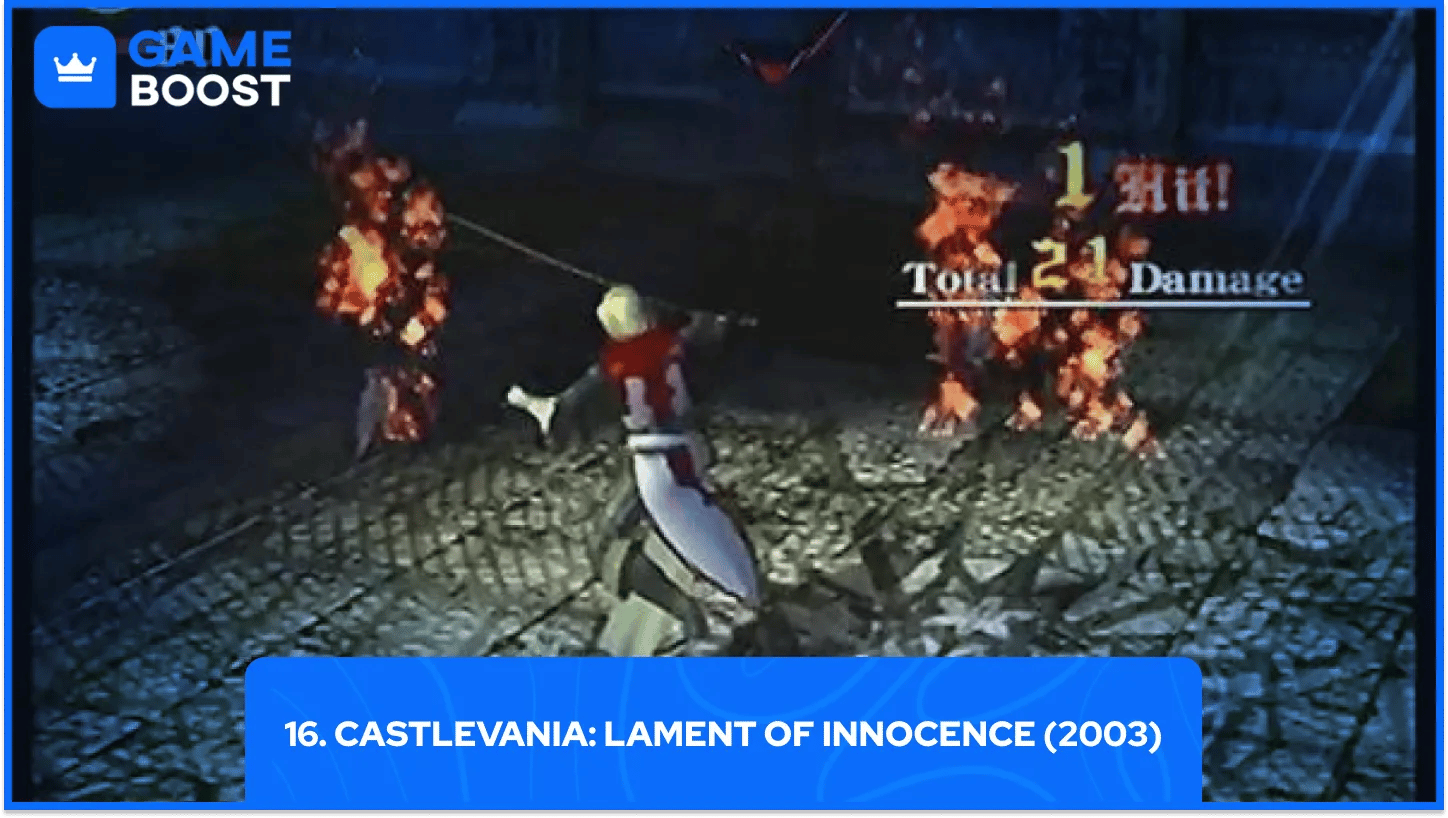
Developer | Konami Computer Entertainment Tokyo |
|---|---|
Release Date | October 21, 2003 (North America) |
Players | Single-player |
Platforms | PS2, PS3 (PS2 Classic) |
Protagonist | Leon Belmont, with Joachim Armster unlockable |
Lament of Innocence is the start of the Castlevania timeline. In 1094, knight Leon Belmont gives up his title to save his fiancée from a vampire, and the Whip of Alchemy he carries becomes the Vampire Killer by the end. Igarashi's team built a 3D action game around five sub-weapons and seven orbs, which combine into special attacks.
The combat feels good, and the origin story fills in a lot of the lore. The castle design lets it down: hub areas lead to long strings of near-identical rooms, and backtracking gets old fast. There is no current-generation version, so you'll need a PS2 or the PS2 Classic version that came to PS3 in 2013.
My Verdict: Worth playing for the lore, less so for the level design. Lore fans should still track it down.
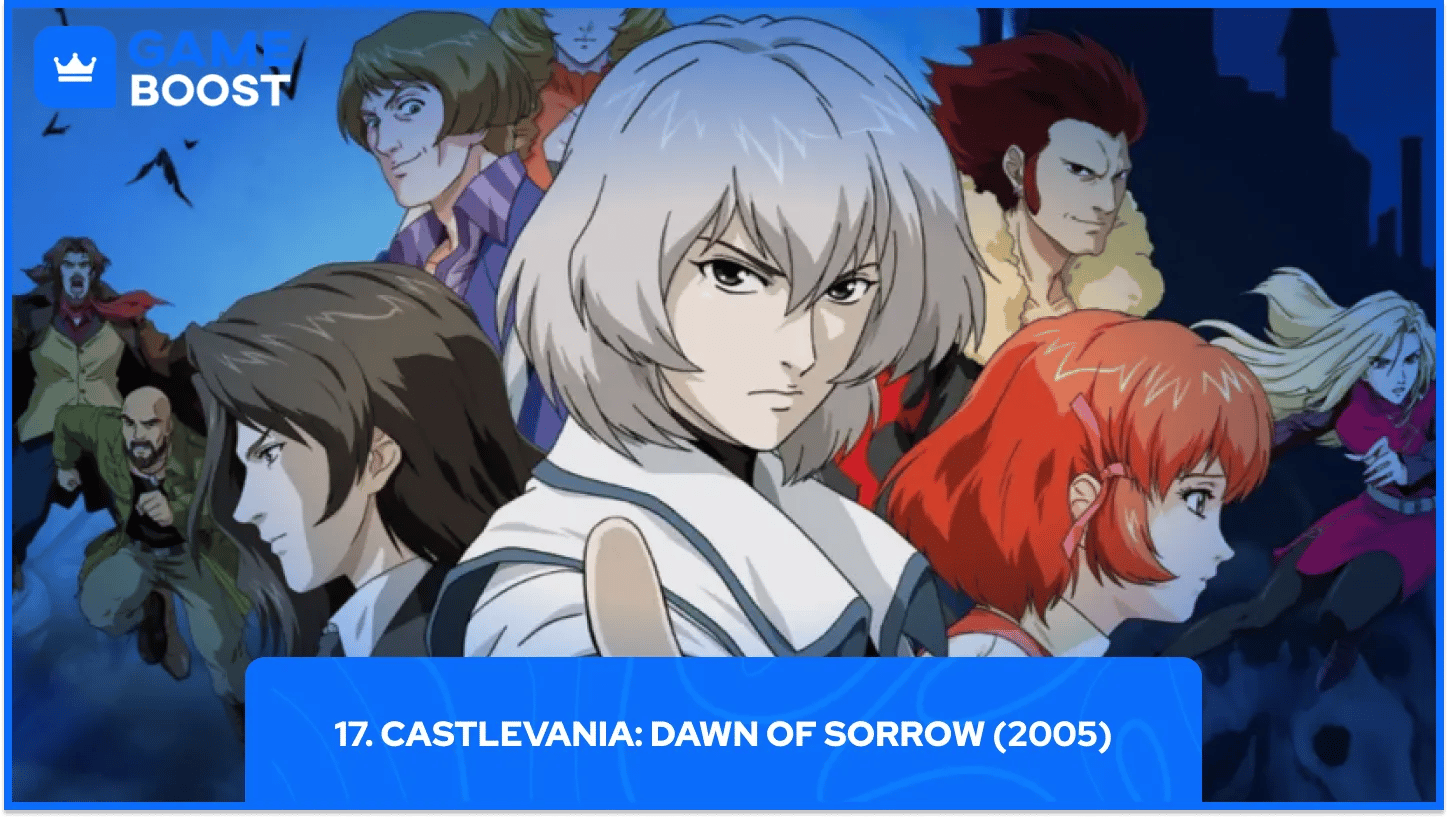
Developer | Konami |
|---|---|
Release Date | August 25, 2005 (Japan), October 4, 2005 (North America) |
Players | Single-player, 2-player wireless (Enemy Set race and trading) |
Platforms | Nintendo DS, Castlevania Dominus Collection (Switch, PS5, Xbox Series X/S, PC) |
Protagonist | Soma Cruz, with Julius Belmont, Yoko Belnades and Alucard unlockable |
A year after Aria, in 2036, a cult led by Celia Fortner wants to raise a new dark lord, and Soma ends up fighting through a replica of Dracula's castle. The Tactical Soul system returns, now with weapon fusion through Yoko's shop and a Doppelganger soul that swaps two loadouts. Bosses have to be sealed at the end of each fight by drawing a Magic Seal on the DS touchscreen.
Konami swapped Ayami Kojima's gothic art for an anime style, which split fans at the time. The seals can get annoying in later fights, and failing one lets the boss recover. Julius Mode adds a full second campaign with three heroes. You can play it now in the Castlevania Dominus Collection, which bundles all three DS games with Haunted Castle and the new Haunted Castle Revisited.
My Verdict: Aria of Sorrow with more of everything. Play them back to back.
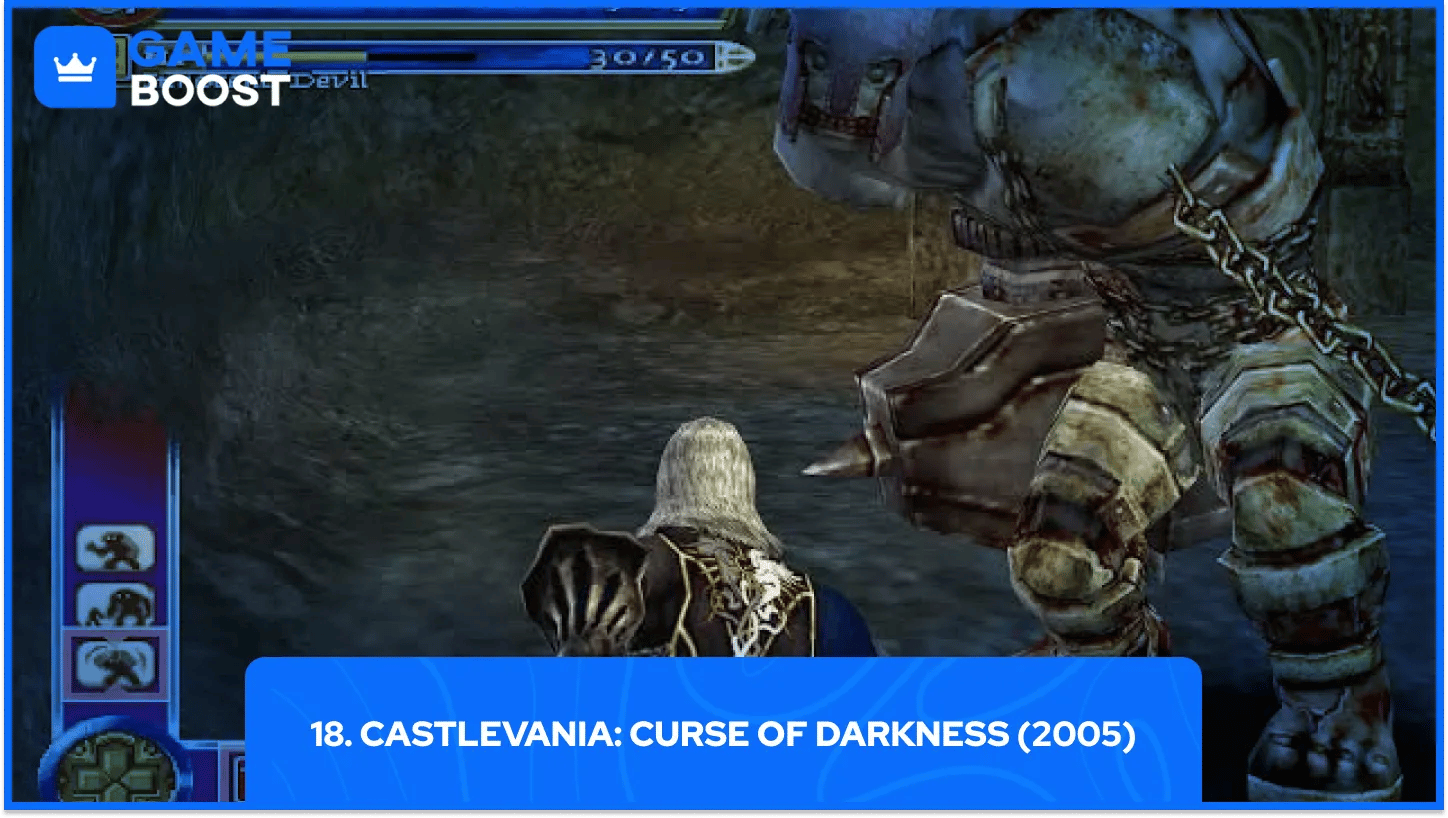
Developer | Konami |
|---|---|
Release Date | November 1, 2005 (North America) |
Players | Single-player |
Platforms | PS2, Xbox |
Protagonist | Hector, with Trevor Belmont unlockable |
Set in 1479, three years after Dracula's Curse, this one follows Hector, a former Devil Forgemaster who served Dracula and now hunts his old rival Isaac. Hector raises Innocent Devils, familiars that level up, evolve into new forms and help solve puzzles. Weapons and armor come from crafting with materials that enemies drop, and some rare ones have to be stolen mid-fight.
The combo-based combat and Michiru Yamane's soundtrack get plenty of praise. Long, bland corridors drag the environments down in places. Netflix's animated series brought in Hector and Isaac from season two and Saint Germain from season three, and all three stayed until the end. Curse of Darkness has never been re-released, so it stays on PS2 and the original Xbox.
My Verdict: The better of the two PS2 games and a fun crafting loop. Hard to recommend over the 2D entries unless you have the hardware.
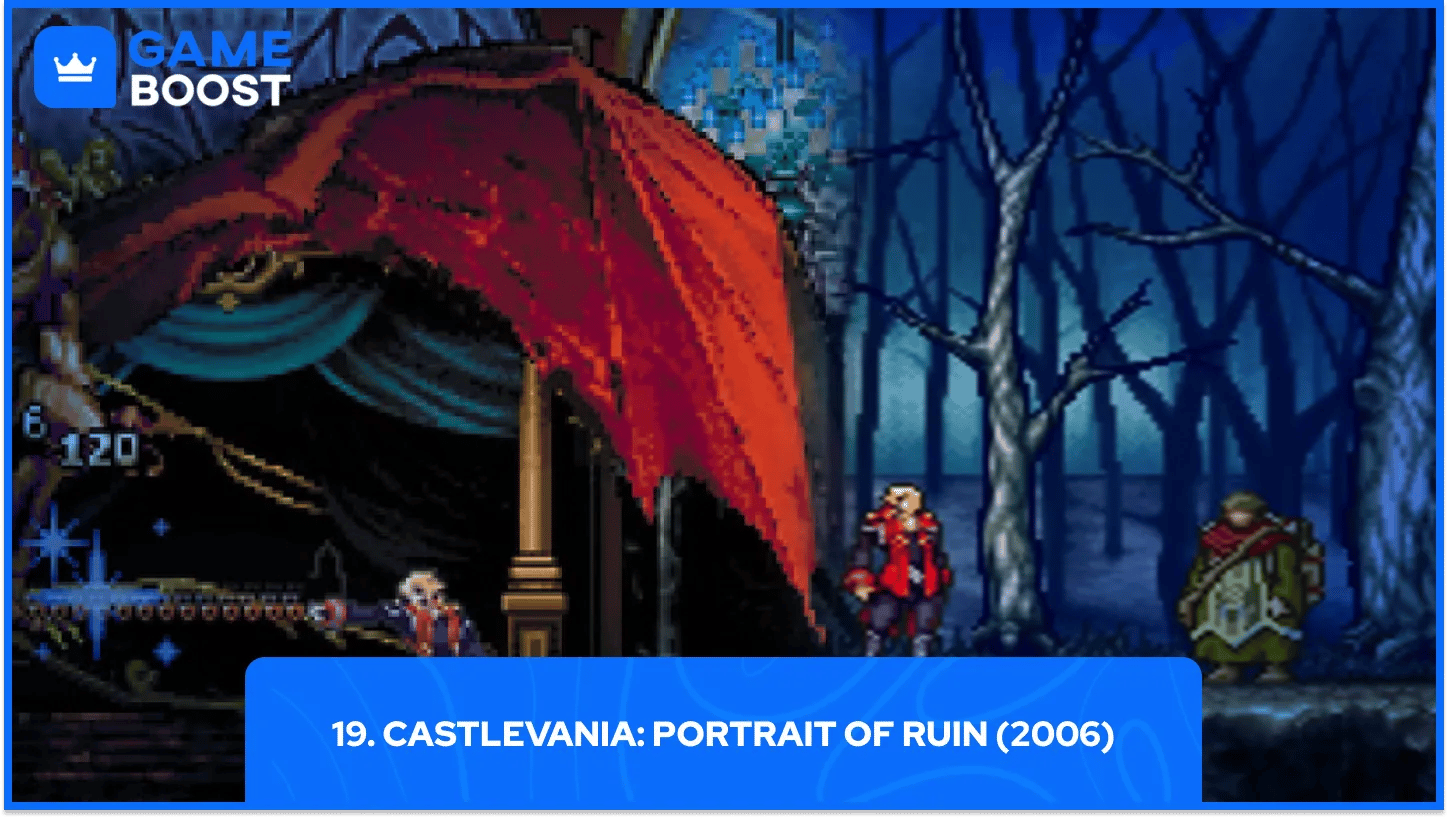
Developer | Konami |
|---|---|
Release Date | November 16, 2006 (Japan), December 5, 2006 (North America) |
Players | 1–2 (local and online co-op) |
Platforms | Nintendo DS, Castlevania Dominus Collection (Switch, PS5, Xbox Series X/S, PC) |
Protagonist | Jonathan Morris and Charlotte Aulin |
Portrait of Ruin picks up the Bloodlines story in 1944, during World War II. Jonathan Morris, son of John Morris, teams up with the young mage Charlotte Aulin, and you can swap between them at any time or have both on screen. Paintings inside the castle act as portals to new areas, from a desert to a haunted circus.
Dual Crush attacks combine both heroes, and the vampire painter Brauner is one of the series' more interesting villains. It was also the first Castlevania with co-op, through a two-player Boss Rush, and a separate Shop mode let players trade items locally or online. Extra modes let you play as Richter and Maria or the Lecarde sisters, and it's part of the Dominus Collection.
My Verdict: The most varied DS Castlevania. The two-hero system makes every boss fight more fun.
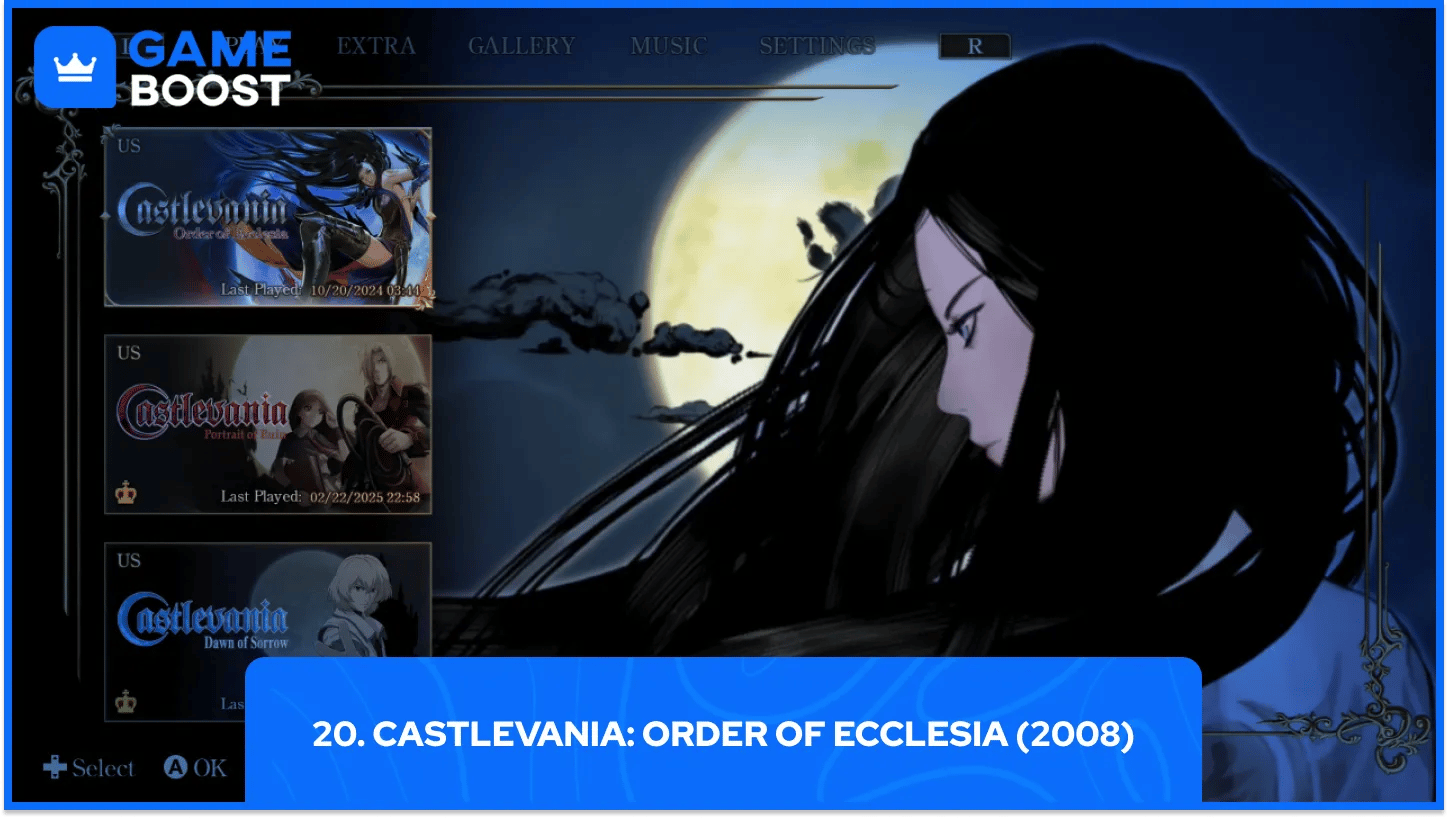
Developer | Konami |
|---|---|
Release Date | October 21, 2008 (North America) |
Players | Single-player |
Platforms | Nintendo DS, Castlevania Dominus Collection (Switch, PS5, Xbox Series X/S, PC) |
Protagonist | Shanoa, with Albus unlockable |
Order of Ecclesia is set in the 19th century, after the Belmonts have vanished. Shanoa, a member of an order formed to fight Dracula, absorbs magic Glyphs and equips them on her arms and back. With over 100 Glyphs and Glyph Union combos, it has the deepest combat of the DS trilogy.
An overworld map links 20 locations, with villagers to rescue and side quests to clear before Dracula's castle opens up. It's one of the hardest modern 2D entries, and bosses punish sloppy play. Albus becomes playable after a clear, and the game links to Castlevania Judgment on Wii for bonus content.
My Verdict: A brilliant, tough final act for 2D Castlevania on Nintendo handhelds. Play it after Dawn of Sorrow.
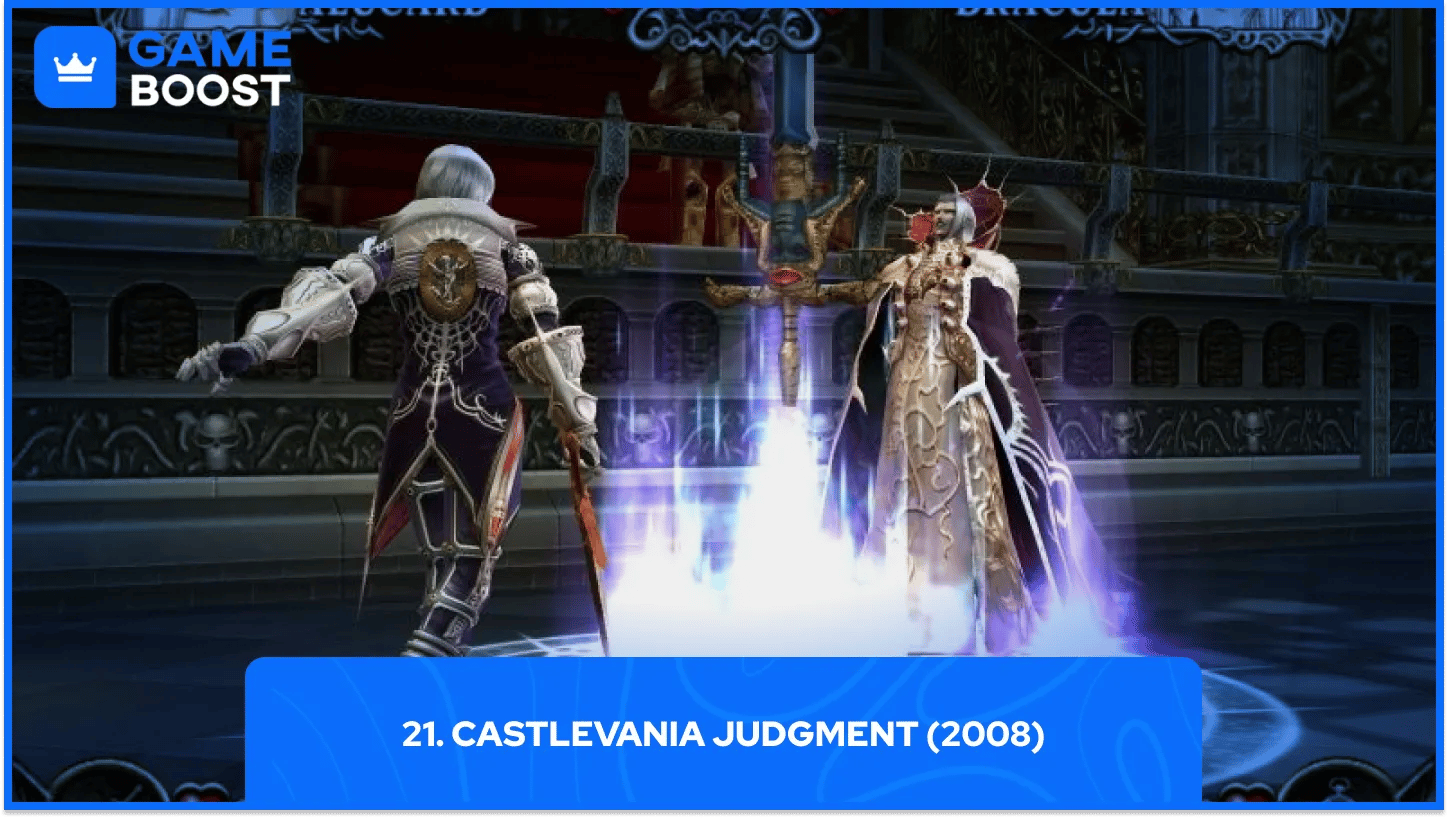
Developer | Eighting (published by Konami) |
|---|---|
Release Date | November 18, 2008 (North America) |
Players | 1–2 |
Platforms | Wii |
Protagonist | Aeon, plus 13 classic heroes and villains |
Castlevania Judgment is a 3D arena fighter that pulls characters out of time. A being called the Time Reaper comes from 10,000 years in the future to destroy Dracula, and the time traveler Aeon gathers fighters from across the timeline to stop him. Death Note artist Takeshi Obata redesigned the 14-character roster, from Simon and Alucard to Shanoa and Dracula.
You attack by swinging the Wii Remote and move with the Nunchuk, which makes precise combos tough. Reviews were harsh, and it holds a Metacritic score of 49. The Order of Ecclesia link unlocks a few extras in both games, but it has never been re-released and its online mode is long gone.
My Verdict: The low point of the series. Watch a trailer for the redesigns and move on.
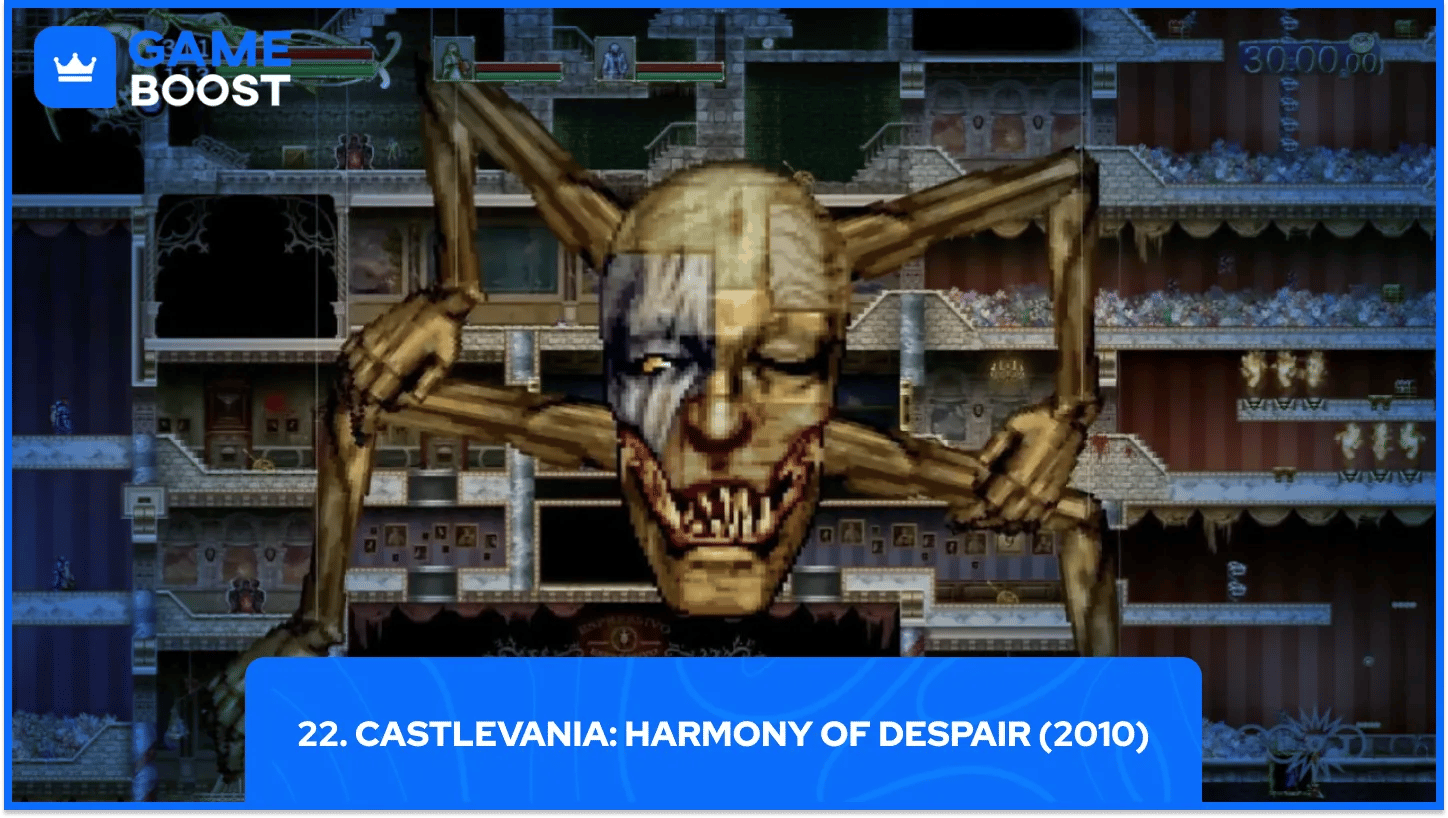
Developer | Konami |
|---|---|
Release Date | August 4, 2010 (Xbox 360), September 27, 2011 (PS3, North America) |
Players | 1–6 (online co-op), 1–4 local co-op on PS3 |
Platforms | Xbox 360, PS3, Xbox One (backward compatibility) |
Protagonist | Alucard, Soma Cruz, Jonathan Morris, Charlotte Aulin and Shanoa |
Harmony of Despair is a co-op crossover that puts an entire castle on one zoomable screen. Up to six players online race through each chapter together, with a boss waiting at the end. Each hero gets stronger in their own way, from Soma's souls to Shanoa's Glyphs, with no shared experience levels.
DLC added Yoko, Julius, Maria, Richter, an 8-bit Simon and Getsu Fūma, plus extra chapters built from older castles. The PS3 version added local co-op for up to four players and bundled some of the DLC. Solo play is dull, and the game only clicks with a full group of friends.
My Verdict: A fun co-op night with friends, and pointless alone. It still runs on Xbox through backward compatibility.
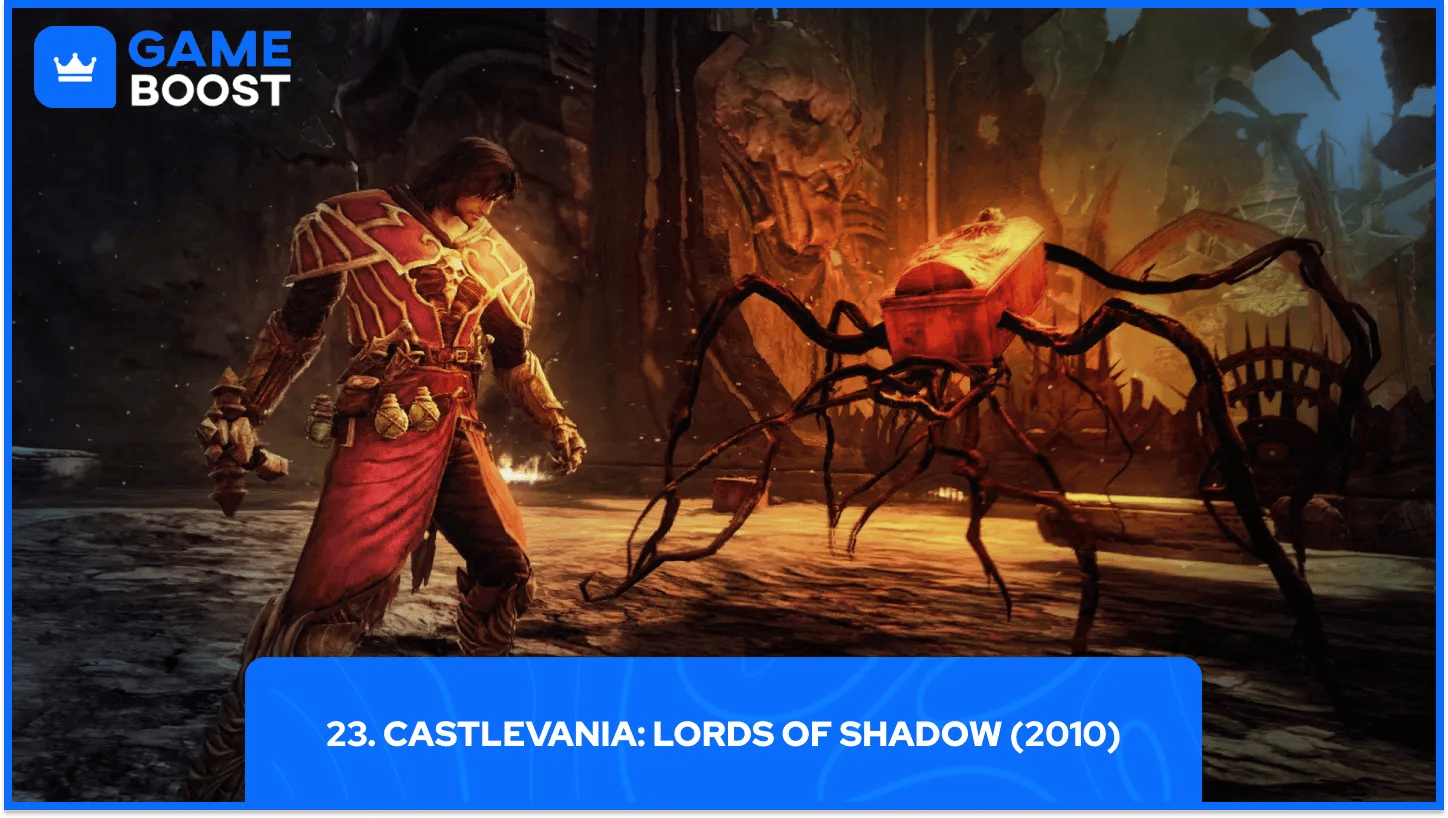
Developer | MercurySteam, with Kojima Productions (published by Konami) |
|---|---|
Release Date | October 5, 2010 (North America) |
Players | Single-player |
Platforms | PS3, Xbox 360, PC (Ultimate Edition), Xbox One and Series X/S (backward compatibility) |
Protagonist | Gabriel Belmont |
Lords of Shadow rebooted the series with its own continuity. In 1047, Gabriel Belmont of the Brotherhood of Light hunts the Lords of Shadow to bring back his murdered wife. Spanish studio MercurySteam built a 3D action game around the Combat Cross, a chain whip, and Light and Shadow magic. Giant Titan bosses recall Shadow of the Colossus, and Hideo Kojima served as a producer.
Robert Carlyle voices Gabriel, and Patrick Stewart narrates and voices Zobek. The game shipped one million copies in North America and Europe by November 2010, and it has since been reported as the best-selling Castlevania, a result that convinced Konami to greenlight sequels. On PC, Castlevania: Lords of Shadow Ultimate Edition from 2013 includes both DLC chapters, Reverie and Resurrection.
My Verdict: A big, gorgeous action game that feels more God of War than Castlevania. The Ultimate Edition is the way to play it.
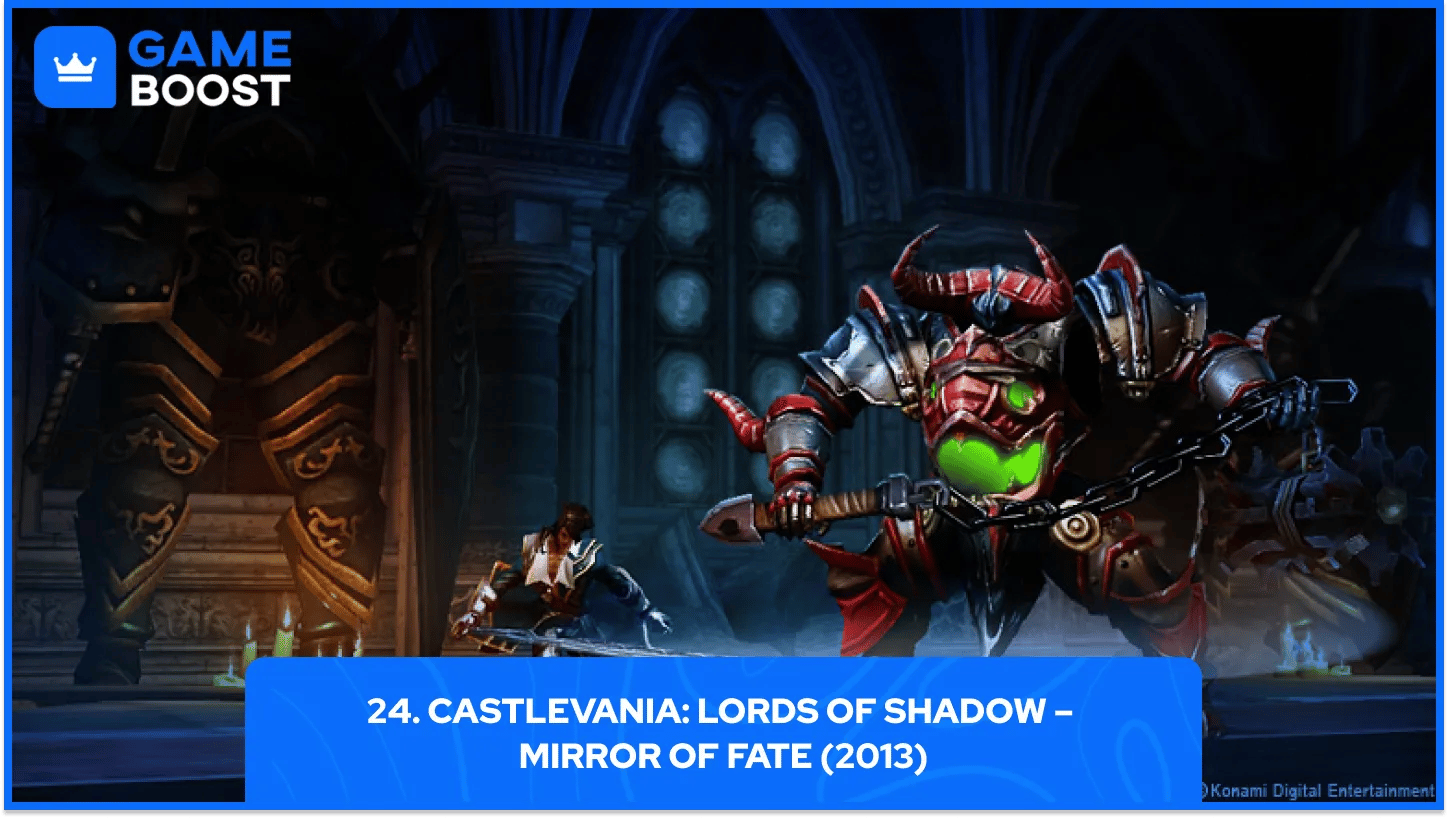
Developer | MercurySteam (published by Konami) |
|---|---|
Release Date | March 5, 2013 (North America, 3DS), October 2013 (Xbox 360 and PS3, HD), March 27, 2014 (PC, HD) |
Players | Single-player |
Platforms | Nintendo 3DS, Xbox 360, PS3, PC, Xbox One (backward compatibility) |
Protagonist | Simon Belmont, Alucard and Trevor Belmont |
Mirror of Fate bridges the two Lords of Shadow console games with a 2.5D side-scroller. The story splits into acts for Trevor Belmont, Alucard and Simon Belmont, with Gabriel himself in the prologue. Trevor's act comes first in the story, and Simon's is set about 25 years after Lords of Shadow. Its big reveals tie the three heroes to Gabriel's fate.
The return to side-scrolling exploration pleased classic fans on paper. In practice, the exploration feels fragmented, and the combat leans on the 3D game's combo system, which doesn't quite fit. Reviews landed in the low 70s. Mirror of Fate HD later brought it to PC and consoles with sharper visuals.
My Verdict: Play it for the story between Lords of Shadow 1 and 2. Grab the HD version and skip the 3DS one.
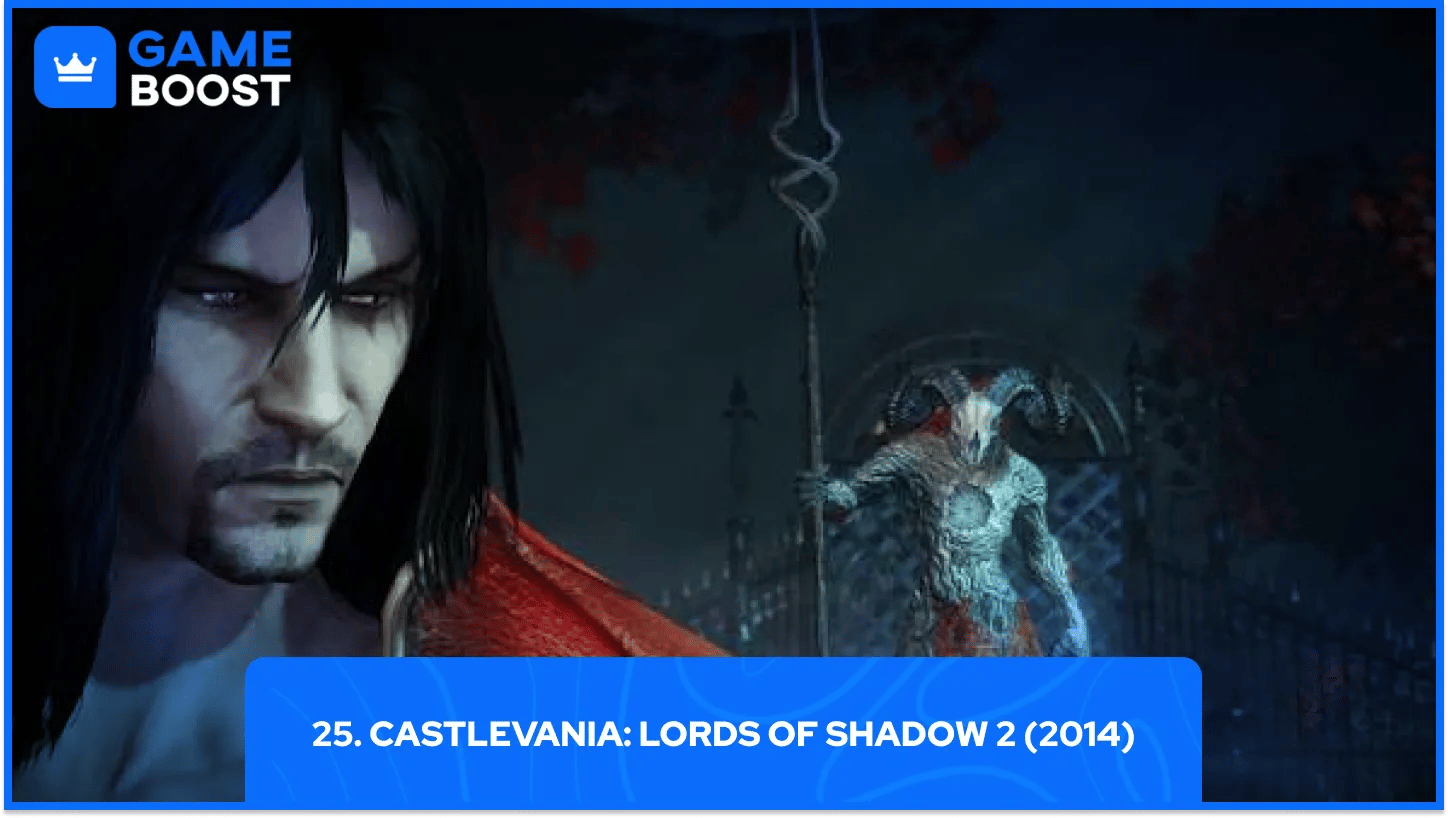
Developer | MercurySteam (published by Konami) |
|---|---|
Release Date | February 25, 2014 (North America) |
Players | Single-player |
Platforms | PS3, Xbox 360, PC, Xbox One and Series X/S (backward compatibility) |
Protagonist | Dracula (Gabriel Belmont), with Alucard in the Revelations DLC |
Gabriel, now Dracula, wakes up centuries later in a modern-day city built over his castle. Zobek offers him the Vampire Killer, the one relic that can end his cursed life, if he stops Satan's acolytes from bringing their master back. Lords of Shadow 2 swaps the first game's linear levels for an open world, a free camera and three weapons: the Shadow Whip, the Void Sword and the Chaos Claws.
The castle sections are the best part, and the modern city is the weakest. Forced stealth segments, where Dracula turns into a rat, drew heavy criticism. Director Enric Álvarez said it sold well, though less than the first game. The Revelations DLC, released March 25, 2014, puts you in control of Alucard just before the main story.
My Verdict: A satisfying end to Gabriel's story with frustrating detours. Play it straight after Mirror of Fate.
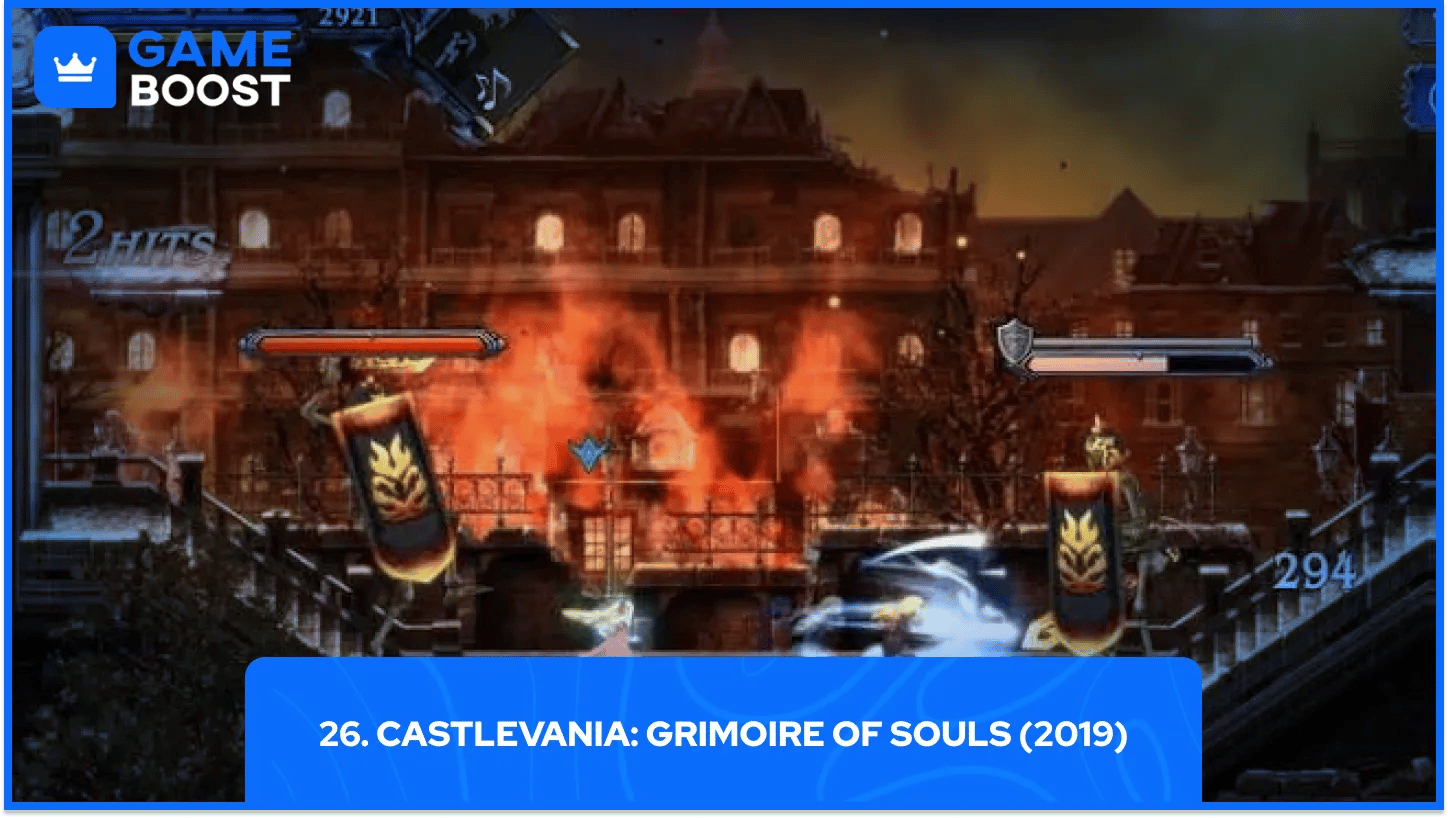
Developer | Konami |
|---|---|
Release Date | September 2019 (Canada soft launch), September 17, 2021 (worldwide, Apple Arcade), service ended September 3, 2026 |
Players | Single-player, online co-op and versus |
Platforms | iPhone, iPad, Mac, Apple TV (Apple Arcade, no longer available) |
Protagonist | Alucard, Simon Belmont, Charlotte Aulin, Shanoa, Maria Renard and more |
Grimoire of Souls started as a free-to-play mobile game. Konami soft-launched it in Canada in 2019, shut it down in September 2020, and relaunched it on Apple Arcade in 2021 without in-app purchases. The plot follows Genya Arikado after a message warns him that Dracula has returned, and heroes from across the series step into magic grimoires to fight the monsters inside.
It plays as a side-scrolling action RPG with short missions, and Konami kept adding heroes through updates. Konami delisted it from Apple Arcade on August 20, 2026 and ended the service on September 3, 2026, so there is no way left to play it.
My Verdict: A decent mobile spin-off that is now gone for good. It's here for completeness only.
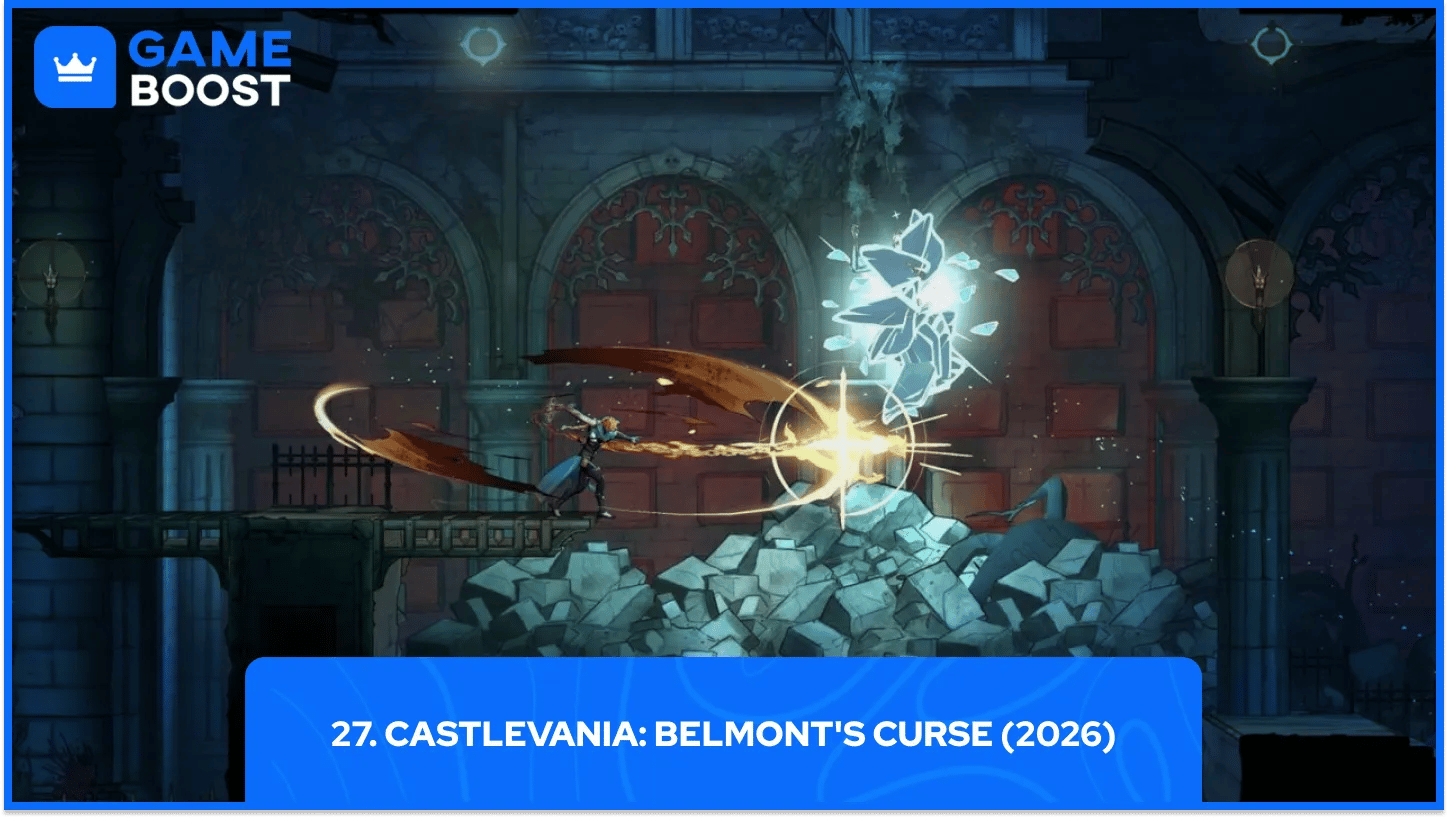
Developer | Evil Empire, with Motion Twin advising (published by Konami) |
|---|---|
Release Date | October 15, 2026 |
Players | Single-player |
Platforms | PS5, Xbox Series X/S, Nintendo Switch, PC |
Protagonist | Rose Belmont |
Castlevania: Belmont's Curse is the first original 2D game on the main timeline since Order of Ecclesia in 2008. Set in Paris in 1499, 23 years after Dracula's Curse, it follows Rose Belmont, Trevor's daughter, as demons overrun the city and a castle appears in its heart. Evil Empire, the studio behind The Rogue Prince of Persia, made it with Motion Twin in an advisory role, and the two studios earlier teamed up on Dead Cells: Return to Castlevania.
Konami describes it as a freeform 2D action-exploration game rather than a roguelike. Rose uses the Vampire Killer for combat and swinging traversal, and defeated bosses such as Death, Medusa and Carmilla turn into Arcana that grant new spells and moves. The PlayStation Store page lists weapons across seven categories and Relics with offensive and defensive effects, which you mix into your own playstyle.
A Midnight Edition adds Trevor and Sypha style costumes, a Family's Grace Relic and a digital art and sound gallery. Reviews have been strong, with an 86 on Metacritic for the PS5 version. Critics praise the combat and movement, and a few, IGN among them, say it plays things safe and loses some of the series' old charm.
My Verdict: The best new Castlevania since Order of Ecclesia. If you loved the Igarashi era, buy it.
Castlevania's release history is really two series. The first ten years are about precise, stage-based action, and everything after 1997 lives in Symphony of the Night's shadow. Your favorite era decides where you should start, and the collections make it cheap to try both before committing.
Most of the 3D games are stuck on old hardware. Castlevania 64, Legacy of Darkness, Curse of Darkness and Judgment have never been re-released, and Lament of Innocence only came back as a PS2 Classic on PS3. The Lords of Shadow trilogy is easier to reach and works best as its own three-game story.
Belmont's Curse fills an empty spot in the timeline in 1499, two decades after Curse of Darkness. It also gives the Belmonts their first new lead in years and shows Konami still trusts outside studios with the series. If sales hold up, a follow-up from Evil Empire seems likely.
For a first run, play Rondo of Blood, Symphony of the Night and Aria of Sorrow back to back, then jump to Belmont's Curse. That route covers the best of the series in four games.
All Castlevania Games Collection
View all GameBoost Game Keys
View all GameBoost Accounts
View all GameBoost Boosting Services
View all GameBoost Currencies
View all GameBoost Gift Cards
View all GameBoost Top Ups
View all GameBoost Items
“ A former sports journalist and editor, Patrik joined Gameboost SEO team in 2026. He has spent most of his life playing Football Manager, but his sphere of interests spreads through whole gaming universe.”


