

•Patrik Mršnik• 16 min read
Game Keys
The Final Fantasy games in order stretch from a 1987 Famicom cartridge to an HD-2D release this October, with 16 numbered entries in between. Around them sit direct sequels, a three-part remake of Final Fantasy VII, an MMORPG that rebuilt itself from scratch, and a long tail of spin-offs. Square Enix says the series has passed 200 million units sold.
This guide covers 30 releases, all the mainline games plus the bigger spin-offs, in Final Fantasy release order. Remasters such as The Zodiac Age, Crisis Core Reunion, and The Ivalice Chronicles are folded into the game they remaster, and mobile-only titles are left out. You can grab keys for plenty of these in our Final Fantasy games collection.
# | Game | Released | Type | Place in the story |
|---|---|---|---|---|
1 | 1987 | Mainline | Standalone world (Stranger of Paradise tells its prequel) | |
2 | 1988 | Mainline | Standalone world | |
3 | 1990 | Mainline | Standalone world | |
4 | 1991 | Mainline | Standalone world | |
5 | 1992 | Mainline | Standalone world | |
6 | 1994 | Mainline | Standalone world | |
7 | 1997 | Mainline | Compilation of FFVII, 2nd | |
8 | 1997 | Spin-off (tactics) | Ivalice, shared with XII | |
9 | 1999 | Mainline | Standalone world | |
10 | 2000 | Mainline | Standalone world | |
11 | 2001 | Mainline | Spira, 1st | |
12 | Final Fantasy XI | 2002 | Mainline (MMORPG) | Standalone world |
13 | 2003 | Direct sequel | Spira, 2nd | |
14 | Dirge of Cerberus: Final Fantasy VII | 2006 | Spin-off (shooter) | Compilation of FFVII, 3rd |
15 | 2006 | Mainline | Ivalice, shared with Tactics | |
16 | 2007 | Spin-off (prequel) | Compilation of FFVII, 1st | |
17 | Dissidia Final Fantasy | 2008 | Spin-off (fighting) | Crossover, non-canon |
18 | 2009 | Mainline | Lightning Saga, 1st | |
19 | 2010 (relaunched 2013) | Mainline (MMORPG) | Standalone world | |
20 | 2011 | Spin-off (action RPG) | Fabula Nova Crystallis, own world | |
21 | 2011 | Direct sequel | Lightning Saga, 2nd | |
22 | 2013 | Direct sequel | Lightning Saga, 3rd | |
23 | 2016 | Spin-off (monster collector) | Crossover, non-canon | |
24 | 2016 | Mainline | Own world, Fabula Nova Crystallis roots | |
25 | 2018 | Spin-off (fighting) | Crossover, non-canon | |
26 | 2020 | Remake (part 1) | Retelling of VII, 1st | |
27 | 2022 | Spin-off (action RPG) | Reimagined prequel to Final Fantasy | |
28 | 2023 | Mainline | Standalone world | |
29 | 2024 | Remake (part 2) | Retelling of VII, 2nd | |
30 | 2026 | Spin-off (HD-2D) | Standalone (Brave Exvius story) |
Want the Final Fantasy chronological order? There isn't a single timeline, since almost every numbered game builds a new world and a new cast. The Final Fantasy VII order runs Crisis Core, then VII (or Remake and Rebirth), then the Advent Children film, then Dirge of Cerberus. Spira goes X into X-2, the Lightning Saga goes XIII, XIII-2 and Lightning Returns, and Tactics and XII share the land of Ivalice. Stranger of Paradise is set before the 1987 original but plays best after it, and everything else stands on its own.
All Final Fantasy Games Collection on Gameboost
Details | Information |
|---|---|
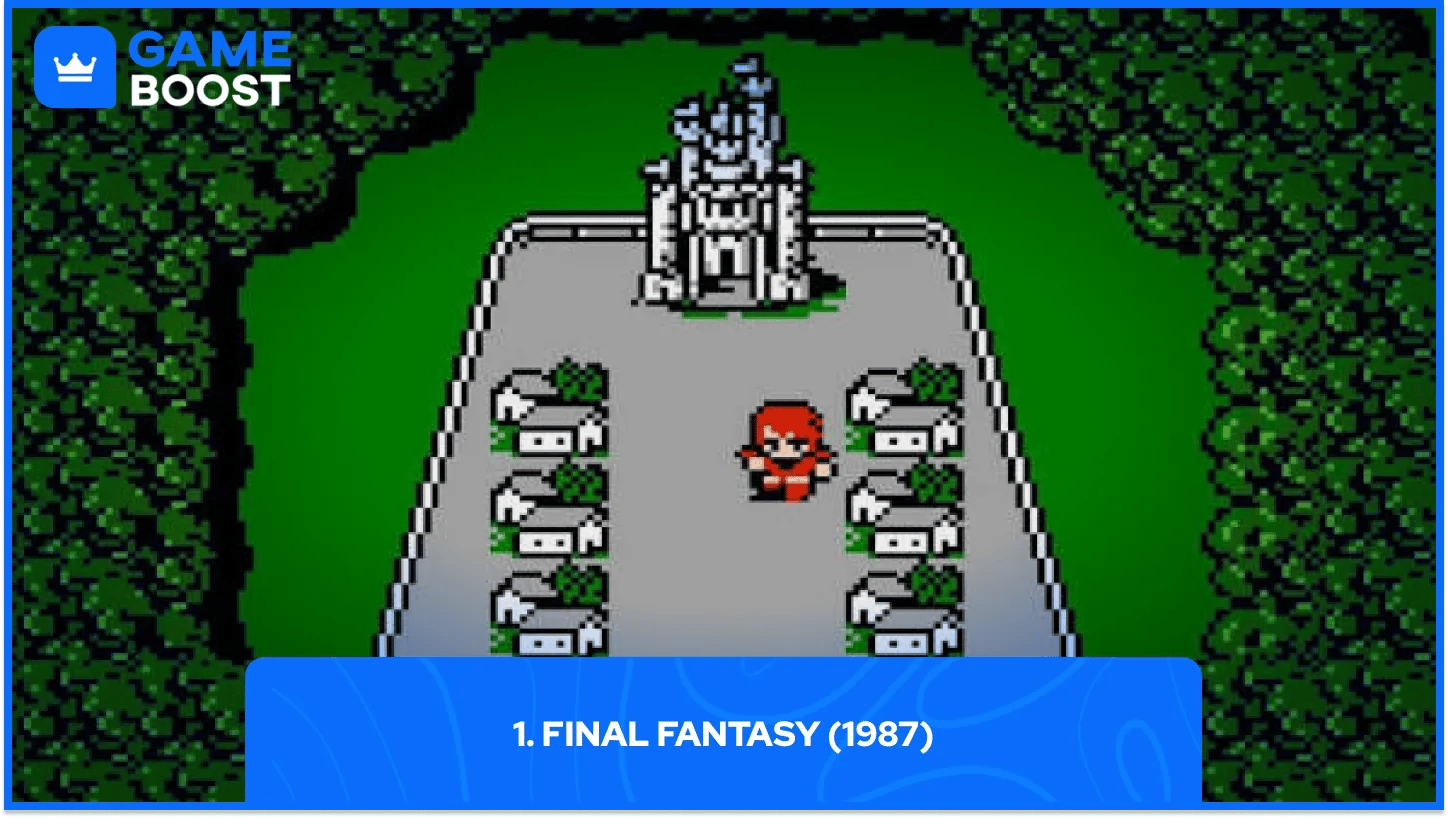
Developer | Square |
Release Date | December 18, 1987 (JP), July 1990 (NA) |
Players | Single-player |
Platforms | Famicom/NES (original); Pixel Remaster on PC, PS4, Switch, Xbox Series X|S, iOS, Android |
Main characters | The four Warriors of Light, Garland, Chaos |
Final Fantasy starts with four nameless Warriors of Light, and four dimmed elemental crystals. You beat the Four Fiends (Lich, Kary, Kraken and Tiamat) to relight Earth, Fire, Water and Wind. Then you travel 2,000 years into the past to break a time loop that Garland, now Chaos, has built around the world.
You build a party from six classes (Fighter, Thief, Black Belt, Red Mage, White Mage, Black Mage), and each one gets a class upgrade later with new sprites, gear, and spells. It has been ported and remade more than a dozen times, and the Pixel Remaster is the cleanest way to play it today.
My Verdict: Simple and still charming. The Pixel Remaster smooths out the old grind, which turns it into a fun weekend history lesson and a good primer for Stranger of Paradise.
Details | Information |
|---|---|
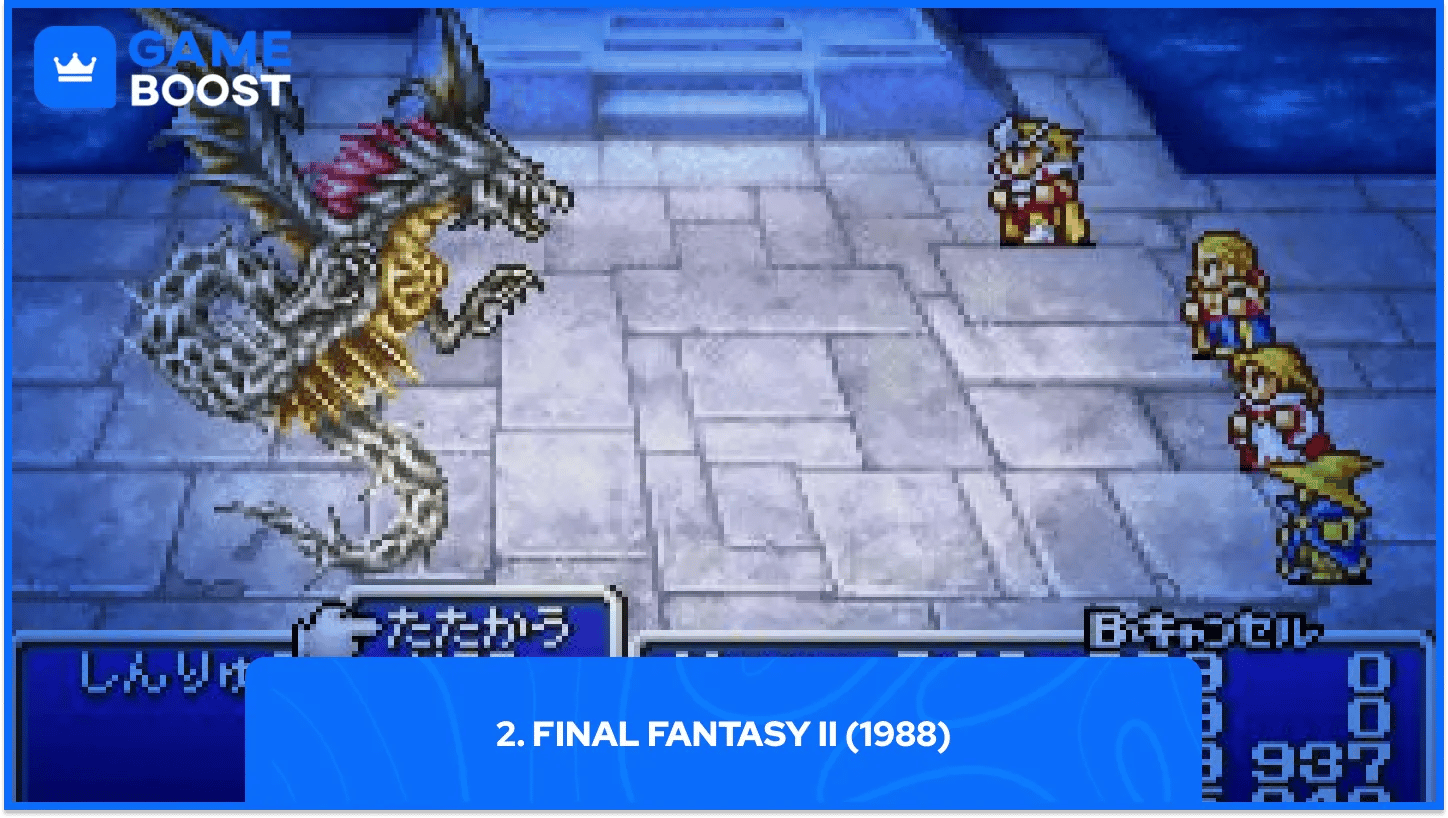
Developer | Square |
Release Date | December 17, 1988 (JP), April 8, 2003 (NA, in Final Fantasy Origins) |
Players | Single-player |
Platforms | Famicom (original); Pixel Remaster on PC, PS4, Switch, Xbox Series X|S, iOS, Android |
Main characters | Firion, Maria, Guy, Leon, the Emperor of Palamecia |
Final Fantasy II swaps the open-ended quest for a war story. The Palamecian Empire is swallowing its neighbors, and orphans Firion, Maria, and Guy join a rebel movement to bring the Emperor down. Maria's brother Leon switches sides along the way, and the Emperor refuses to stay dead.
There are no experience levels at all. Stats and weapon skills climb based on what each character does in battle. A Word Memory system lets you learn key terms and quiz people about them. It also debuted Chocobos, and the first Cid, two things no later numbered Final Fantasy has gone without.
My Verdict: Odd one out of the early games. I found the growth system easy to break and easy to hate, so play it for the history and the story, then move on.
Details | Information |
|---|---|
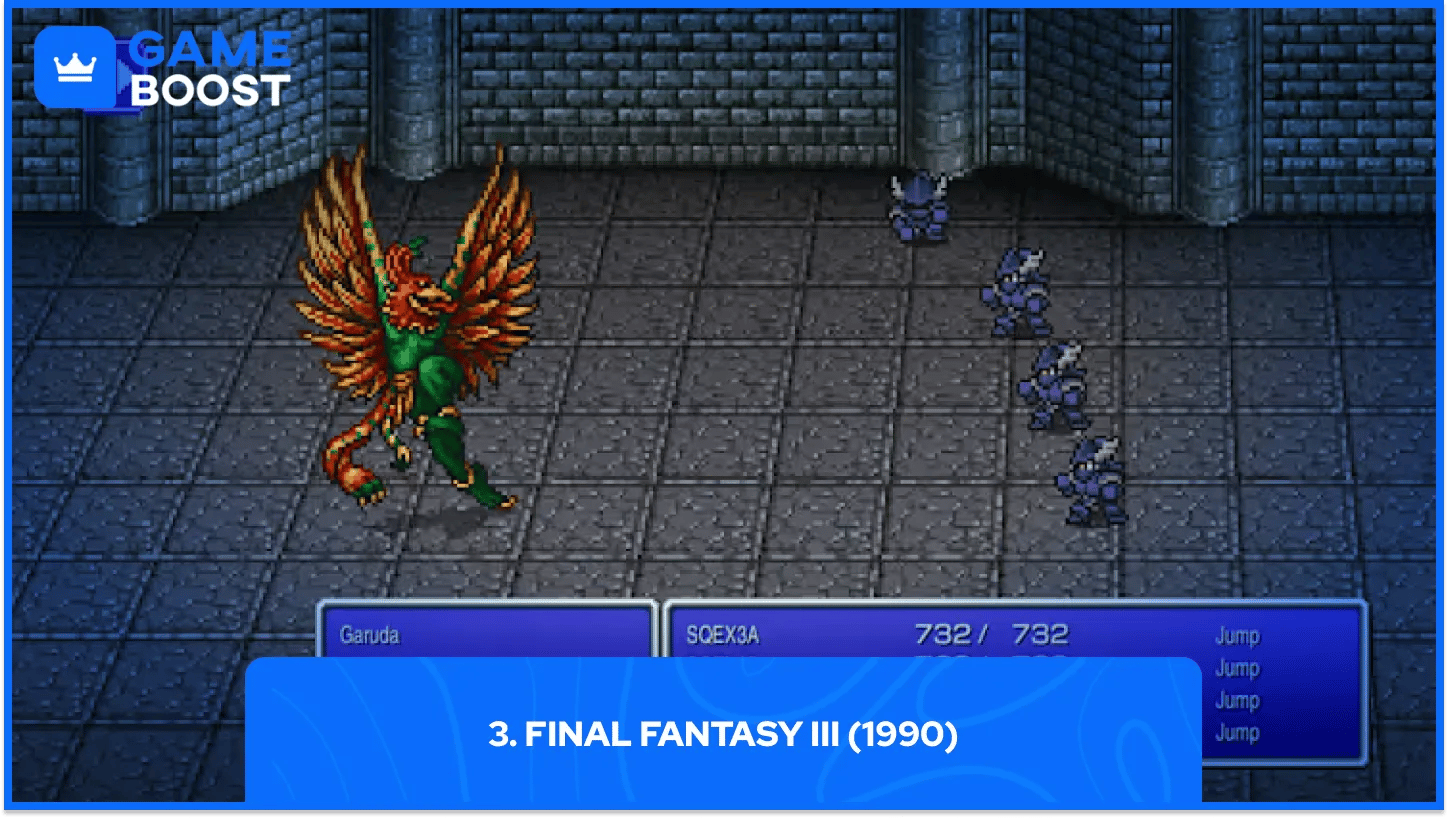
Developer | Square |
Release Date | April 27, 1990 (JP), November 2006 (NA, DS remake) |
Players | Single-player |
Platforms | Famicom (original); 3D remake on DS, PSP, PC and mobile; Pixel Remaster on PC, PS4, Switch, Xbox Series X|S, iOS, Android |
Main characters | Four orphans from Ur (named Luneth, Arc, Refia and Ingus in the 3D remake), Xande, the Cloud of Darkness |
Final Fantasy III opens on the Floating Continent, where four orphans from the village of Ur are chosen by the Wind Crystal. The surface world below has been swallowed by a Flood of Darkness. The kids have to restore the balance between light and dark, facing the wizard Xande and the Cloud of Darkness at the end.
This is where the job system was born. You swap jobs freely and build a party around the dungeon in front of you. Summons and Moogles also show up here for the first time. Western players had to wait for the 2006 DS remake to play it officially, and the 2D original only reached English with the Pixel Remaster.
My Verdict: A big step up from the first two. If you like tinkering with party builds, start your classic run here.
Details | Information |
|---|---|
Developer | Square |
Release Date | July 19, 1991 (JP), November 23, 1991 (NA, as Final Fantasy II) |
Players | Single-player |
Platforms | Super Famicom/SNES (original); 3D remake on DS, PC and mobile; Pixel Remaster on PC, PS4, Switch, Xbox Series X|S, iOS, Android |
Main characters | Cecil Harvey, Kain, Rosa, Rydia, Golbez |
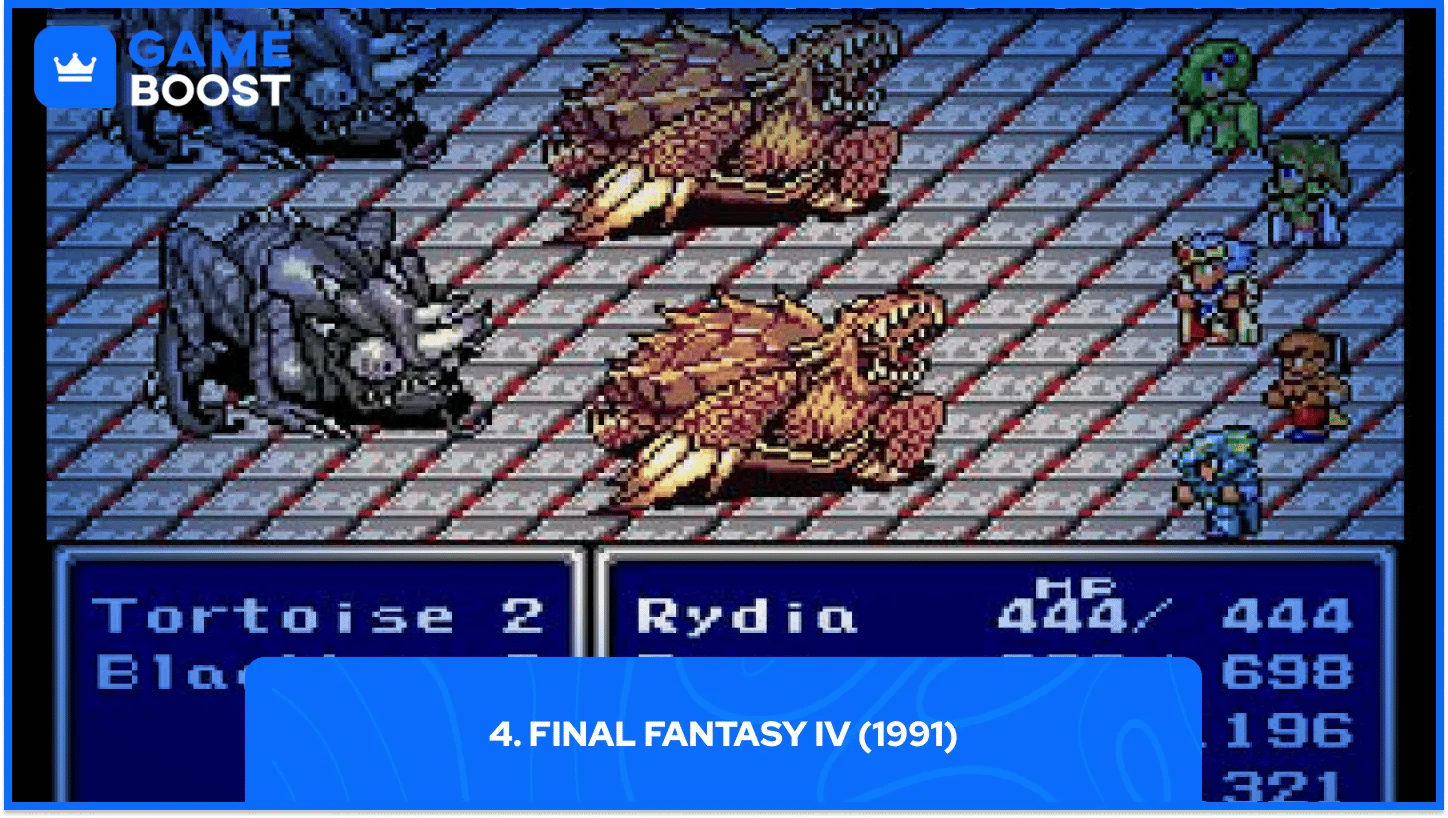
Final Fantasy IV follows Cecil, a dark knight who captains Baron's airship fleet, the Red Wings. After one crystal raid too many, he turns on his king, sheds his dark armor to become a paladin, and fights Golbez for the crystals. The story climbs from the surface world to a dwarven underworld and finally to the moon.
It introduced the Active Time Battle (ATB) system, which kept battles moving in real time for the next decade of games. Each character has a fixed role, so the cast carries the story rather than a class menu. A sequel, The After Years, picks up the story 17 years later.
My Verdict: This is where Final Fantasy starts to feel like a modern story. It moves fast and it's my pick for anyone who wants one classic before jumping to VI.
Details | Information |
|---|---|
Developer | Square |
Release Date | December 6, 1992 (JP), fall 1999 (NA, in Final Fantasy Anthology) |
Players | Single-player |
Platforms | Super Famicom (original); Pixel Remaster on PC, PS4, Switch, Xbox Series X|S, iOS, Android |
Main characters | Bartz Klauser, Lenna, Galuf, Faris, Krile, Exdeath |
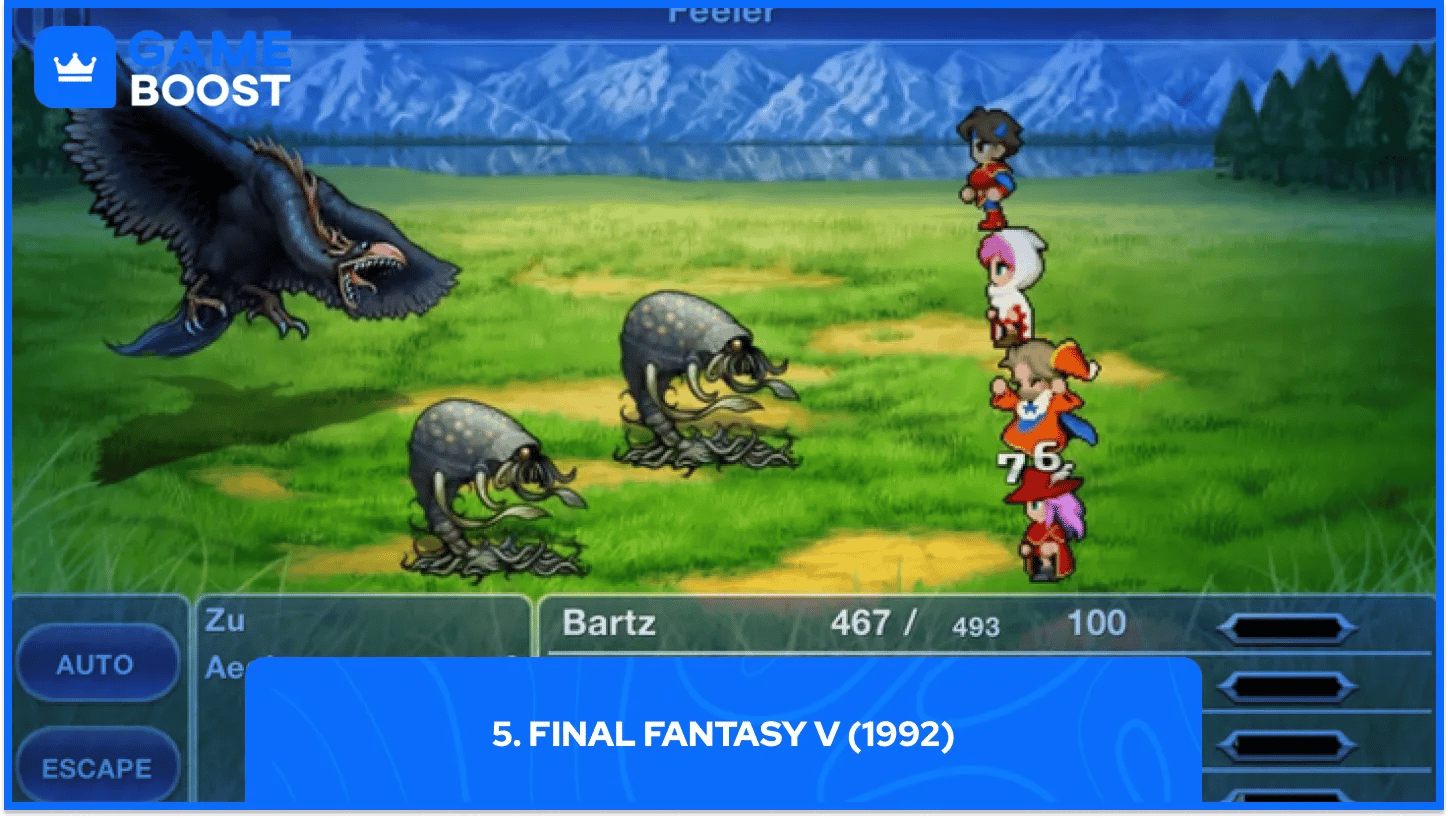
Final Fantasy V starts with a meteor. It throws the wanderer Bartz together with Princess Lenna, the amnesiac Galuf, and the pirate captain Faris, just as the overworked crystals begin to shatter. Behind it all sits Exdeath, who wants to claim the Void, a force sealed away when the world was split in two.
The job system returns in its best form. The original and the Pixel Remaster have 22 jobs (the Game Boy Advance version adds four), and abilities from a mastered job carry over to another one. V also gave the series its first visible ATB gauge.
My Verdict: Light on story and great as a playground. If you love breaking a game with silly job combos, V is the one you'll replay.
Details | Information |
|---|---|
Developer | Square |
Release Date | April 2, 1994 (JP), October 1994 (NA, as Final Fantasy III) |
Players | Single-player |
Platforms | Super Famicom/SNES (original); Pixel Remaster on PC, PS4, Switch, Xbox Series X|S, iOS, Android |
Main characters | Terra Branford, Locke, Celes, Edgar, Sabin, Kefka Palazzo |
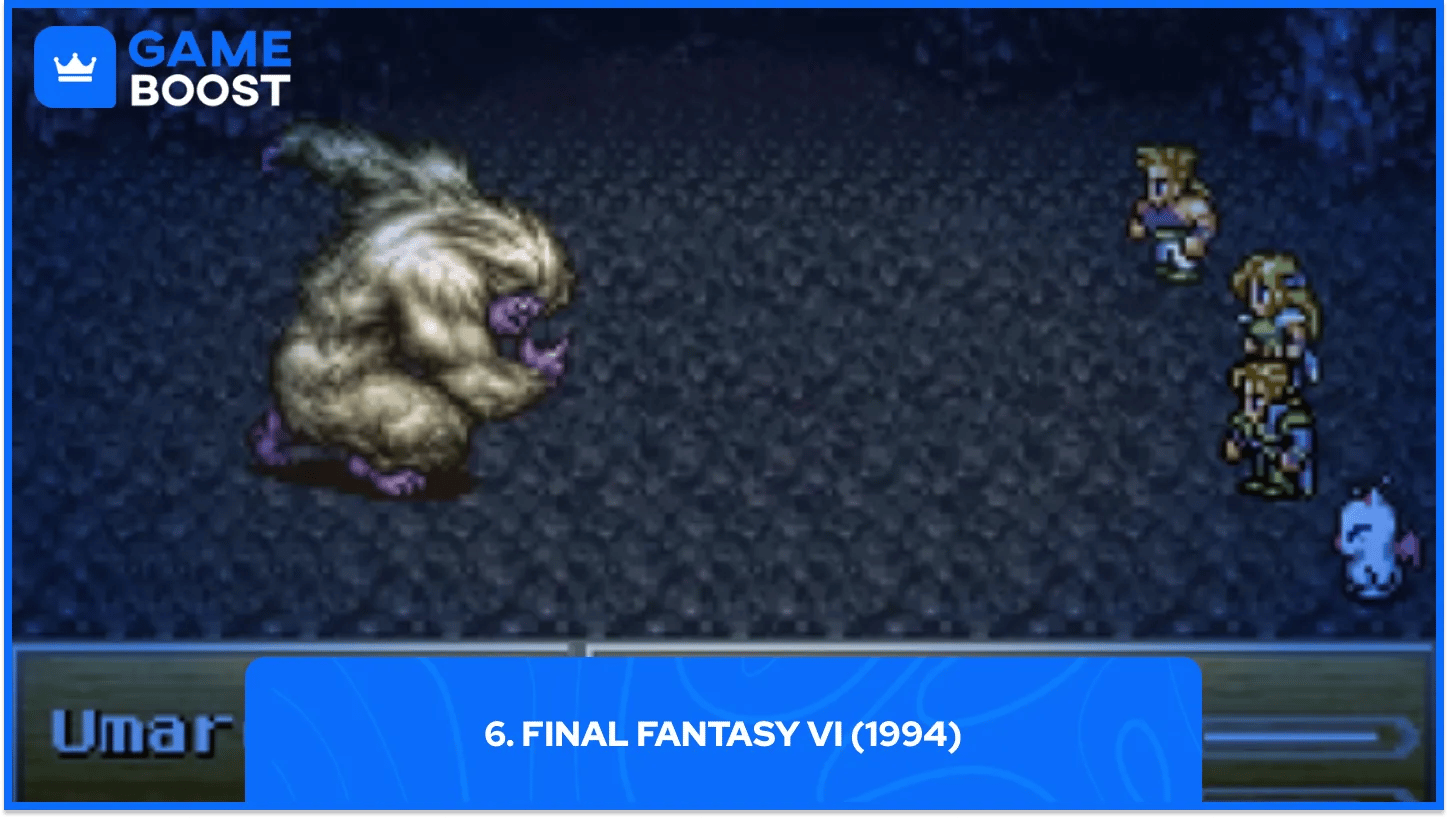
Final Fantasy VI trades castles for steam engines. The Gestahl Empire is reviving magic that vanished 1,000 years ago, and Terra, half human and half Esper, ends up with the rebel Returners. Halfway through, the court mage Kefka tears the world apart, and the scattered party has to regroup across the World of Ruin.
There are 14 playable characters, each with a unique ability. Equipping magicite, the remains of Espers, teaches spells and grants stat bonuses on level-up, and Relics let you bend each character toward a role. Kefka still tops plenty of lists of the series' best villains.
My Verdict: For me, the high point of the 2D era. Play it even if you skip every other classic, mostly for that second half.
Details | Information |
|---|---|
Developer | Square |
Release Date | January 31, 1997 (JP), September 7, 1997 (NA) |
Players | Single-player |
Platforms | PS1 (original); PC, PS4, Switch, Xbox One, iOS, Android |
Main characters | Cloud Strife, Barret, Tifa, Aerith, Sephiroth |
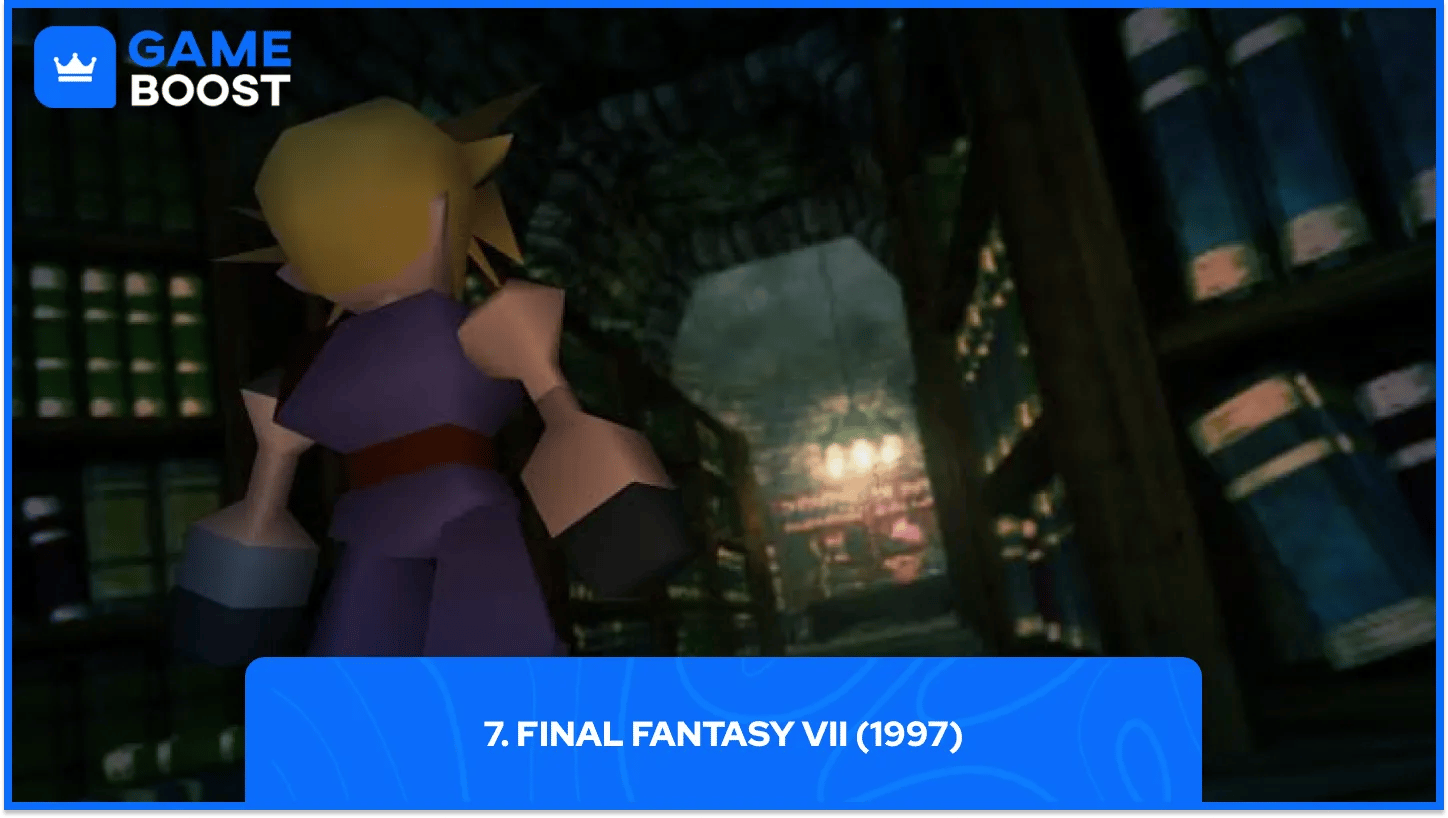
Final Fantasy VII begins in Midgar, where former SOLDIER Cloud Strife takes mercenary work with the eco-terrorist group AVALANCHE. Their target is the Shinra company, which is draining the Planet's life energy to run the city. The fight with Shinra soon turns into a chase after Sephiroth, who wants to become a god.
It was the series' first 3D game, mixing 3D characters with pre-rendered backgrounds and cinematic cutscenes. Materia, orbs you slot into gear for spells, summons, and commands, made customization flexible, and Limit Breaks gave every fight a payoff. Square Enix says it has sold over 15 million copies, more than any other entry, and a new PC version arrived on Steam in early 2026.
My Verdict: Still the most important game on this list. The story and Materia hold up fine under the old polygons, and playing it first makes the Remake trilogy hit harder.
Details | Information |
|---|---|
Developer | Square (The Ivalice Chronicles by Square Enix) |
Release Date | June 20, 1997 (JP), January 28, 1998 (NA); The Ivalice Chronicles September 30, 2025 |
Players | Single-player |
Platforms | PS1 (original); The War of the Lions on PSP, iOS, Android; The Ivalice Chronicles on PS5, PS4, Switch 2, Switch, Xbox Series X|S, PC |
Main characters | Ramza Beoulve, Delita Heiral, the Lucavi |
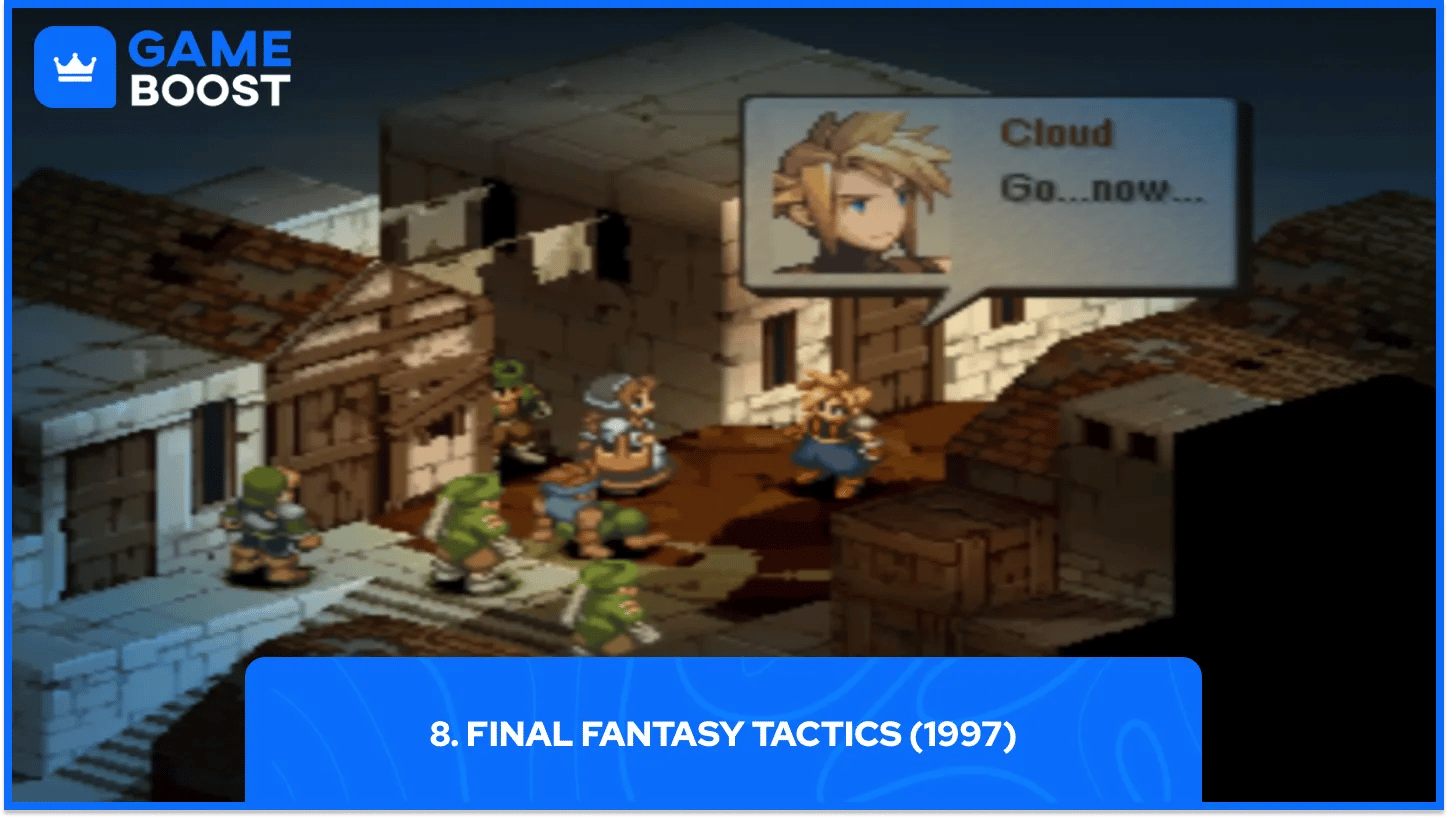
Final Fantasy Tactics is set in Ivalice after the Fifty Years' War, when a succession fight called the Lion War splits the kingdom. Ramza, a son of a noble house, slowly uncovers a church plot built around the Zodiac Stones. His friend Delita takes the other road and schemes his way toward the throne.
Battles play out on isometric grid maps where height matters, and turn order runs on a Charge Time system. Around 20 jobs share abilities the same way V does, which makes army building a long, rewarding project. The 2025 release, The Ivalice Chronicles, adds full voice acting and quality-of-life options, and Square Enix reports it passed 1 million in sales by the end of 2025.
My Verdict: One of the best stories Square ever wrote, wrapped in a demanding tactics game. Get The Ivalice Chronicles and start on the new Squire difficulty if tactics games are new to you.
Details | Information |
|---|---|
Developer | Square |
Release Date | February 11, 1999 (JP), September 1999 (NA) |
Players | Single-player |
Platforms | PS1, PC (original); Remastered on PC, PS4, Switch, Xbox One, iOS, Android |
Main characters | Squall Leonhart, Rinoa, Quistis, Zell, Seifer, Ultimecia |
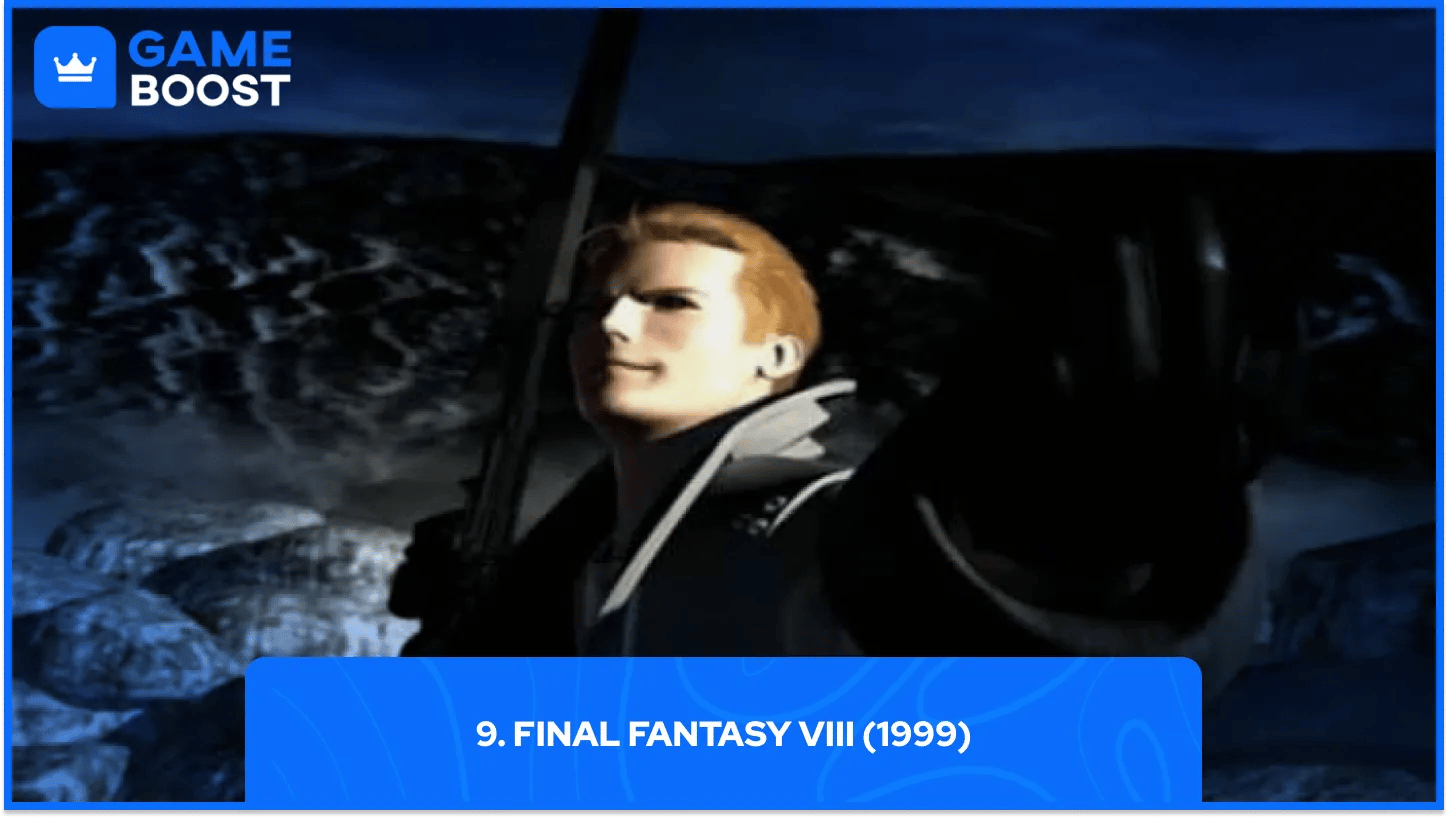
Final Fantasy VIII puts you in the boots of Squall, a SeeD mercenary student at Balamb Garden. A job against the sorceress Edea pulls his squad into a war that turns out to be steered by Ultimecia, a sorceress from the future who wants to compress time itself. In between, there's a love story with Rinoa and flashbacks starring Laguna.
The Junction system ties Guardian Forces to characters and lets you attach spells to stats, and you draw those spells from enemies. Enemies scale with your level, which catches out players who grind the usual way. The Triple Triad card game is a big reason people still talk about VIII.
My Verdict: Easily the most divisive of the PlayStation trio. Junction is easy to exploit once it clicks and the romance won't suit everyone. Triple Triad alone kept me hooked for hours.
Details | Information |
|---|---|
Developer | Square |
Release Date | July 7, 2000 (JP), November 14, 2000 (NA) |
Players | Single-player |
Platforms | PS1 (original); PC, PS4, Switch, Xbox One, iOS, Android |
Main characters | Zidane Tribal, Garnet (Dagger), Vivi, Steiner, Kuja |
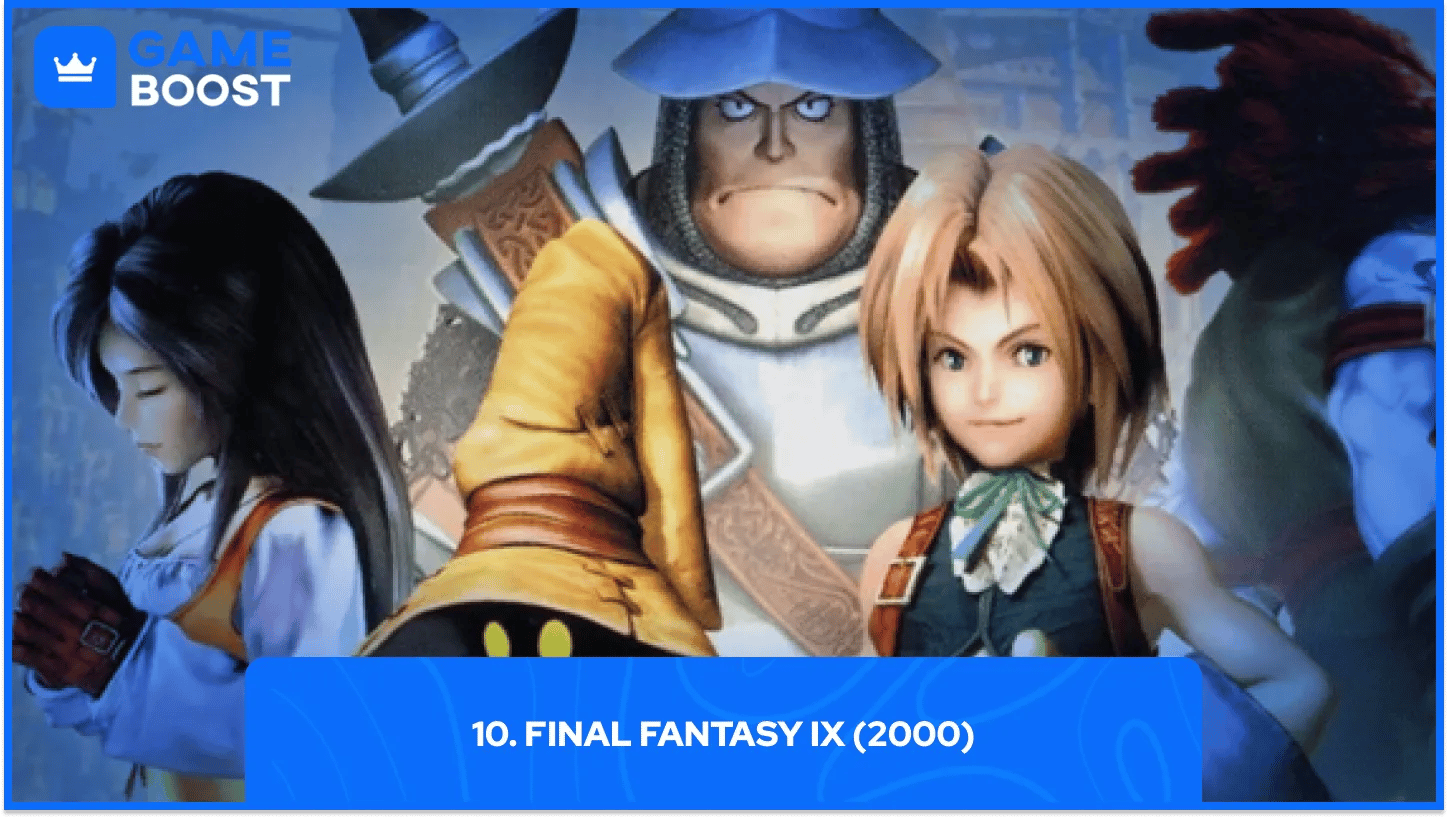
Final Fantasy IX goes back to crystals and castles. The thief Zidane kidnaps Princess Garnet, who wants out of her mother's warmongering kingdom, and the pair end up crossing the Mist Continent with the black mage Vivi and the knight Steiner. Kuja waits at the end of the road, along with some heavy questions about life and death.
Abilities come from equipment and stick once learned, and Trance gives each character a temporary surge in battle. Active Time Events cut away to what other party members are doing. The whole game is a love letter to the earlier entries, and Square Enix marked its 25th anniversary in July 2025.
My Verdict: No Final Fantasy feels warmer. Turn on the remaster's speed option for the slow battles and enjoy the best cast of the PlayStation era.
Details | Information |
|---|---|
Developer | Square |
Release Date | July 19, 2001 (JP), December 2001 (NA) |
Players | Single-player |
Platforms | PS2 (original); X/X-2 HD Remaster on PS3, PS Vita, PS4, PC, Xbox One, Switch, Switch 2 |
Main characters | Tidus, Yuna, Auron, Wakka, Lulu, Seymour |
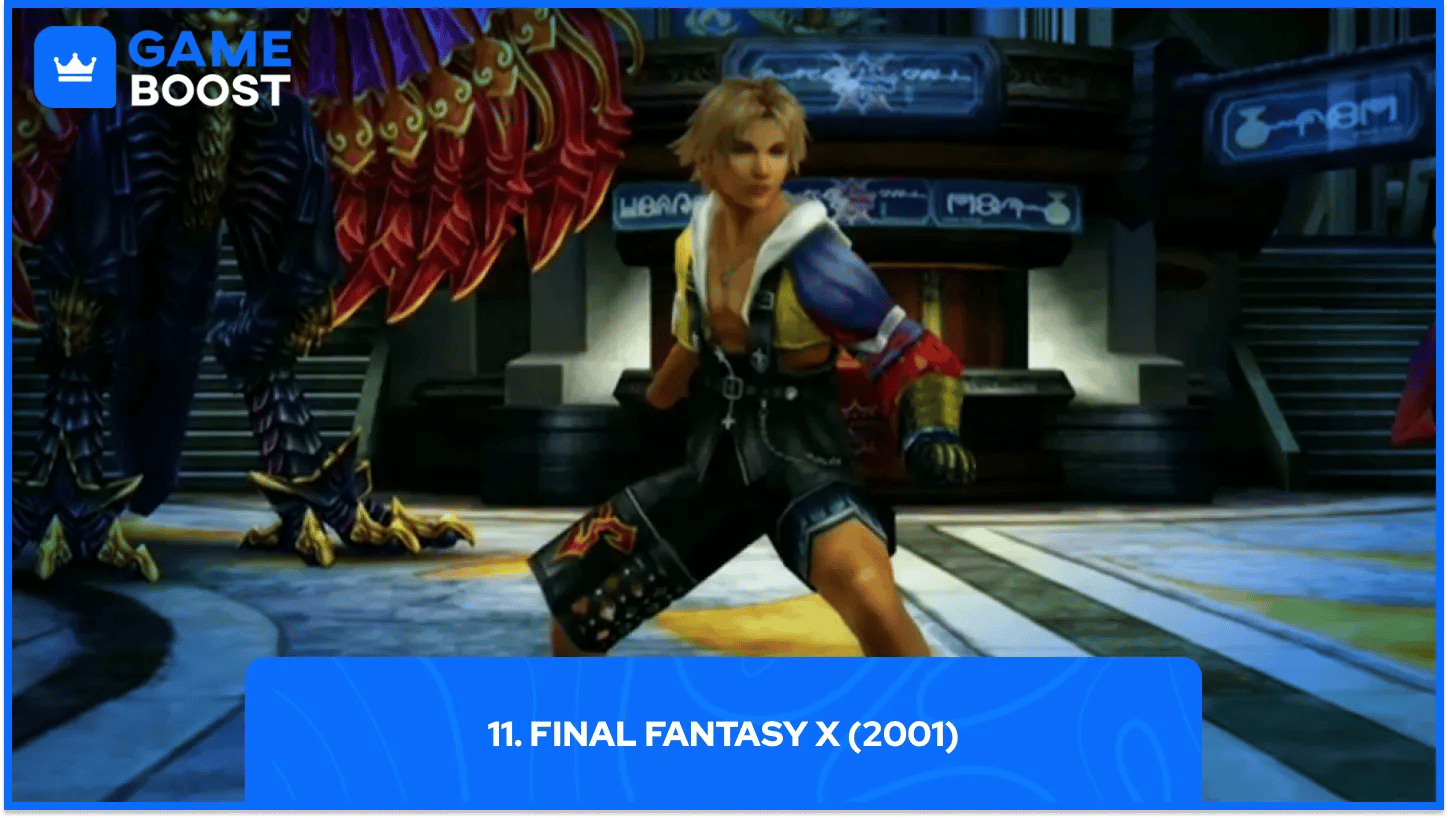
Final Fantasy X pulls Blitzball star Tidus out of his home city of Zanarkand and drops him in Spira, a world terrorized by the monster Sin. He joins the summoner Yuna on her pilgrimage to defeat Sin, and the trip slowly exposes what the church of Yevon has hidden about the Final Summoning.
It was the first Final Fantasy with voice acting and the first with fully 3D areas. Conditional Turn-Based battles show you the turn order; you can swap party members mid-fight, and the Sphere Grid lets you route each character's growth. The HD Remaster landed on Switch 2 in July 2026 for the game's 25th anniversary.
My Verdict: My first recommendation among the older games. Turn-based combat doesn't get much cleaner than this, and the ending still lands.
Details | Information |
|---|---|
Developer | Square (Square Enix from 2003) |
Release Date | May 16, 2002 (JP, PS2), October 28, 2003 (NA, PC) |
Players | Online MMORPG, subscription |
Platforms | PC (live); PS2 and Xbox 360 service ended in 2016 |
Main characters | Your own adventurer, Shantotto, Prishe, the Shadow Lord |
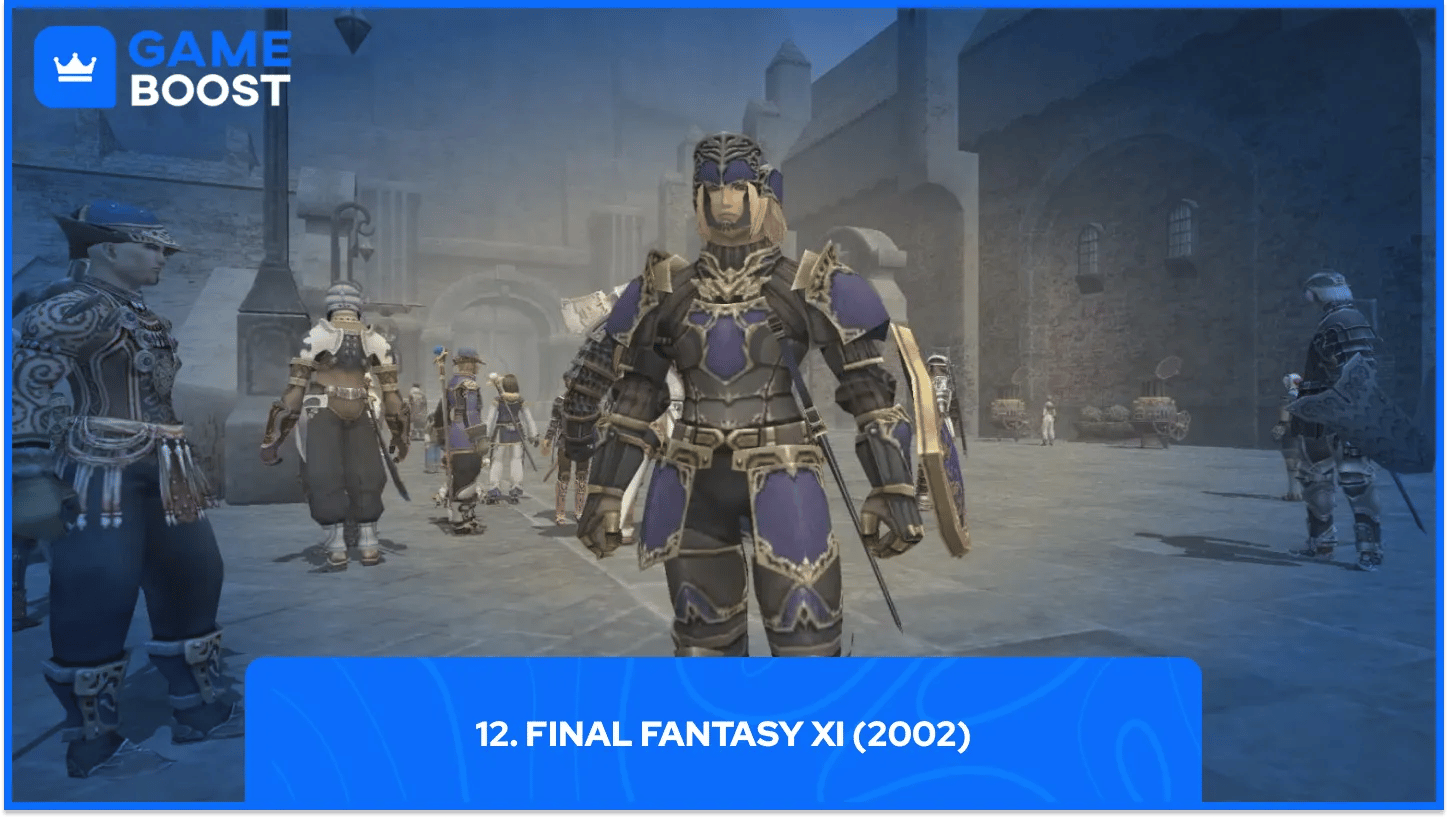
Final Fantasy XI took the series online. You make an adventurer in Vana'diel and serve one of three nations, San d'Oria, Bastok, or Windurst, as the Shadow Lord and the Beastmen return. Five full expansions and several story add-ons have stacked on top of that base since 2002.
It was the first MMORPG to let PS2 and PC players share the same worlds, with Xbox 360 joining in 2006, and it added support jobs and Skillchains for group combos. The console servers closed in 2016, but the PC version is still live and still getting updates in 2026, with Square Enix replacing its aging server hardware to keep it running.
My Verdict: A piece of MMO history that's hard to pick up today. Visit out of curiosity and save your subscription money for XIV.
Details | Information |
|---|---|
Developer | Square |
Release Date | March 13, 2003 (JP), November 18, 2003 (NA) |
Players | Single-player |
Platforms | PS2 (original); X/X-2 HD Remaster on PS3, PS Vita, PS4, PC, Xbox One, Switch, Switch 2 |
Main characters | Yuna, Rikku, Paine, Shuyin |
Final Fantasy X-2 was the first direct story sequel in the mainline series. Two years after X, Yuna spots someone who looks like Tidus in a sphere recording and becomes a sphere hunter with Rikku and Paine. Their treasure hunts drag them into a standoff between Spira's new factions over the ancient weapon Vegnagun.
Dresspheres let each girl switch jobs mid-battle, and a faster ATB system rewards chaining attacks. The structure is mission-based, with hotspots spread across Spira, and full completion earns an extra ending. It comes bundled with X in the HD Remaster.
My Verdict: Goofy and fun to play, with a combat system better than its reputation. Play it right after X, and treat the tone shift as part of the charm.
Details | Information |
|---|---|
Developer | Square Enix |
Release Date | January 26, 2006 (JP), August 15, 2006 (NA) |
Players | Single-player |
Platforms | PS2 only |
Main characters | Vincent Valentine, Shelke, Weiss, Nero |
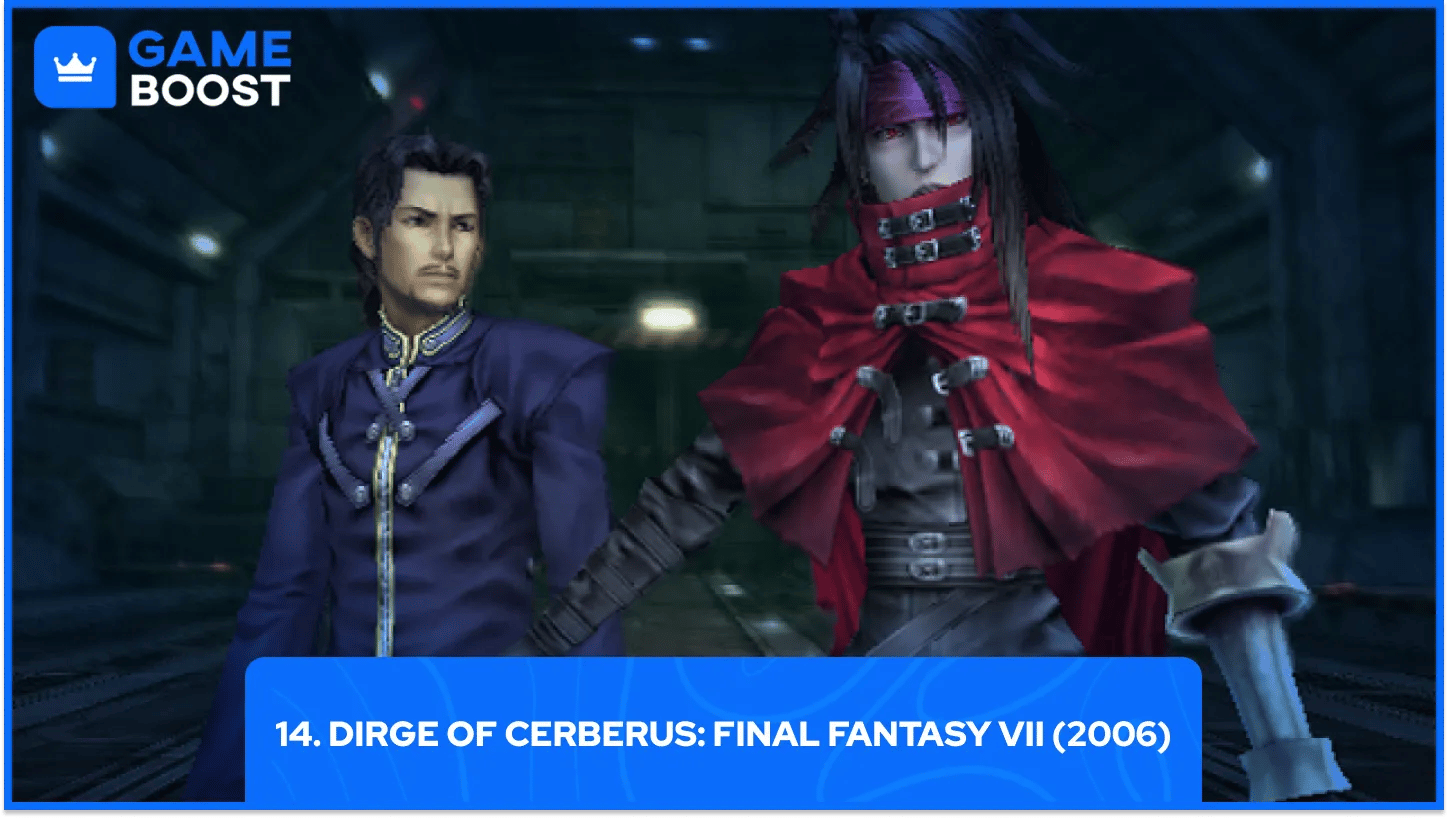
Dirge of Cerberus hands the spotlight to Vincent Valentine, the brooding optional party member from VII. About three years after VII, a hidden Shinra army called Deepground rises from under Midgar and starts kidnapping people. Vincent fights them and deals with his own past and the monster living inside him.
It's a third-person shooter with customizable guns and Limit Break transformations. Japan had an online mode that never made it to the West. There's no modern re-release, so you'll need the original PS2 disc to play it in 2026.
My Verdict: For VII lore fans only. The shooting feels stiff, and the story matters mostly if you want everything that happens after Advent Children.
Details | Information |
|---|---|
Developer | Square Enix |
Release Date | March 16, 2006 (JP), October 31, 2006 (NA); The Zodiac Age July 2017 |
Players | Single-player |
Platforms | PS2 (original); The Zodiac Age on PS4, PC, Xbox One, Switch |
Main characters | Vaan, Ashe, Balthier, Fran, Basch, Vayne Solidor |
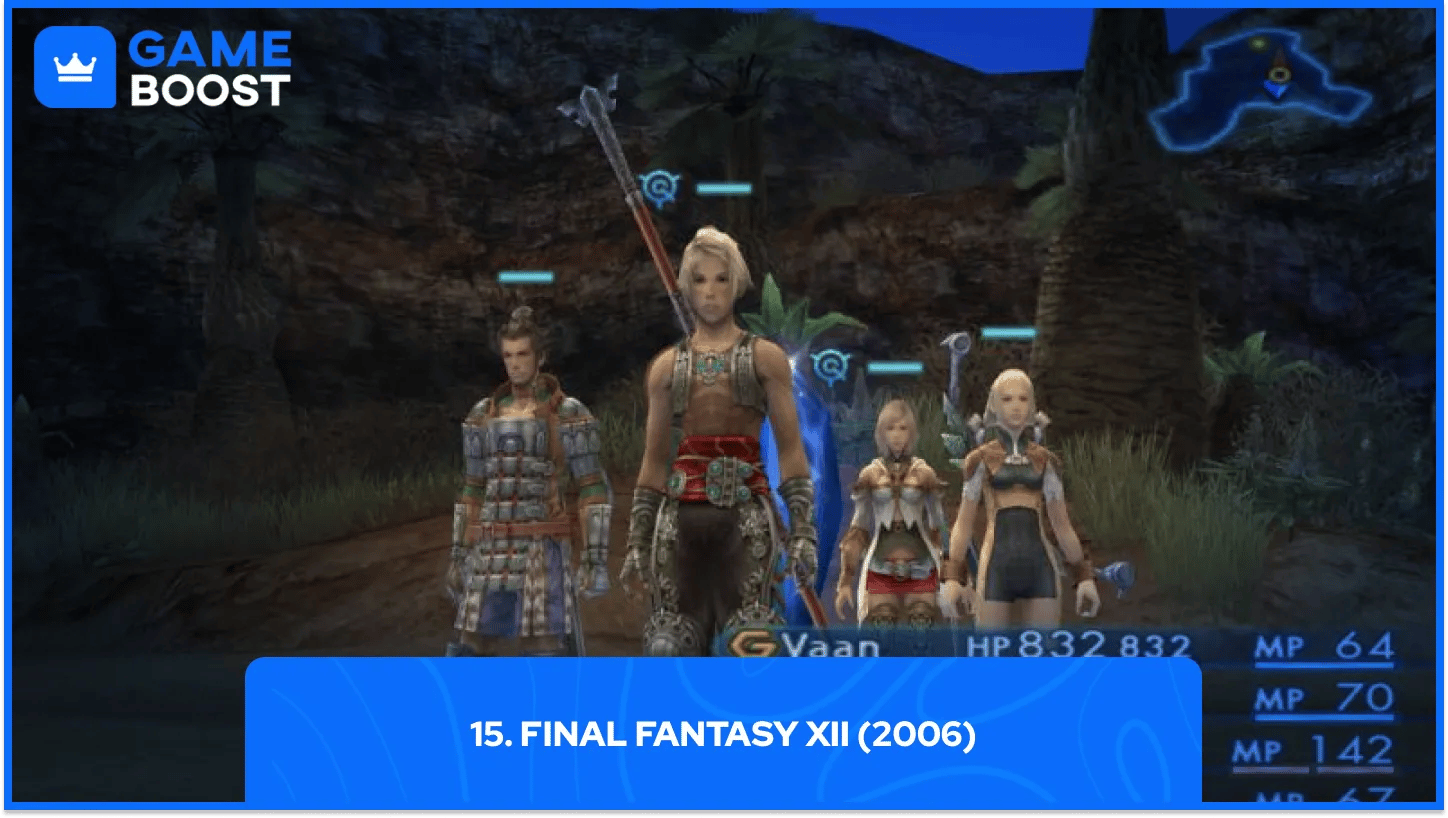
Final Fantasy XII returns to Ivalice, the world of Tactics. The Archadian Empire has conquered the kingdom of Dalmasca, and street thief Vaan falls in with Princess Ashe and her resistance. Their hunt for the Nethicite stones runs straight into Vayne Solidor's imperial ambitions.
Battles run in real time on the same maps you walk around, with no random encounters. Gambits let you program each ally's behavior, and the License Board handles growth. The Zodiac Age adds 12 Zodiac jobs, a speed-up mode and a Trial Mode, and it's the only version worth buying today.
My Verdict: Gambits are still brilliant if you like setting up a party and watching it run. Balthier steals every scene, and The Zodiac Age fixes most of the original's pacing.

Details | Information |
|---|---|
Developer | Square Enix |
Release Date | September 13, 2007 (JP), March 25, 2008 (NA); Reunion December 13, 2022 |
Players | Single-player |
Platforms | PSP (original); Reunion on PS5, PS4, Xbox Series X|S, Xbox One, Switch, Switch 2, PC |
Main characters | Zack Fair, Angeal, Aerith, Cloud, Genesis Rhapsodos |
Crisis Core is set seven years before Final Fantasy VII and stars Zack Fair, a cheerful SOLDIER 2nd Class. His search for the deserters Genesis and Angeal leads into Shinra's ugliest experiments and ends at the Nibelheim incident. If you know VII, you know where this is heading.
Combat is real-time with Materia, and a slot-reel feature called the Digital Mind Wave triggers Limit Breaks and level-ups at random. Crisis Core Reunion rebuilt the combat and visuals in 2022, and a Switch 2 version dropped in September 2026.
My Verdict: Best Compilation spin-off by a mile. Zack is lovable, the final hour is brutal, and Reunion makes the PSP original feel like a modern game.
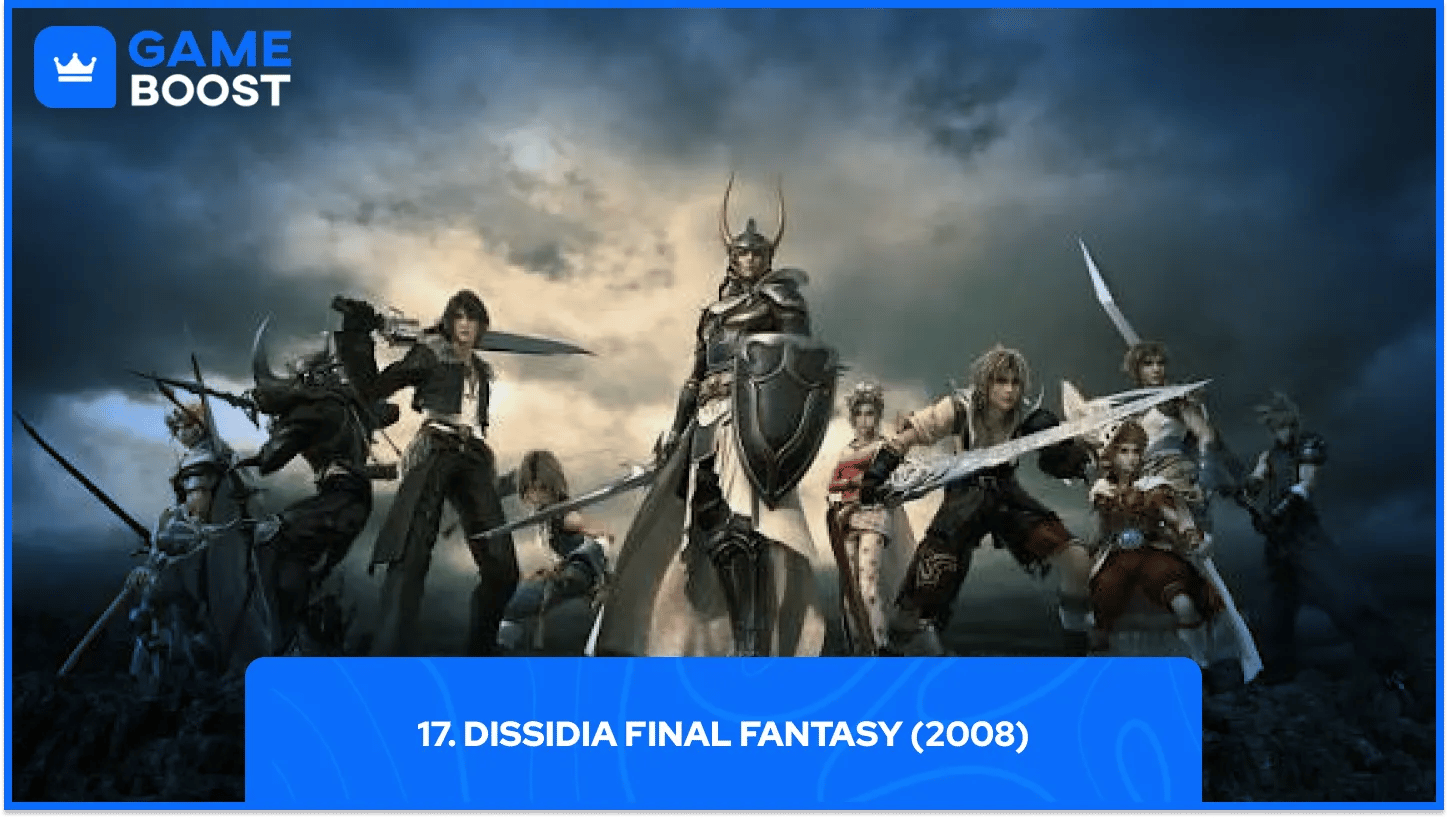
Details | Information |
|---|---|
Developer | Square Enix |
Release Date | December 18, 2008 (JP), August 25, 2009 (NA) |
Players | Single-player, local 1v1 versus |
Platforms | PSP (Dissidia 012 also on PSP) |
Main characters | Warrior of Light, Cloud, Squall, Garland, Kefka, Sephiroth |
Dissidia Final Fantasy turns the series into a fighting game. The gods Cosmos and Chaos summon heroes and villains from Final Fantasy I through XII into an endless war, and Cosmos's side has to recover their crystals to break the cycle. The 2011 follow-up, Dissidia 012, is a prequel that adds Lightning, Tifa, Yuna, and more.
Bravery attacks steal Bravery points from your opponent, and HP attacks cash those points in as damage. EX Mode adds a burst of extra strength for each fighter. The series is crossover fan service and sits outside every game's canon.
My Verdict: A blast on PSP and a dream roster for fans. It's stuck on old hardware, though, so only chase it down if you still own a PSP.
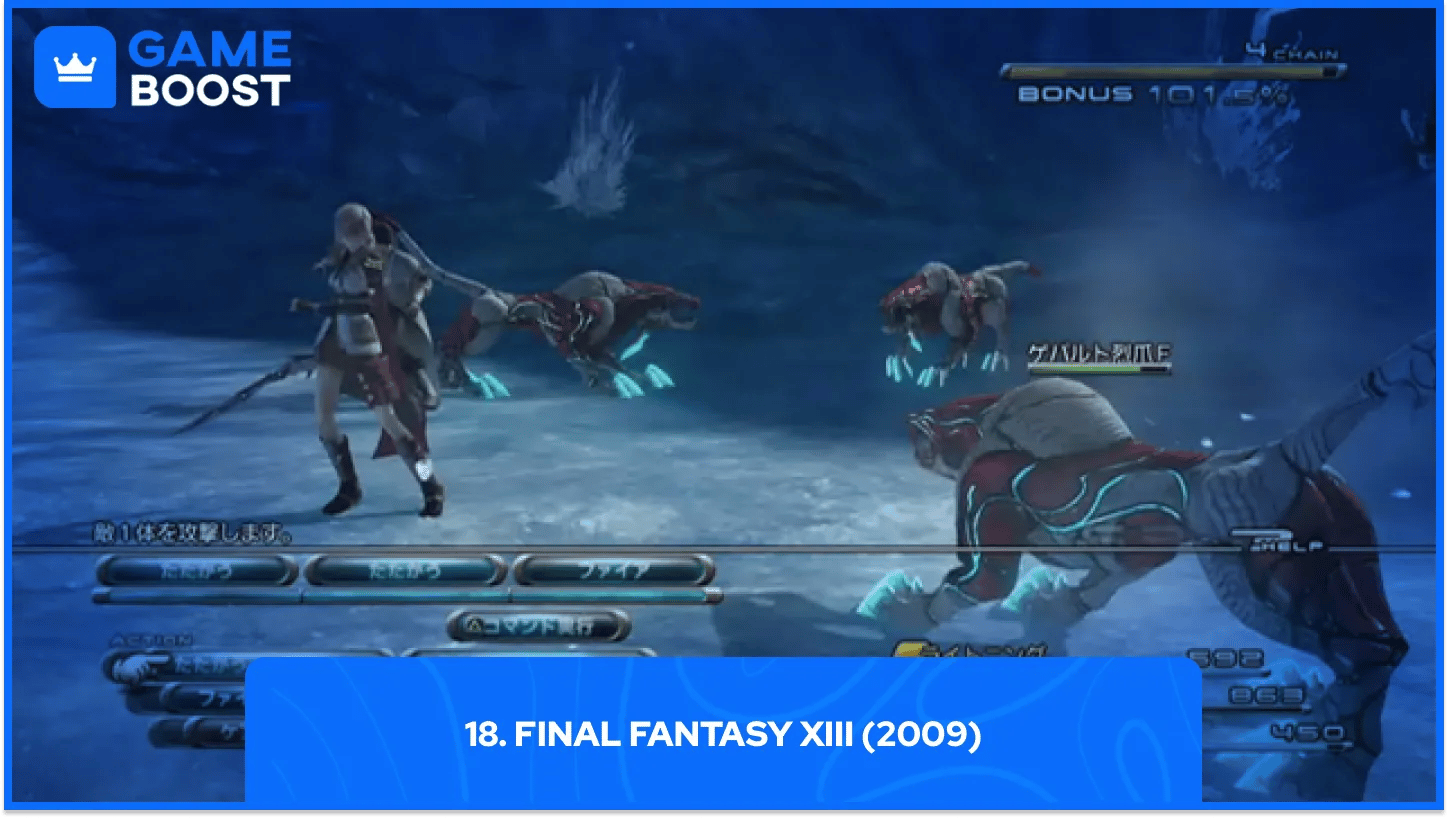
Details | Information |
|---|---|
Developer | Square Enix |
Release Date | December 17, 2009 (JP), March 9, 2010 (NA) |
Players | Single-player |
Platforms | PS3, Xbox 360, PC (playable on Xbox One and Series X|S via backward compatibility) |
Main characters | Lightning, Snow, Vanille, Sazh, Hope, Fang |
Final Fantasy XIII starts on Cocoon, a floating world whose government purges anyone who touched the wild lands of Gran Pulse below. Lightning and five unlikely allies get branded as l'Cie and handed a Focus, a task they must finish or turn into monsters. They spend the game on the run from the Sanctum and the fal'Cie pulling its strings.
The Paradigm Shift system has you swapping whole party roles mid-fight, and Stagger rewards building pressure on a single enemy. The first half is very linear before Gran Pulse opens up. It began the Lightning Saga and sat at the center of the Fabula Nova Crystallis project alongside Type-0 and what became XV.
My Verdict: Combat is excellent once Paradigms are fully open. The long corridor up front tested my patience, so push through to Gran Pulse, where it becomes a much better game.
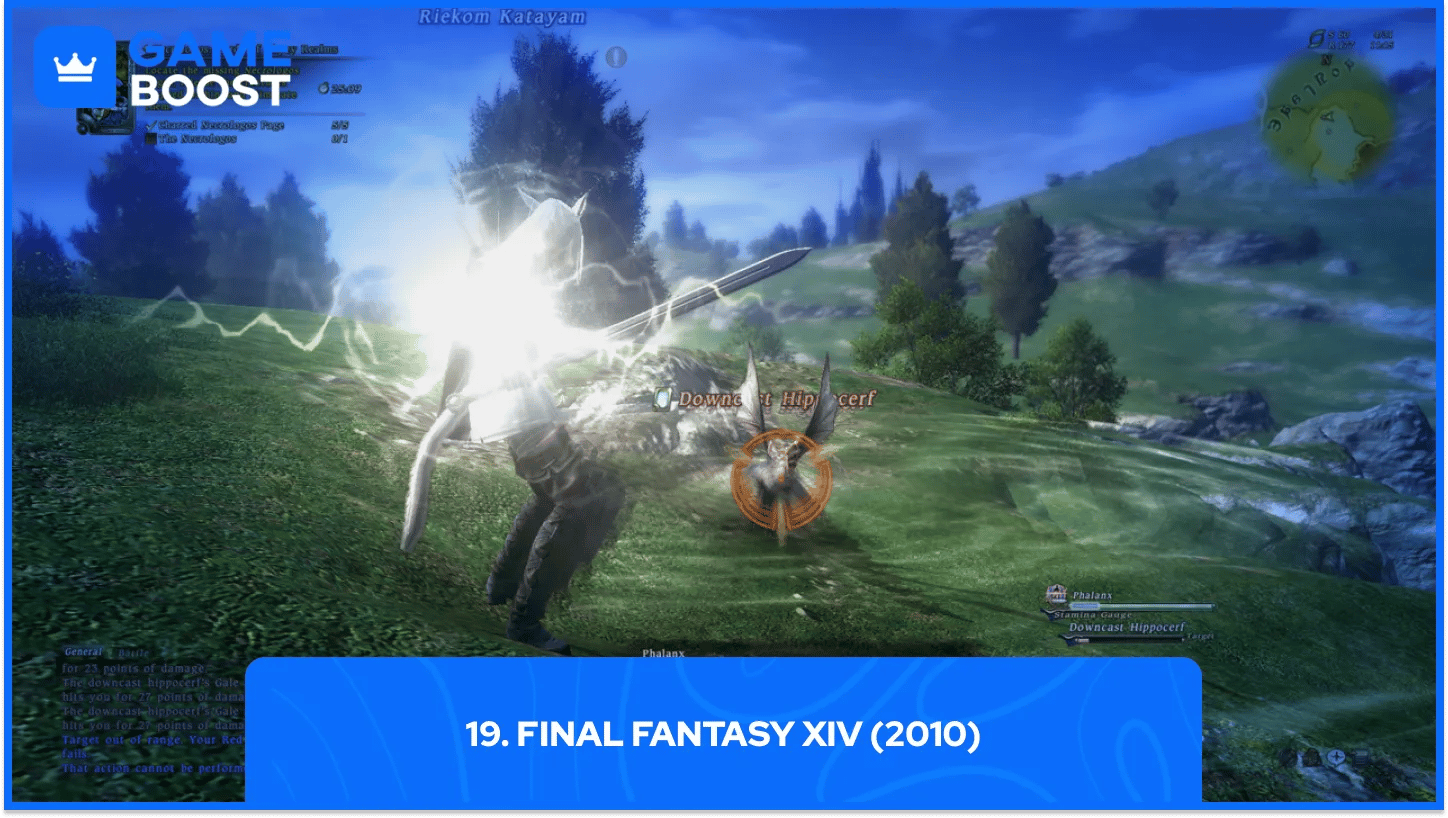
Details | Information |
|---|---|
Developer | Square Enix |
Release Date | September 2010 (original); A Realm Reborn August 27, 2013 |
Players | Online MMORPG, subscription with a free trial |
Platforms | PC, Mac, PS4, PS5, Xbox Series X|S, Switch 2 |
Main characters | Your Warrior of Light, the Scions, Emet-Selch, Wuk Lamat |
Final Fantasy XIV launched in such a rough state in 2010 that Square Enix shut it down and relaunched it as FINAL FANTASY XIV: A Realm Reborn in 2013. Your adventurer arrives in Eorzea, grows into its Warrior of Light, and is drawn into the Ascians' plan to revive their god Zodiark. Endwalker closed that first saga in 2021, and Dawntrail opened a new chapter on the continent of Tural in 2024.
One character can play every job just by switching weapons, and crossplay now covers PC, PlayStation, Xbox, and Switch 2. Square Enix counts over 30 million registered players, and the next expansion, Final Fantasy XIV: Evercold, is due in January 2027. The free trial covers everything through Shadowbringers with no time limit.
My Verdict: Gaming's greatest comeback, and the free trial alone is longer than most RPGs. If you have time for one ongoing game, make it this one.

Details | Information |
|---|---|
Developer | Square Enix |
Release Date | October 27, 2011 (JP, PSP); Type-0 HD March 2015 (worldwide) |
Players | Single-player |
Platforms | PSP (Japan only); Type-0 HD on PS4, Xbox One, PC |
Main characters | Class Zero (Ace, Machina, Rem and others), Cid Aulstyne |
Final Fantasy Type-0 is the darkest game on this list. The Militesi Empire invades the Dominion of Rubrum and disables its crystal, and the 14 cadets of Class Zero are thrown into the war. The deeper they go, the more they learn about an apocalypse called Tempus Finis. The crystals also erase the memories of everyone who dies, so the living forget their fallen friends.
Combat is real-time with three swappable cadets and timed instant-kill windows called Killsight. Some missions run on a clock, and world-map battles add light strategy. The PSP original stayed in Japan, so Type-0 HD in 2015 was the West's first chance to play it.
My Verdict: Grim and messy, with a great ending. The 14-character roster is more than the story can handle. Play it if XIII's mythology interests you.
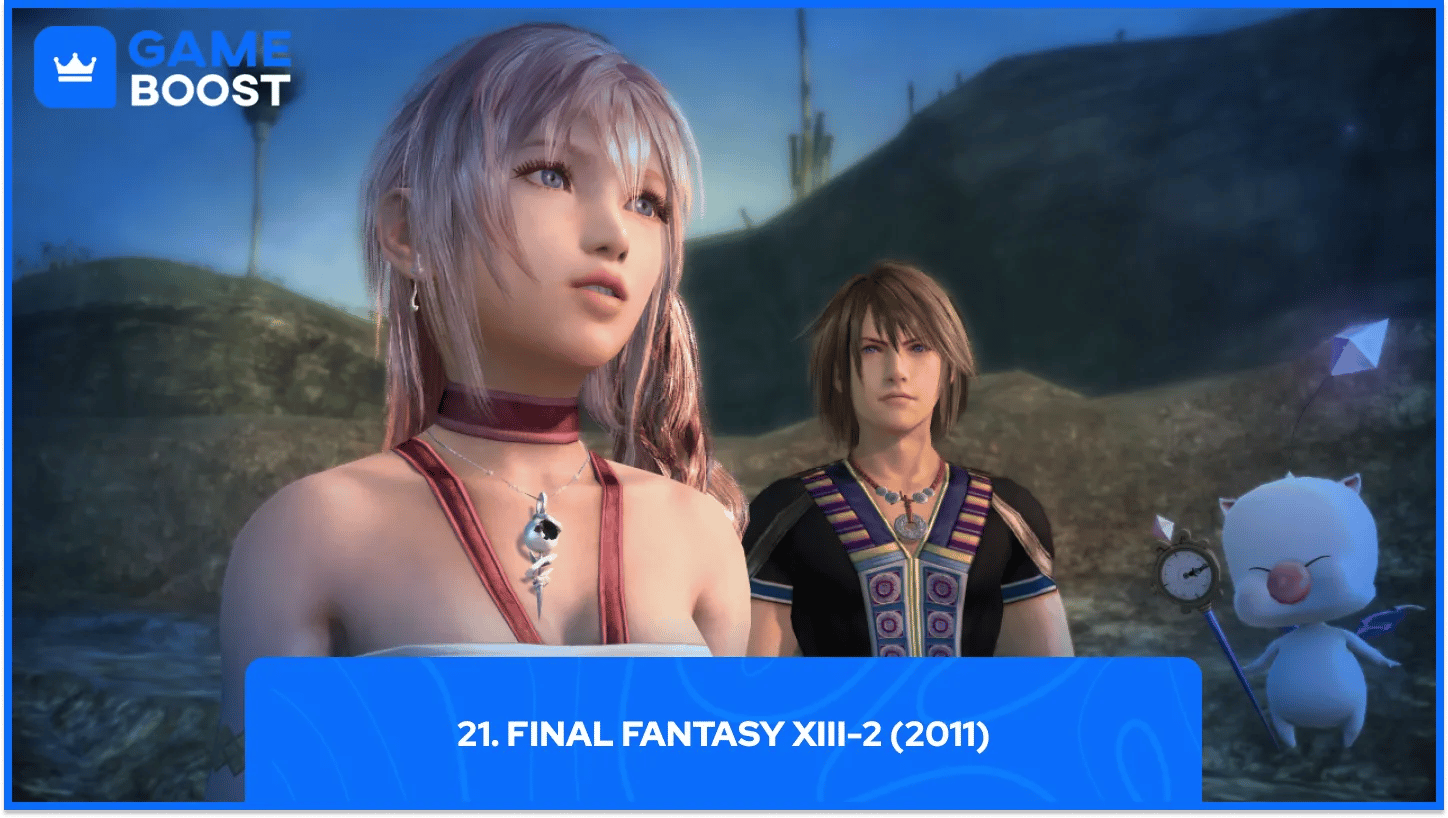
Details | Information |
|---|---|
Developer | Square Enix (with tri-Ace) |
Release Date | December 15, 2011 (JP), January 31, 2012 (NA) |
Players | Single-player |
Platforms | PS3, Xbox 360, PC (playable on Xbox One and Series X|S via backward compatibility) |
Main characters | Serah Farron, Noel Kreiss, Caius Ballad |
Final Fantasy XIII-2 picks up three years after XIII. Lightning has vanished into Valhalla, and her sister Serah teams up with Noel, a traveler from the future, to jump through time and fix paradoxes in history. Their rival is Caius, who wants to end time itself to spare the seeress Yeul from dying over and over.
The Paradigm system returns, and your third party slot goes to one of roughly 150 recruitable monsters. A time-travel hub lets you pick your path, and some scenes give you dialogue choices. It ends on a cliffhanger that Lightning Returns resolves.
My Verdict: Better paced and more open than XIII. The time travel gets convoluted, and monster collecting kept me playing well past the credits anyway.

Details | Information |
|---|---|
Developer | Square Enix (with tri-Ace) |
Release Date | November 21, 2013 (JP), February 11, 2014 (NA) |
Players | Single-player |
Platforms | PS3, Xbox 360, PC (playable on Xbox One and Series X|S via backward compatibility) |
Main characters | Lightning, Bhunivelze |
Lightning Returns closes the trilogy 500 years after XIII-2. The world of Nova Chrysalia is ending, and the god Bhunivelze wakes Lightning to act as his Savior and gather souls before the end. She starts with seven days on the clock and can stretch that to 13.
Lightning is the only playable character. Combat runs on garbs, outfits that each carry their own abilities and ATB gauge, and you swap between three of them in real time. The doomsday clock pushes you to plan every in-game day around quests.
My Verdict: Probably the strangest game in the series, and oddly compelling. The time limit stressed me out on a first run. If you finished XIII-2, you owe Lightning this ending.
Details | Information |
|---|---|
Developer | Tose (published by Square Enix) |
Release Date | October 25, 2016 (NA), October 27, 2016 (JP) |
Players | Single-player |
Platforms | PS4, PS Vita, PC; Maxima on Switch, Xbox One |
Main characters | Lann, Reynn, Brandelis |
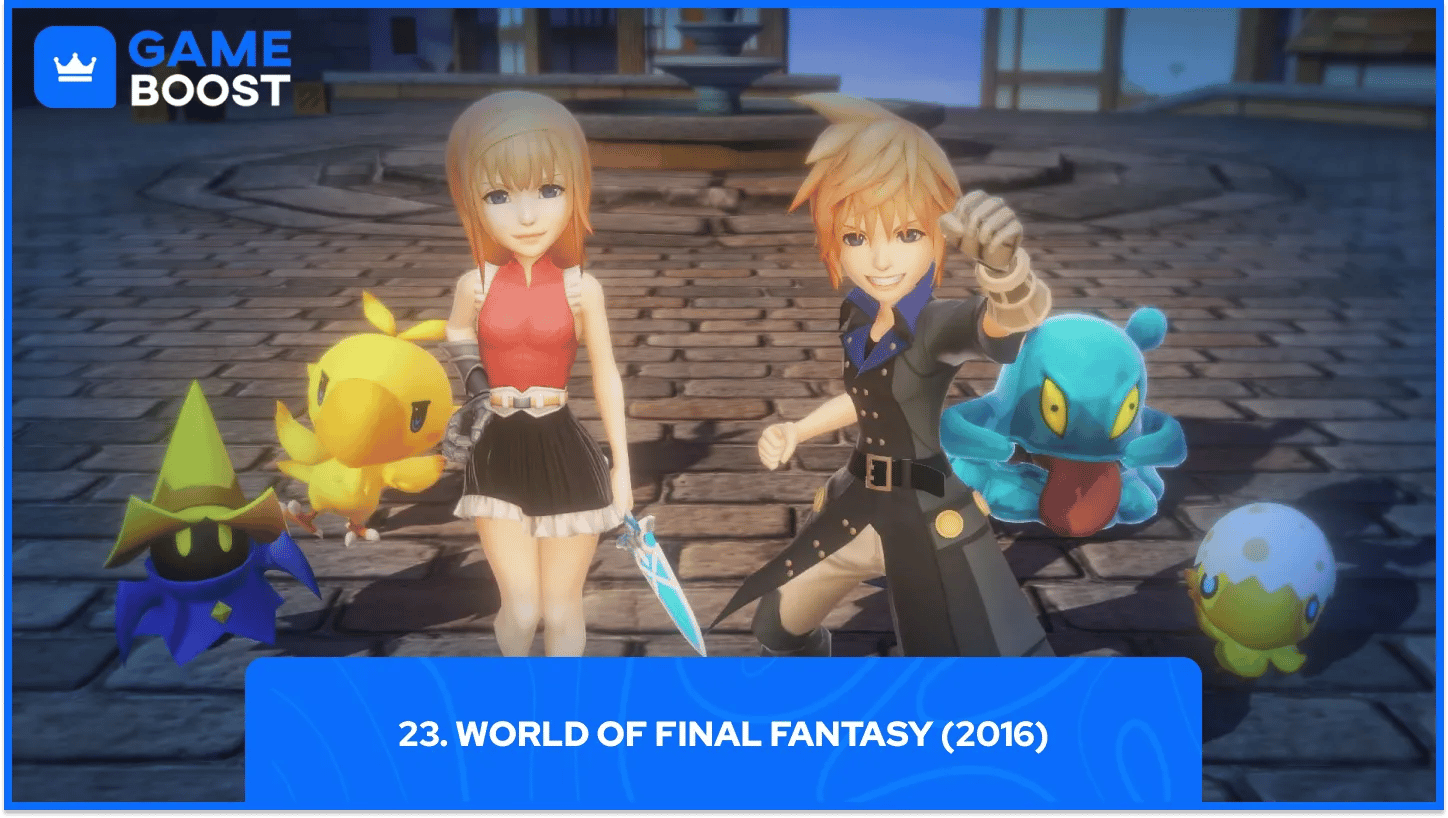
World of Final Fantasy sends twins Lann and Reynn into Grymoire, a world where towns and heroes from across the series live side by side. The pair have lost their memories, and they set out to recover them, learning along the way that they can tame monsters called Mirages.
You catch Mirages and literally stack them on your head for combined stats and abilities. The twins also switch between full-size and chibi forms. The Maxima edition added more content and brought it to Switch and Xbox One in 2018.
My Verdict: My top pick on this list for kids and newcomers. It's light on challenge but full of charm and cameos.
Details | Information |
|---|---|
Developer | Square Enix |
Release Date | November 29, 2016 (worldwide); Royal and Windows Editions 2018 |
Players | Single-player (Comrades online mode for up to 4) |
Platforms | PS4, Xbox One, PC |
Main characters | Noctis Lucis Caelum, Gladiolus, Ignis, Prompto, Ardyn Izunia |
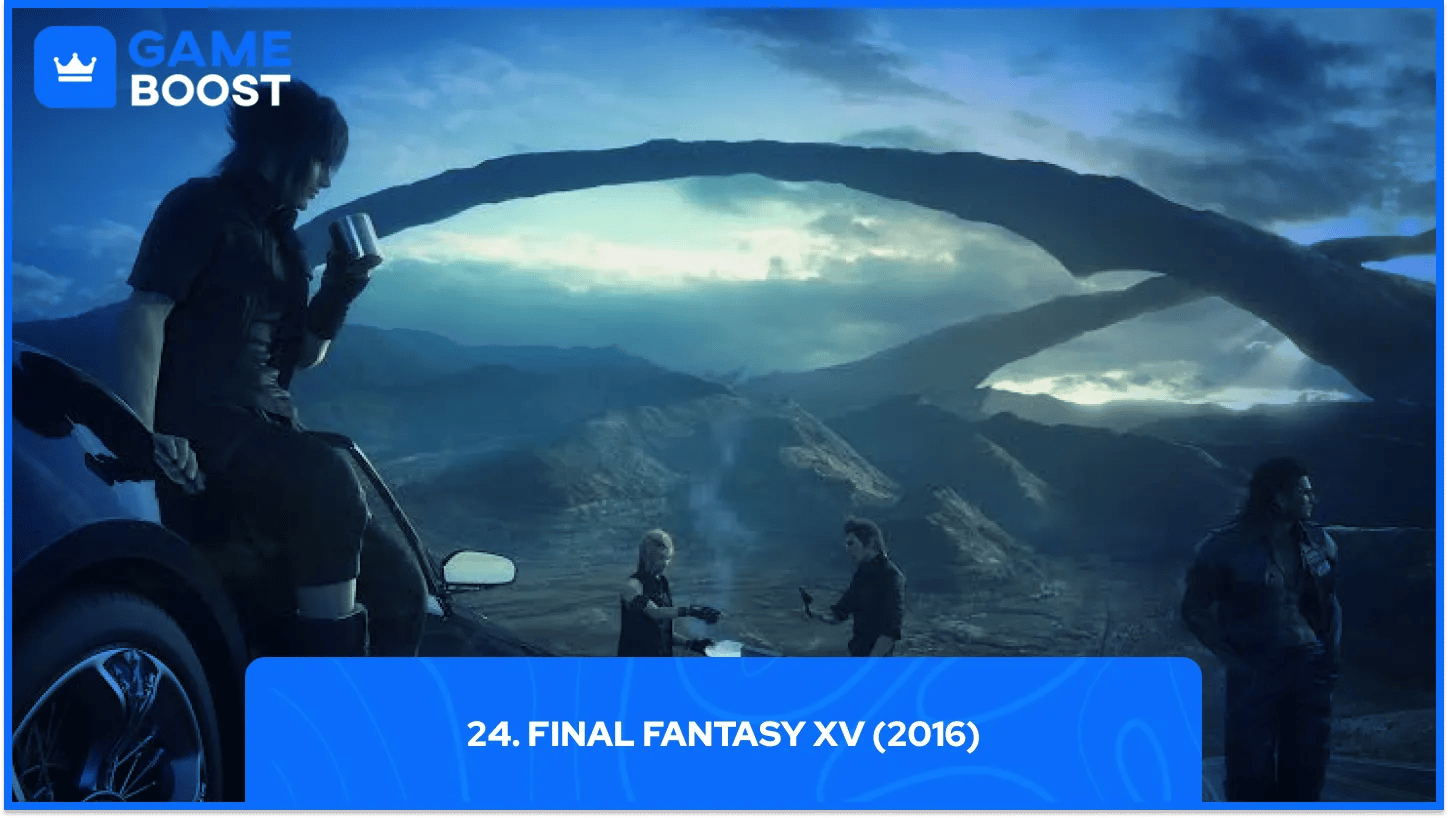
Final Fantasy XV starts as a road trip. Crown prince Noctis and his three friends drive out of Insomnia in the Regalia to reach his wedding with Lunafreya. The empire of Niflheim attacks the capital the moment they leave, and the trip turns into a fight to reclaim the throne and the Crystal.
Combat is real-time, with warp-strikes that zip Noctis across a fight. You turn experience into levels by camping, and Ignis cooks a meal at every camp. The game started life as Final Fantasy Versus XIII in 2006 before becoming a numbered entry, and Square Enix says it has sold over 10 million copies.
My Verdict: A wonderful open-world road trip for half its length, and a rushed sprint after that. Get the Royal Edition, which patches in a lot of what the original lacked.
Details | Information |
|---|---|
Developer | Team Ninja (published by Square Enix) |
Release Date | November 26, 2015 (JP arcade); January 11, 2018 (PS4, JP); January 30, 2018 (PS4, NA/EU) |
Players | 3v3, up to 6 online |
Platforms | Arcade (Japan), PS4, PC |
Main characters | Heroes and villains from across the series, including Shinryu |
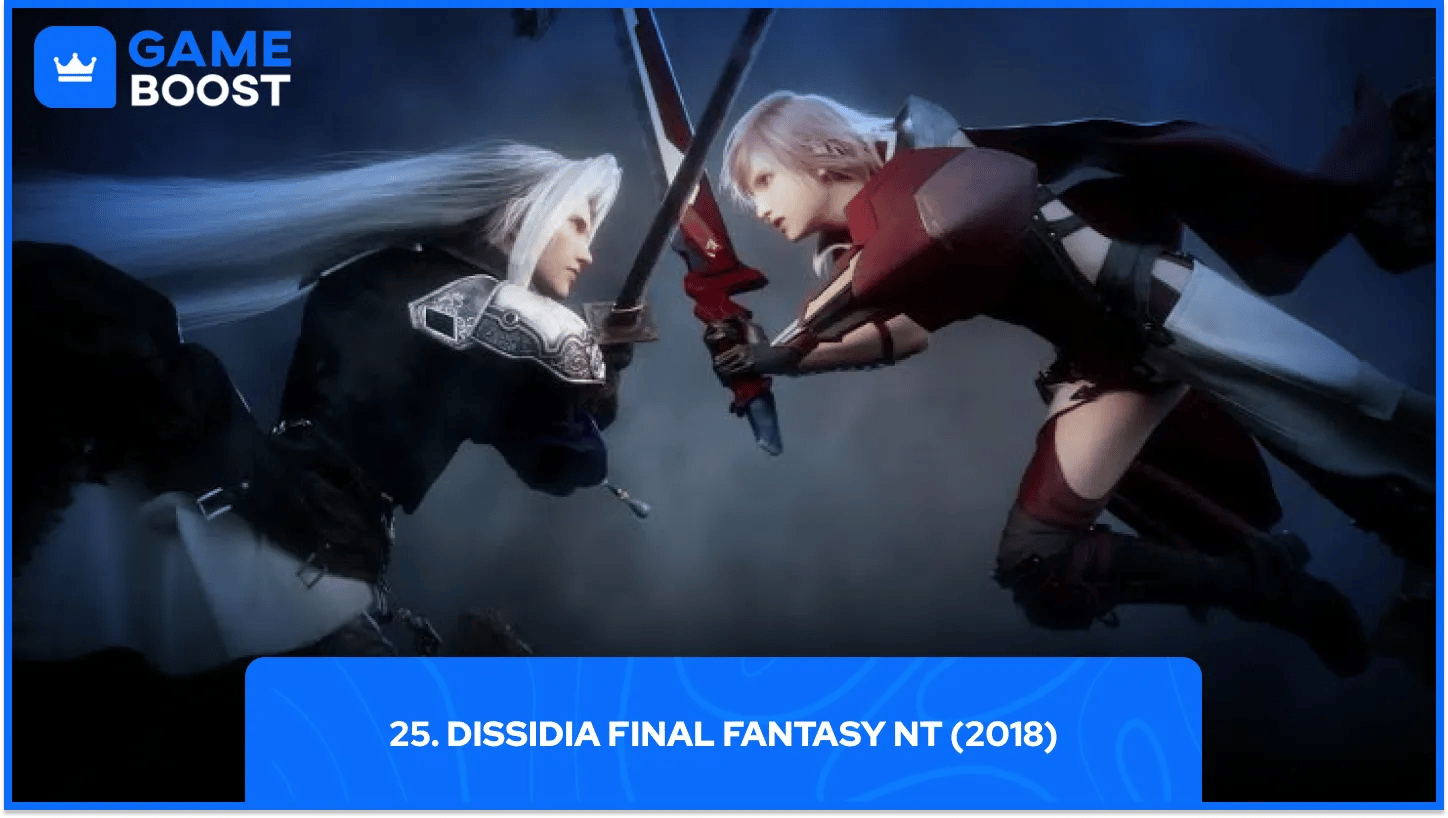
Dissidia Final Fantasy NT moves the crossover fighter to team battles. The goddesses Materia and Spiritus summon warriors from across the series to fight each other, until the dragon Shinryu threatens all of them and both sides have to join forces.
Fights are 3v3, with the Bravery and HP attack system carried over from the PSP games. Your team shares one pool of lives, and summons like Ifrit and Bahamut can turn a match. Updates ended in 2020, and the Free Edition on Steam and PS4 still lets you try it at no cost.
My Verdict: Fun for a weekend. The team format buries what made the PSP games great, so try the Free Edition before spending anything.
Details | Information |
|---|---|
Developer | Square Enix |
Release Date | April 10, 2020 (PS4); Intergrade June 10, 2021 (PS5) |
Players | Single-player |
Platforms | PS4, PS5, PC, Switch 2, Xbox Series X|S |
Main characters | Cloud, Barret, Tifa, Aerith, Sephiroth |
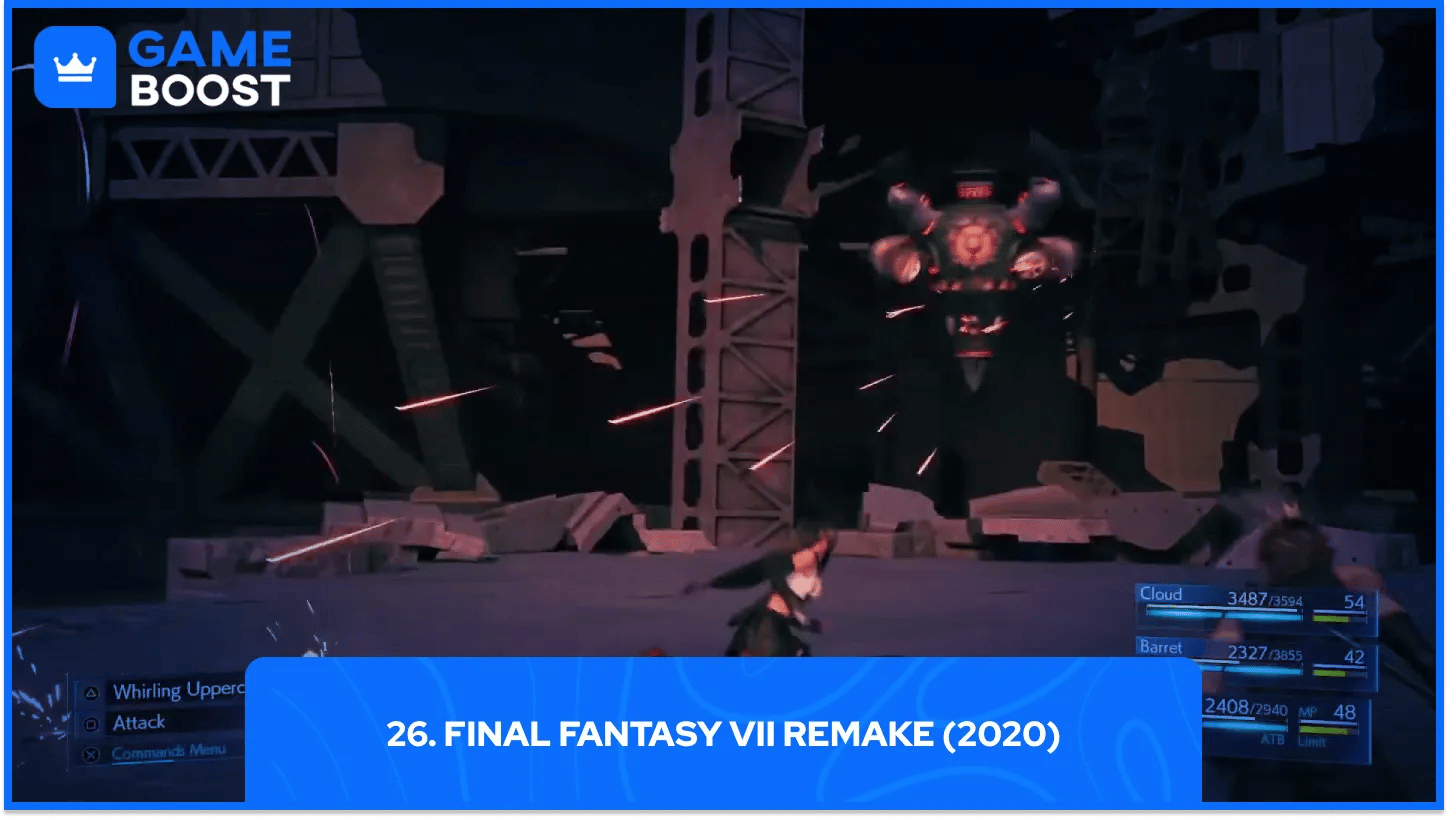
Final Fantasy VII Remake covers the Midgar section of the 1997 game and stretches it into a full-length RPG. Cloud, Barret and AVALANCHE still bomb Shinra's Mako reactors, but ghostly beings start pushing events back toward their original course. The final chapters make it clear this retelling isn't a straight copy.
Combat blends real-time action with an ATB gauge and a slowed-down command menu, and stagger rewards learning enemy weak points. A Classic mode hands the action to the AI for players who want turn-based pacing, and Intergrade adds a Yuffie episode. Square Enix reported 3.5 million copies shipped and sold digitally in its first three days, and Switch 2 and Xbox versions arrived in January 2026.
My Verdict: I'd call this the best combat the series has had. Midgar is padded in spots, every big moment from the original lands, and it's the right starting point for the trilogy.
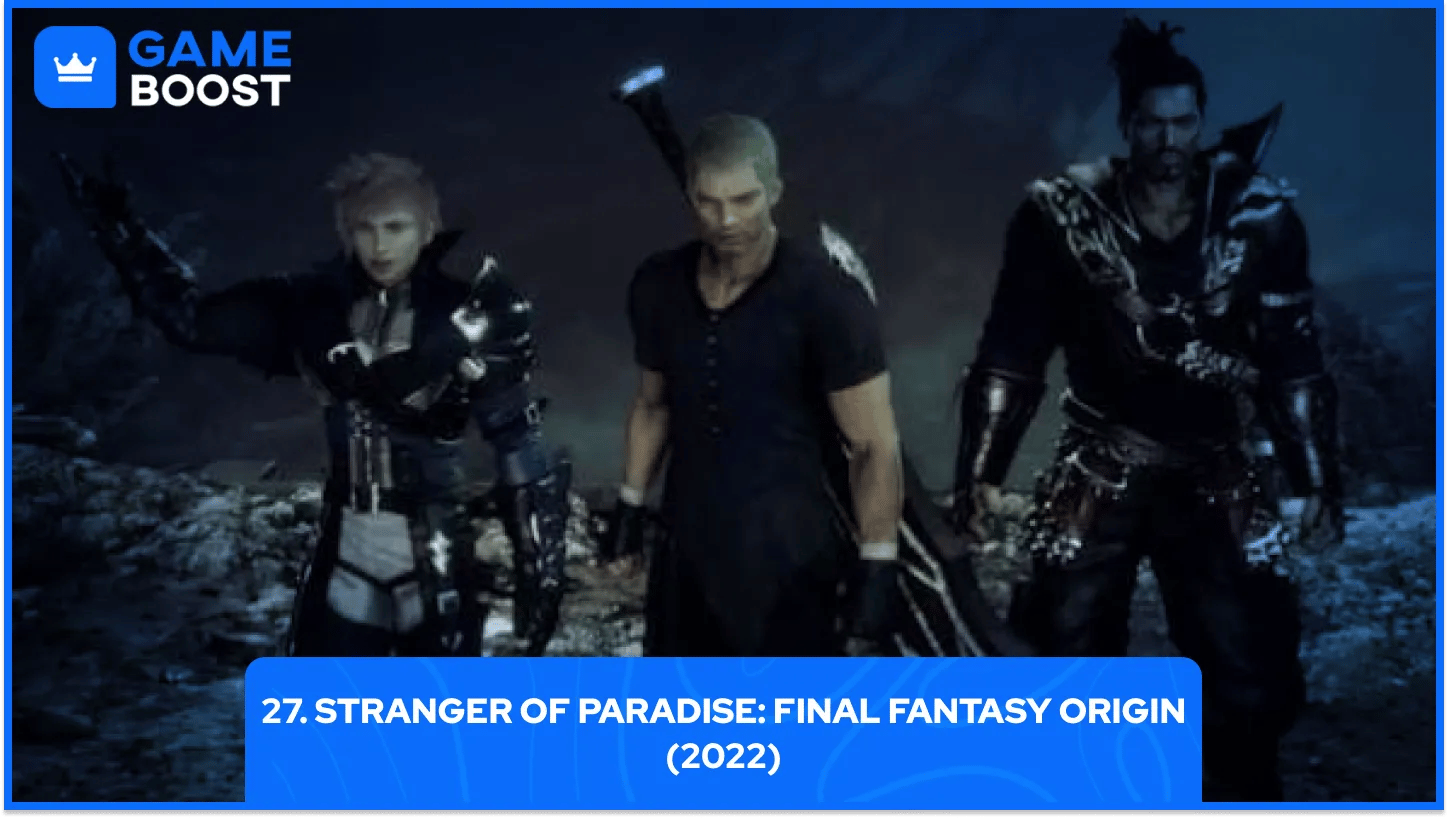
Details | Information |
|---|---|
Developer | Team Ninja with Square Enix (published by Square Enix) |
Release Date | March 18, 2022 (worldwide) |
Players | Single-player, online co-op |
Platforms | PS4, PS5, Xbox One, Xbox Series X|S, PC |
Main characters | Jack Garland, Ash, Jed, Neon, Sophia, Chaos |
Stranger of Paradise is a dark reimagining of the original Final Fantasy. Jack and his companions arrive in Cornelia carrying crystals and convinced they're the prophesied Warriors of Light. Jack has one goal: killing Chaos, and the story's twist ties straight back into the 1987 game.
Team Ninja built it as a tough action RPG with Soulslike elements. You run two jobs and swap between them on the fly, and breaking an enemy's guard sets up flashy crystallization finishers. Three DLC packs followed in 2022 and 2023.
My Verdict: The cheesy dialogue became a meme, and the combat is excellent. Play the 1987 original first so the ending has its full effect.
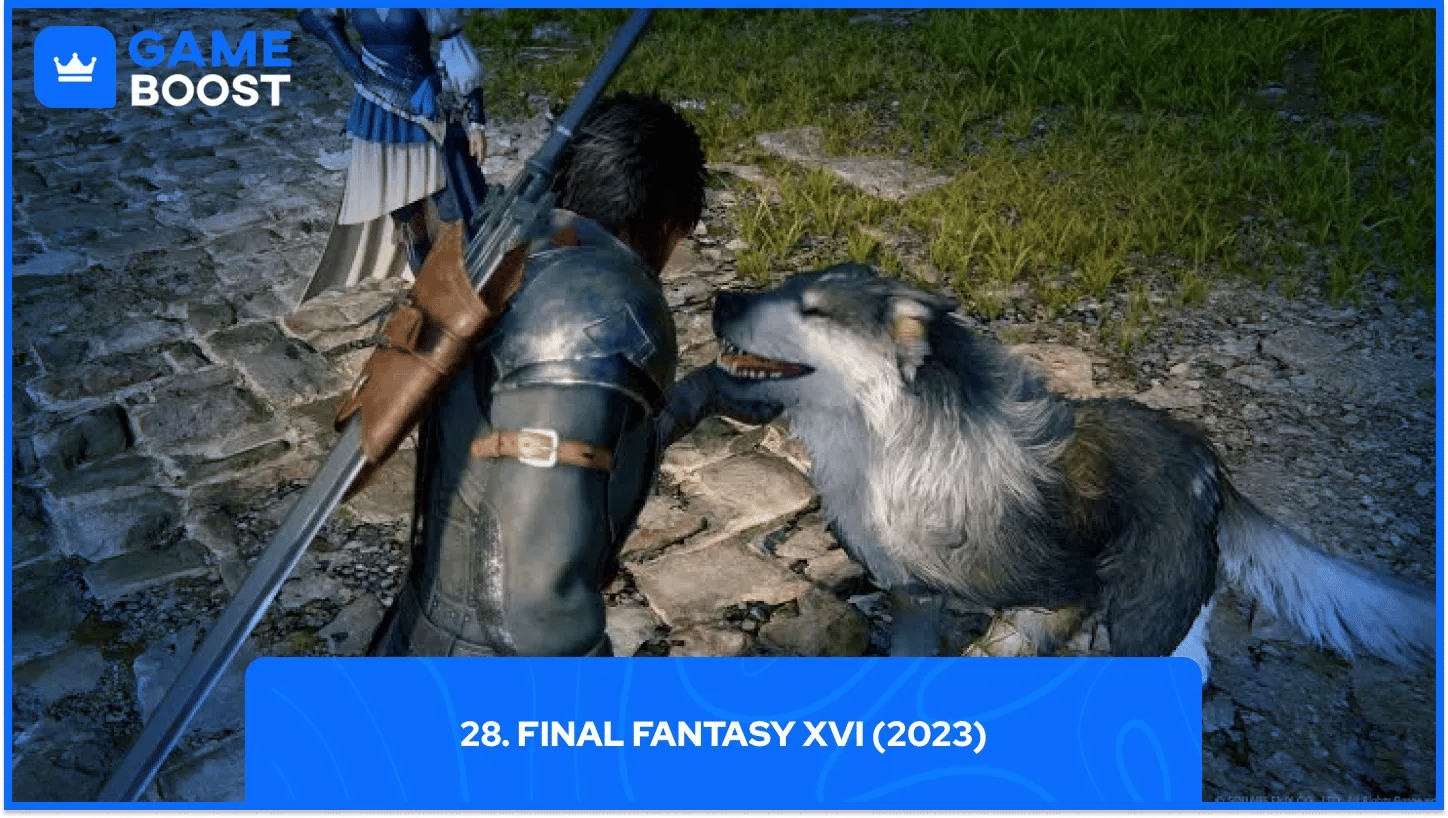
Details | Information |
|---|---|
Developer | Square Enix |
Release Date | June 22, 2023 (PS5); PC September 17, 2024; Xbox June 8, 2025 |
Players | Single-player |
Platforms | PS5, PC, Xbox Series X|S |
Main characters | Clive Rosfield, Jill Warrick, Joshua Rosfield, Torgal, Ultima |
Final Fantasy XVI is set in Valisthea, where nations depend on giant Mothercrystals and a spreading Blight kills the land. Clive Rosfield loses his homeland and his younger brother Joshua in one night of fire, and spends years hunting the dark Eikon he blames for it. That quest grows into a war to destroy the Mothercrystals and free the Bearers, people enslaved for their magic.
Combat is pure real-time action, with Eikon abilities you mix and match and commands for Clive's dog Torgal. The boss fights between Eikons are some of the biggest set pieces in the series. Square Enix said it sold over 3 million copies in its first week, and the Complete Edition bundles both story DLCs.
My Verdict: Loud and gorgeous. Side quests drag, and the Eikon battles plus Clive himself still make it one of the best modern Final Fantasy games.
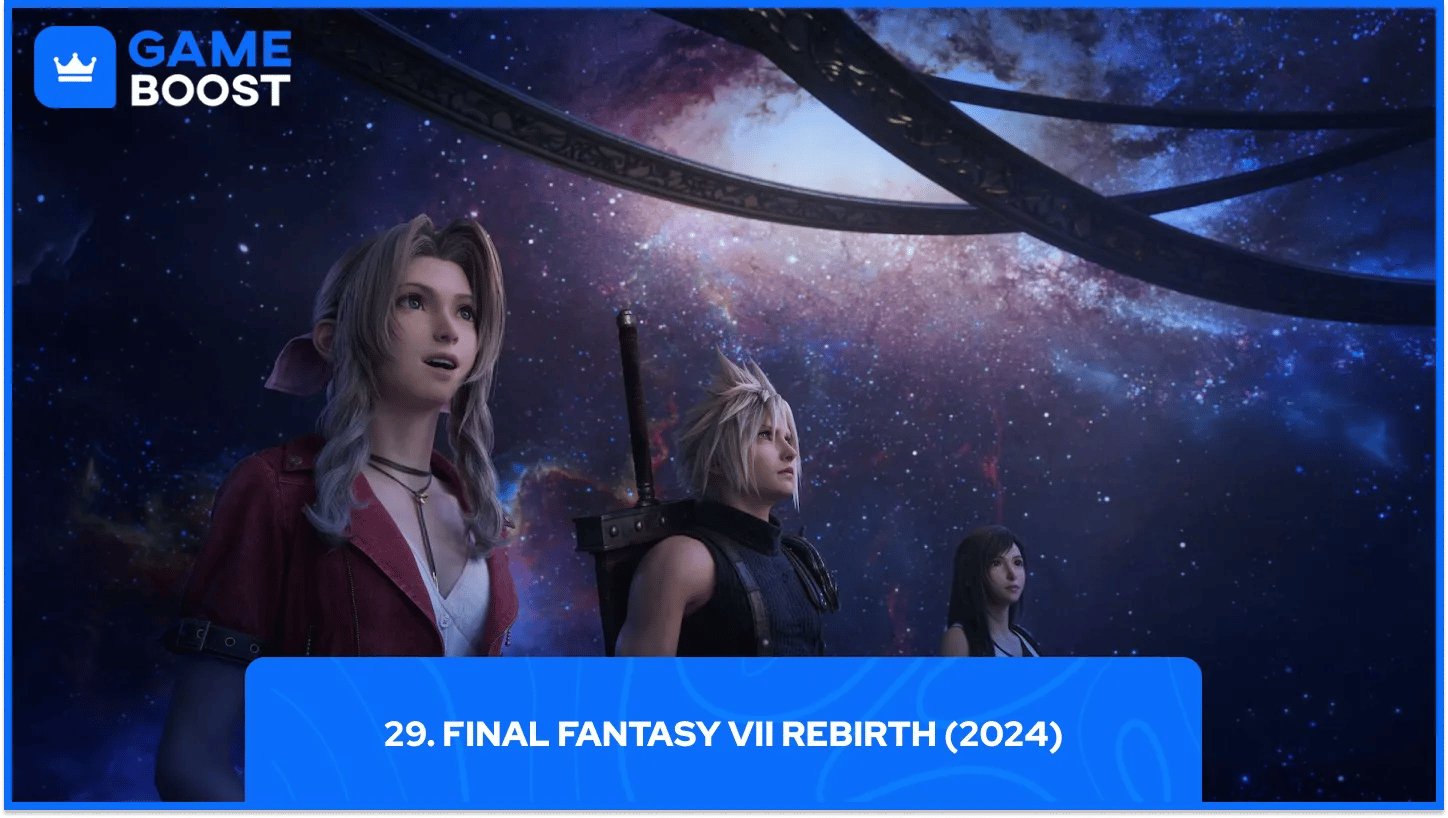
Details | Information |
|---|---|
Developer | Square Enix |
Release Date | February 29, 2024 (PS5); PC January 23, 2025; Switch 2 and Xbox June 3, 2026 |
Players | Single-player |
Platforms | PS5, PC, Switch 2, Xbox Series X|S |
Main characters | Cloud, Tifa, Barret, Aerith, Red XIII, Yuffie, Sephiroth |
Final Fantasy VII Rebirth follows the party out of Midgar and across the world, from Kalm and Junon to the Gold Saucer, Cosmo Canyon, and Nibelheim. Cloud's memories start to fray as Sephiroth works toward summoning Meteor. The story ends at the Forgotten Capital, one of the most famous moments in gaming.
Synergy Skills let party members team up for combo attacks, and big open regions are yours to roam on a chocobo. The Queen's Blood card game is a time sink in the best way. The final part, Final Fantasy VII Revelation, launches April 8, 2027 on PS5, Switch 2, Xbox Series X|S and PC.
My Verdict: My favorite part of the trilogy so far. It's huge and sometimes too generous with minigames. The combat and the cast are worth every hour.
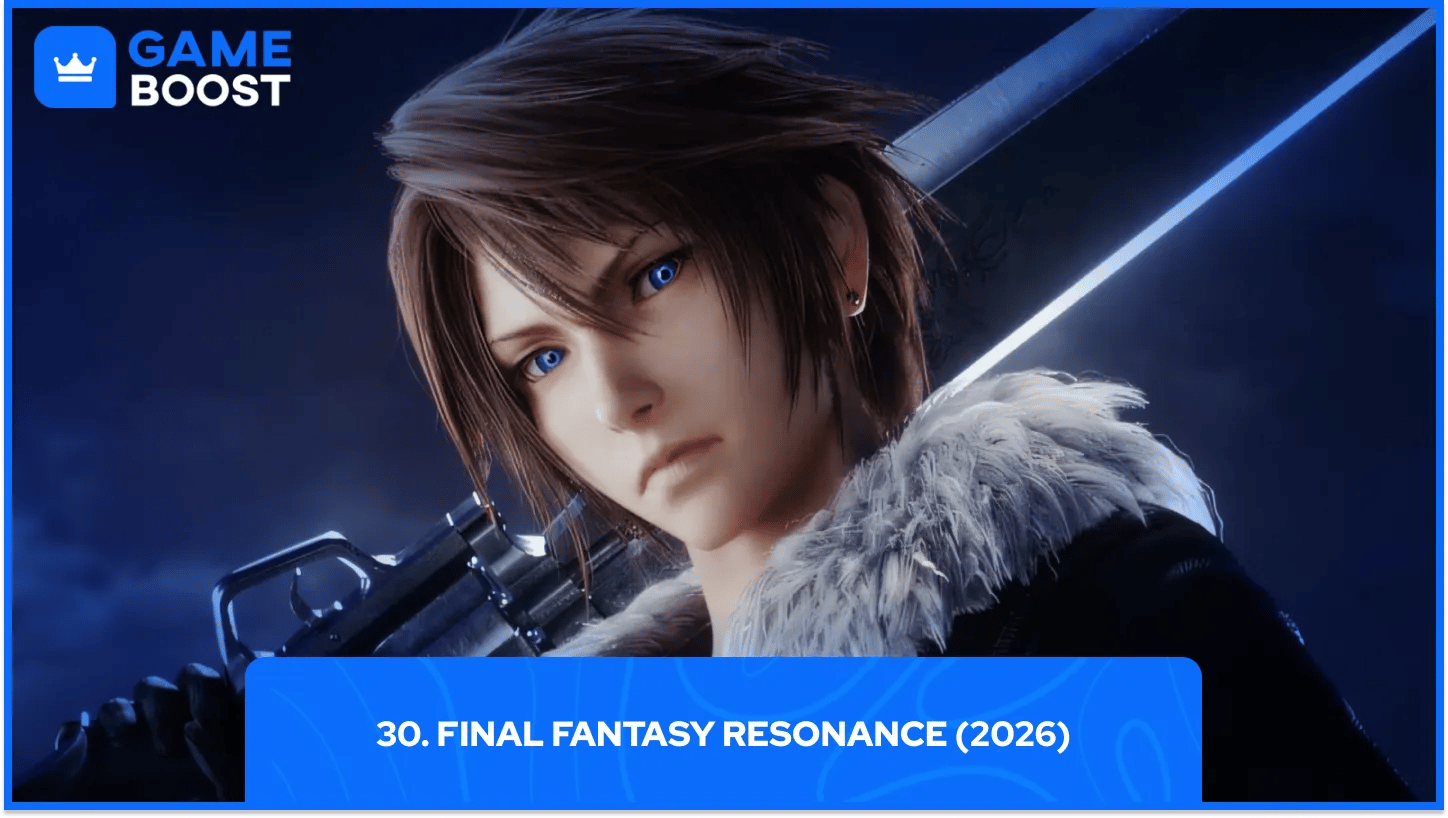
Details | Information |
|---|---|
Developer | Square Enix and Lancarse |
Release Date | October 22, 2026 (worldwide) |
Players | Single-player |
Platforms | PS5, Xbox Series X|S, Switch 2, Switch, PC |
Main characters | Rain, Lasswell, Fina, Veritas of the Dark |
Final Fantasy Resonance is the series' first HD-2D game, and it rebuilds the first story arc of the mobile game Final Fantasy Brave Exvius for consoles and PC. Rain and Lasswell, airship knights of the Kingdom of Grandshelt, watch the Earth Crystal shatter, then set out with the mysterious Fina to protect the remaining crystals from Veritas of the Dark.
Battles are turn-based with a turn-order timeline and a stagger gauge that drops faster when you hit weaknesses. Visions, crystallized heroes such as Cloud, Tidus, and the Warrior of Light, equip onto characters for stats and abilities. Stagger every enemy at once, and you can fire off a Resonance attack. There are 26 Visions, no gacha, and Sephiroth waits as a hidden challenge with a special reward.
My Verdict: Breezy and nostalgic, like a classic Final Fantasy with modern comforts. It plays it safe. Fans of the 2D games will have a great time anyway.
Thirty Final Fantasy games in order across four decades sounds like a mountain. Almost every entry is a fresh start, though, so pick the style you like (turn-based, action, tactics or online) and jump straight in.
Patience pays off only in the clusters. The Lightning Saga and Spira stories make little sense out of order, and the VII Remake trilogy gets much more out of you if you've played the 1997 original or at least Remake before Rebirth.
Final Fantasy XIV: Evercold arrives in January 2027, and Final Fantasy VII Revelation closes the Remake trilogy on April 8, 2027, on PS5, Switch 2, Xbox Series X|S and PC at once. If you haven't started XIV or the Remake trilogy, the months until then are a good window to catch up.
Will HD-2D become a regular home for Final Fantasy? Nobody outside Square Enix knows yet. The company has announced nothing beyond Resonance, so watch how it sells before hoping for an HD-2D Final Fantasy VI.
All Final Fantasy Games Collection
View all GameBoost Game Keys
View all GameBoost Accounts
View all GameBoost Boosting Services
View all GameBoost Currencies
View all GameBoost Gift Cards
View all GameBoost Top Ups
View all GameBoost Items
“ A former sports journalist and editor, Patrik joined Gameboost SEO team in 2026. He has spent most of his life playing Football Manager, but his sphere of interests spreads through whole gaming universe.”


