


•Hamza Rashid• 10 min read
League of Legends

League of Legends has dominated the MOBA scene since 2009, pulling millions into its strategic 5v5 battles where one misstep can flip the entire match. Every game unfolds differently based on champion picks, team coordination, and how fast objectives get taken down.
Here we break down the average game lengths across different League of Legends game modes, what makes matches drag on or end early, and how to plan your gaming sessions around LoL's actual time commitment.
Game length in League varies significantly depending on which mode you queue for. Summoner's Rift demands the most time investment, rotating modes offer quicker matches, and each has different factors that push games longer or shorter.
Standard Summoner's Rift matches in League of Legends typically last between 25 and 35 minutes, with the sweet spot landing around 30 minutes for most skill levels. This classic 5v5 mode gives teams enough time to farm, scale their champions, and fight for objectives without matches dragging on forever.
Ranked matches in League average around 28 to 32 minutes across all tiers, with competitive play pushing players to make cleaner macro decisions. Games in Iron through Gold often extend to 35+ minutes because teams throw leads and miss win conditions, turning dominant performances into coin flips.
Platinum through Challenger games tend to be shorter, with each match averaging 26 to 30 minutes, as players understand how to snowball advantages and recognize when a game is unwinnable. High-elo players also surrender earlier when matches are clearly lost, saving everyone's time instead of dragging out inevitable defeats.

All Random All Mid (ARAM) matches are the fastest game mode in League of Legends, usually wrapping up in 15 to 20 minutes, as the constant fighting, single lane, and inability to recall for items create a completely different pace compared to Summoner's Rift.
ARAM games can end in under 12 minutes when one team rolls a perfect poke composition against a team with zero engage tools. Random champion selection means some matches are basically decided in champion select, leading to quick stomps that feel unwinnable from the start.
Longer ARAM games hitting 25+ minutes happen when both teams have strong wave clear and poke, creating endless stalemates where neither side can push into the enemy Nexus towers. These matches turn into endurance tests where one missed skillshot decides everything after 20 minutes of poking.
Also Read: How to See Your Time Spent on LoL?
Arena mode rounds last approximately 15 to 25 minutes total, as this 2v2v2v2 format cycles through multiple combat rounds with different augments and buffs. Each individual round takes 2-3 minutes, and teams need to survive several rounds to claim victory.
Ultra Rapid Fire (URF) matches typically finish in 15 to 20 minutes due to the insane cooldown reduction and unlimited mana, making everyone a killing machine. The chaotic nature and overpowered abilities mean games snowball incredibly fast with little room for comebacks.
URF can occasionally stretch to 25 minutes when teams are evenly matched, and both sides have champions that can defend their base effectively. Split-pushing becomes nearly impossible to stop, and respawn timers are the only thing preventing complete chaos in these extended slugfests.
Teamfight Tactics matches typically last between 25 and 35 minutes, depending on how quickly players get eliminated and how contested the top positions become. This auto-battler mode plays out in rounds where your team fights automatically, and you focus on strategy between rounds.
Early eliminations can shorten TFT games to around 20-25 minutes when several players lose their health quickly and get knocked out by Stage 4 or 5. Fast-paced lobbies with aggressive reroll strategies and early three-star units tend to finish faster than games where everyone plays for late-game compositions.
Competitive TFT games with skilled players often extend to 30-35 minutes as the final four players have strong boards and healthy HP totals. These endgame scenarios create tense battles where a single positioning mistake or missed item combination can determine who places first versus fourth.
The longest TFT matches can reach 40+ minutes in rare cases when the final two or three players have nearly identical board strength and keep trading rounds back and forth. Hyper-roll lobbies where multiple players force the same comp also drag on longer due to contested units slowing everyone's power spikes.
Also Read: Check How Much Money You Spent on League of Legends
Teams can surrender starting at 15 minutes with a unanimous vote (all 4 players agreeing before 20 minutes). This early surrender option was added to reduce time wasted in completely unwinnable games where the score is 2-20 and three inhibitors are down.
After 20 minutes, only 4 out of 5 players need to vote yes for surrender, making it much easier to end matches that are clearly lost. Most surrenders happen between 20 and 25 minutes when teams recognize they can't come back from massive gold deficits.
The remake system activates within the first 3 minutes when a player fails to connect or goes AFK. If someone never loads into the game or disconnects before first blood and 90 seconds of game time, any player can call a remake vote at 3:00. The match ends with no LP loss for anyone except the AFK player, and the game doesn't count in your match history. Remakes are the absolute shortest way to exit a League match, typically ending around the 3-4 minute mark and saving everyone from playing a doomed 4v5.
Refusing to surrender in already-lost games can extend matches by 10-15 minutes unnecessarily, frustrating teammates who want to move on to the next game. The "never surrender" mentality works in rare comeback scenarios but wastes hours over hundreds of games when applied blindly to every deficit.
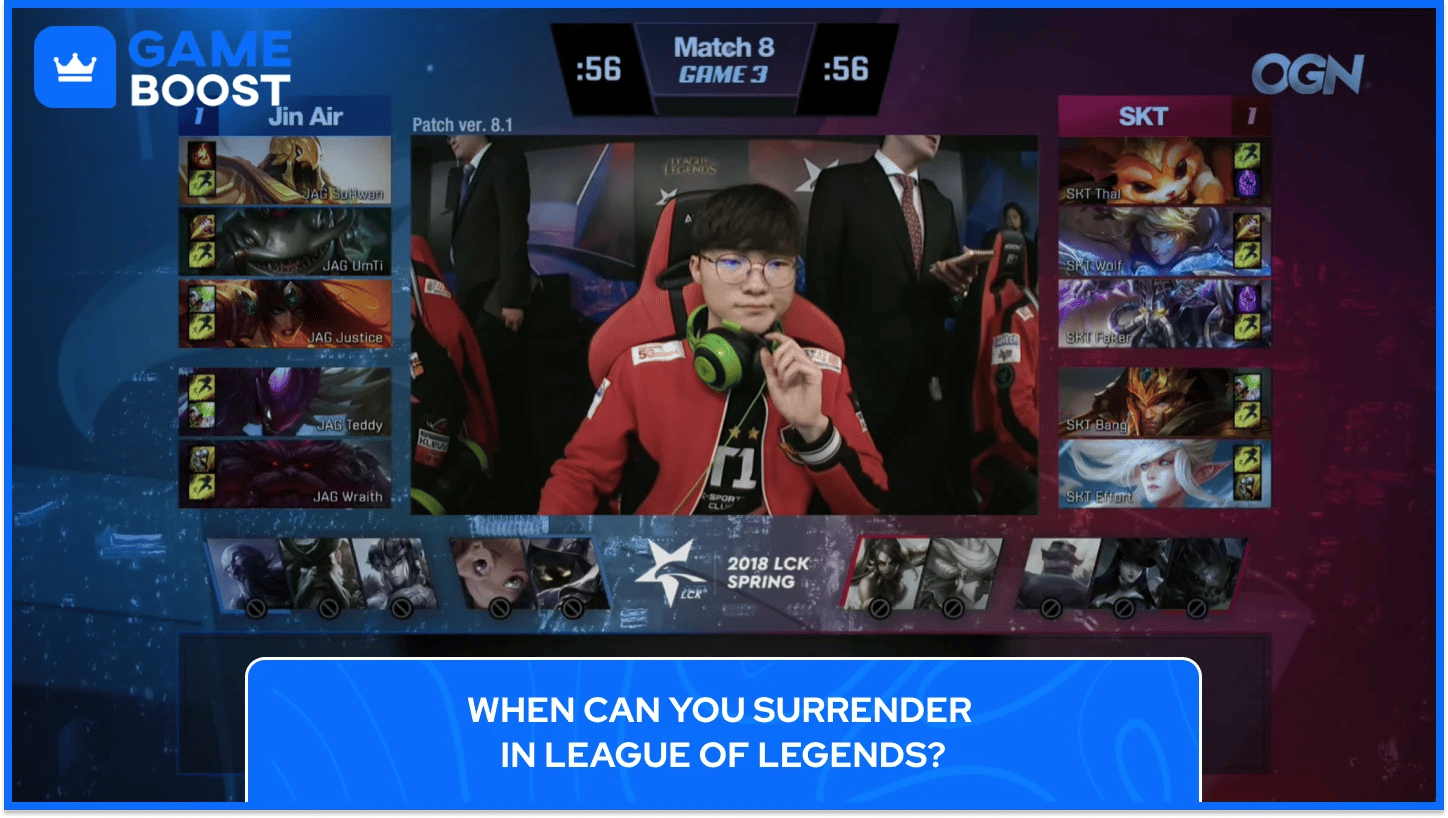
The longest professional League of Legends match lasted 94 minutes and 36 seconds between Jin Air Green Wings and SK Telecom T1 in 2018. Both teams had incredible wave clear and refused to take risks, leading to an absurdly long stalemate that tested viewer patience. The match featured minimal kills and aggressive plays, with both teams prioritizing safety over potentially game-ending engagements.
Non-professional matches have reached 2+ hours in extremely rare circumstances when both teams coordinate to avoid ending the game intentionally or when server issues prevent normal gameplay. These situations are statistical anomalies rather than realistic expectations for normal play. Some of these extended matches occur in custom games where players intentionally stall, or in regular matches where both teams have such strong defensive compositions that neither can break through the other's base.
The shortest possible ranked game is around 3-4 minutes with an early remake when a player fails to connect. Remakes trigger at the 3-minute mark if a player is AFK or disconnected before first blood occurs and before 90 seconds of game time pass. Outside of remakes, the shortest "real" games end at the 15-minute surrender mark. Stomps that end at exactly 15:00 happen when one team completely dominates from the start and the losing team immediately surrenders. These typically involve score lines like 20-2 with multiple turrets and drakes taken before the surrender vote goes throug
Also Read: How Many Times Has Faker Won Worlds?
Multiple factors determine if your League match ends at 20 minutes or drags past 40, including champion picks, player skill, and how teams handle advantages; all play massive roles in controlling game duration.
Team composition directly impacts the length of a League of Legends match:
Early game compositions designed around snowballing typically finish in 20-28 minutes. Champions like Pantheon, Renekton, and Lee Sin need to convert their early power into objectives before scaling champions outstat them.
Late-game team compositions extend matches to 35+ minutes intentionally, as champions like Cho'Gath, Kayle, Smolder, Veigar, and Vayne need time to reach their power spikes.
Siege compositions with strong wave clear artificially extend game length by preventing either team from pushing into bases. Champions like Ziggs or Anivia make it nearly impossible to end games quickly, even with significant gold leads.
Player rank dramatically affects League of Legends game duration:
Bronze and Silver players often turn 25-minute wins into 40-minute slogs because they don't recognize when to group, take Baron, or push for the final objective.
Gold and Platinum matches show better macro play but still suffer from indecisiveness, with games averaging 30-33 minutes.
Diamond and above consistently produce shorter games, averaging 27-29 minute,s because these players punish mistakes instantly and coordinate objective takes efficiently.
The way teams handle early advantages completely changesthe game duration. First Blood and early kills give teams a 52-55% win rate boost when converted into objective control, and these games typically end 3-5 minutes faster than average. A 3-kill lead at 10 minutes usually translates to 5+ minutes faster game completion because the winning team can control vision, invade the enemy jungle, and deny farm. On the other hand, comeback mechanics like Baron Nashor's buff can swing 15-minute deficits into wins, extending what should have been 25-minute stomps into 40-minute thrillers.
Planning your League of Legends sessions gets easier once you know how long does league match lasts, and what time commitment each mode demands. Summoner's Rift games need 30-40 minutes of your full attention, while ARAM and URF let you squeeze in quick 15-20 minute matches between other activities. TFT sits somewhere in the middle, giving you that competitive fix without the intense mechanical demands of traditional MOBA gameplay.
The real skill comes from recognizing when a game is worth playing out and when it's time to move on. High-elo players understand this balance perfectly, which is why their average game times stay consistently shorter than lower ranks. Master the fundamentals, learn when to push advantages, and you'll spend less time stuck in drawn-out defeats and more time climbing the ranked ladder efficiently.
Buy LoL Skins
Buy Riot Points
League of Legends Boosting Service
LoL Accounts
View all GameBoost Accounts
View all GameBoost Boosting Services
View all GameBoost Currencies
View all GameBoost Game Keys
View all GameBoost Gift Cards
View all GameBoost Top Ups
View all GameBoost Items
Counter-Strike 2 Skins
“ Kristina joined GameBoost in 2024 as an SEO specialist and quickly became the go-to writer for third-person shooter and competitive games. She covers titles like Fortnite, Valorant, League of Legends, GTA 5, and Roblox, focusing on how-to guides, practical tips, and updates.”