

Control Resonant Review: A Brutal Start, a Brilliant Sequel
This Control Resonant review comes from someone who loved the Oldest House and was nervous about Remedy trading the Service Weapon for a melee blade. Control Resonant puts you in the shoes of Dylan Faden, Jesse's brother, and throws him into a Manhattan the Hiss has twisted into something new. Remedy launched it on September 24, 2026, on PS5, Xbox Series X|S, and PC. I started it that day and have spent most evenings since swinging the Aberrant around the city.
The gamble paid off. The combat is the best thing Remedy has built, and Dylan turns out to be a better lead than I expected. The first few hours on my PS5 are rough, and the side content is patchy, so it isn't a clean sweep.
Below, you'll find my take on the story, the combat, the builds, the world, the difficulty, and the performance, and who should buy it now.
Control Resonant Review Summary
Control Resonant is a confident sequel that swaps gunplay for fast, combo-driven melee, and the switch works
Dylan Faden carries the story with an awkward, guarded voice, and his radio banter with handler Zoe de Vera is the emotional spine
Aberrant forms fill primary, secondary and combo ender slots, so two players rarely build the same Dylan
Each Resonant boss makes you pick one ability from a short list, so one run never collects them all
Manhattan is split into big, distinct zones around a Bureau hub, with fast travel that makes backtracking painless
The Control Resonant difficulty spikes early, even with the launch hotfix in place, and Assist Mode is there if you need it
The main story runs 25–35 hours by Remedy's estimate
Dylan Faden Is The Right Lead
Dylan was a locked-up side character in the first game, and Remedy made the smart call of keeping his edges. The FBC held him in the Oldest House for years, and he comes out of it stiff and suspicious. His sister Jesse is missing and the Hiss has broken out into Manhattan. The Bureau needs someone who can hold his own against it, and Dylan signs on mostly for lack of any other option. I liked him inside the first hour, which caught me off guard.
A lot of the storytelling runs through Zoe de Vera, the FBC agent who handles Dylan over the radio. Their conversations fill the walks between fights, and the dialogue choices let me play Dylan as prickly or as warmer. I leaned friendly by the second evening, and Zoe's replies shifted in ways that made the relationship feel earned. The radio format also trims the long NPC exposition scenes that slowed the original down. I'd happily see Remedy keep this lighter way of delivering lore.
The plot gets messier in the last stretch. Remedy leans hard on its shared universe, and a few late reveals draw on Alan Wake lore that newcomers will have to piece together. The collectible documents help, but the game drops a lot of them in the middle of combat areas, and stopping to read one mid-fight breaks the rhythm. I ended up grabbing them and reading a stack once the room was clear. The story is strongest as a sibling drama, and it wobbles when it tries to be a franchise map.
The Aberrant Makes Melee Click

The Control Resonant combat is built around the Aberrant, a weapon that changes form mid-combo. You pick a primary form for your basic attacks, a secondary form for special and charged attacks, and a combo ender for finishers. The primary options are Cleave (an axe-like blade), Strike (twin daggers) and Glaive (a scythe). Crush (a giant hammer), Extend (a chained weapon with extra reach) and Drill (a spear built for sustained damage) fill the secondary slot. Pairing across the two columns gives the system its depth.
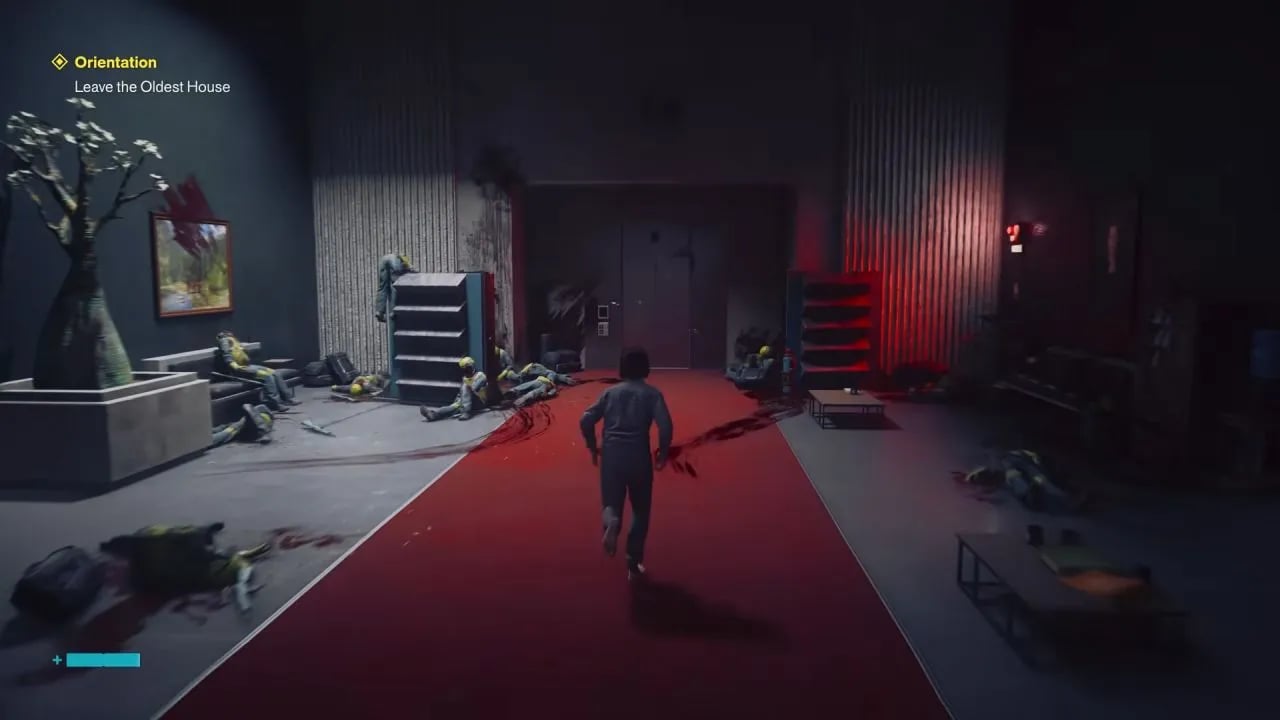
I started on Glaive and Crush, and the pairing taught me how Falter works. Every hit fills an enemy's stagger bar, and once a regular enemy breaks I get an execution that also hands me a short melee damage buff. Crush is slow, but it fills that bar fast, so my combos started ending in executions instead of drawn-out trades. Melee hits also refill Power, the resource Dylan spends on his paranatural abilities. That loop pushed me to play aggressively, and I stopped hanging back within my first session.
Movement matters as much as the swings. The perfect dodge is generous once the timing sinks in, and it flows straight back into attacks. Dylan can double jump and float across gaps, and some fights take place in pockets where gravity shifts under you. Enemies jump between platforms and throw paranatural attacks back at you, so standing still is how I died most often. Remedy has named Devil May Cry and PlatinumGames as influences, and you can feel it in every clean combo.
Abilities And Talents Reward Tinkering
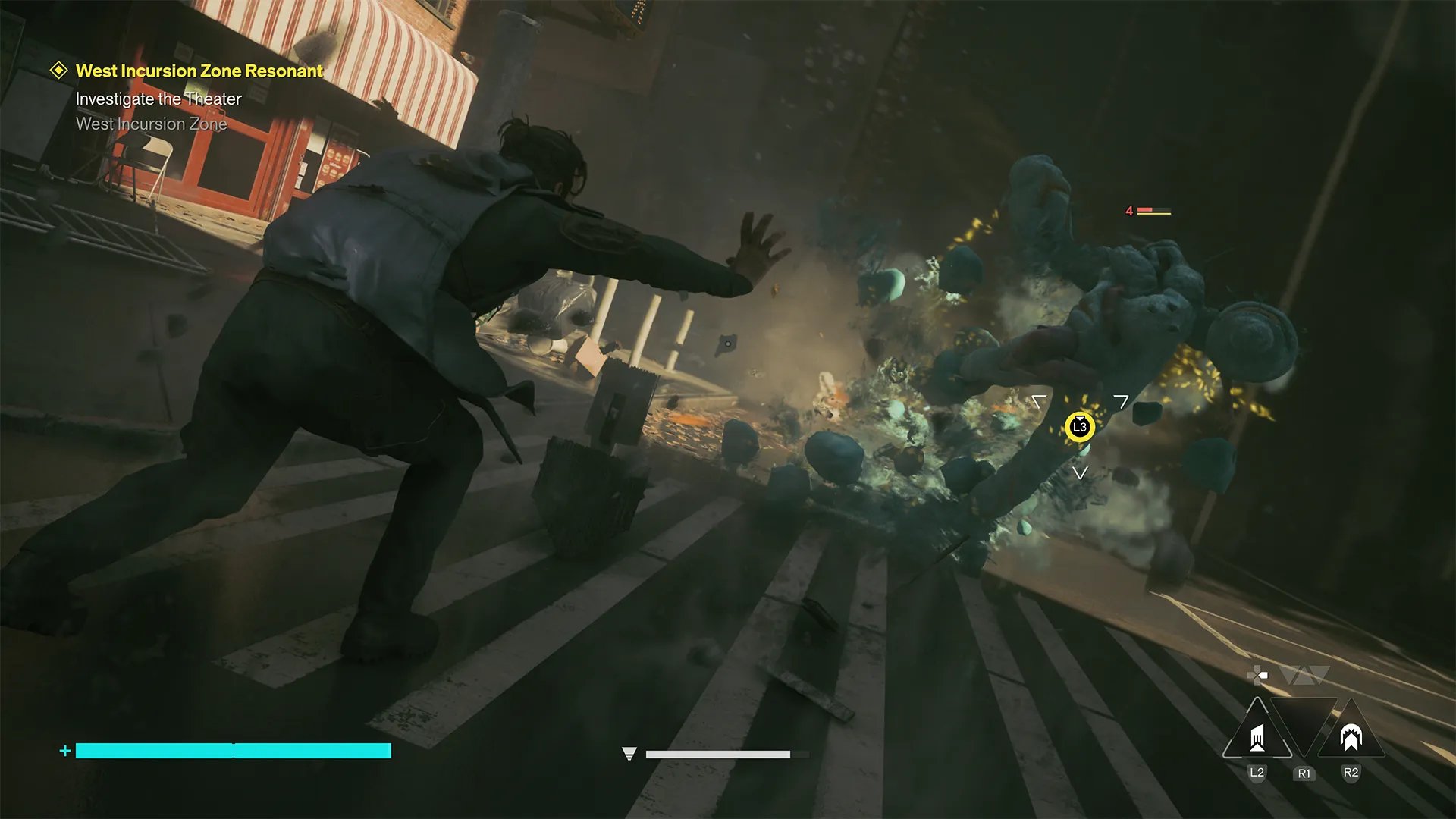
Dylan's abilities change a build more than any weapon swap. The first Resonant, the Artist, makes you choose one of three: Barrage launches projectiles, Shield wraps Dylan in a debris barrier, and Volatile Anomaly summons a turret-like ally you can throw and detonate. On PS5, each ability pushes back through the adaptive triggers with its own resistance, a small touch I noticed every time. I took Volatile Anomaly and ran it for most of the story. Parking it behind a crowd bought me room to line up executions.
Every Resonant boss works on that model. These distorted boss figures sit along the story path, and beating one offers a short list of abilities where you keep only one. Remedy explained in an Xbox Wire combat preview that you can't collect every option in a single playthrough. The Artist, the Dancer and the Deserter gave me some of my favorite fights, each with patterns I could read and punish. Talent trees carry exclusive picks too, so no single run fills them all.
All of this is managed in the Gap, a mind-palace space where Dylan applies upgrades, tests builds and crafts artifacts. Artifacts add passive modifiers, and fire and Mold-based status effects let you lean into damage over time. Respeccing costs Reset Items, and the launch hotfix lowered respec costs and put more Reset Items in vendor stock. I rebuilt Dylan twice before the credits and never felt punished for it.
Warped Manhattan Steals The Show

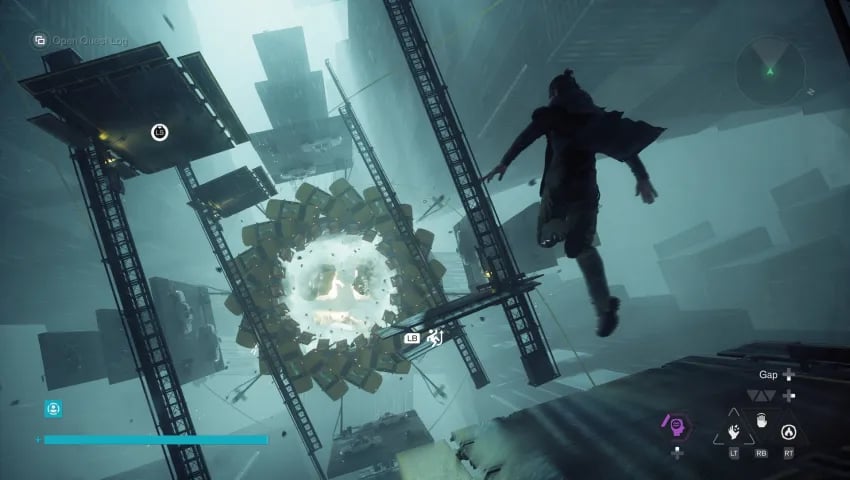
Manhattan is where the game shows off most. The city is divided into big, visually distinct zones that branch out from the Bureau's Manhattan hub, and each one breaks physics in its own way. Streets fold up into the sky, skyscrapers hang at angles, and bodies float above the rubble where the Hiss took hold. The gray brutalism of the original gives way to far more color, and the signature red pops against all of it. I stopped to take screenshots constantly.
Remedy describes these as large, distinct zones, and the label fits my experience. Each zone mixes story missions, side stories, hidden encounters and vendors, and near-instant fast travel means I never walked back across a map I had already cleared. Traversal abilities open up rooftops and ledges as the story goes, so older zones gain new routes later. It has the lock-and-key feel of the Oldest House stretched across a city. Coming back to a zone with a new movement ability was one of my favorite loops.
Some of the trippiest areas are hard to read, and more than once I lost several minutes working out which surface was the floor. Objective markers help, but a few paths only reveal themselves if you study the geometry. It suits the tone, and it gets tiring after a long session. I learned to take those zones slowly.
Side Quests Swing From Weird To Filler
The best side content is as strange as anything in the main story. One quest had me singing along with a malevolent karaoke machine, and another dropped me into a pocket dimension full of taxis for a spot-the-difference puzzle. The side stories come with their own small arcs, lore beats and outfit rewards. These are the quests I'll remember, and they are the reason to clear a zone properly.
Filler sits right next to them. Escort jobs and wave-defense missions turn up across the map, and they rarely have any twist. Wave fights are the worst offenders, since smaller enemies keep respawning until you take down the larger one anchoring them. I spent too many of those fights clearing adds that kept coming back. They feel obligatory, and I dropped most of them once the side stories were keeping Dylan strong enough.
Side content also feeds progression. Skipping too much leaves Dylan underpowered for later story fights, and the game expects you to do a fair share of it. Chasing side stories and ignoring the repeatable tasks kept me on pace. If you plan to mainline the story, expect to hit a wall or two.
The Opening Hours Hit Too Hard
The Control Resonant difficulty is the first thing I'd warn a friend about. Early enemies soak up damage, Dylan dies quickly, and his toolkit is thin before the first few talents come in. Remedy shipped a launch hotfix that lowered base enemy health and Falter thresholds, eased the Dancer and Deserter fights, and raised Dylan's maximum Aberrant Strength and Ability Strength. I played with that hotfix in place from the start, and the opening still punished me. It clicked around the point where I had a second ability and a proper combo ender.
Enemy health bars keep growing in the late game, and a couple of the final bosses turned into long endurance tests. Healing comes from pickups and enemy drops, and in the hardest fights the damage coming in outpaced what I could recover. Enemy variety thins out around the same stage. The last few hours threw the same matchups at me more often than I wanted.
Assist Mode is the release valve, and it's one of the most flexible I've used. Remedy's Assist Mode breakdown covers enemy aggression, the perfect dodge window, projectile speed, incoming and outgoing damage, Falter and Power recovery, plus immortality and one-hit kills. The sliders go both ways, so players who want more challenge can raise it too. Remedy says no trophies or achievements are locked behind any of these settings. I widened the dodge window for one boss and felt no guilt about it.

Control Resonant Looks Stunning In Motion
I played on a PS5 Pro in Performance mode, which the official PS5 features post lists at 60fps at 2160p, and it stayed smooth in the busiest fights. The base PS5 offers a 60fps Performance mode at 1440p and a 30fps Quality mode at 2160p. The Pro adds a ray-traced Quality mode at 30fps and a 40fps Balanced mode for 120Hz displays. The DualSense feedback is excellent, and 3D audio on my headset made it easy to tell when something was flying at my back.
On PC, Remedy's Northlight engine supports path tracing and Nvidia's RTX Mega Geometry, and Control Resonant runs on GeForce NOW from launch. A Mac version through Steam and the App Store is on Remedy's roadmap. On my PS5 Pro, the particle storms in big fights are the best-looking chaos I've seen in an action game.
Character detail is the weak spot. Faces look great in cutscenes, and they drop noticeably during regular conversations out in the world. That matters in a game that leans this hard on dialogue. It never broke the experience for me, but I noticed it every time the camera lingered. Here is a full guide to the problem.
Is Control Resonant Worth Buying Right Now?
Yes, if you like melee action with real build depth and don't mind a hard start. Control Resonant is the most mechanically satisfying game Remedy has made, and Manhattan gives it a setting that keeps finding new ways to surprise you. Fans of the original will get the weirdness and the lore they came for, delivered through a blade instead of a gun.
The game shipped in good condition. The day-one hotfix went after the early sponginess and made respeccing cheaper, and I hit no crashes or progress-breaking bugs. Both ends of the campaign could use more tuning. Remedy has shown it will listen, judging by how fast that first hotfix landed.
Wait if you came for the original's slower, investigative pace or its gunplay. Wait as well if waves of respawning enemies wear your patience thin, since the side content leans on them. Those players will get more out of it after a balance update or two, and at full price the rough edges would sting more. Everyone else can jump in now.
FAQs About Control Resonant
Final Words
For me, Remedy games were always about the story first, with combat as the part I put up with. Control Resonant flips that around. The swinging, dodging and ability juggling kept me coming back each evening, and the story became the bonus. That's a strange thing to say about a Remedy game.
Patience with the first few hours matters most. The game hands you its best tools late, and the players who push through to a second ability and a real combo ender are the ones who'll love it. If it isn't clicking, a small Assist Mode tweak costs you nothing.
Balance is the unfinished part. Remedy moved fast on the opening, and the late-game health bars and thin enemy roster are the next obvious targets. If those get the same attention, this goes from a great action game to Remedy's best work.
GameBoost Products
Control Resonant Game Key
View all GameBoost Game Keys
View all GameBoost Accounts
View all GameBoost Boosting Services
View all GameBoost Currencies
View all GameBoost Gift Cards
View all GameBoost Top Ups
View all GameBoost Items