

Halloween: The Game Review, Great Killer, Shaky Survival
This game is reviewed on:
Graphics Card | GigaByte Geforce RTX4080 |
Processor | AMD Ryzen 7 9800X3D |
Memory | Kingston Fury Beast White RGB EXPO 64GB RAM |
I picked up IllFonic's new slasher the weekend it launched, and this Halloween: The Game review comes out of most evenings since, split between wearing the mask and running from it. It's a 1v4 asymmetrical horror game set in Haddonfield on Halloween night in 1978, and playing Michael Myers is the best version of that fantasy I've had in the genre.
The rest of the package is shakier. Civilian rounds hinge on AI residents who make baffling choices, and the patch cycle has swung the balance hard in both directions.
Halloween: The Game launched on September 8, 2026 on PS5, Xbox Series X|S and PC, and the official site announced on September 12 that it had passed 1 million players. Below, you'll find how each role plays, what the four maps get right, where the story mode fits and who should hold off.
Halloween: The Game Review Summary
My verdict is 7/10: the best Michael Myers game I've played, dragged down by AI residents and a balance that moves with every patch.
Michael Myers plays like the film, with Killer Sense stalking, Shape Jump through the dark and kills built from whatever is in the room.
Civilian rounds are about saving residents, so a match can turn on an NPC who runs straight at the knife.
Four Halloween: The Game maps cover farmland, the Strode house street, a rich suburb and downtown, all dressed in convincing 1978 detail.
The story mode is a prologue plus five chapters as Michael, about two hours long, with Dr. Loomis narrating and multiple endings.
Patches 1.0.3 and 1.0.4 cut civilian melee and fixed grabs, and Michael now wins more fights than he should.
Michael Myers Is The Reason To Play
Every match as Michael starts slow, and the pace suits him. Killer Sense drops me into first person and builds Stalk on anyone I watch, so my opening minutes go by behind hedges and parked cars, watching civilians loot kitchens. The longer I stare, the higher their Stalk tier climbs, and high tiers open up executions and make my grabs harder to wriggle out of. I learned on my first evening that charging in with a knife gets me blinded by a flashlight and beaten back with a bat.
Shape Jump is the ability I'd build a whole guide around. Michael slips into the shadows and moves faster unseen, but entering or leaving it needs darkness or a spot outside a resident's line of sight. Shape Dash lunges me forward from inside it, which is how I close the last few meters on someone sprinting for a car. Porch lights and streetlamps became the map I actually read, and I started cutting lights before I moved. Catching someone off guard this way is the best feeling the game has.
Beyond Killer Sense and Shape Jump, I pick three abilities for my loadout, from options including Reality Tear, Blackout and Detection Pulse. Blackout knocks out the lights around me for a short spell, and Detection Pulse finds residents tucked into hiding spots, something the day-one patch made it better at. I run Blackout almost every match. Executions change with the room, so a kill next to a television plays out differently from one by a fireplace or a fence. Admiring a kill in first person feeds Bloodthirst, which ramps Michael up in levels as the night goes on.
He goes down, but he never dies. Four civilians swinging axes and bats can put him on the floor, and the police can detain him for a short time. A Steam reviewer going by Mickey wrote that coordinated survivor groups can bully Michael badly, and my first week matched that: my worst rounds came against full squads attacking in unison. Patch 1.0.3 gave a recovering Michael temporary stagger immunity plus buffs to damage resistance, melee damage and attack speed, so those gang fights now tend to end with him standing.
Civilian Matches Live Or Die On Residents
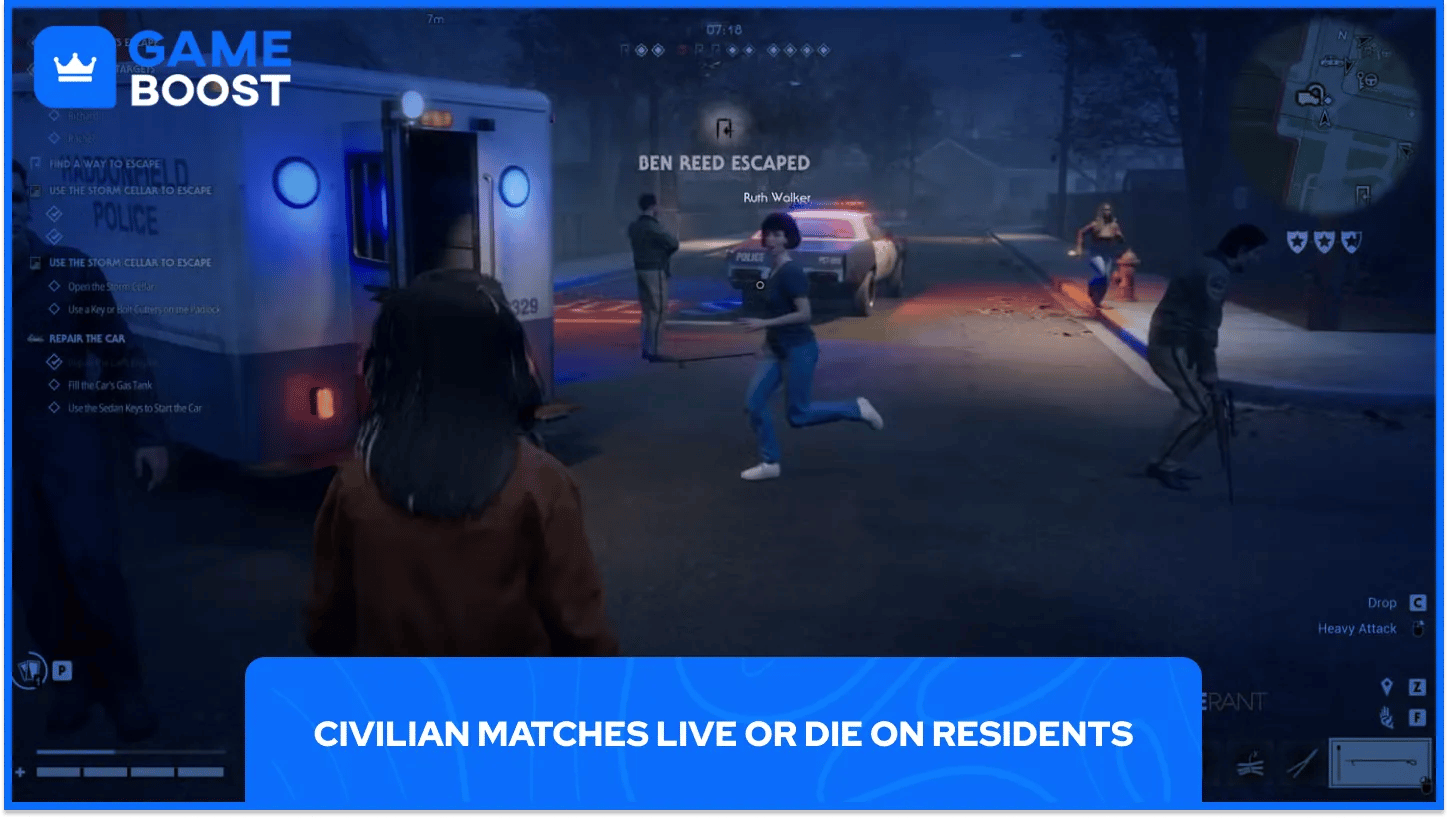
Civilian rounds run about 20 minutes, and escaping is only part of the job. Haddonfield is full of AI residents going about their evening, and my team scores by warning them, persuading them to hide, follow or call the police, and walking them out. Special Targets are residents Michael earns extra for killing before time runs out. Patch 1.0.3 lowered those points and raised the value of every ordinary resident saved or killed.
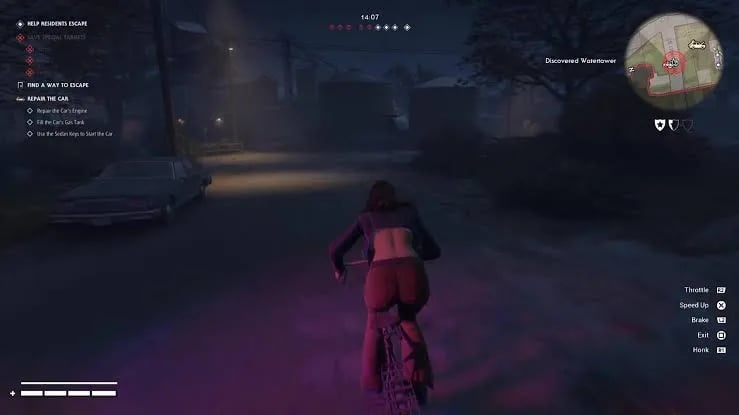
Every round randomizes the escapes and locks them behind items. Depending on the draw I'm prying open a padlocked gate, repairing and fueling a getaway car or getting a storm shelter open, sometimes after swapping in fuses to get a door working. The keys, bolt cutters, repair kits and fuses all come out of drawers and cabinets. Starting an escape makes enough noise to bring Michael running. My group settled into a split: two of us loot, one works the exit and one herds residents.
The residents are the weak link. I've watched a neighbor I'd just talked into hiding wander back onto the lawn, and others sprint toward Michael when told to run. The day-one patch fixed police NPCs getting stuck and residents failing to path into escapes, and IllFonic's September 17 roadmap listed residents spawning on roofs among the bugs it was chasing. Ever tried coaxing a terrified neighbor down off a roof mid-chase? When the AI behaves, guiding a panicked neighbor across a dark backyard is the tensest thing in the game. When it breaks, a round of good play counts for nothing.
Each civilian carries four stats: Athleticism, Personality, Resourcefulness and Capability. Athleticism covers how fast and how long I can run, Personality covers persuasion plus fear and stalk resistance, and Resourcefulness makes repairs, cars and firearms easier. Capability decides how hard I hit with melee weapons and throwables. The standard edition ships with ten civilians, from new faces like Jennifer Aarons and Marcus Navarro to Laurie Strode, Annie Brackett, Lynda van der Klok and Bob Simms. Richard and Alexis come with the Digital Deluxe Edition. Death isn't the end of my round either, since I can return as a Sheriff's Deputy or Dr. Loomis to help detain Michael.
Halloween: The Game Maps Nail 1978
The four Halloween: The Game maps are where IllFonic's period detail lands hardest. Haddonfield Heights holds the Strode house, the abandoned Myers house, the water tower and Lampkin Lane, and walking it as Michael feels like stepping onto the film set. Across all four maps, porches carry jack-o'-lanterns, kitchens have corded phones and the cars look period-correct.
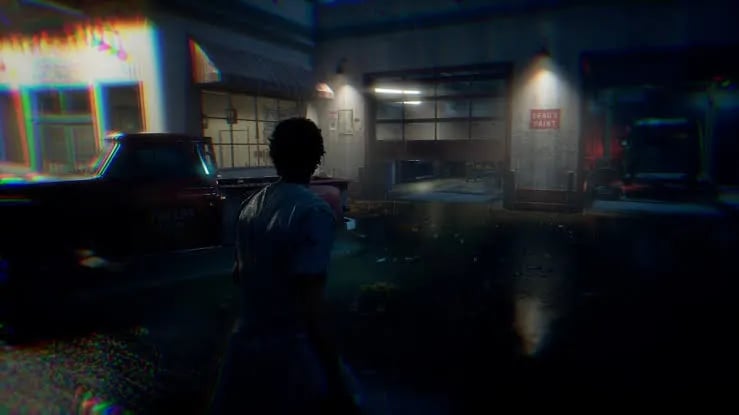
East Haddonfield is the rustic one, farmland spread around The Rabbit in Red Lounge biker bar, Phelps Garage and the Midwest Feed Company. In the fiction it's Michael's way into town, and the wide gaps between buildings leave civilians exposed when they run. I like my odds as Michael there. As a civilian I stick to the buildings and move in the dark.
Orange Grove Estates is the upscale suburb, with multi-story homes, detached garages, balconies, the Doyle and Wallace residences and a playground. Stacked floors make hiding easy, and Detection Pulse earns its slot here. Haddonfield Town Center is downtown, built around Nichols Hardware with the A-Side Music Store, Hill Garden Center and Patty's Pub nearby. It plays brightest to me, with shop windows and streetlights cutting down my Shape Jump routes.
Since the day-one patch, public matches cycle through every map before repeating one, so I see all four in an evening. Four is still a thin count for a game built on replaying the same 20 minutes. IllFonic's roadmap post from September 17 lists fixes and October celebration plans without naming a new map.
The Story Mode Earns One Evening
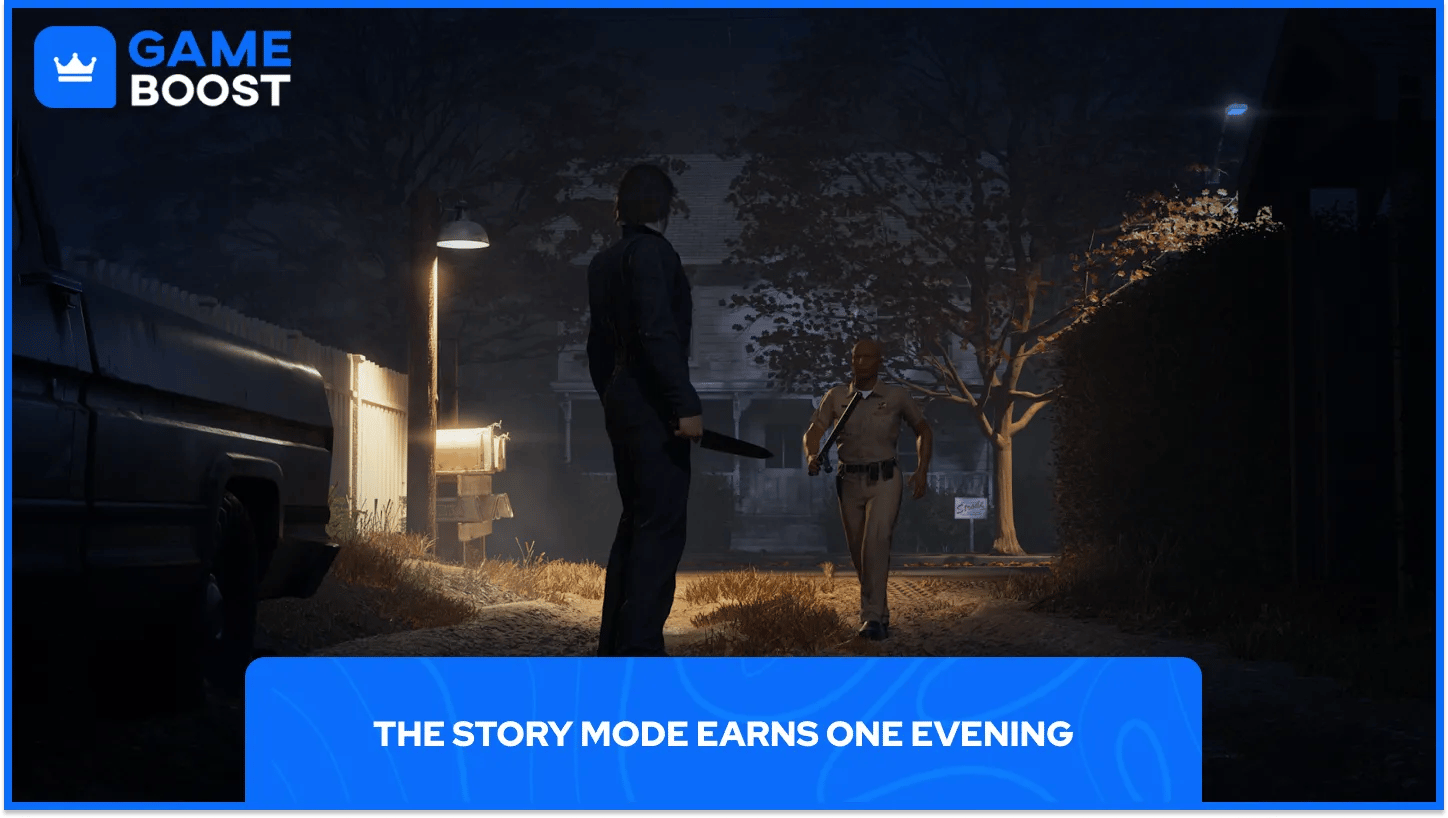
The Night He Came Home is the single-player mode, and I play all of it as Michael. It picks up after his escape from Smith's Grove Sanitarium, 15 years after the 1963 killing, with Dr. Samuel J. Loomis narrating. There's a prologue and five chapters, and I finished it in roughly two hours across one evening. Scenes rebuild moments from the 1978 film and fill in things it never showed, like the escape itself and the Phelps Garage incident.
It doubles as the best tutorial the game has for Michael. The chapters walk me through Killer Sense, Shape Jump and executions in a controlled space before the online side throws four humans at me. I went into multiplayer confident with stalking and lost my first few rounds anyway, so the lesson has limits. It teaches nothing about civilian play, since you never control one.
Replay value comes from the optional layer. IllFonic lists multiple difficulty levels, optional objectives, secret collectibles and multiple endings decided by what you do. The singleplayer challenges award alternate costumes for the legacy characters, including looks from the original film, which gave me a reason for a second run. IllFonic's roadmap flagged four of the harder story challenges, in chapters 2, 4 and 5, for retuning. I also hit a crash at the end of the prologue, one of the end-of-chapter crashes the studio flagged, and patch 1.0.4 went after crashes following story missions.
Perk Cards Turn Progression Into A Gamble
Progression runs on four tracks at once: a Profile Level for everything, a Killer Level for Michael, a Civilian Level for each character and a Weapon Level for each of Michael's weapons. Maxing any of them lets you prestige for another set of rewards. Hundreds of challenges sit on top, passive ones that track themselves and progressive ones tied to characters, skins and weapon types. Every match I finish nudges a few bars along, which keeps the post-match screen satisfying.
Perk Cards are the civilian system that decides fights. Finished matches pay Perk Points, and I spend them rolling for random cards of varying strength, then build a Perk Deck for my loadout. The day-one patch capped decks at two copies of any single perk. IllFonic later said select perks were far too effective against Michael. The random rolls mean my deck depends on luck more than on how well I play, and who wants a loadout picked by a slot machine?
IllFonic has handed out Perk Points as compensation twice: 5,000 to everyone who logged in during early access and 10,000 to everyone with patch 1.0.4. That second gift filled out my civilian decks faster than a week of matches would have. It works as an apology, and it also shows how slow the base rate is. Michael's side progresses differently, through skins, tints, starting weapons and abilities he earns by playing.
Patches Keep Swinging The Balance
Every Halloween: The Game patch has moved the goalposts. Patch 1.0.1 landed with launch on September 8 and reworked stamina: civilians regenerate later, Evil Presence drains more, and stalked targets recover slower. Low-Athleticism characters got faster recovery, and high-Athleticism ones lost maximum stamina. Patch 1.0.2 on September 11 fixed crashes and re-enabled Prestige Challenges. It also cut Grab Escape Item spawns such as the Pocket Knife, raised Michael's base damage resistance and weakened the Lethal Pitch perk.
On September 17 IllFonic said select perks were too effective against Michael and named a Slasher meta it wanted to break up. Patch 1.0.3 on September 22 cut civilian melee damage at high Capability and raised it at low Capability. It also slowed Wood Axe and Pick-Axe combos, reduced heavy melee, rifle and shotgun spawns and weakened the Heavyweight trait. Michael also got more damage resistance at every Bloodthirst level, to stop one-shot downs.
My civilian nights changed after 1.0.3. Rounds where my group used to swarm Michael now end with him shrugging off the pile and picking us apart, and escaping feels like the only plan left. Patch 1.0.4 on September 26 fixed Bloodthirst Level 3 making grabs far harder to escape than intended, which explained a lot of deaths I'd blamed on myself. My read is that the pendulum has swung past center, toward Michael.
Stability is the other half. Patch 1.0.4 fixed a crash when Loomis spawns on lower-spec platforms and replaced the two Xbox Series S graphics modes with a single 30 FPS mode. On PC I still get stutter in busy moments and a crash every few sessions. IllFonic has promised a quality-of-life update in early October and special content for Halloween month.
Is Halloween: The Game Worth Buying Right Now?
Yes, if you're buying it to play Michael Myers, and I'd hold off if you mostly want to survive. The killer side is polished, faithful to the film and fun in every match I play, with a story mode that's worth one evening. Crossplay links PS5, Xbox Series X|S and PC, and the day-one patch stopped cross-platform party members from getting dropped on the way into matchmaking.
The game is stable enough to enjoy and still being rebalanced patch by patch. Civilian play is where that hurts, since the AI residents and the current Michael-leaning balance can undo a well-played round. At full price I'd want the early October update in hand before committing as a civilian main.
Xbox Series S players should expect a 30 FPS cap, and players in Australia and New Zealand can't buy it at all. PS5 and Xbox Series X players who prefer a disc have a physical edition scheduled for October 6, 2026.
FAQs About Halloween: The Game

Final Words
Every horror sandbox eventually gets solved, and that clock is running fast here. Within two weeks of launch, civilian melee was strong enough that IllFonic cut it hard in patch 1.0.3, and the fix tipped things the other way. How well the studio lands the next correction will decide whether civilian play settles or keeps lurching.
Light decides more rounds than any perk. Porch lamps, streetlights and Blackout go a long way toward setting where Michael can Shape Jump, and a civilian who learns to move through dark yards survives rounds a flashlight-waver doesn't. Learning each map by its light sources did more for me than my best Perk Deck.
IllFonic has promised a quality-of-life update and special content for Michael's month, and a fifth map would change the replay math more than any balance pass. I'll be back in Haddonfield for whatever arrives.
GameBoost Products
Halloween: The Game Game Key
View all GameBoost Game Keys
View all GameBoost Accounts
View all GameBoost Boosting Services
View all GameBoost Currencies
View all GameBoost Gift Cards
View all GameBoost Top Ups
View all GameBoost Items