Resonance: A Plague Tale Legacy Review: Swords Over Rats
This game is reviewed on:
Graphics Card | GigaByte Geforce RTX4080 |
Processor | AMD Ryzen 7 9800X3D |
Memory | Kingston Fury Beast White RGB EXPO 64GB RAM |
Asobo built a very different game around a familiar face, and that's where my Resonance: A Plague Tale Legacy review starts. Sophia, the smuggler who stole scenes in Requiem, gets her own Plague Tale prequel, and it swaps stealth and rat swarms for sword fights, light puzzles, and Greek myth.
I picked it up on PC the weekend it launched and have been in it most evenings since. I finished the story on Normal, then went back for a share of the charms and blades I'd walked past. Somewhere along the way it stopped feeling like a spin-off and started feeling like Asobo's next real step.
Below, you'll find my take on the story, the combat, the puzzles and creature sections, and how the game looks and runs. I'll also cover who I think should buy Resonance: A Plague Tale Legacy and who should wait.
Summary
My verdict: a confident action-adventure that keeps the series' grief and darkness and drops most of its stealth DNA.
Story: Sophia's search for her past on the Minotaur's Island, set 15 years before Requiem, is the strongest writing in the game, with Leni and Faro as the emotional anchors.
Combat: sword, dagger, parry, kick,k and grappling hook make every fight a test of timing, and Resonance Points and charms reward every detour.
Puzzles and stealth: the Minoan sphere's light puzzles repeat themselves by the back half, and the creature sections are too rare to replace the rats.
Length: expect a story run of roughly 10 to 15 hours, and well past 20 hours for everything.
Presentation and performance: a gorgeous island and a superb score, smooth play on mid-range PC hardware and a few bugs that a checkpoint reload fixed.
Sophia's Prequel Story Earns Its Tears
Resonance opens with Sophia as a girl, years before the confident captain I knew from Requiem. The game sets up her father, Alec, his right-hand Faro, and the visions of an ancient warrior that have followed Sophia since childhood. An early infiltration of the Venice carnival puts Sophia side by side with Leni, a thief whose banter gives the first act its warmth. By the time they reach the Minotaur's Island off Crete, I cared about this little family of outlaws more than I expected to.
Somewhere on that island lie the origins of the Prima Macula, the curse at the center of the whole series. Sophia's visions turn out to belong to Theseus, and the game cuts between her medieval present and his Minoan past, where his trials play out in flashback. I liked how those two timelines answer each other. Events in the Minoan past change what Sophia finds in the present. That link gave the myth some weight for me, since Theseus stops being a statue-perfect hero and becomes a character with a story of his own.
Faro stayed with me longest. He steps in as Sophia's guardian, and the scenes between him and Sophia say more about grief than any speech in the game. Ezra, the crew's gentle giant, gets quieter moments that hit just as hard. If you finished Requiem, the final scene ties straight into that game's ending. Want it to hit as hard as possible? Play the earlier entries first.
Melee Combat Is The Big Surprise
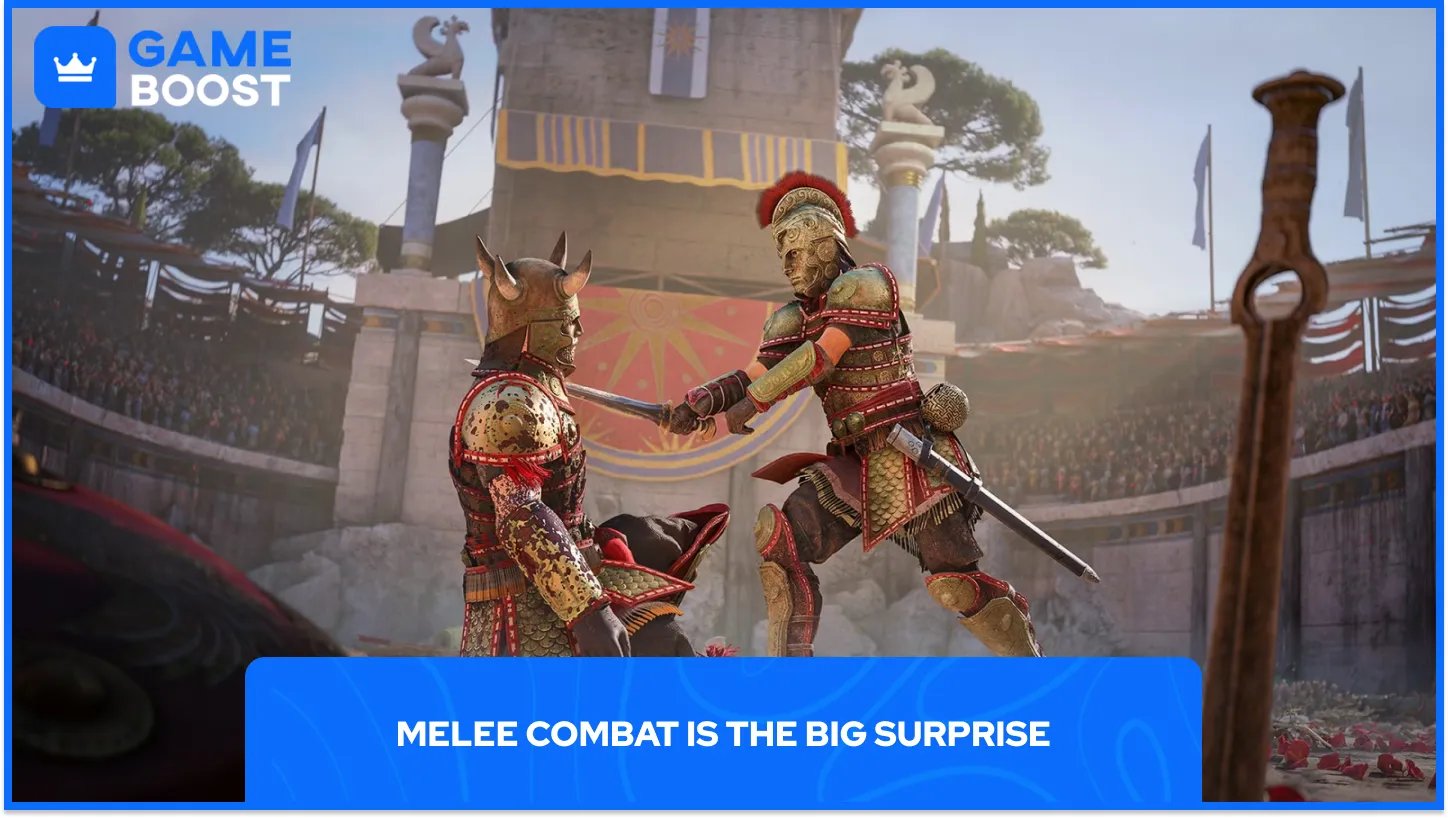
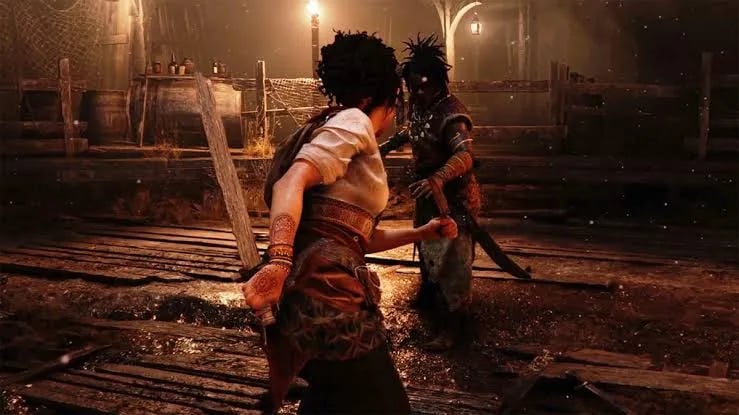
Resonance: A Plague Tale Legacy combat is the biggest change in the series, and it works far better than I expected from a studio known for sneaking. Sophia fights with a sword and a dagger and chains attacks into brutal finishers. Enemy wind-ups are color-coded: you parry the yellow ones and dodge the red ones, and mixing those two up caused most of my early deaths. On Normal, Sophia only takes a few hits before she goes down, so I learned to respect even a single archer.
My favorite tool in the kit is the kick. It staggers enemies, breaks their rhythm,m and sends anyone near a ledge straight over it. The grappling hook drags a distant enemy into my blade or throws one into a hazard, and grabbing a bottle to break over someone's head never got old. Finishing an enemy restores health, which pushed me to fight aggressively and stopped me from hiding behind a block.
Progression runs on Resonance Points, which you earn from fights and from seashells tucked into corners of the island. They feed a compact skill tree of six main abilities, each with two mastery options. Aegean Deflect is a good example: one mastery adds damage after back-to-back parries, the other lets Sophia block heavy attacks. A Focus Gauge builds during fights and pays out a wide swing that clears space, and charms found off the main path add perks such as a longer parry window. Special tombs hold legendary blades with their own bonuses, and that loot kept dragging me off the critical path.
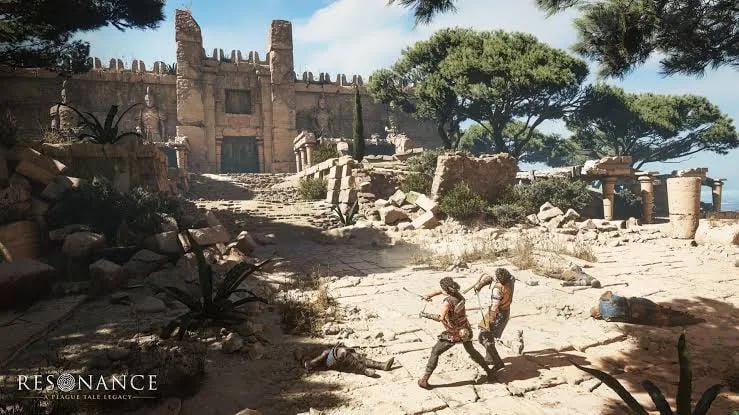
Enemy variety covers the usual spread of archers, spearmen, knife fighters, shield users, rs, and brutes. By the last third I was seeing the same mixed groups in the same arena layouts, and the parry window started to feel like the only answer the game wanted from me. Targeting can also pick the wrong enemy in a crowded fight. Those are real limits, though none of them stopped me from looking forward to the next scrap.
Puzzles Repeat, The Creature Sections Shine
Sophia carries a stolen Minoan sphere that acts as a prism. Held up in the light, it reveals hidden marks and paths around the ruins, and it also splits light into colored beams you steer through lenses. The first few rooms built around it are lovely, and I enjoyed reading the ruins for clues. Her journal keeps track of clues, so I could check my notes without losing sight of the room.
Variety is the trouble. By the middle chapters,s I was solving the same kind of beam-routing room again, often followed by a floor of symbols to step on in the right order. In long stretches,s the game stops for one puzzle after another, and the pacing sags right where the story wants to speed up. An optional hint system softens it, and you can switch it off or set how quickly hints appear. I left it on the slowest setting and only leaned on it twice.
The rat swarms that defined Innocence and Requiem are close to absent, and there's no slingshot to lean on either. Lead writer Carol-Ann Bañuls explained before launch that the rats belong to the series' French plague setting and have no ties to the Minotaur myth. In their place, Asobo uses a creature that hunts Sophia through the dark, first underground and later around the palace. When it hunts you, Sophia has to slow down, stay behind walls, pillars,s and boulders, and avoid leaving a glowing trail behind her. Light becomes both a shield and a risk, and juggling it with the sphere gave me the series' old sense of dread.
I wanted more of it. These sequences are the most memorable in Resonance, yet they felt rare to me and never grew into a system the way the rats did. More than once I caught myself holding my breath, which no sword fight in the game managed. If stealth was the reason you loved the first two games, this is the part that will feel thinnest to you.
Minotaur's Island Looks Great And Runs Well
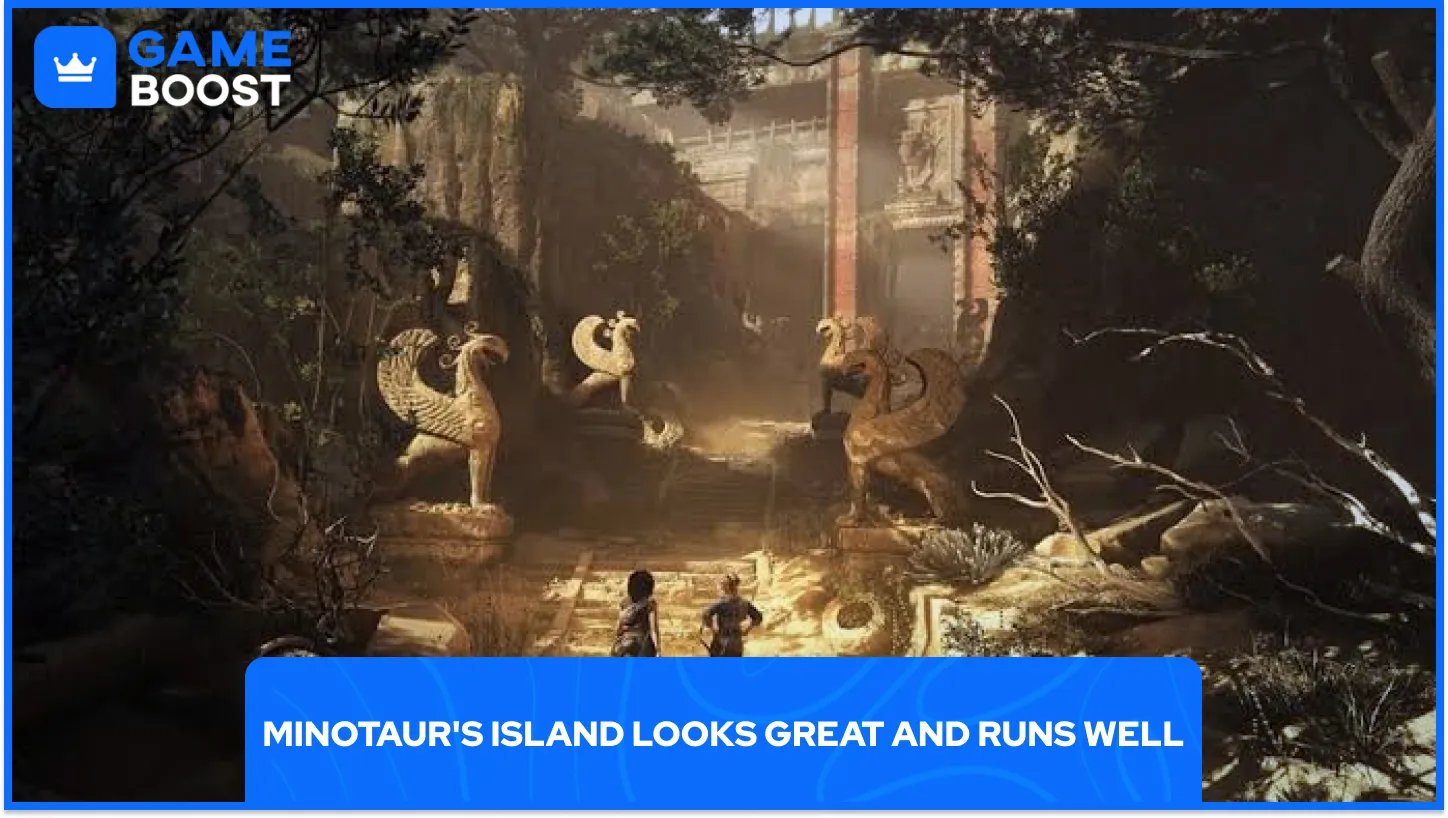
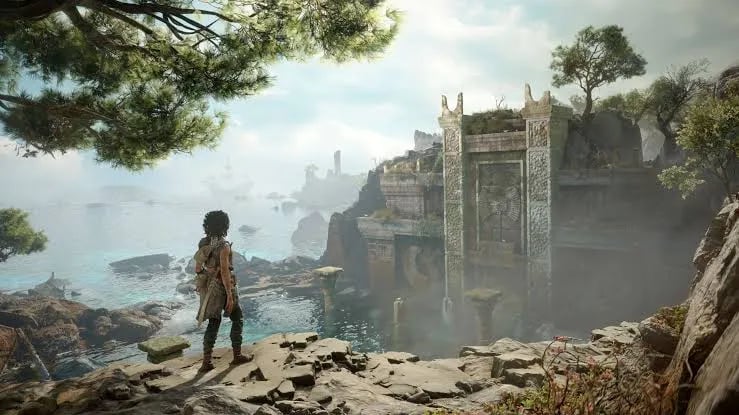
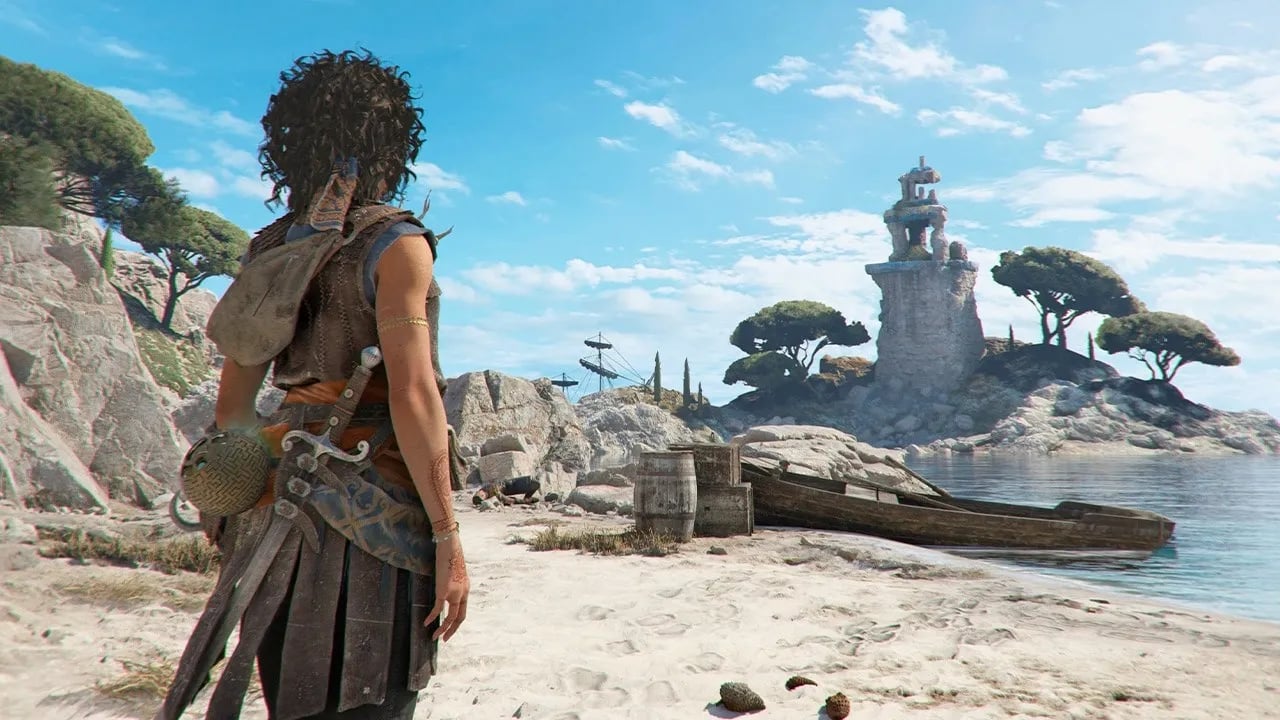
The Minotaur's Island is the best-looking setting in the series. Bright Mediterranean water sits right next to bone-filled caves, sun-bleached palaces and grand Minoan halls, and glowing spores light the underground passages. Faces carry a lot of the drama, with wet eyes and small expressions that sell quiet moments without dialogue. I took more screenshots here than in either earlier game.
Olivier Derivière returns as composer, and his score leans on traditional Greek-Cypriot instruments and choral vocals. Hearing those voices over the ruins did more to sell the island than any cutscene, and they move the series away from its medieval horror sound. Anna Demetriou is back as Sophia too. She plays her as younger, angrier,r and quicker to lash out than the captain from Requiem, and that temper finally gives in the quiet scenes with Faro.
Resonance PC performance was smooth for me on a mid-range build at 1440p. The recommended tier on the Steam store page lists an RTX 3060 Ti or RX 6700 XT for 60 frames per second at 1080p on Ultra. You'll also need 16 GB of RAM and 75 GB on an SSD. I hit one black-screen crash during a long session, and capping the frame rate at 60 stopped it from coming back. Once, a companion froze in place during a fight, and another time Sophia got stuck mid-animation. Reloading the last checkpoint fixed both, and neither cost me more than a few minutes.
Console players get a 30 FPS quality mode and a 60 FPS performance mode on PS5 and Xbox Series X, plus higher frame rate options on 120Hz displays. The Series X holds its 60FPS more consistently, and the base PS5 dips below it in heavy scenes. The Series S drops to 30 and 40 FPS options only, with visible cuts to shadows and draw distance. The game also arrived on day one with Xbox Game Pass and Xbox Play Anywhere, per Focus Entertainment's launch announcement.
Is Resonance: A Plague Tale Legacy Worth Buying Right Now?
Yes, if you want a story-driven action-adventure with fights that ask for timing. Resonance plays like a darker cousin of the modern Tomb Raider and Uncharted games, with the Plague Tale sense of loss running through it. Fans of the series get a meaningful piece of lore, and newcomers get a self-contained story that works without the previous games.
PC and Xbox Series X run it well, and the PS5 version holds up with some dips. Bugs are minor,r and checkpoints are kind, so I never felt the urge to wait for a patch. Players who just want the plot get five difficulty levels from Story to Very Hard, an Invincible Mode and a blood toggle, all listed in the official accessibility blog.
Anyone who loved Innocence and Requiem for the rats and the slow, tense stealth should wait for a sale or try it through Game Pass first. The same goes for anyone who dislikes puzzle-heavy pacing. At full price, I think the game earns it for action fans; for stealth purists, it's a discount purchase.
FAQs About Resonance: A Plague Tale Legacy
Final Words
Resonance surprised me by proving that Asobo can build a combat game without losing what made its stories land. Creative director Eric Chort has said Ghost of Tsushima was where the team started finding its way, and you can feel it in every parry. The kick and the grappling hook give Sophia an identity of her own, far from Amicia's careful survival.
How much you miss the rats will decide how you feel about it. Stealth fans will feel the gap every time the creature fades from the story, and puzzle fatigue tends to hit in those same stretches. Action fans will barely notice.
So where does the series go from here? Resonance answers part of the Prima Macula's origin and leaves room for more, and I'd watch for whether Asobo carries this combat forward or returns to the slow dread of the first two games.
GameBoost Products
Resonance: A Plague Tale Legacy Game Key
View all GameBoost Game Keys
View all GameBoost Accounts
View all GameBoost Boosting Services
View all GameBoost Currencies
View all GameBoost Gift Cards
View all GameBoost Top Ups
View all GameBoost Items