


•Hamza Rashid• 10 min read
League of Legends

Vision control has always shaped how League of Legends matches play out. Teams that see more of the map typically make better calls, catch enemies off guard, and secure objectives without walking into traps. Riot's been tweaking the vision system for years, and the latest addition to the game is Faelights. They are new mechanic that changes how players approach map awareness.
Here we break down what Faelights are, how they function, and why they matter for your ranked climb.

Faelights are added in League of Legends Patch 26.1 notes as temporary vision-granting objects that appear naturally across Summoner's Rift during matches. Unlike wards that players place themselves, Faelights spawn at predetermined locations and provide brief bursts of vision to whichever team controls them. They were introduced as part of Riot's ongoing efforts to add more dynamic map control elements beyond the traditional ward system.
Each Faelight looks like a glowing, ethereal orb that floats above the ground. When a player walks near one and clicks on it, the Faelight activates and grants vision of the surrounding area for a limited duration. Once activated, the Faelight disappears and respawns after a set cooldown period, making its availability something teams need to track and contest.
The mechanic draws inspiration from neutral objectives like Scuttle Crab, but with a vision-focused purpose. Faelights don't provide combat stats or permanent advantages; they simply give teams more information about enemy movements, jungle pathing, and objective setups. This makes them particularly valuable during mid-game rotations and late-game sieges when vision control often decides fights.
What separates Faelights from standard wards is their accessibility to both teams. No one owns a Faelight until someone activates it, which creates natural skirmish points where teams fight for vision control. You can't just place them wherever you want, like trinket wards, and you can't clear them like enemy wards. You either claim them first, or your opponents do.

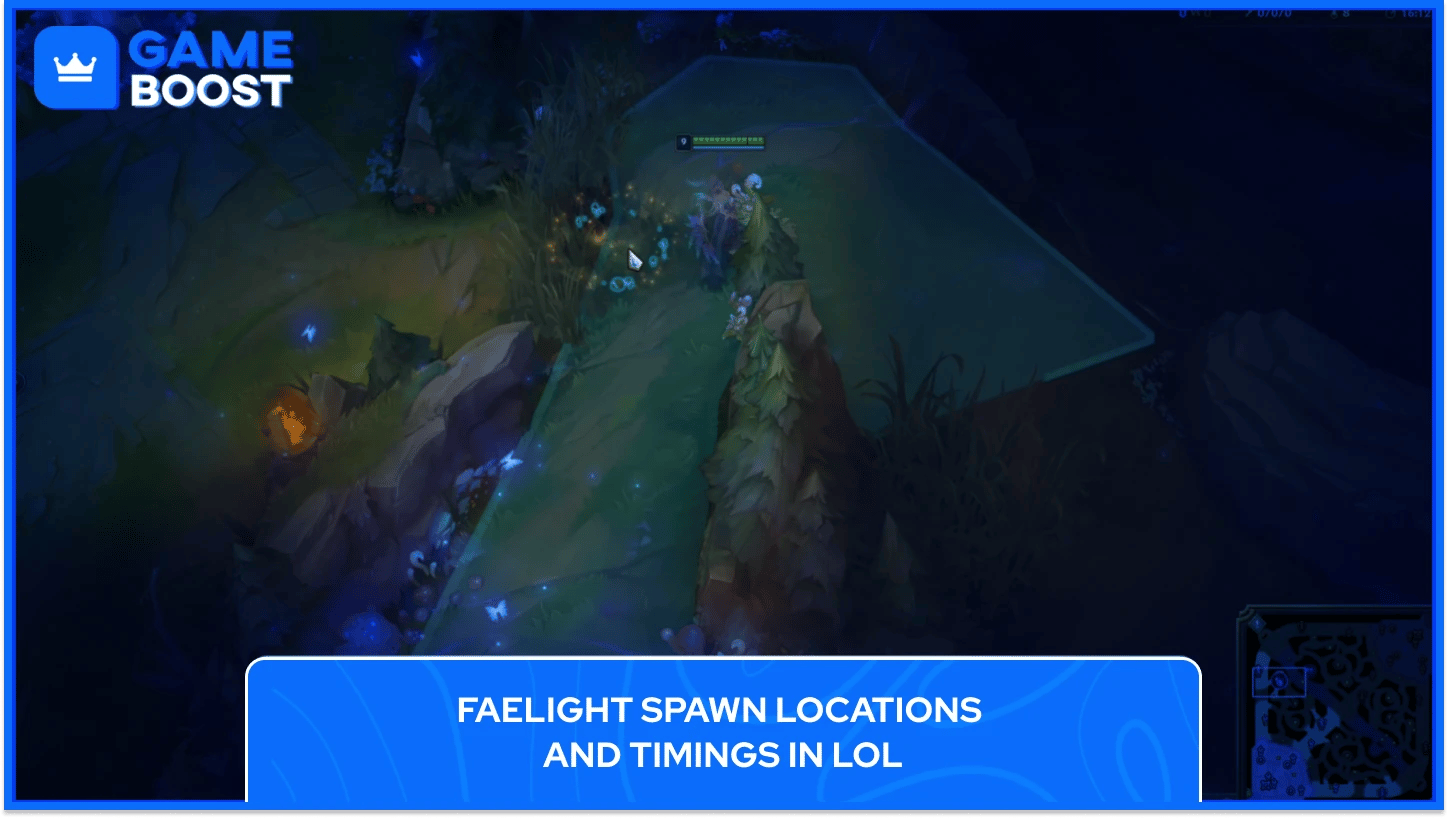
Knowing exactly where Faelights appear on the map helps you plan your warding patterns and control key vision zones before fights break out.
Eight Faelights spawn across Summoner's Rift at the start of every match:
Base Gate Faelights (4 total): One near each team's base gate. These spots give vision into your nearest jungle entrance and help detect early invades or track enemy movement when your team is pushed back to base.
Island Brush Faelights (2 total): Found in the island brushes adjacent to the top and bot lanes. These cover river approaches and help spot jungle ganks during lane phase.
Banana Brush Faelights (2 total): Located in the curved river wall brushes near mid lane. These reveal river traffic while staying close to the mid lane brush, making them ideal for tracking jungle rotations without overextending.
These early-game Faelights give every role access to strong vision spots without needing to coordinate with your support or risk face-checking dangerous areas
Four additional Faelights unlock when the map transforms. Side Lane Faelights spawn in the jungle paths running parallel to the top and bot lanes, one in each map quadrant. They unlock when the Elemental Rift transforms (around 14:00-15:00, depending on dragon spawn timing). These locations are built specifically for split-push scenarios and side lane pressure.
The timing matters because these side lane spots don't exist during the early laning phase. You need to wait for the Elemental Rift transformation before they become available, so don't waste time looking for them before the map changes.
Also Read: League of Legends Seasons: All Start and End Dates
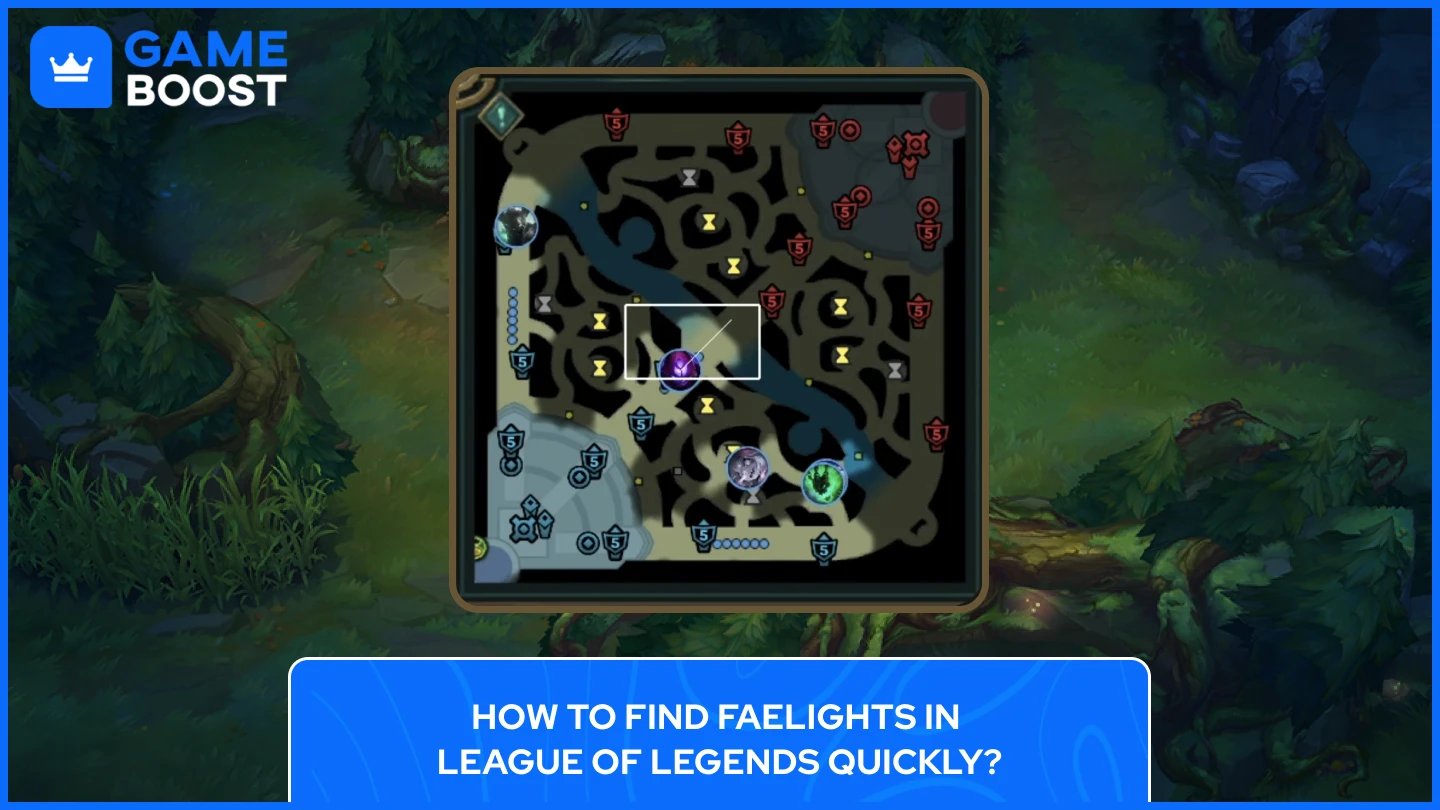
Faelights show up as small dot indicators on your minimap. Hovering over these dots displays the exact vision coverage you'll get from warding that spot. Each location has a different bonus vision shape—some are circular, others stretch along jungle corridors or river lanes. Riot tuned each spot individually, so no two Faelights provide identical coverage.
The Elemental Rift transformation also adds new Scryer's Bloom spawn points at the same time as the side lane Faelights. These plants work alongside Faelights to give you more vision tools for split-pushing and base defence situations.
Placing a ward on a Faelight ring converts it into a superward with specific mechanical properties that differ from standard wards, and several effects activate simultaneously:
25% increased vision radius: The ward itself gets a boosted detection range compared to normal wards.
45-second bonus vision region: A large area around the ward is revealed for exactly 45 seconds, shown by a countdown circle visual on the ward itself.
Type-independent coverage: Control wards, trinket wards, and zombie wards all grant the same bonus vision area. The ward type doesn't change the Faelight's coverage.
Brush detection: The bonus region can see into bushes if those bushes fall within the coverage zone.
Vision score boost: The ward receives a +25% vision score modifier, and the bonus region counts as an extra ward for scoring purposes (following position modifier rules but ignoring staleness penalties).
The 45-second timer is strict. Once it expires, the ward reverts to normal vision range but continues functioning as a regular ward until destroyed, or it times out naturally.
Also Read: Importance of Vision Control in League of Legends

Faelights in League of Legends have specific rules that limit how they can be used and how enemies can counter them.
If your team already has a ward on a Faelight and someone places another one, the old ward gets destroyed automatically to make room for the new superward. However, you can't have two simultaneous superwards on the same Faelight location; only one superward can be active per Faelight at any given time. This prevents ward stacking but also means you need to communicate with teammates to avoid wasting wards.
When vision gets disrupted by nearsight abilities, all superward buffs get suppressed while the ward is affected. If the ward dies while nearsighted, the buffs are permanently removed. This matters when enemies use abilities like Graves' Smoke Screen or Quinn's Blinding Assault near your Faelight wards. The bonus vision cuts out temporarily, and if they destroy the ward during that window, you lose all the Faelight benefits immediately.
Though Faelights are easy to activate and use, players often misuse them, wasting vision potential and trinket charges.
Many players drop wards on the island brush Faelights at 1:30, but most junglers don't path through those areas until closer to 3:00-3:30 when Scuttle Crab spawns. Warding 15-25 seconds before Scuttle gives you actual information about the junglee’s location instead of staring at an empty river for two minutes.
Players also tunnel on the base eight Faelights and forget that four new side lane Faelights unlock after the map transforms. These are your best tools for split-pushing. Ignoring them means missing vision that could prevent collapses and ganks during side lane pressure.
Another common mistake is placing control wards on Faelights near the enemy base. These spots grant vision into the jungle, but control wards work better in objective pits like Baron and Dragon, where denying enemy vision actually wins fights. The exception is active sieging, where you need to deny vision over walls, but standard river control wards usually work better even then.
Players still walk into unwarded river brushes or jungle paths to check for enemies instead of using nearby Faelights first. Ward the Faelight before face-checking if there's one within walking distance of an objective. The 45-second window gives enough time to spot ambushes, rotations, or enemy setups without risking a pick.
Another mistake players make is when two teammates ward the same Faelight within seconds of each other, which burns two trinket charges for the same 45 seconds of vision. Since the old ward gets destroyed automatically, quick pinging "warding here" prevents this waste, especially during mid-game rotations when everyone's trying to secure vision simultaneously.
Also Read: How Big is League of Legends?

Getting the most value from Faelights requires timing, coordination, and understanding how they fit into your team's overall strategy.
Make sure to trigger Faelights when your minion wave is about to crash into the enemy turret. This synchronises the 45-second vision window with the exact moment enemies might rotate to collapse on you or contest your push. Early activation means the Faelight expires before you actually need the information.
With faster trinket recharge rates, you can hold a ward charge specifically for upcoming Faelight opportunities. Instead of dropping wards in mediocre spots just because your trinket is off cooldown, save it for high-impact Faelight locations that cover multiple approach angles or objective areas.
When enemies spend Oracle Lens charges or place control wards to check your Faelight vision, they're burning limited detection on a single predictable spot instead of sweeping your deeper jungle wards. Place backup wards in less obvious locations while they focus on clearing your Faelight to maintain vision control across multiple areas.
If your top laner or ADC is setting up a split-push, preemptively ward the side lane Faelight in their target lane before they even arrive. This gives them safe vision coverage the moment they start pressuring. The 45-second window usually covers an entire wave crash plus turret damage. Supports and junglers should prioritise this during mid-game rather than clustering all vision around the mid lane.
Baron spawning soon means warding the top-side Faelights to control approach paths and flank routes. Dragon up next means shifting to bot-side Faelights. Match your Faelight priority to upcoming objectives to get 45-second windows of information exactly when fights are most likely to break out. This makes it harder for enemies to surprise you with flanks or steals.
Faelights represent Riot's push toward making vision more interactive and accessible across all roles. The mechanic shifts power away from supports being the sole vision providers and gives every player tools to contribute to map awareness.
What makes Faelights successful is how they reward map knowledge without requiring deep warding expertise. New players can hover over the minimap dots and instantly see what vision they'll gain, while experienced players can layer Faelight coverage with traditional wards to create vision networks that are harder to dismantle.
The side lane Faelights that spawn post-transformation address one of League's long-standing issues: split-pushing felt too risky without dedicated support from teammates. Now, solo laners and ADCs have reliable vision spots they can control independently, making side lane pressure a more viable strategy without constant team coordination.
Buy LoL Skins
Buy Riot Points
League of Legends Boosting Service
LoL Accounts
View all GameBoost Accounts
View all GameBoost Boosting Services
View all GameBoost Currencies
View all GameBoost Game Keys
View all GameBoost Gift Cards
View all GameBoost Top Ups
View all GameBoost Items
Counter-Strike 2 Skins
“ Kristina joined GameBoost in 2024 as an SEO specialist and quickly became the go-to writer for third-person shooter and competitive games. She covers titles like Fortnite, Valorant, League of Legends, GTA 5, and Roblox, focusing on how-to guides, practical tips, and updates.”