Gears of War: E-Day Review, a Comeback With a Long Tail
This game is reviewed on:
Graphics Card | GigaByte Geforce RTX4080 |
Processor | AMD Ryzen 7 9800X3D |
Memory | Kingston Fury Beast White RGB EXPO 64GB RAM |
This Gears of War: E-Day review comes from someone who grew up on the original trilogy and walked into Kalona expecting a nostalgia trip. Gears of War: E-Day launched on October 6, 2026, for Xbox Series X|S and PC, with Premium Edition and Collector's Edition owners getting in from October 1. It's a prequel set 14 years before the first game, on the day the Locust Horde tore through the ground. The Coalition rebuilt it from scratch in Unreal Engine 5, with People Can Fly as co-developer, and the Gears of War: E-Day campaign shows that work in every collapsing street.
I picked it up the day early access opened and have been in it most evenings since, playing on my PC. I finished the story in a mix of solo and co-op runs, spent a good stretch of evenings in Horde Siege, and played every Versus mode that shipped.
Below, you'll find my verdict on each part of the game, from Kalona's story to PC stability, and who should pick it up first.
Gears of War: E-Day Review Summary
My verdict: 8/10. The best setting Gears has had in years, wrapped around a campaign that runs longer than it should.
Kalona and the three-day Emergence Day story give the series its most grounded, horror-tinged opening yet.
New jump, slide, and climb moves change how every firefight plays, and the active reload bar now sits under the reticle.
Hardcases and weapon mods make the open districts between main missions worth a detour.
Gears of War: E-Day Horde Siege puts 12 players in one city map and is the mode I keep returning to.
Versus feels right across all six launch maps, but my lobbies were often lopsided, and Ranked was scheduled a week behind launch.
Gears of War: E-Day PC performance still needs work, with crashes and memory trouble in long sessions.
Kalona Turns E-Day Into Horror
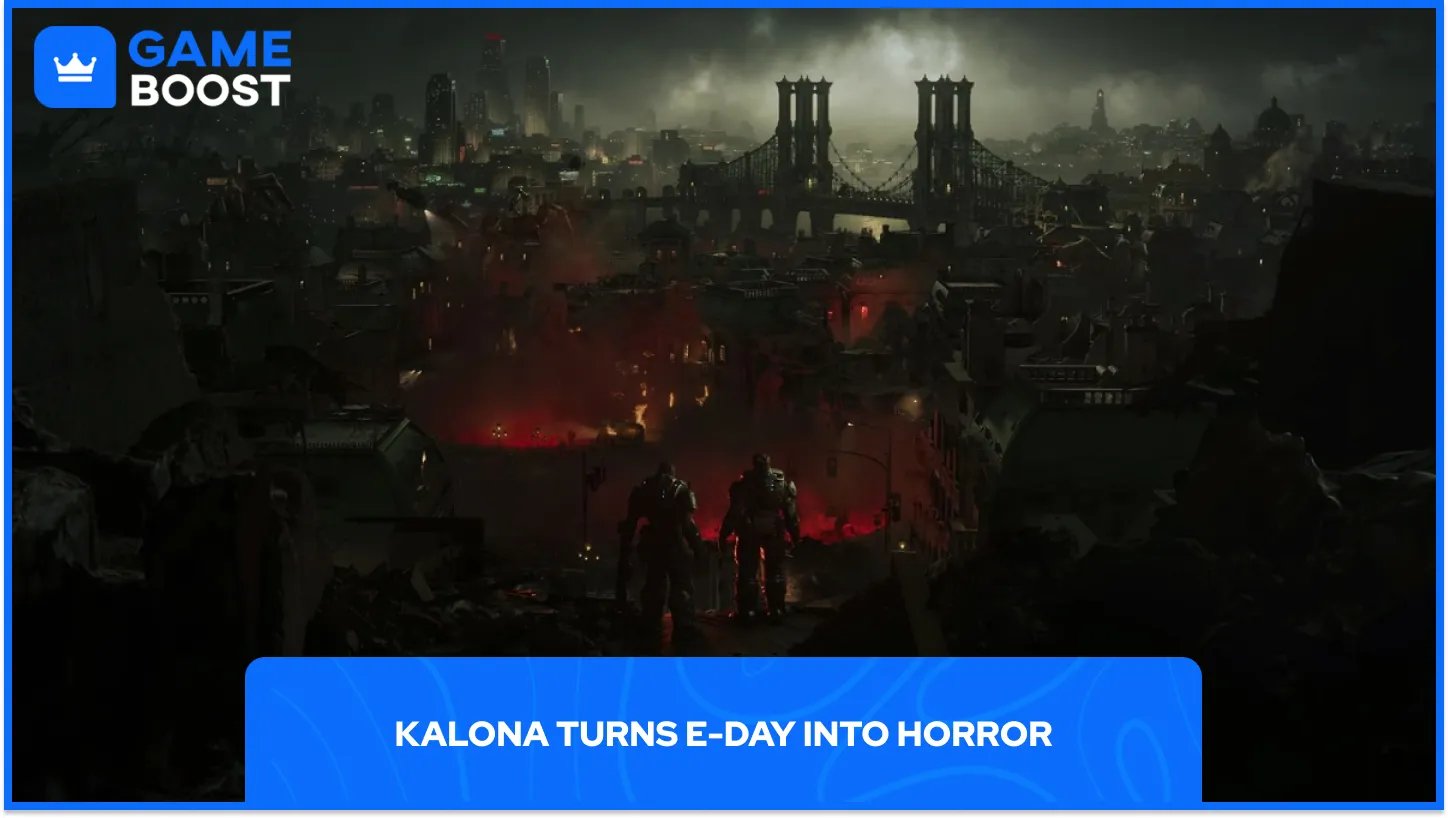
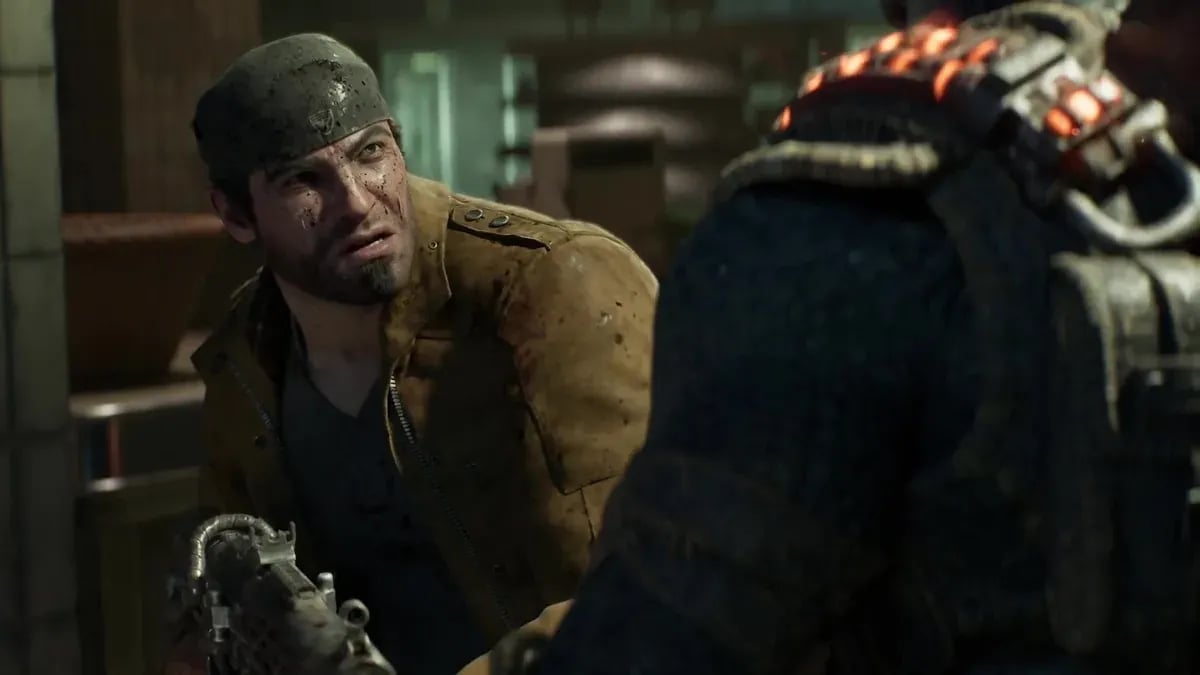
Marcus Fenix and Dom Santiago are back from the Pendulum Wars and standing at a peace memorial when the ground opens under Kalona. The first hours play like a horror game, with civilians running past me, and Wretches spilling out of holes that weren't there a minute earlier. The Coalition says Kalona drew on Vancouver's geography, and you feel it in the industrial waterfront, the stadium, and the refineries on the skyline. Storefronts are still intact, emergency lights are still flashing, and abandoned cars fill the streets. Every street looks like someone lived there yesterday, which makes it hurt more when it falls.
The story covers three days, and the fall of Kalona is the whole point, so I knew the city's fate before I started. Somewhere around the second day I stopped playing to win and started playing to get people out, which feels nothing like mowing through Locust in the older games. Young Marcus and Dom also look like people now, with leaner builds and faces that carry real expressions in the cutscenes.
Bravo Squad fills out with Mags Carter, a former Gear dragged back into uniform, and Lucas Reyes, a young cadet working communications, with Tai Kaliso turning up along the way. Mags carries far more of the story than I expected. A Steam player going by Kusanagi complained that the marketing sold a Marcus and Dom story and delivered a Mags story, and I felt that same tilt by the midpoint. She is still the best-written newcomer the series has had, so the tilt bothered me less than it bothered that player.
Lucas is the weak link. For most of the campaign he exists to relay orders, and I barely registered him as a person. A late chapter finally gives him something to do and lands harder than I expected, though it arrives so late that it felt like the writers caught the problem in the final edit.
The Jump Button Changes Every Firefight
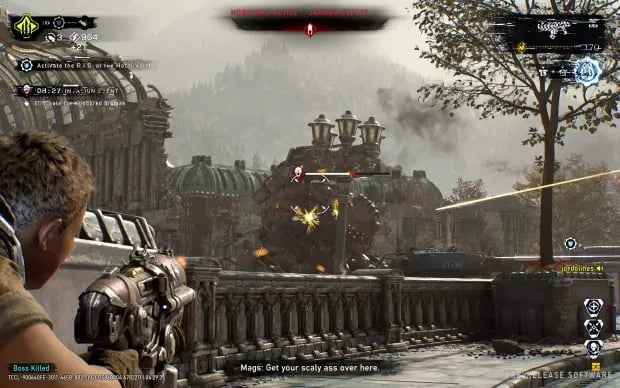
For the first time in the series, Marcus can jump. He can also slide out of a sprint, climb onto vehicles and ledges, and mantle without snapping into cover first. Low gaps, like the space under a truck, let you duck or slide straight through. My habits changed within the first chapter: I started sliding into cover instead of running at it, and climbing onto a wrecked bus to get an angle on Drones dug in behind a barricade.
You can only cancel a cover entry within 1.5 meters of the cover itself, and The Coalition says that ends hyper-bouncing. The active reload bar moved to the center of the screen under the reticle, with the old corner position still in the settings. Every projectile now has travel time, so my Longshot shots started leading moving targets by the end of the opening act. The Gnasher drops from eight shells to six and reloads round by round, with active reload timing on each shell, so every close fight became a question of how many I had left.
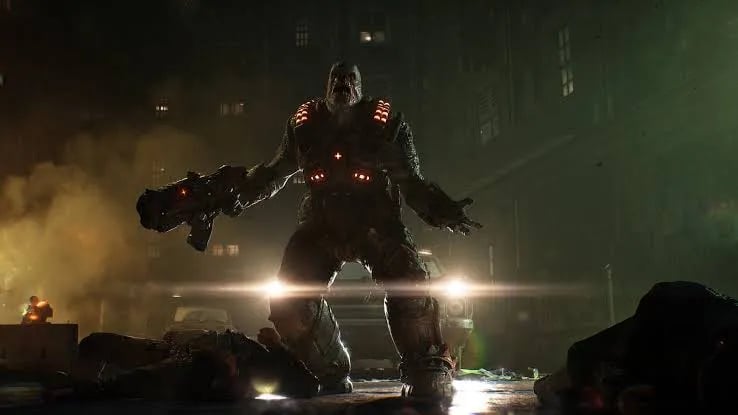
The Gut Puncher is a new grenade launcher that lets you choose when the round goes off. The Incinerator is a shotgun built around Imulsion, and the Chainsaw Lancer shows up as a kit-bashed prototype soldier built on the day itself. On the Locust side, you get Wretches, armed Drones, and Boomers that still make me back off the second I hear them. A new acid-spitting frog creature forced me out of cover more often than any Drone did.
In my first evening, I noticed there are no chainsaw duels and no meat shields. Creative director Matt Searcy told Dexerto's Fall Damage channel that the team built the game from scratch, with every mechanic and animation new. He added that the studio loves both features and will see what the future brings. I kept reaching for a downed Drone to hold up as a shield, and the game kept saying no.
Weapon Mods Make The Districts Pay
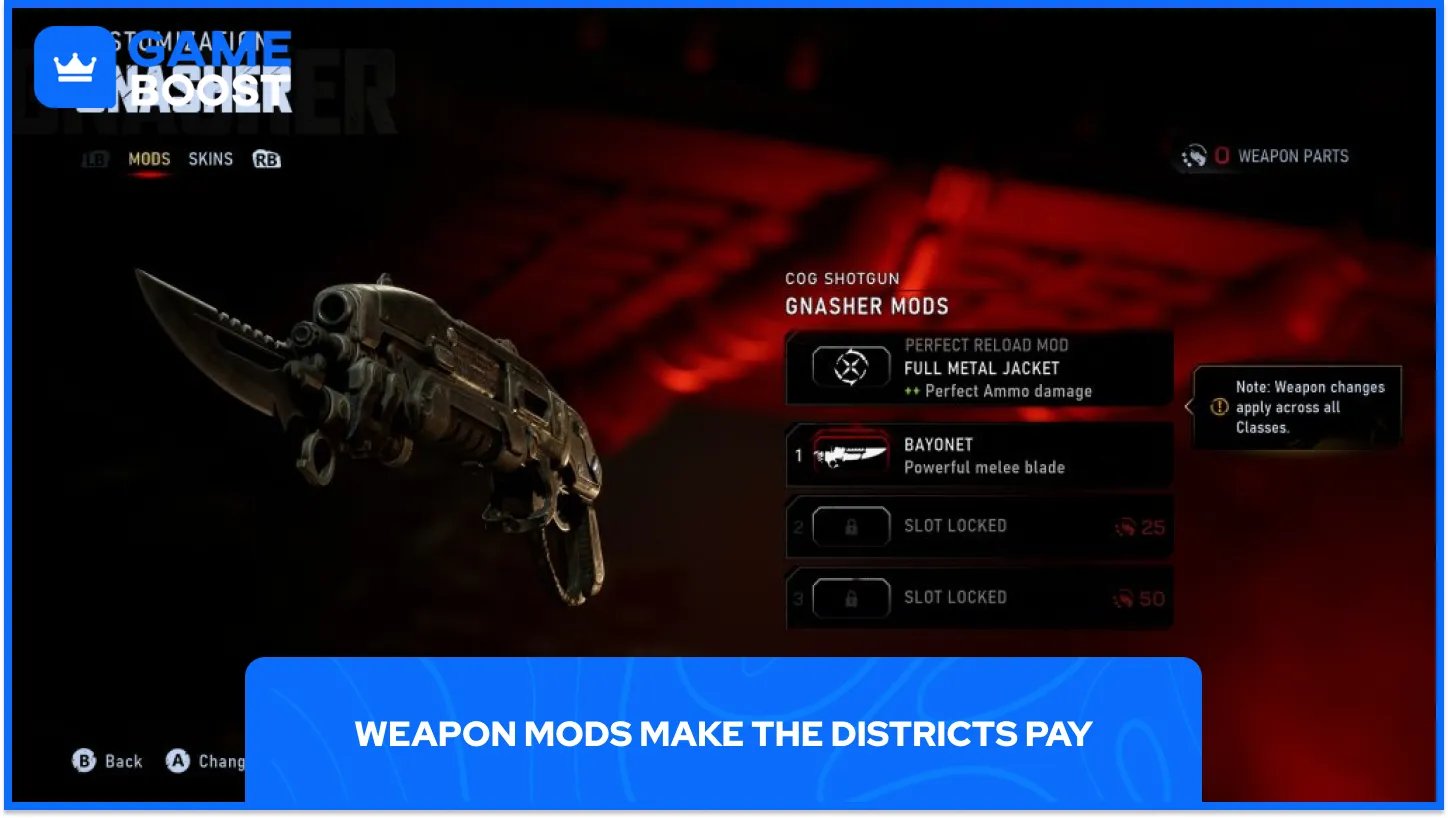
Some chapters drop the corridor and hand you a district. You get a map, a list of secondary objectives, Hardcases full of weapon mods hidden in side streets, and Supply Caches where you rebuild your loadout. In the Hold the Line chapter, a stadium turned into a COG base opens out into one of these areas, and I lost a long evening there before touching the main mission.
I found weapon mods for recoil, scopes, and chainsaw rev speed, and armor mods that change what you get back for good play. By the second day, my Lancer revved fast enough to cut through a charging Wretch before it reached me, and my Longshot sat steady enough for back-to-back headshots. Tactical gear rounds it out, with an Adrenaline Injector that heals and adds damage, plus a shockwave gadget that stuns enemies.
The side objectives mostly involve helping survivors or other squads, and the first few hit hard. Getting a group of survivors out of a ruined block as Locust poured in from the street gave the war a human scale I haven't felt in a Gears game before. By the third district, the pattern showed, and I was clearing markers off a map that was already too busy with icons. I still went back for every Hardcase. A loadout without mods plays noticeably harder on Hardcore, and swapping them at a Supply Cache before a big fight became a ritual for my co-op partner and me.
The E-Day Campaign Runs Too Long
This is the longest Gears campaign I have played, and it would be better two or three chapters shorter. The opening act is tight and frightening. Past it, the mission objectives settle into a loop of holding an area and surviving the next wave, and the story slows down to match. I started checking how many chapters were left, which never happened to me in Gears 2.
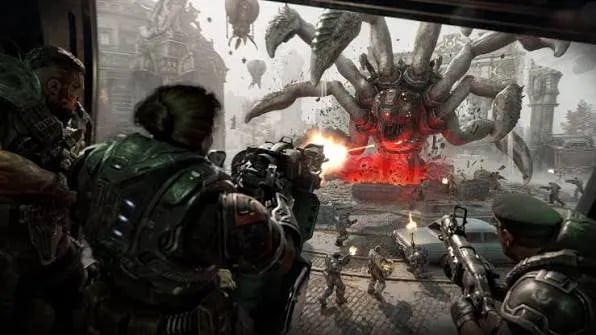
Boss fights start strong and sag in the same way. The Corpser tearing up through a street is one of the best set pieces in the series, and I stopped shooting for a second just to watch it. Later bosses and elite enemies soak up far too much damage, and on Hardcore I spent long stretches watching a health bar crawl down as I rotated between the same three pieces of cover. The helicopter turret sequences are loud fun the first time and filler the second. Checkpoints sometimes sit before unskippable conversations, too. Dying to a Boomer meant sitting through the same squad chatter again, and after the fourth time I started muting the TV on retries.
Co-op fixes a lot of this. You can play the whole campaign with four players online or two on split-screen on Xbox, and all four members of Bravo Squad are playable from the start. The slow stretches went quicker with a friend in Dom's boots, and the districts turned into a race for Hardcases. PC players get the online co-op without the couch option.
Horde Siege Keeps Me Coming Back
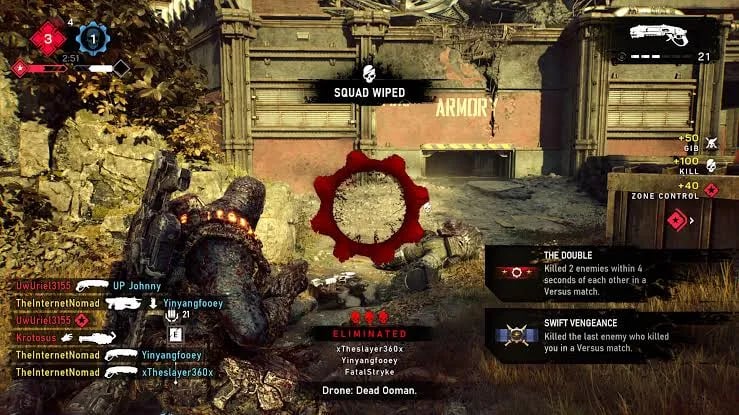
Horde Siege drops three squads of four into a large Kalona map to defend positions, complete objectives, and extract. You pick from four classes: Assault with a Sonic Disruptor, Breacher with an Adrenaline Injector, Marksman with a Pulse Drone, and Medic with a Stim Vaporizer. Each class levels separately up to 30, and the points you earn go into upgrades for that class. My squads did best with all four classes covered, and the games where nobody picked Medic fell apart by the late objectives.
Blitz missions run 15 to 20 minutes with one or two objectives, Siege runs 20 to 40 with several, and Horde is the classic 10-wave format at 50 to 60 minutes. Three maps shipped, including the Golden Quarter, and some objectives put a world boss in your path.
The other two squads make every match. In one Siege on the Golden Quarter, my squad held a plaza alone until a second team arrived from the other side of the map with a Boomshot, right as my squad's heals ran dry. Nobody planned it, and the old five-player Horde could never produce that moment. That rescue is why I switched to Medic and stayed there.
I do miss the slow, careful fortifying of the older Horde modes. Siege moves fast and rewards running between objectives more than building a fortress. The 10-wave Horde missions scratch that itch, and they've become my late-night default when I want something quieter. A full run takes most of an hour, so I save them for evenings with nothing else planned.
Versus Feels Classic, Matchmaking Lags
Versus, the competitive half of Gears of War: E-Day multiplayer, is 4v4 across four modes. Team Deathmatch uses dynamic respawns, Conquest keeps its zones active until one team banks enough time, Demolition ends after three detonations, and Crucible sends you running a Power Core to a zone that moves and shrinks each round. The six launch maps are Outpost, Battleship, Park, Precinct, Market, and Skyward, all set in war-torn Kalona. Crucible became my favorite of the four, since the moving zone keeps both teams from settling into one sightline.
The Gnasher fights feel like Gears again, with the six-shell magazine forcing harder decisions about when to reload. The new movement adds height to every map, and within my first few matches, the fights moved up onto higher ground I would never have bothered with in Gears 5. Veterans who built their game on hyper-bouncing will hate the cover commitment limit, and I don't miss it.
Matchmaking is the weak spot. My Social lobbies often paired players near the top of the level track with people who had barely started, and a few matches ended in lopsided blowouts before the second round. The player level caps at 100 with four Re-Ups, so the gaps show on the scoreboard. Versus Ranked was scheduled for October 13, a week behind launch, with Social offering quickplay, bot matches, and limited-time modes.
Cosmetics come mostly from challenges, achievements, and Coins earned through play, with a separate Iron currency on the side that also ships with the Premium Edition. Season 1: Emergence opened at launch with three themed events, including a 20 Years of Gears celebration, and The Coalition has five themed seasons planned, starting with this one. Challenges alone had put a couple of new skins on my Marcus by my third evening.
E-Day PC Performance Needs Work
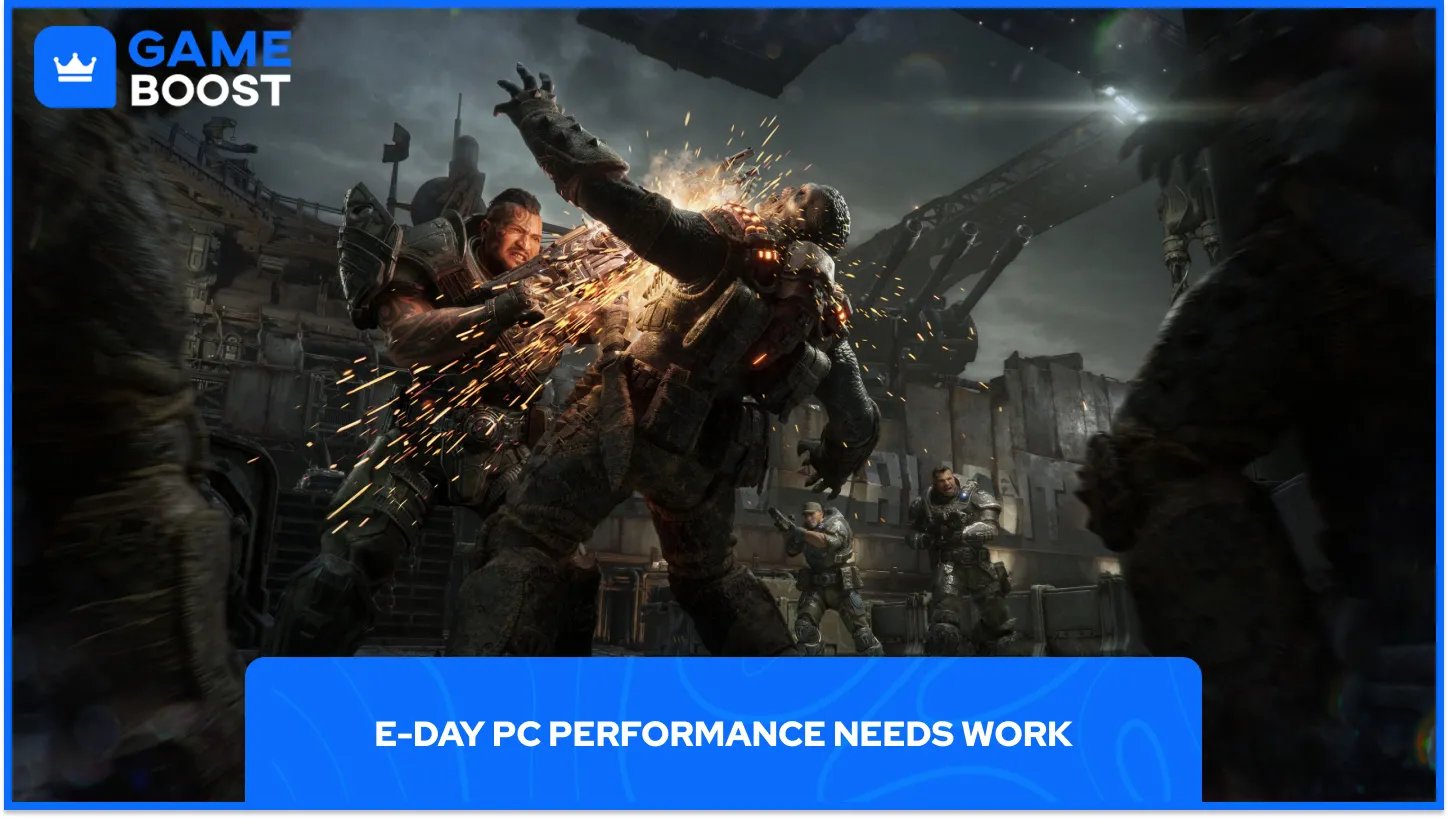
The published Ultra spec aims at 4K and 60-plus frames per second with a Ryzen 7 7800X3D and an RTX 5070 Ti. My RTX 4080 sits in that same class, and Kalona looks incredible on it. The Lumen lighting turns every burning street into something worth stopping for, and gore and destruction go further than I remember from Gears 5, with cover chipping away under fire and buildings coming down mid-fight. The Ryzen 7 9800X3D in my machine never looked like the limit, even in Horde Siege with three squads and a world boss on screen at once.
Being on NVIDIA cost me the PC version's best launch feature. Advanced Shader Delivery cuts down shader compiling, but it launched with AMD support only, and The Coalition promised NVIDIA support after launch. My 4080 compiled shaders the old way, which meant a long wait on first boot before I could touch the menu. The settings also offer multi frame generation and a frame cap that goes up to unlimited. On NVIDIA hardware, multi frame generation needs an RTX 50-series card, so that option was off the table for my 4080.
A strong rig didn't stop the crashes. The game still went down on me in long campaign sessions. The Coalition lists memory problems during extended play without checkpoint reloads as a known issue, along with the game process sometimes staying open after you quit. With 64GB of RAM in the machine, the crashes point to a bug in the game itself.
Reloading from a checkpoint every couple of hours and checking Task Manager after closing the game kept me going. The October 5 patch brought stability and performance improvements, cleared several campaign objective bugs and fixed Versus Social matches stuck on the waiting screen. My sessions felt steadier after it, though I still wouldn't leave the campaign running overnight.
Is Gears of War: E-Day Worth Buying Right Now?
Yes, for anyone who loved the original trilogy or wants a co-op shooter to play with friends this season. Kalona is worth seeing even if the campaign drags, and Horde Siege is worth the purchase on its own for a regular group. On top of that, the new movement makes Versus feel fresh without losing what made it Gears. It's also included with Game Pass Ultimate and PC Game Pass, so subscribers can try it at no extra cost.
The game runs well on Xbox. On PC, it's playable and improving, but long sessions still need checkpoint reloads. The Xbox Store page and the Steam page list the editions, and a digital copy from the Xbox Store covers both Xbox and PC through Play Anywhere.
Competitive players who live in Ranked should hold off until it has had a few weeks to settle. Anyone who dislikes long campaigns should also know the second half drags, and anyone who bought Gears for chainsaw duels will find them missing. Subscribers lose nothing by trying the first act and deciding from there.
FAQs About Gears of War: E-Day
Final Words
Gears of War: E-Day reads best as a rebuild. The Coalition threw out every animation and system and started again, and the parts that worked out (movement, Kalona, Horde Siege) feel like a foundation the series can build on for years. The pacing and the missing duels are the kind of gaps a rebuild leaves behind.
In practice, the movement decides whether this game clicks for you. It changes how the campaign plays, how Horde Siege squads hold a position, and how every Versus map flows. If the jump and slide feel natural in the first hour, the rest of the game will follow.
Ranked still has to prove itself, and NVIDIA's shader support still has to land. Can five seasons keep Horde Siege fed with new maps? Watch the first two seasons closely before deciding whether this becomes a long-term multiplayer home.
GameBoost Products
Gears of War: E-Day Game Key
View all GameBoost Game Keys
View all GameBoost Accounts
View all GameBoost Boosting Services
View all GameBoost Currencies
View all GameBoost Gift Cards
View all GameBoost Top Ups
View all GameBoost Items