
.png)

•Hamza Rashid• 10 min read
League of Legends
League of Legends Classic brought back the old Rune system from the Season 3 era, and it changes how you build a champion from the ground up. Instead of picking pre-built rune pages the moment you queue up, you earn slots as you level, then spend Influence Points to fill them one rune at a time.
If you jumped into Classic and opened an empty rune page, you've probably noticed there's no default setup waiting for you. Every slot starts empty, and it's on you to decide what goes into it and when you can afford to buy it.
This guide covers what each rune type does, when your slots open as you level, what everything costs in the Classic Store, and how to put together a page that actually helps your champion instead of just filling slots for the sake of it.
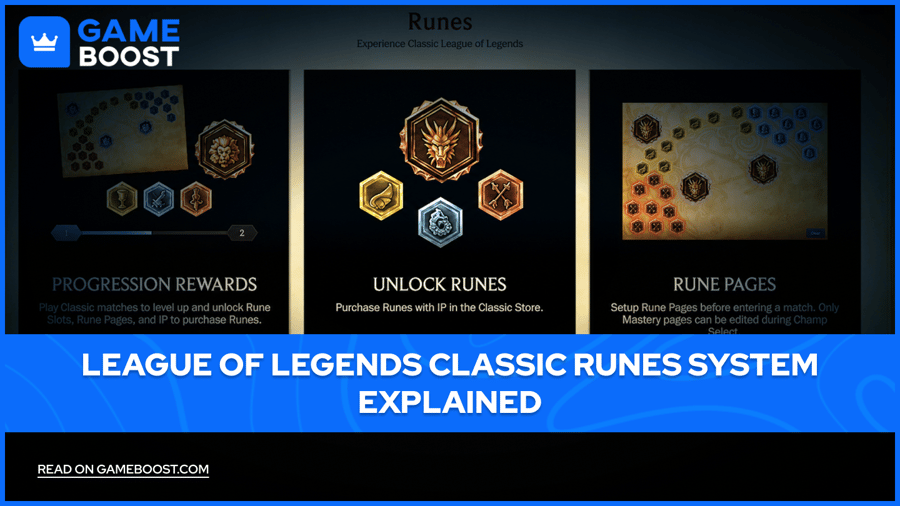
Runes in LoL Classic use the original four-type system: Quintessences, Marks, Seals, and Glyphs, each granting a small stat bonus that stacks across your full page.
Slots open in stages as you level: Marks at level 4, Seals at level 6, Glyphs at level 7, and Quintessences at level 8, for 30 total rune slots.
Every rune functions at Tier 3 strength, so there's no grinding through weaker tiers like the old live game once required.
Runes are bought with Influence Points (IP) in the Classic Store: 500 IP for a Mark, Seal, or Glyph, 650 IP for their "minor" counterparts, and 1,250 IP for a Quintessence.
You start with three Rune Pages at level 4, with extra pages becoming available at levels 13, 17, and 20 for 1,500 IP each.
The League of Legends Classic Pass drops random runes as you progress it, and once you own every rune, duplicate drops convert into Blue Essence instead.
Old Runes Reforged pages don't carry over. Classic runs on its own separate system from the live game.
In LoL Classic Runes are small permanent stat boosts you equip before a match, split across a page with dedicated rows for each rune type. They sit on top of your champion's base stats and your item build, so a well-built page gives you a real edge in the early game, when even a couple of extra points of armor or attack damage can decide a trade.
This is separate from Masteries, which is a point-allocation tree covering broader combat bonuses. Runes and Masteries work together, but they're built and bought independently, so filling out one doesn't touch your progress on the other. Both draw from the same pool of Influence Points, though, so how you split your spending between the two matters just as much as which runes you pick.
Buy League of Legends Accounts
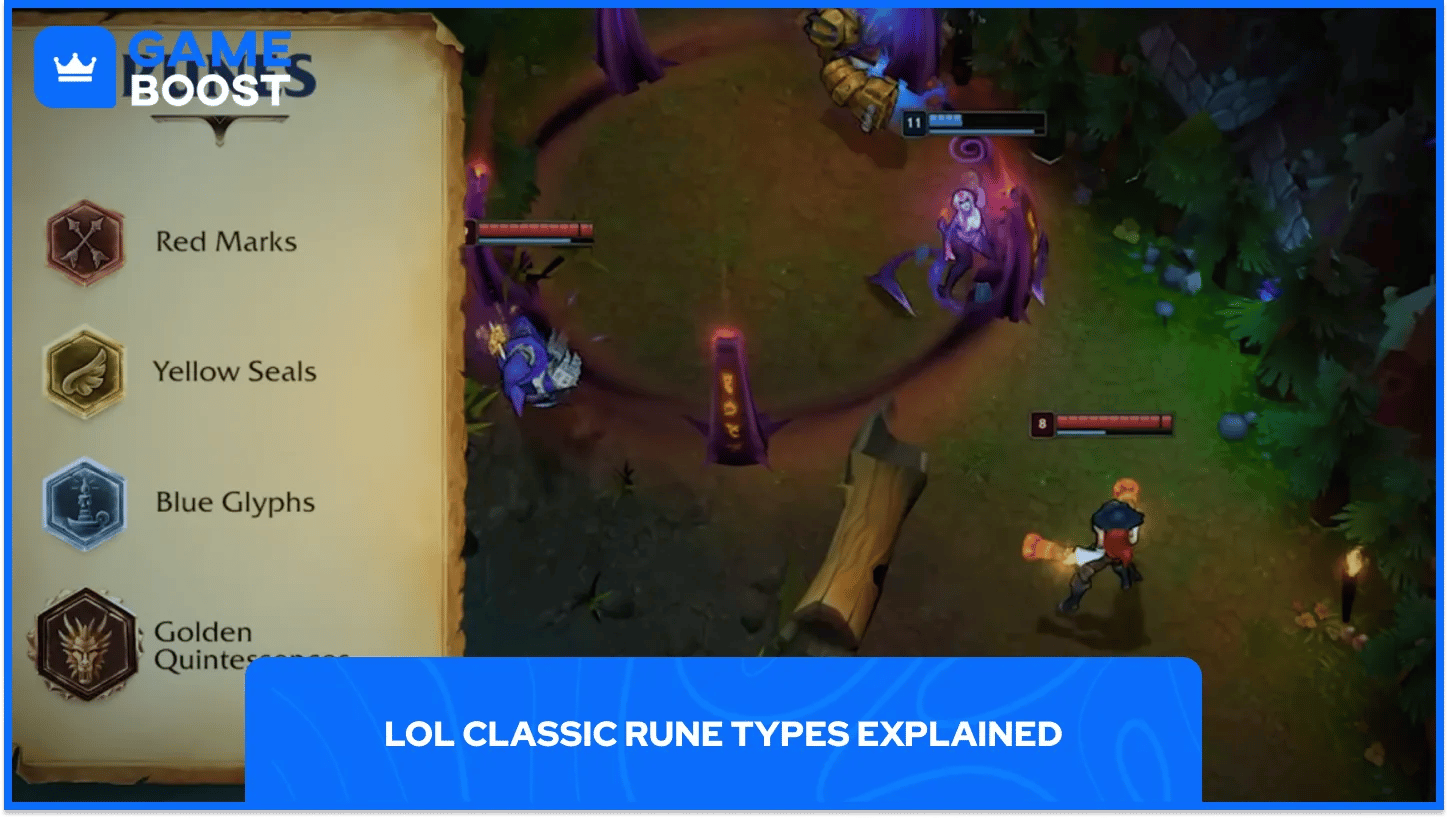
Classic uses four rune categories, and each one leans toward different stats. Each category fills a distinct row on your page, and you can't move a rune into a row it doesn't belong to.
A Mark only ever goes into a Mark slot, so your build is really four smaller decisions rather than one big one. Think of Marks and Glyphs as your offense rows, Seals as your defense row, and Quintessences as the flexible row where you patch whatever your build is still missing.
Rune Type | Slots | Example Effects |
|---|---|---|
Mark | 9 | Attack damage, magic penetration, lethality, critical strike chance |
Seal | 9 | Armor, health, health regeneration, mana regeneration |
Glyph | 9 | Ability power, magic resist, cooldown reduction, mana |
Quintessence | 3 | Bigger versions of the above, plus movement speed, life steal, spell vamp, and gold generation |
Keep in Mind:: Quintessences give the largest individual stat bump, since you only get three slots to fill compared to nine for the other types.
Rune slots open in a fixed order tied to your Classic account level, not your rank or games played. There's no way to skip ahead or buy your way into an earlier slot. Every LoL Classic account follows the same path, so a level 6 player has access to Marks and Seals no matter how many games they've won or how much IP they've saved up.
The pacing is intentional, it spreads your rune decisions out over your first several games instead of dumping all 30 slots on you at once. The table below breaks down how the slots unlock and makes the progression easier to understand:
Classic Level | What Opens |
|---|---|
4 | 9 Mark slots, plus your first 3 Rune Pages |
6 | 9 Seal slots |
7 | 9 Glyph slots |
8 | 3 Quintessence slots |
13, 17, 20 | One additional Rune Page at each level |
Just remember a fresh league of legends Classic account plays without any runes at all until level 4, then gradually fills out a full 30-slot page by level 8. By level 20, you'll have six total Rune Pages to save different setups for different champions or roles.
Also Read: Best Jinx Build in League of Legends
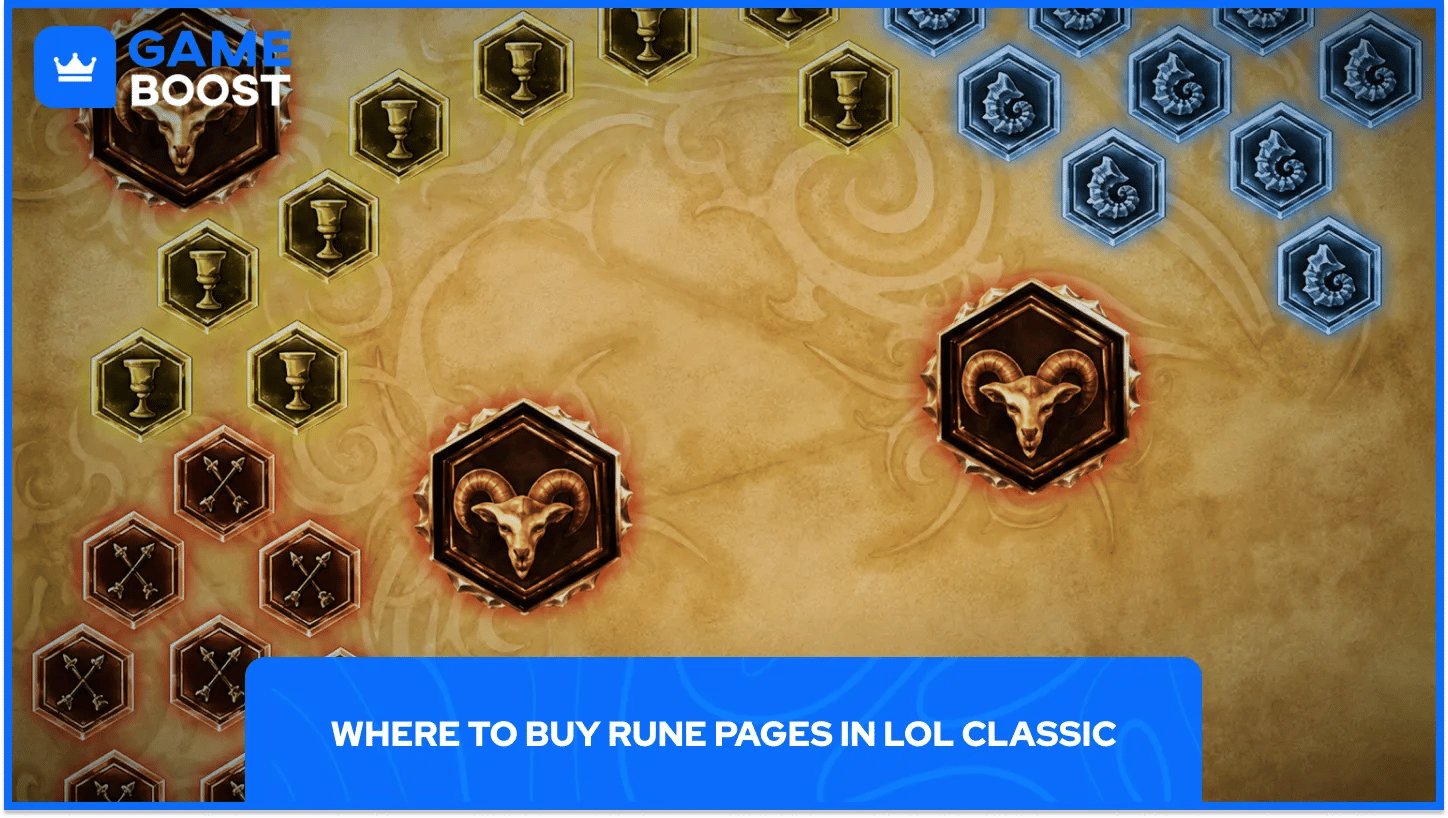
Runes are purchased individually from the Lol Classic Store using Influence Points, the currency you earn from playing matches or completing daily objectives. You can'‘t buy a rune page as a bundle. Every rune and every extra page is its own separate purchase, so you're free to save toward whatever you need most instead of committing IP to a preset kit.
That also means two players at the same level can have completely different pages, depending on which slots they prioritized filling first. Here's the full cost breakdown:
Item | IP Cost |
|---|---|
Mark, Seal, or Glyph (major) | 500 |
Minor Mark, Seal, or Glyph | 650 |
Quintessence | 1,250 |
Extra Rune Page | 1,500 |
Filling every slot on a single page adds up fast, since a full 30-rune page runs into the tens of thousands of IP. Most players build one solid page first, then slowly buy runes for a second and third page as IP comes in from regular games.
Every rune in League Classic performs at the same power level, equal to a Tier 3 rune from the original live game. There's no separate tier of weaker runes to grind through first.
The difference comes down to efficiency, not strength. Runes that fit a rune type well are labeled as standard runes and cost 500 IP. Runes that are less suited to their slot, an off-stat pick that's still technically legal in that row, get greyed out and marked as "minor runes," costing 650 IP despite giving the same numbers. In short: minor runes cost more for a rune you'd normally skip anyway, so stick to the standard options unless you have a specific build reason to branch out.
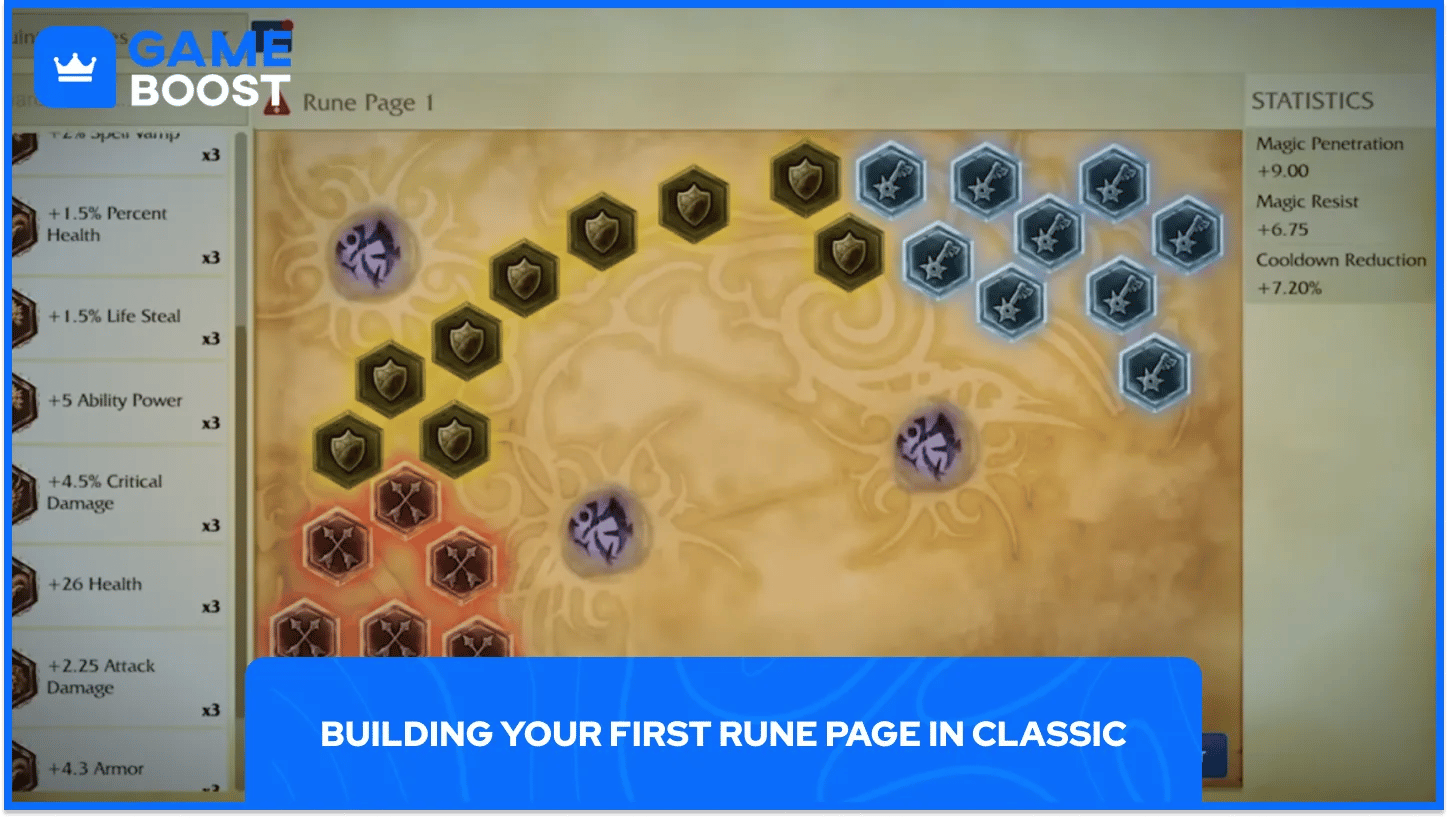
Once your first slots open at level 4, it's tempting to buy whatever's cheapest just to fill the page. That works in a pinch, but it's not worth the IP once you can afford to be more deliberate.
Here's how to prioritize your early purchases:
Cover your class first. AD champions want Mark attack damage and armor penetration runes; AP champions want Glyph ability power and magic penetration. Match your runes to your damage type before anything else.
Fill Seals with survivability. Armor and health Seals keep you alive through early trades, especially against AD-heavy lanes.
Save Quintessences for last. They cost the most per slot, so buy them once your Marks, Seals, and Glyphs are already filled.
Build one flexible page before specializing. A generic damage-and-survivability page covers most champions reasonably well while you save IP for role-specific pages later.
Also Read: How to Get Blue Essence Fast in League of Legends
The League Classic Store isn't the only source. The Classic Pass hands out random runes as you climb its tiers, with each individual rune carrying roughly a 2.3% drop rate per reward. Once you own every rune in the game, any further rune drops from the Pass convert automatically into 500 Blue Essence instead, so nothing goes to waste even after your collection is complete.
Note that this is a fully separate collection from the Runes Reforged system on the live game. Nothing from your existing account carries over. Classic runes have to be earned or bought from scratch, even on accounts that already own every rune page in normal League.
A: At Level 4. That's when your first 9 Mark slots and your first 3 Rune Pages become available.
A: LoL Classic has 30 rune slots per page: 9 Marks, 9 Seals, 9 Glyphs, and 3 Quintessences.
A: No. Every rune performs at Tier 3 strength. Minor runes just cost more IP for a rune type that's a less efficient fit for that slot.
A: Six by level 20: three starting pages at level 4, then one more at levels 13, 17, and 20 each.
A: No. League Classic runs its own separate rune system, and nothing carries over from the live game.
A: Yes, through the Classic Pass, which drops random runes as you progress it. Once your collection is complete, extra drops turn into Blue Essence.
The Classic rune system rewards patience with perfect optimization. Level up to open your slots, spend IP where it matters most for your champion's damage type, and build out extra pages as you go. There's no need to rush a full 30-rune page on day one. A focused page built around your main's stats will carry you through most games while the rest of your collection fills in naturally.
Buy LoL Skins
Buy Riot Points
League of Legends Boosting Service
LoL Accounts for Sale
View all GameBoost Accounts
View all GameBoost Boosting Services
View all GameBoost Currencies
View all GameBoost Game Keys
View all GameBoost Gift Cards
View all GameBoost Top Ups
View all GameBoost Items
“ Hamza is your average video game enthusiast who’s always looking for his next game to play. Whether he’s diving into a competitive multiplayer match, exploring a massive open world, or getting completely hooked on a new release, gaming has always been one of his favorite ways to spend his time. Over the years, his love for games has grown into a passion for understanding and sharing everything about them. Through his articles, Hamza aims to help gamers discover new games, improve their skills, stay up to date with the latest gaming news, and get the most out of their favorite titles.”