


•Patrik Mršnik• 5 min read
Games
Sid Meier’s Civilization VII continues one of gaming’s most influential strategy series, challenging players to build an empire across different historical periods. Developed by Firaxis Games, the series combines exploration, city management, technological advancement, diplomacy, and warfare within an accessible turn-based format, and it's one of the titles on our roundup of the best PC games worth playing.
Few games reproduce every part of the Civilization formula. Some concentrate on a particular historical period, while others move the familiar 4X structure into fantasy worlds or procedurally generated galaxies. The best alternatives still provide meaningful decisions, competing nations, multiple victory paths, and the constant temptation to play one more turn.
In this article, we’ll cover the best games like Civilization available in 2026, including historical strategy games, fantasy 4X titles, and space-based alternatives.
If you’re short on time, here are our five strongest recommendations:
Rank | Game | Why It’s Similar |
|---|---|---|
1 | The closest complete alternative, covering human history through multiple eras and cultures | |
2 | Civilization-style expansion combined with dynasties, characters, and political events | |
3 | A fantasy 4X game with cities, research, diplomacy, expansion, and tactical combat | |
4 | Hex-based empire building with distinctive fantasy factions and multiple victory paths | |
5 | A turn-based space alternative built around research, diplomacy, colonization, and cultural influence |
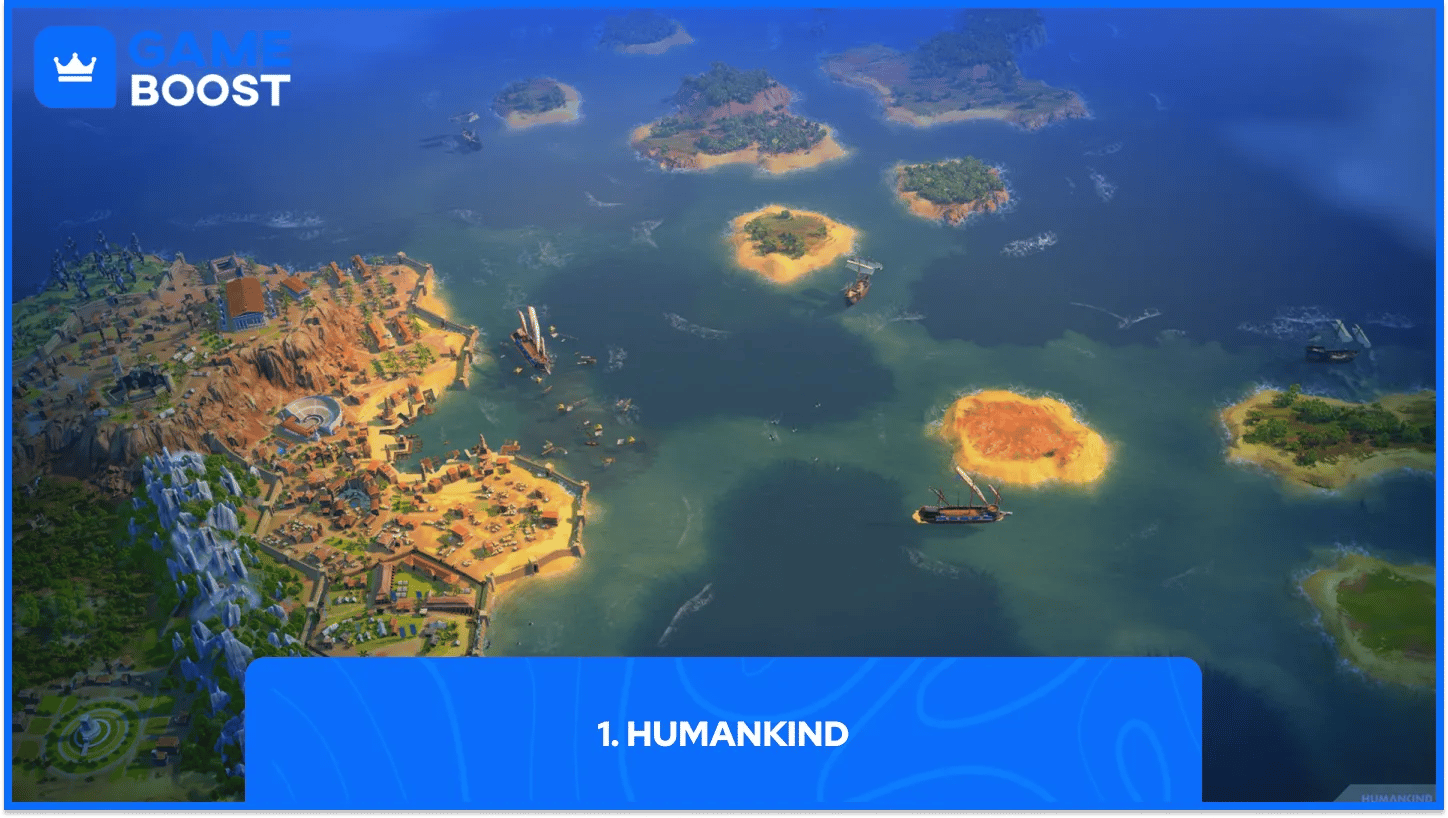
Humankind is the closest direct alternative to Civilization on this list. Developed by Amplitude Studios, it follows humanity from the Neolithic period into the modern age while allowing you to shape a civilization through culture, technology, diplomacy, warfare, and territorial expansion.
Instead of selecting one civilization that remains unchanged throughout the campaign, you choose a new historical culture whenever your empire advances into another era. You might begin with an agrarian culture, adopt a militaristic identity later, and finish the campaign as an industrial or scientific power. Bonuses from earlier cultures remain part of your civilization, creating combinations that differ between campaigns.
Humankind also replaces Civilization’s traditional score victories with Fame. Military victories, scientific achievements, cultural influence, territorial expansion, and other accomplishments all contribute to your final Fame score. This means an empire can lose territory or fall behind technologically and still win because of what it achieved earlier in history.
Combat takes place across multiple tiles, turning individual encounters into compact tactical battles. Terrain, elevation, reinforcements, and unit positioning matter considerably more than they do in most Civilization battles.
Why It’s Similar: Humankind follows the same basic journey as Civilization, beginning with a small settlement and ending with an advanced global power. It includes hexagonal maps, districts, technological eras, diplomacy, historical cultures, and several viable ways to build a successful empire.
Available on: PC, macOS, PlayStation 4, PlayStation 5, Xbox One, and Xbox Series X|S
My Verdict: Humankind is the best overall choice for players who want another historical 4X game that covers the full development of human civilization. Its evolving culture system makes it familiar without feeling like a direct copy.
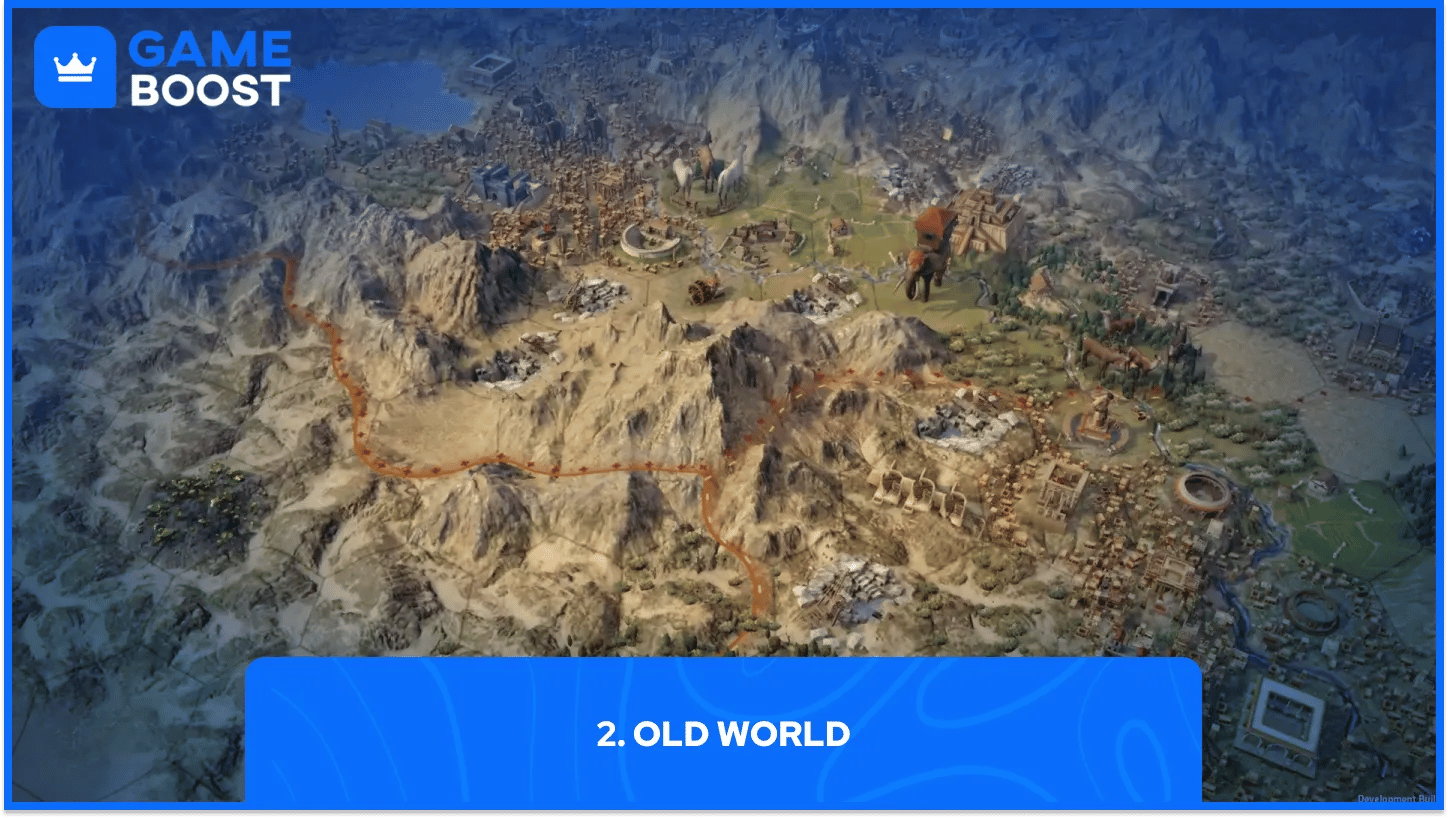
Old World narrows the Civilization formula to classical antiquity, focusing on empires such as Rome, Greece, Egypt, Persia, and Babylon. It was created by Mohawk Games and led by Soren Johnson, the lead designer of Civilization IV.
Although Old World covers a shorter historical period, it adds significantly more detail to leadership and internal politics. Your ruler ages, forms relationships, raises heirs, and eventually dies. The next member of your dynasty then inherits the empire, potentially bringing different traits, ambitions, strengths, and political problems.
Cities are associated with powerful families that expect positions, resources, and favorable treatment. Ignoring them can create instability, while giving one family too much influence can weaken your control over the rest of the nation. Narrative events regularly force you to choose between political benefits, personal relationships, religious pressure, and long-term strategic goals.
Old World also uses an Orders system. Moving units, constructing improvements, assigning officials, and performing other actions consume Orders from a shared pool. You cannot automatically move every unit during every turn, so deciding which actions matter most becomes part of the strategy.
Why It’s Similar: Old World retains Civilization’s turn-based exploration, city development, resource management, technology, diplomacy, and warfare. Its historical setting and hex-based map make it immediately recognizable, while dynasties and limited Orders add more personal and tactical decision-making.
Available on: PC, macOS, and Linux
My Verdict: Old World is the strongest recommendation for experienced Civilization players who want deeper rulers, internal politics, and difficult turn-by-turn decisions. Its smaller historical scope allows every system to receive more attention.
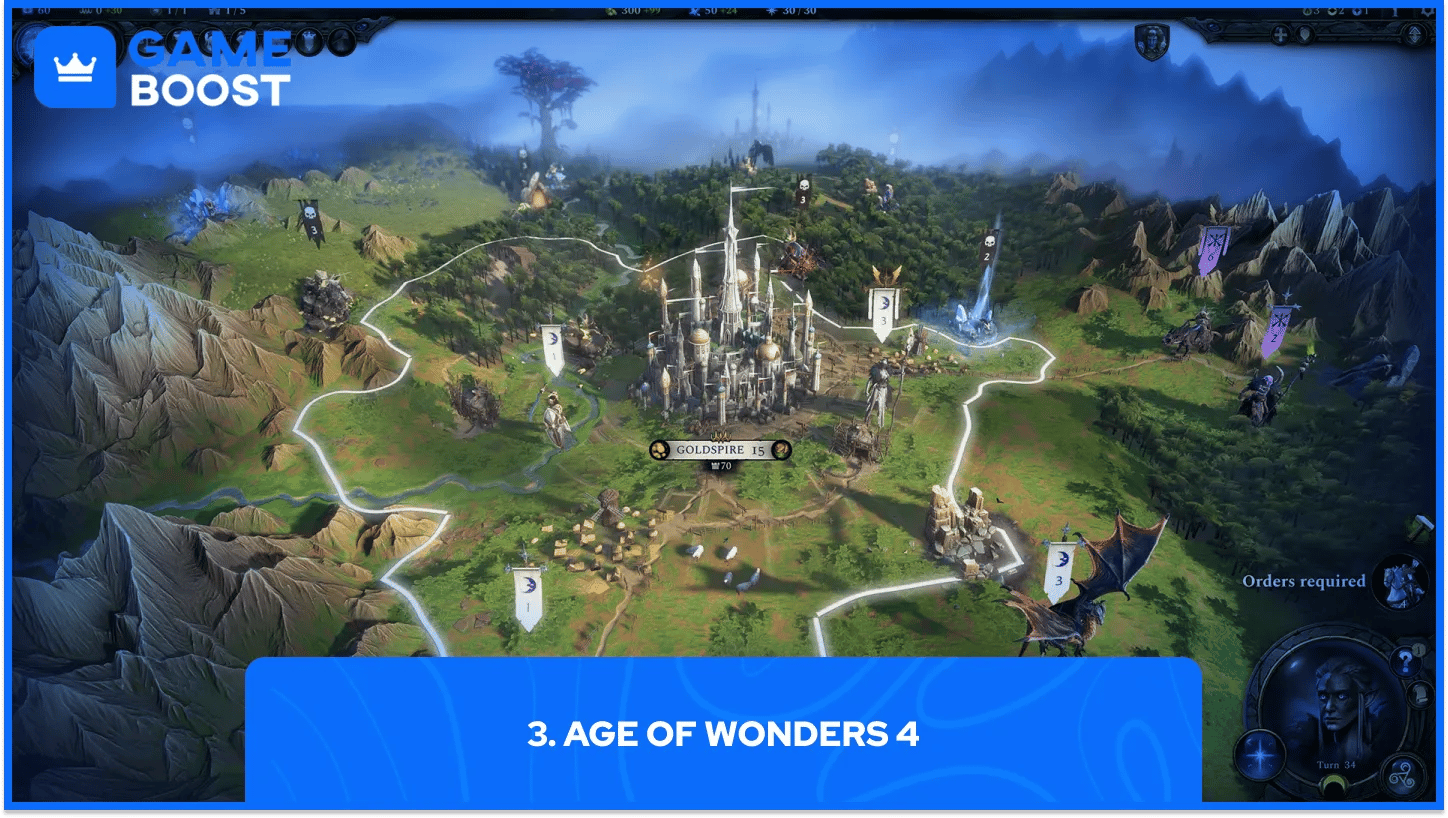
Age of Wonders 4 moves Civilization-style empire building into a customizable fantasy universe. Developed by Triumph Studios, it combines turn-based 4X strategy with detailed tactical battles and role-playing systems.
Faction creation is one of its greatest strengths. You choose your people’s physical form, culture, society traits, magical affinities, and ruler before entering a procedurally generated realm. These choices can produce traditional fantasy kingdoms or unusual combinations such as industrial elves, cannibal halflings, or magically enhanced mole people.
As your empire develops, Tomes of Magic unlock spells, units, buildings, and transformations. These transformations can physically and mechanically change your population, allowing an ordinary society to become undead, angelic, demonic, plant-based, or otherwise altered by the end of a campaign.
Cities expand by claiming nearby provinces, while diplomacy, alliances, vassals, ancient wonders, and rival empires shape the wider map. When armies meet, combat moves to a tactical battlefield where positioning, formations, spells, and unit abilities determine the outcome.
Why It’s Similar: Age of Wonders 4 uses the familiar 4X loop of exploring a map, founding cities, claiming resources, researching upgrades, negotiating with rivals, and pursuing victory. It replaces historical civilizations and technologies with fantasy cultures and magical tomes.
Available on: PC, PlayStation 5, and Xbox Series X|S
My Verdict: Age of Wonders 4 is the best fantasy alternative to Civilization. Choose it if you want more faction customization and deeper battles without giving up city development, diplomacy, or turn-based empire management.
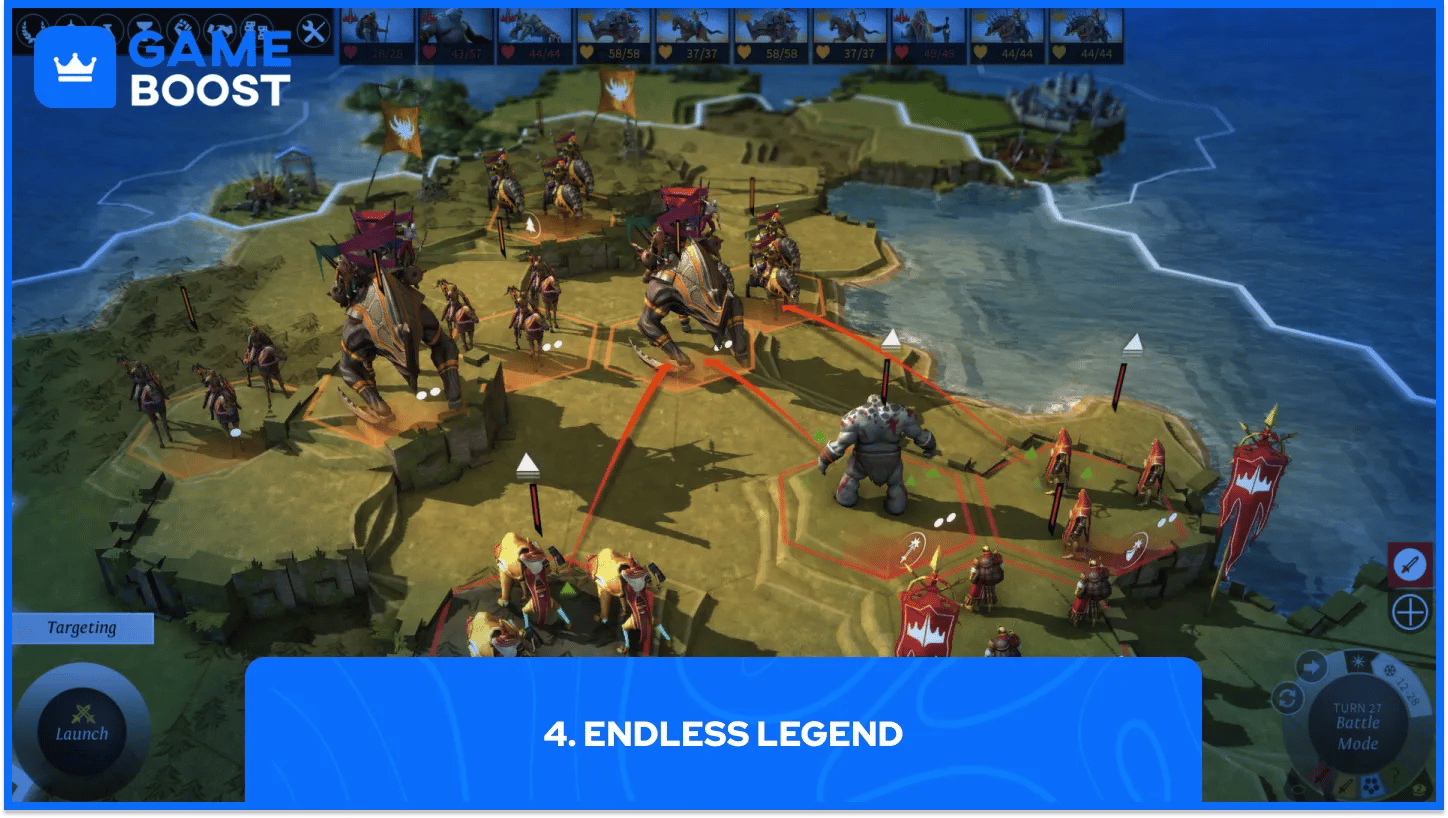
Endless Legend is a turn-based fantasy 4X game from Amplitude Studios, the same developer behind Humankind. It takes place on Auriga, a dying world inhabited by factions with dramatically different cultures, stories, and gameplay mechanics.
Each faction changes how the campaign is approached. The Broken Lords consume Dust instead of food, the Cultists build one enormous city and convert minor factions, while the Roving Clans specialize in trade and cannot declare conventional wars. These differences go far beyond Civilization’s unique units and bonuses.
Cities expand through districts placed on a hexagonal map, rewarding careful planning around terrain and resources. Armies move as individual groups before deploying into tactical battles when they meet an enemy. Heroes can lead armies or govern cities, gaining equipment and abilities as they level.
Auriga’s increasingly severe winters create an additional strategic threat. Movement, production, and military plans can all be disrupted when winter arrives, forcing every empire to prepare for conditions that become harsher as the campaign progresses.
Why It’s Similar: Endless Legend shares Civilization’s hex-based map, turn structure, city expansion, research, diplomacy, resource management, and multiple victory conditions. Its fantasy setting and highly asymmetric factions make every campaign feel more specialized.
Available on: PC and macOS
My Verdict: Endless Legend remains one of the best choices for players who want Civilization’s structure with stronger faction identities and more world-building. Some systems show their age, but the factions remain unusually creative.
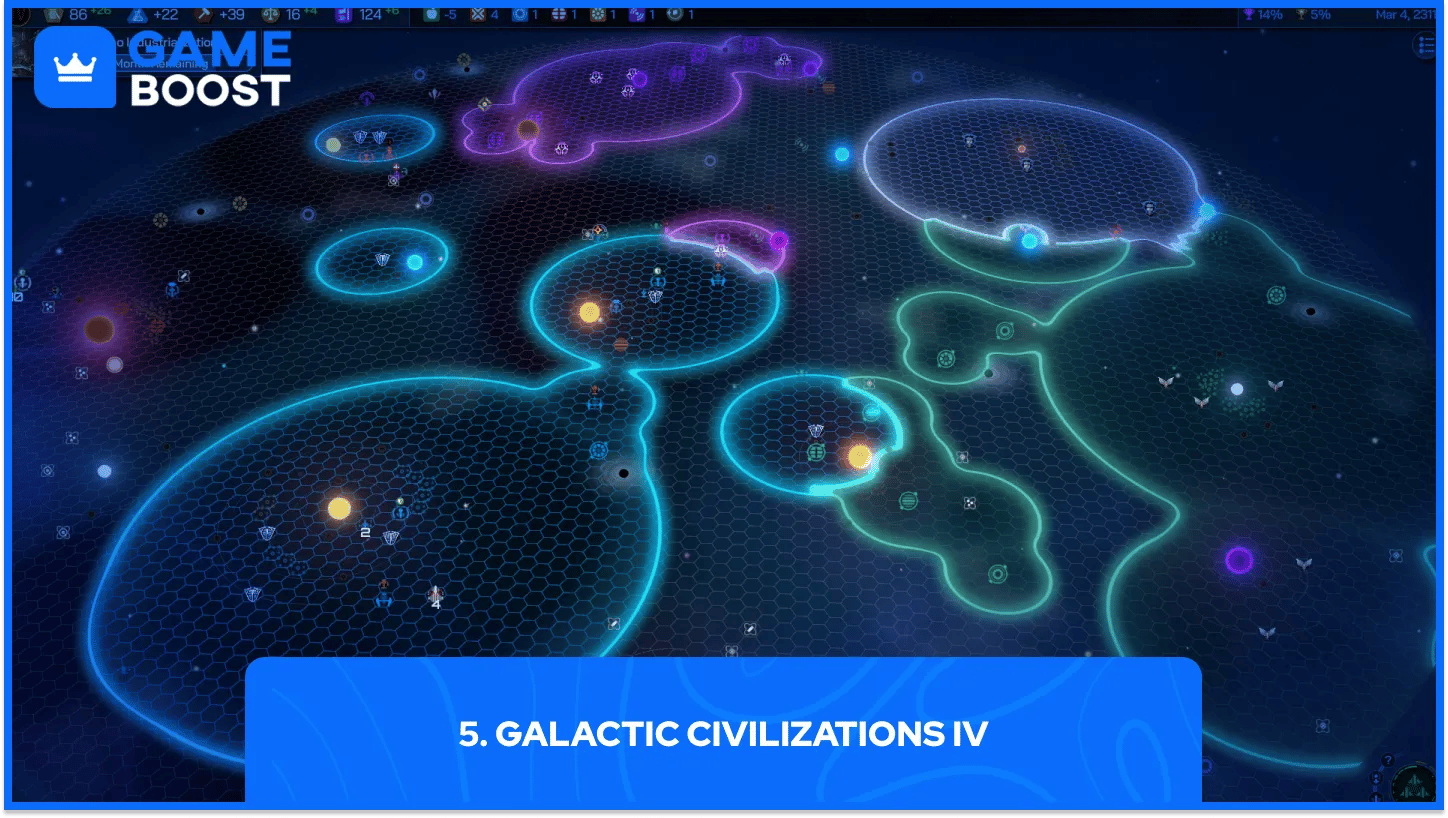
Galactic Civilizations IV takes the turn-based 4X formula beyond Earth and places you in command of an interstellar civilization. Developed by Stardock Entertainment, it focuses on planetary colonization, technological research, diplomacy, cultural influence, and fleet warfare.
The basic campaign begins with a small homeworld and limited knowledge of the surrounding galaxy. Exploration reveals habitable planets, strategic resources, anomalies, and rival species. Some planets become fully managed Core Worlds, while others operate as Colonies that send resources to the nearest developed world.
Civilizations can be heavily customized, including their appearance, ideology, abilities, government, ships, and background. The ship designer also allows you to create original vessels instead of relying entirely on predetermined military models.
Victory does not require conquering every opponent. Cultural influence, diplomacy, technological advancement, Prestige, and other objectives provide peaceful alternatives to military domination. Procedurally generated galaxies and customizable opponents keep campaigns unpredictable.
Why It’s Similar: Galactic Civilizations IV is essentially a space-based counterpart to Civilization. It retains turn-based exploration, colonization, research trees, diplomacy, cultural pressure, competing civilizations, and multiple paths to victory.
Available on: Windows PC
My Verdict: Galactic Civilizations IV is the closest space alternative for players who specifically want Civilization’s turn-based pacing. Its ship and civilization customization provide enormous freedom, though managing a large galaxy can become demanding.
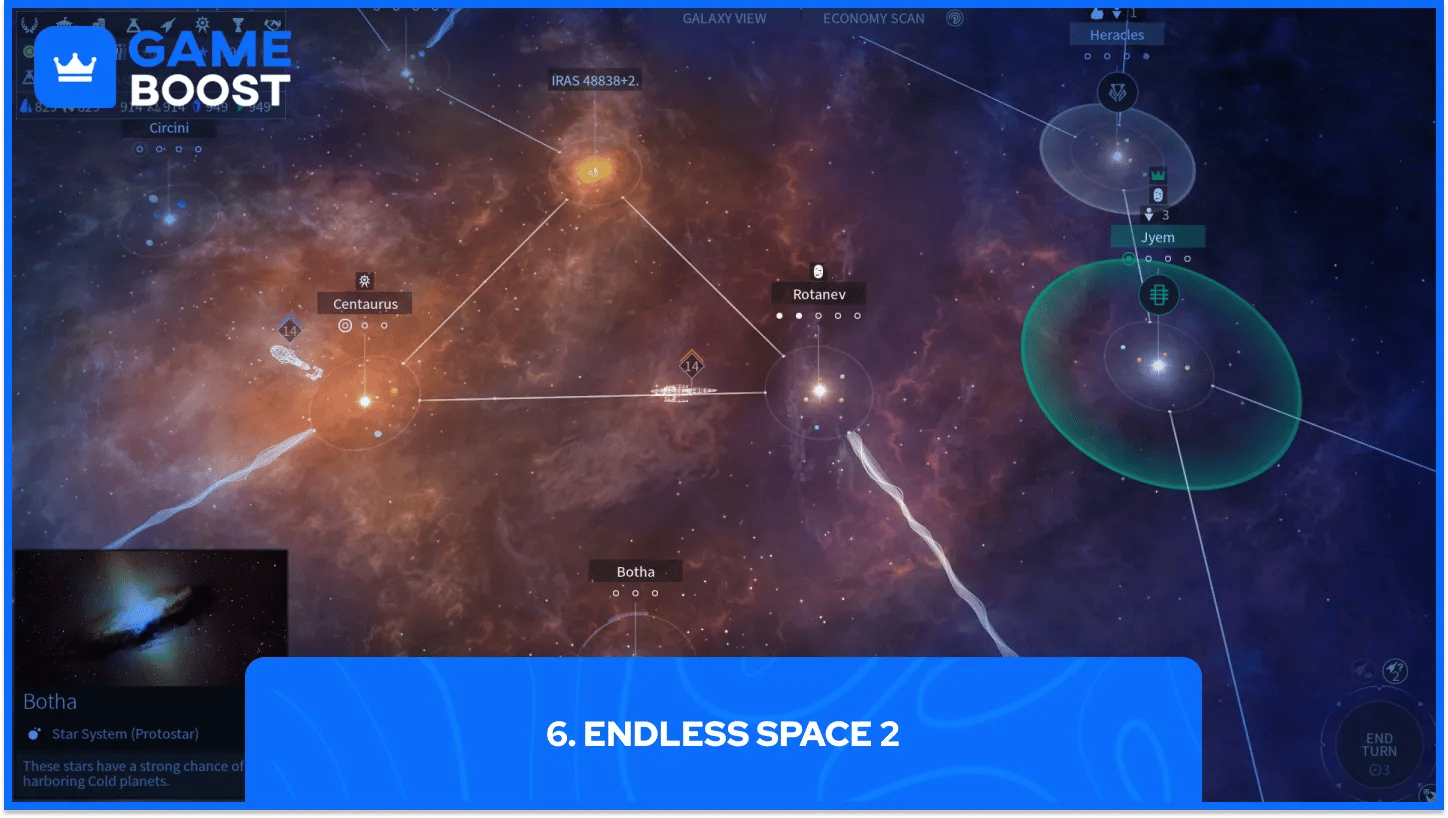
Endless Space 2 is another space-based 4X game from Amplitude Studios. You begin with a single system before exploring the galaxy, colonizing planets, researching technology, encountering alien civilizations, and competing for control of strategic resources.
Its factions are built around distinct mechanics rather than minor statistical bonuses. Some civilizations expand through conventional colonies, while others rely on migration, trade, religious conversion, planetary consumption, or unusual population systems. Every faction also receives its own narrative quest that develops throughout the campaign.
Internal politics respond to the way you govern. Military expansion can strengthen militarist parties, while scientific investment, trade, ecology, or religious decisions empower different political groups. Elections determine which parties influence your government and what laws become available.
Fleet design remains strategically important even though space battles are largely automated. Ship modules, weapon ranges, defenses, fleet composition, and battle plans determine how your forces perform once combat begins.
Why It’s Similar: Endless Space 2 preserves Civilization’s turn-based empire management, technology trees, diplomacy, expansion, resources, unique factions, and different victory conditions. The primary difference is replacing cities and continents with planets and star systems.
Available on: PC and macOS
My Verdict: Endless Space 2 is ideal for Civilization players who enjoy diplomacy, faction identity, and long-term planning more than manually controlling every battle. Its universe and narrative quests give each empire a memorable identity.
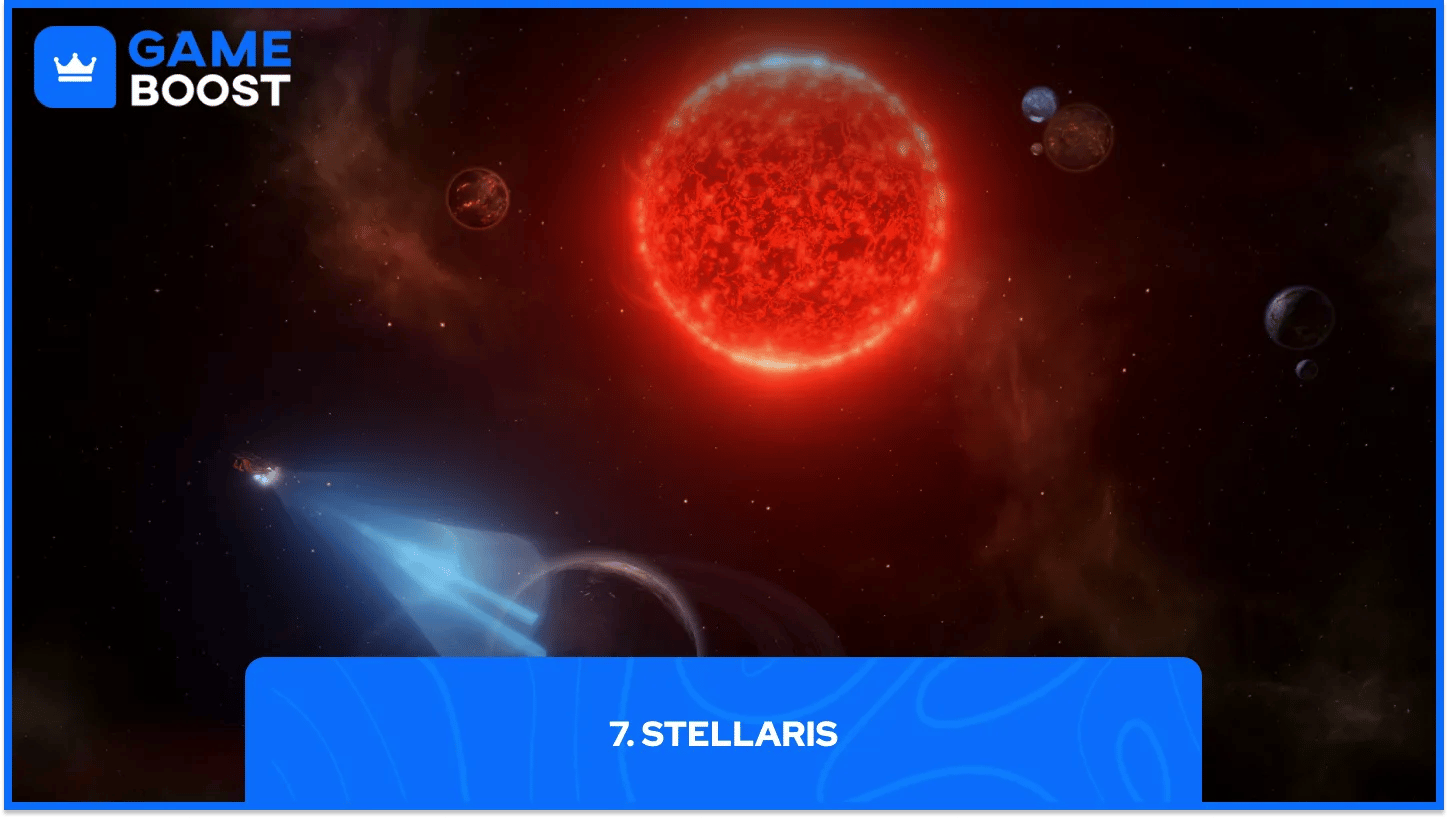
Stellaris combines 4X exploration with the scale and complexity of a Paradox grand-strategy game. Instead of guiding a historical civilization, you design a species and government before leading them into a procedurally generated galaxy.
Species traits, ethics, authority types, civics, and origins determine how your empire functions. You can create democratic explorers, corporate traders, machine intelligences, militaristic conquerors, collective hive minds, and many other societies with substantially different mechanics.
The early game closely resembles traditional 4X exploration. Science ships survey unknown systems, construction vessels establish outposts, colonies expand your population, and first-contact events introduce neighboring civilizations. As the galaxy fills, the focus shifts toward federations, economic specialization, espionage, galactic politics, wars, and large-scale crises.
Unlike Civilization, Stellaris runs in real time with pause controls. You can stop the game whenever you need to issue orders or review your economy, but several systems continue developing simultaneously when time resumes.
Why It’s Similar: Stellaris includes exploration, expansion, research, diplomacy, resource management, cultural identity, and several approaches to galactic domination. Its scope is broader than Civilization, although its real-time format creates a different rhythm.
Available on: PC, macOS, Linux, PlayStation, and Xbox
My Verdict: Stellaris is the best recommendation for Civilization players ready to move into deeper grand strategy. It requires more learning and campaign management, but few games provide as much freedom when designing and developing an empire.
PC offers all seven games featured in this article. Humankind is the closest historical alternative, while Old World adds deeper character and political systems. Age of Wonders 4 and Endless Legend provide fantasy settings, while Galactic Civilizations IV, Endless Space 2, and Stellaris take empire building into space. Players can explore more options through the wider PC game keys catalogue.
Humankind and Age of Wonders 4 both run natively on PS5. Humankind is the closest match to Civilization’s historical progression, while Age of Wonders 4 replaces historical civilizations with customizable fantasy factions and tactical battles. Stellaris is also available for players who prefer large-scale space strategy. More titles are available through the broader PlayStation game keys selection.
Humankind and Age of Wonders 4 are both available on Xbox Series X|S. Stellaris is another option for players who want deeper empire customization, galactic exploration, and real-time grand strategy. Players can browse the broader Xbox game keys catalogue for additional strategy games.
None of the seven games featured in this article currently has a native Nintendo Switch release. Players looking for turn-based strategy and empire-building alternatives can browse the wider Nintendo Switch game keys selection.
Humankind is the most direct alternative to Civilization, while Old World provides deeper leadership and political systems within a focused historical period. Age of Wonders 4 is the strongest fantasy option, and Galactic Civilizations IV offers the closest turn-based equivalent in space.
Every game on this list approaches empire building differently, but all preserve the long-term planning, expansion, and consequential decisions that make Civilization difficult to put down.
View Civilization Game Keys Collection
“ Filip Premuš is a seasoned gaming content writer specializing in titles like Steal a Brainrot, Old School RuneScape, and other popular online games. With a sharp focus on accuracy, updates, and in-game strategy, he creates comprehensive guides that help players stay ahead of the meta and make informed decisions.”