

Planet Zoo 2 Review: The Animals Steal the Whole Show
My Planet Zoo 2 review starts with a sea turtle. I built my first saltwater tank on launch night, dropped in a hawksbill turtle and watched it glide over a glass tunnel full of guests for longer than I'd like to admit. Planet Zoo 2 adds aquariums, flying birds, and wildlife reserves to the series, and it's the most alive a zoo game has ever felt to me.
The game launched on October 13, 2026, for PC, PlayStation 5, and Xbox Series X|S, as Frontier announced in its release date reveal. I picked it up on PS5 and played across Career, Sandbox, and Franchise mode.
It's also a launch build, with rough edges Frontier is already patching. Below, I go through the animals, the reserves, the building tools, and the modes, then answer whether you should buy it yet.
Planet Zoo 2 Review Summary
Planet Zoo 2 has the best-looking, best-animated animals I've seen in a management sim, and they carry the whole game.
Aquariums and aviaries bring sharks, fish shoals and flying birds to the series for the first time.
Planet Zoo 2 wildlife reserves give breeding a goal: restore damaged land, then release the animals you raised.
Building is quicker thanks to the Nature Brush, finer path placement, and the Line and Curve Builder. The menus still waste clicks.
Franchise mode launched with a near-empty trading pool. Update 1.0.4 raised it and fixed a stack of crashes.
The base roster leaves South America and Oceania thin, so returning players will miss old favorites.
The Animals Carry Planet Zoo 2
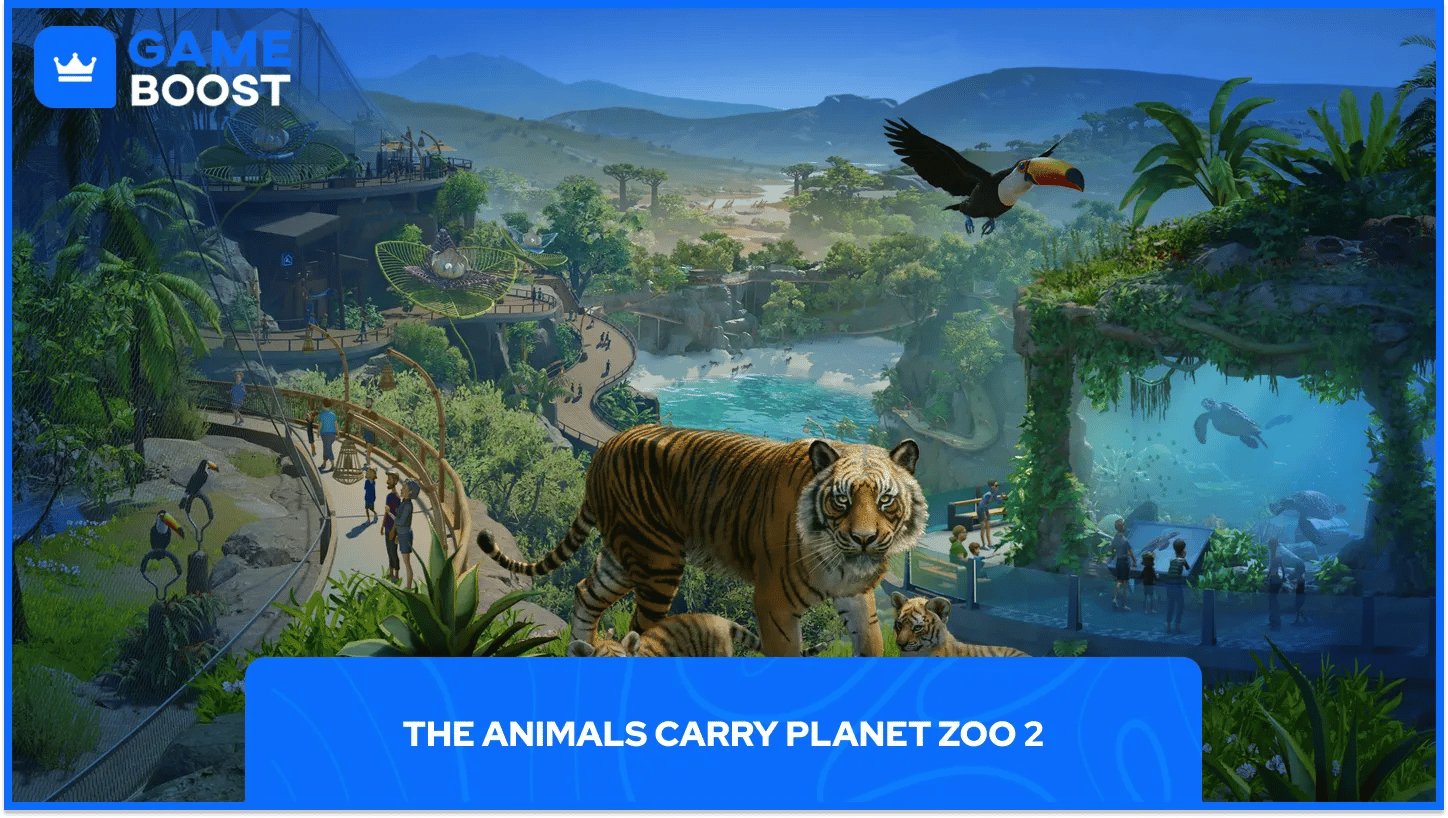
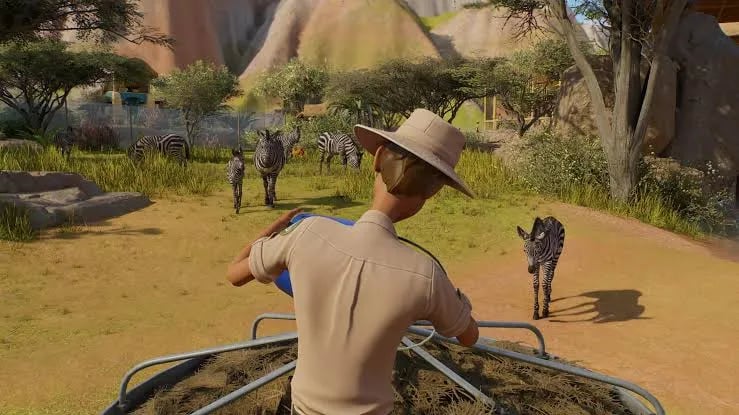
Every animal in Planet Zoo 2 moves like it has somewhere to be. Herds graze together, youngsters stick close to one another, and a group will bolt if something comes at it too fast. Animals that reach the Thriving state can live longer and draw more guest donations, so the welfare screens finally pay back care with something I can see.
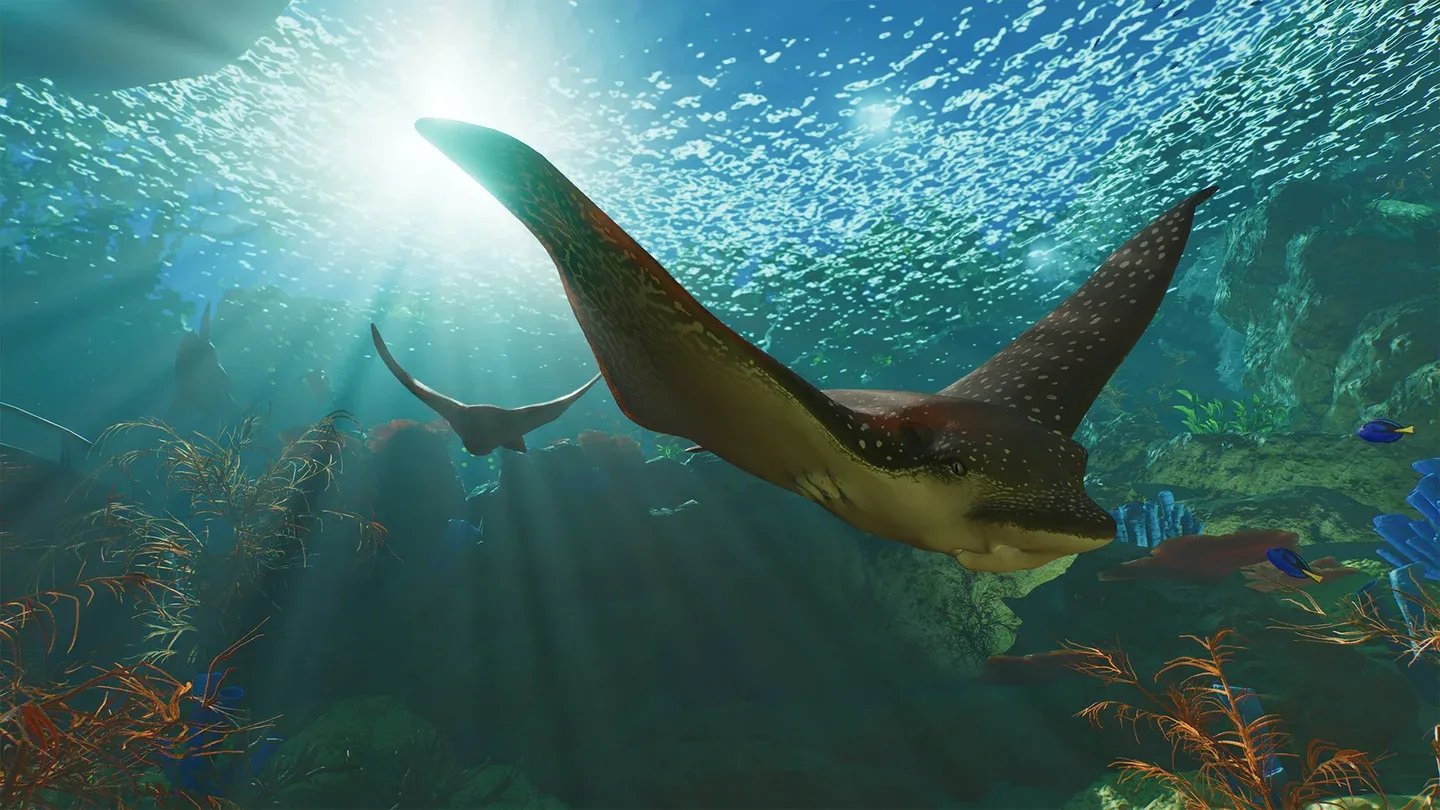
Aquariums are the headline. I can build freshwater or saltwater tanks, hook them into the filtration network, set the temperature and lighting, and run tunnels underneath so guests walk through the water. My blacktip reef sharks circled rockwork I'd built piece by piece. Zooming the camera into the water throws a little splash across the lens, and I did it way more often than I needed to.
Birds changed how I lay out a zoo. The toco toucan and the secretarybird fly for real, so every aviary needs barriers, support poles, and a mesh cover over the top. Some aviaries let guests walk straight through, and a toucan landing on a perch beside a crowd sells the idea better than any trailer did. Mixing compatible species in one big walk-through aviary became my favorite build.
Planet Zoo 2 slips on its roster. I went looking for a capybara and a jaguar and found neither, and South America and Oceania feel thin next to Africa and Asia. The six Deluxe Edition species add a golden lion tamarin and not much else for those regions. Climbing animals were the buggiest part of launch, with primates clipping through trees and bears stuck on their routes, and Frontier lists climbing, jumping and pouncing as ongoing work.
Wildlife Reserves Give Breeding A Purpose
Wildlife reserves are the big new idea in Planet Zoo 2. A reserve is a stretch of damaged land outside the zoo that I restore, replant, and study until it can support a release group bred back home. The Sumatran Rainforest opens on ground scarred by mining, and the Swedish tundra was the other reserve I spent real time in. A surplus of juveniles stops being a storage headache and turns into a conservation project with an end point.
The work is part terrain editor, part science project. I paint undergrowth with the Nature Brush, place research outposts, and set camera traps and acoustic monitors to learn what the land still lacks. The Research Vehicle lets me drive around a reserve and see the work up close. Once I meet the conservation requirements, I pick a release group and watch it walk into the wild.
My first release felt like a payoff, and the later ones less so. Each release runs through several menus and a cutscene, and by my third group the ceremony outlasted the reward. The reserve list is short at launch, so plenty of species in my zoo had nowhere to go. I'd like reserves to grow beyond decorating, with threats to manage or wild populations that change between visits.
Building Got Easier, Menus Got Worse
As a returning player, I found the building tools the biggest step up from the first game. Paths lay down in much finer increments, shops can sit anywhere on a plaza without touching a path edge, and the Line and Curve Builder throws up raised walkways in a few clicks. The Nature Brush spreads foliage and rocks across a slope in seconds, and I can reshape a pool without draining it first. Object scaling, mirroring and wider Flexicolour support let one rock asset play several roles in a single habitat.
Patch 1.0.4 dropped the default angle snapping from 15 degrees to 1, which made fine work on fences and rockwork much less fiddly. Small scenery still clips through larger pieces. On my RTX 4080, the DLSS option did nothing when selected until that patch, and the Ultra preset now pushes foliage detail to Very High, so reopen the graphics menu after updating.
The RTX 4080 and my Ryzen 7 9800X3D both sit above the recommended tier on the Steam page, which asks for an RTX 3070 and a Ryzen 7 5800X. Even my biggest Career zoo stayed smooth with crowds packing every path. I had one crash on launch night, from jumping in and out of the Planet Hub quickly, and Frontier lists that exact crash as fixed in 1.0.4.
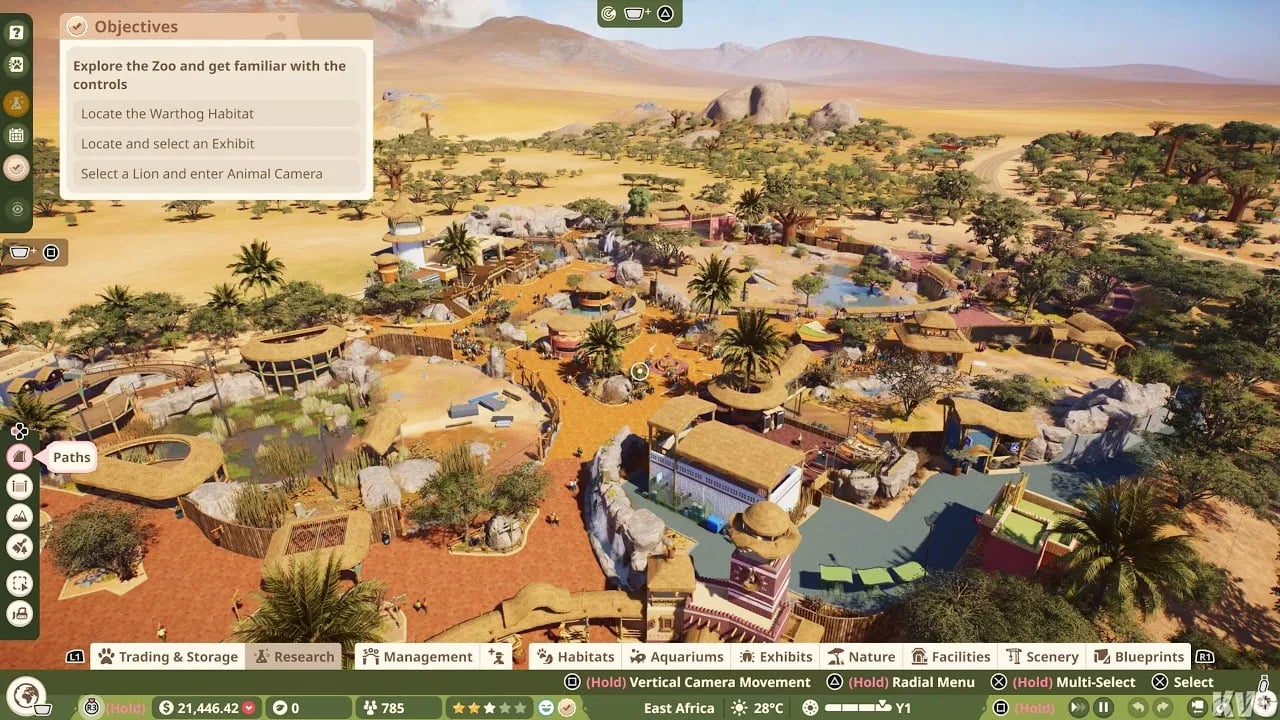
I'd rebuild the menus first. Changing a shop's price opens a popup that takes more clicks than a one-number edit should, and the foliage and build icons are small and hard to read. Habitat welfare is split across temperature, terrain, plants, water filtration, group size, and sex ratio, each in its own submenu. Quick-access buttons help, and I still spent too much of each evening reading tabs when I wanted to watch animals.
Career Teaches, Franchise Stumbles
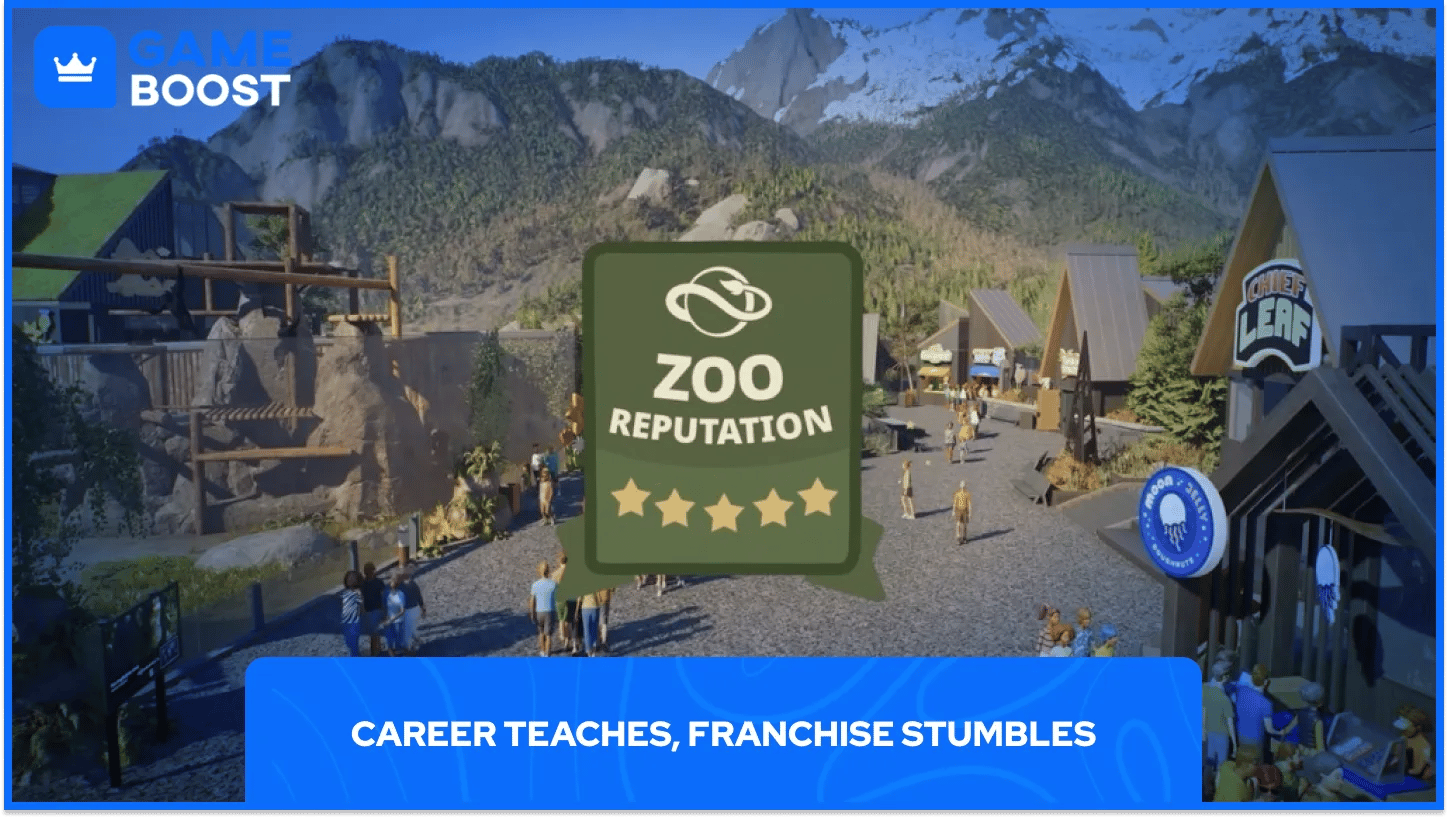
Career mode is the gentlest way into Planet Zoo 2. It sends me through a run of zoos with set problems, like debt or a cramped plot, in places that range from Wales to the mountains of China. The objectives are tidy and a little safe, and I'd have liked more story between them.
Sandbox is the mode I'll live in. With no objectives in the way, the building tools get room to shine, and the Frontier Workshop puts community blueprints a click away, including creations from players on other platforms. My best aviary started from someone else's frame that I reworked for my own birds.
Planet Zoo 2 Franchise mode is the online layer. I build a network of zoos, trade animals with other players, and chip away at Community Challenges that pay out Conservation Credits. On launch night, the trading pool barely had animals in it, and research wanted a reserve and bred animals before it opened up. Steam player Loulou described the same loop in a launch review, and my first Franchise evening ran straight into that wall.
Update 1.0.4 raised the starting trading volumes, fixed juvenile shoal trades and corrected the Conservation Credit rewards, and Frontier says it will keep watching Franchise stability. The pool already feels healthier. I'd still treat this mode as unfinished for a few more patches.
Is Planet Zoo 2 Worth Buying Right Now?
Yes, Planet Zoo 2 is worth buying now if you want a zoo builder for Career and Sandbox. The animals, aquariums, and aviaries are ready, and newcomers will find it easier to pick up than the original.
Frontier shipped Update 1.0.4 a day after release and says animal climbing, enrichment alignment, and habitat escapes come next. Expect the odd bug in long sessions until those land.
Franchise players should wait, and so should anyone whose favorite species from the first game is missing. At full price, a returning fan planning a South American zoo will feel the gaps. The Standard Edition covers everything I've described, and the Deluxe Edition adds six species plus exclusive animal signs, both on the Planet Zoo 2 Steam page.
FAQs About Planet Zoo 2
Final Words
Planet Zoo 2 got the hard parts right first. The animation and the feel of a crowd moving past a shark tunnel arrived finished. Small jobs, like a price change or a trade menu with stock in it, still need work.
Primates, bears and big cats are the stars of most zoos, so the climbing fixes Frontier has lined up matter more than anything else on its list. If those animals end up moving as the sharks and toucans do, most of my complaints shrink to the roster.
Will Frontier fill South America and Oceania with free species, or sell them back as packs? That's what I'll be watching. If you're starting, build an aquarium early and give reserves a full evening before you judge them.
GameBoost Products
Planet Zoo 2 Game Key
View all GameBoost Game Keys
View all GameBoost Accounts
View all GameBoost Boosting Services
View all GameBoost Currencies
View all GameBoost Gift Cards
View all GameBoost Top Ups
View all GameBoost Items