
•Filip Premuš• 23 min read
Games
Few sandbox games combine exploration, mining, construction, character progression, and boss battles as effectively as Terraria. The 2D adventure from Re-Logic begins with a few basic tools but gradually expands into a massive journey involving elaborate bases, dangerous biomes, powerful equipment, world-changing events, and increasingly demanding enemies.
Terraria’s strength comes from how these systems support one another. Exploring reveals materials, materials produce better equipment, and better equipment lets you reach new areas and defeat stronger bosses. Players can follow that progression, focus on creative construction, collect rare items, experiment with different combat builds, or share a world with friends.
Here are the best games like Terraria to play in 2026:
# | Game | Best For |
|---|---|---|
1 | Terraria-style exploration in space | |
2 | Underground exploration and bosses | |
3 | Settlement building and co-op | |
4 | 2D sandbox RPG progression | |
5 | Cooperative crafting adventures |
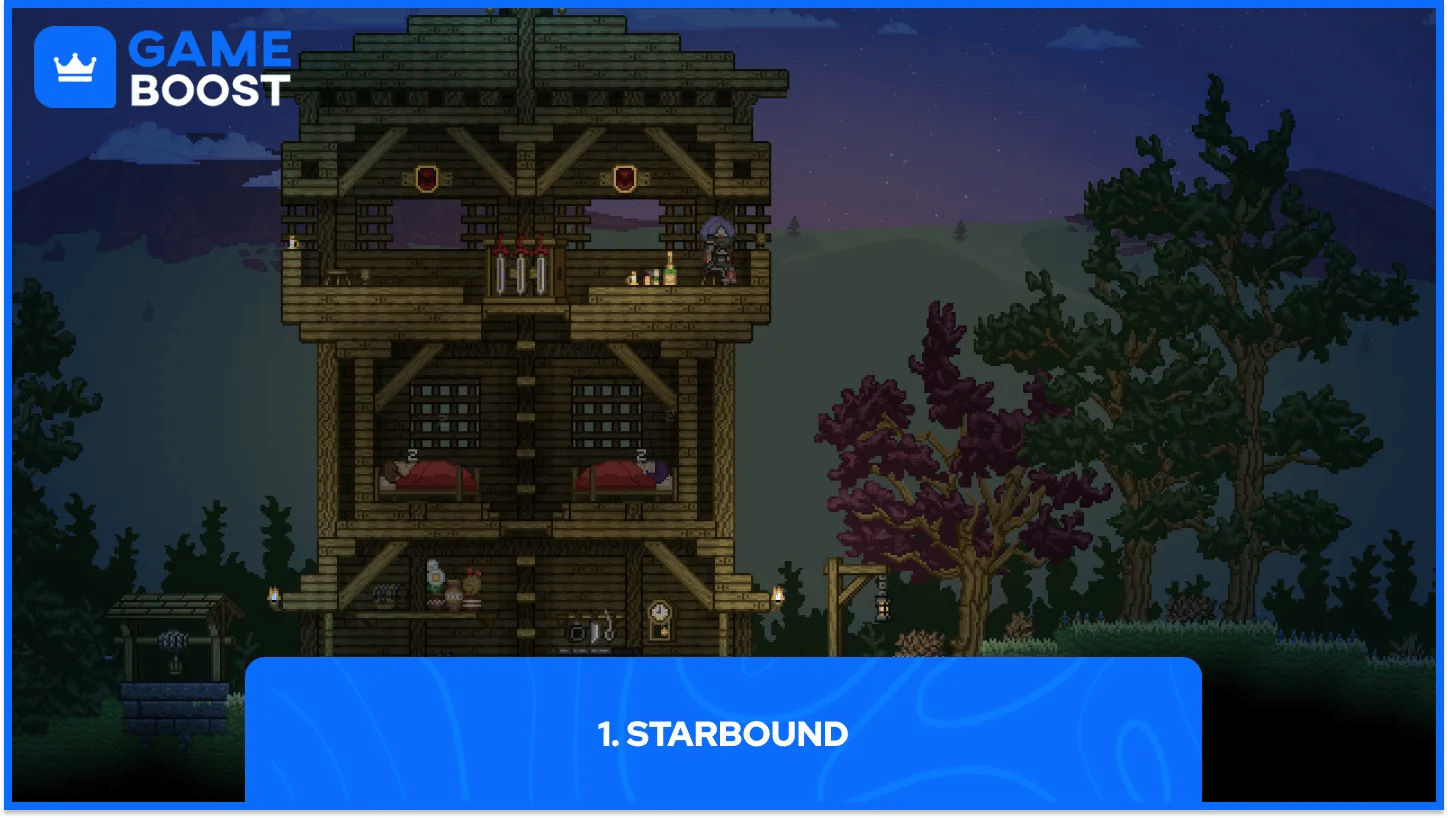
Starbound is the closest overall alternative to Terraria. It retains the side-view perspective, destructible terrain, mining, crafting, equipment progression, base building, and pixel-art presentation while replacing a single fantasy world with an entire universe of planets.
You begin aboard a damaged spacecraft and gradually acquire the resources needed to repair it. Once operational, the ship allows you to travel between procedurally generated planets with different climates, creatures, settlements, dungeons, and materials. You can mine beneath their surfaces, collect furniture, recruit crew members, establish colonies, and upgrade your equipment.
The game places greater emphasis on quests and science-fiction storytelling than Terraria. Its combat and bosses are less central to the overall experience, but the ability to explore new planets creates a similarly powerful sense of discovery. Multiplayer and extensive mod support also provide plenty of reasons to continue after completing the main campaign.
Why It’s Similar:
2D sandbox exploration
Destructible environments
Mining, crafting, and construction
Weapons, armor, and equipment progression
Procedurally generated locations
Bosses, dungeons, and multiplayer
Large modding community
Available on: PC, macOS, Linux, Xbox One, and Xbox Series X|S
My Verdict: Starbound is the most obvious recommendation for Terraria players because it follows nearly the same basic formula. Its planet-hopping structure sacrifices some of Terraria’s tightly connected progression but provides substantially more environmental variety.
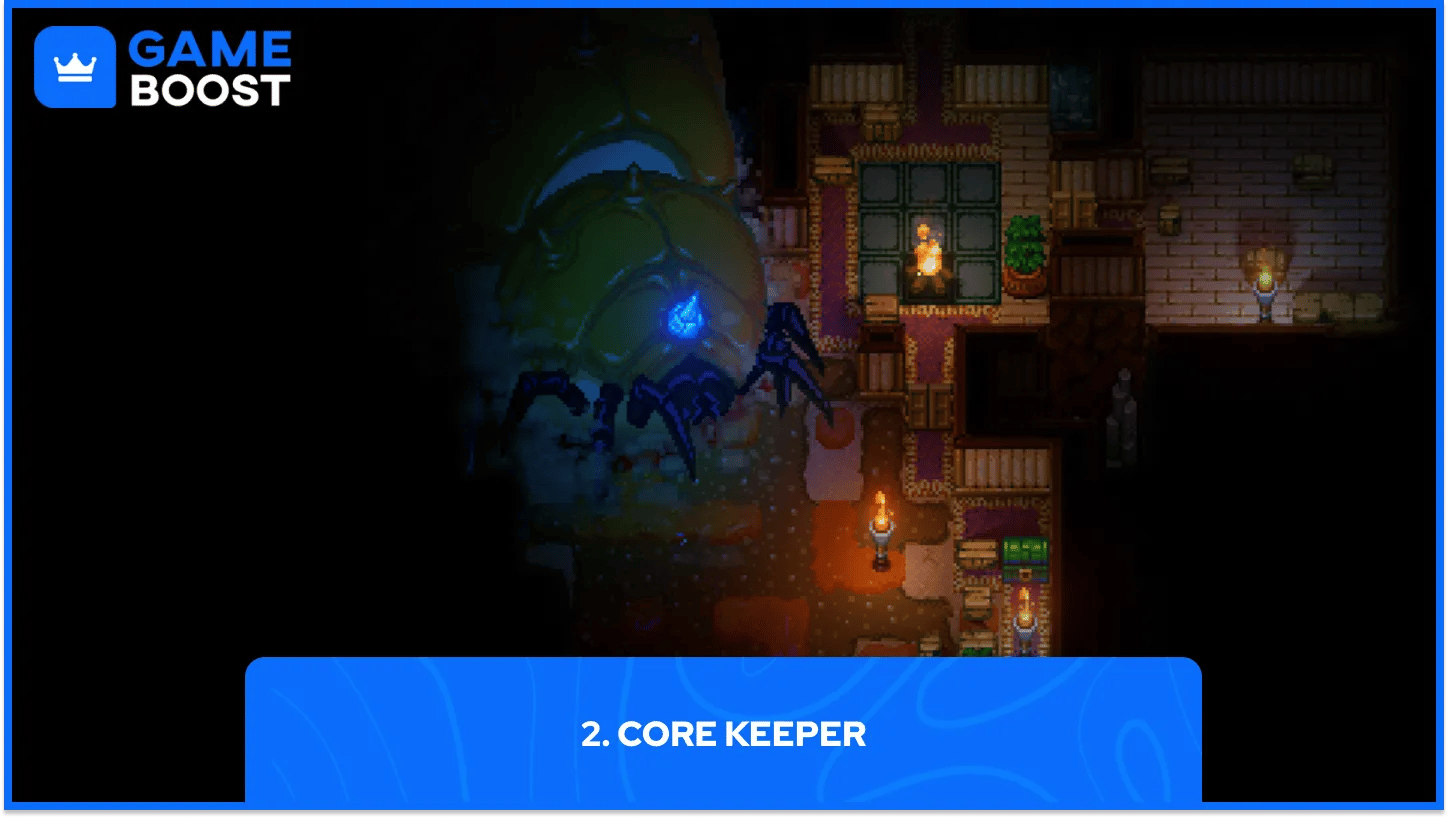
Buy Core Keeper if mining, equipment upgrades, cooperative exploration, and boss progression are your favorite parts of Terraria. Instead of presenting the world from the side, Core Keeper uses a top-down perspective and places almost the entire adventure inside an enormous underground cavern.
Mining is central to progression. Different sections of the cave contain new materials, enemies, environmental hazards, and resources required to produce stronger tools and equipment. Defeating major bosses opens routes into additional biomes, creating a steady sequence of preparation, exploration, combat, and advancement.
You can also construct a base, grow crops, cook meals, fish, automate resource production, recruit merchants, and design transportation networks. Up to eight players can explore the same world online, making Core Keeper particularly suitable for groups that enjoyed dividing mining, construction, and combat responsibilities in Terraria.
Why It’s Similar:
Procedurally generated sandbox world
Mining and resource progression
Crafting, farming, and base building
Biomes with unique enemies and materials
Equipment tiers and character builds
Major boss encounters
Online cooperative multiplayer
Available on: PC, PS4, PS5, Xbox One, Xbox Series X|S, and Nintendo Switch
My Verdict: Core Keeper is the best modern alternative for players who want Terraria’s progression loop from a different perspective. Its combination of exploration, bosses, automation, and co-op captures much of what makes Terraria difficult to stop playing.
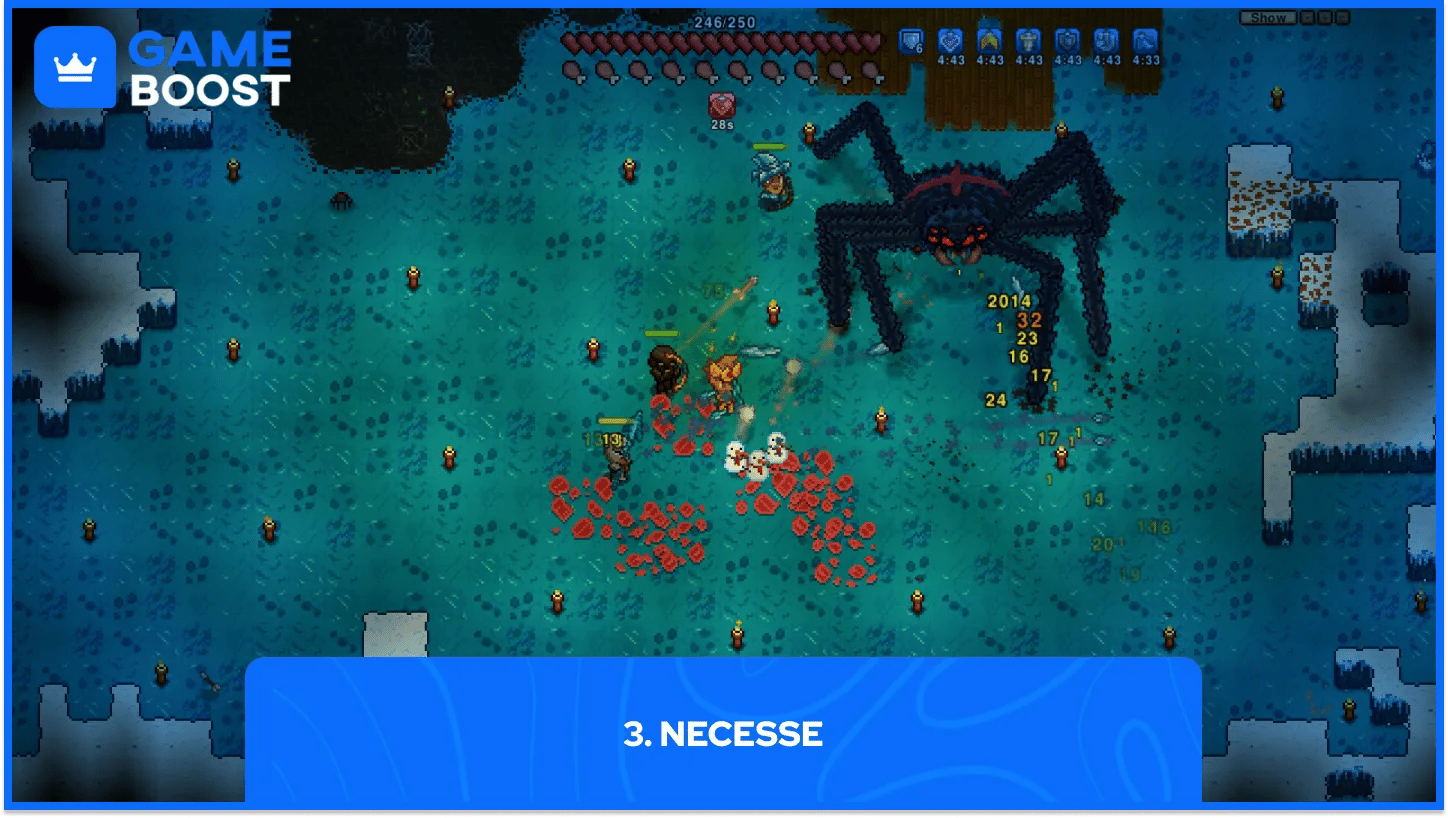
Necesse combines sandbox exploration with much deeper settlement management. Its procedurally generated world contains islands, caves, dungeons, villages, resources, enemies, and bosses that can be explored alone or through online multiplayer.
Like Terraria, progression depends on gathering materials and using them to craft stronger tools, weapons, armor, potions, and accessories. Different equipment supports melee, ranged, and magical playstyles, while increasingly dangerous areas require better preparation and more specialized builds.
The largest difference is the settlement system. You can recruit settlers, assign jobs, establish farms and workshops, organize storage, trade with other communities, and build defenses against raids. Settlers can gather resources and produce items while you concentrate on exploration or combat.
Why It’s Similar:
Procedurally generated open world
Mining, crafting, and equipment upgrades
Melee, ranged, and magical builds
Dungeons and boss battles
Base construction and farming
Solo and online co-op
Extensive world and difficulty settings
Available on: PC
My Verdict: Necesse feels like Terraria combined with a colony-management game. It is an excellent alternative for players who enjoyed constructing NPC housing and wish Terraria’s residents had more meaningful jobs and production systems.
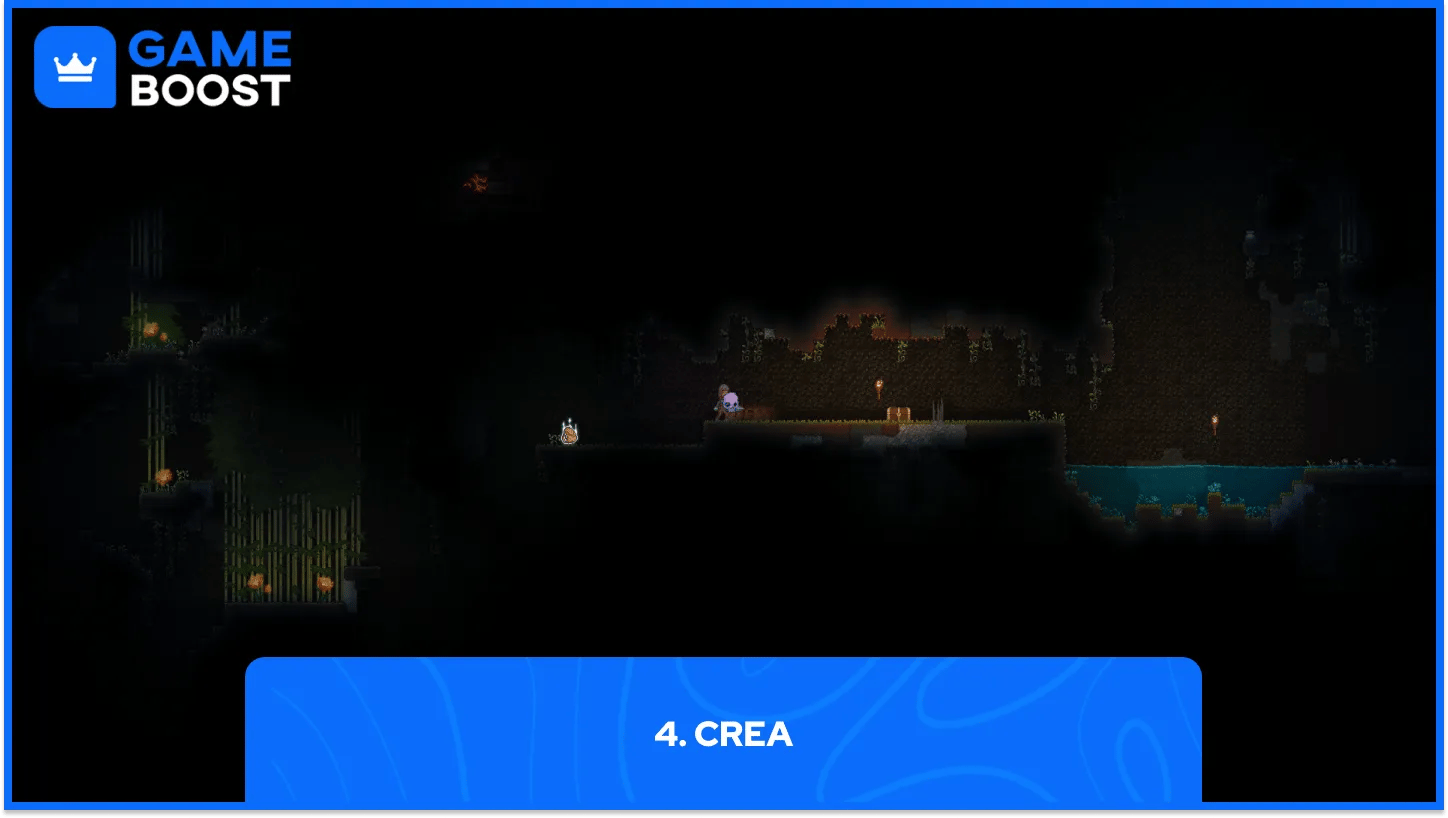
Get Crea for one of the most direct 2D interpretations of Terraria’s formula. It features randomly generated fantasy worlds, destructible terrain, mining, crafting, construction, character progression, dungeons, monsters, and major boss encounters.
Its RPG systems provide considerably more control over character development. Players improve talents by using related abilities and can choose from numerous skills spread across combat, exploration, crafting, and magic. Equipment and ability combinations allow you to create specialized builds instead of relying entirely on whichever powerful weapon you recently discovered.
Crea also places strong emphasis on community-created content. Its modding tools allow players to change existing systems or introduce new items, creatures, environments, and mechanics. The smaller community means there is less content available than for Terraria, but the underlying systems remain impressively flexible.
Why It’s Similar:
2D side-view sandbox
Procedurally generated worlds
Mining and block-based construction
Crafting and equipment progression
Dungeons, enemies, and bosses
Extensive character skills
Built-in mod support
Available on: PC, macOS, and Linux
My Verdict: Crea is one of the closest matches on paper, especially for players who want Terraria’s perspective and progression with more traditional RPG skills. It lacks Terraria’s scale and polish but understands exactly what makes the formula appealing.
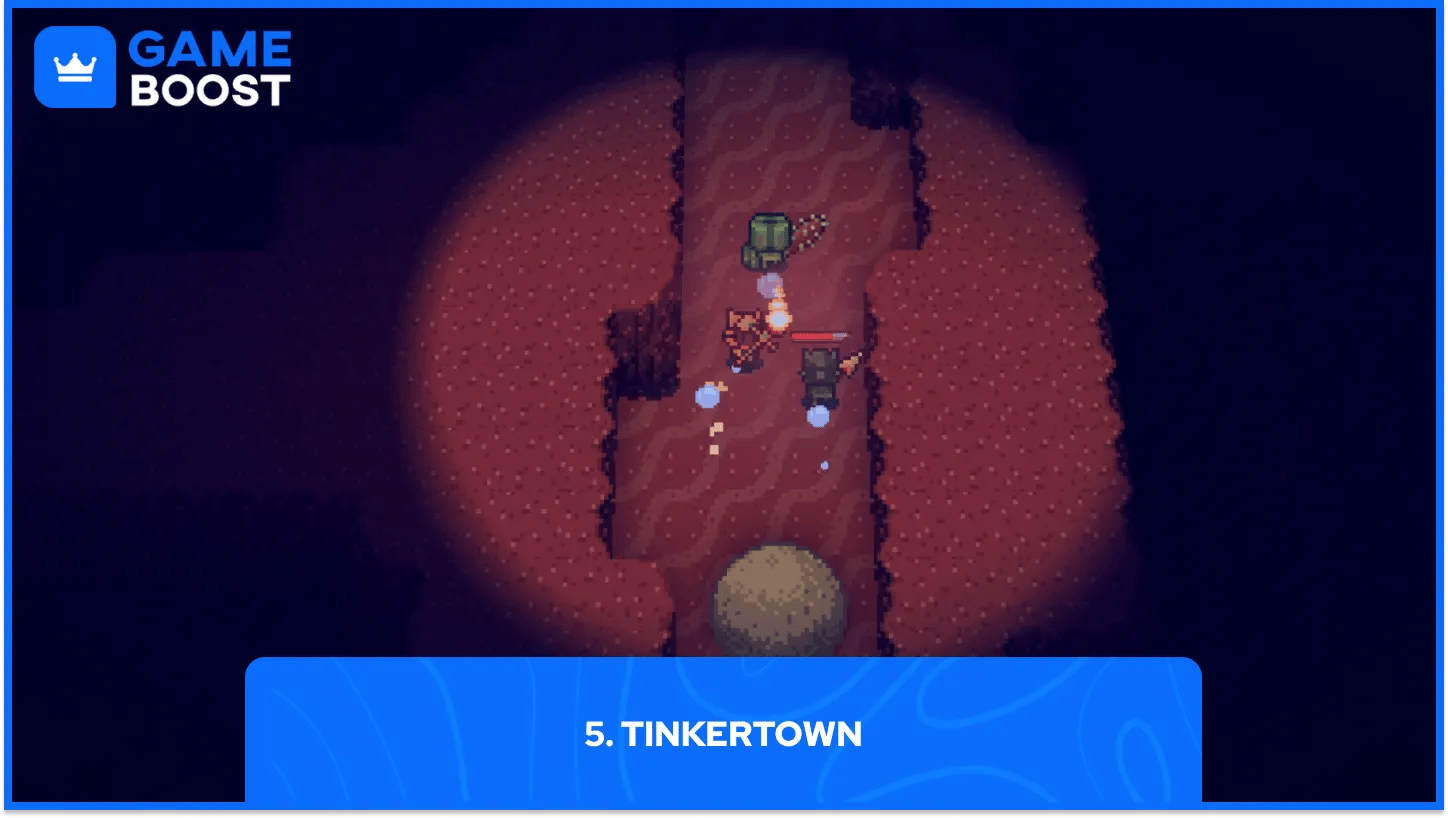
Tinkertown moves the sandbox formula into a colorful top-down world. You gather wood, stone, ore, food, and monster materials before turning those resources into equipment, crafting stations, furniture, and increasingly elaborate settlements.
The world contains forests, deserts, frozen regions, caves, dungeons, treasures, and hostile creatures. Equipment determines much of your combat role, allowing you to fight with melee weapons, ranged attacks, or magic. Exploring dangerous areas produces the materials required to improve your gear and reach more challenging locations.
Construction is flexible enough to support anything from a functional workshop to a decorated village. Tinkertown can be played alone, but its gathering and building systems are particularly enjoyable in multiplayer when each player can concentrate on a different project.
Why It’s Similar:
Open-ended sandbox structure
Resource gathering and crafting
Base and village construction
Different biomes and underground areas
Equipment-based combat roles
Dungeons and boss encounters
Cooperative multiplayer
Available on: PC, PS4, Xbox One, and Nintendo Switch
My Verdict: Tinkertown is a relaxed Terraria alternative with a more approachable top-down presentation. Its progression is not as extensive, but the combination of exploration, crafting, combat, and cooperative building makes it a natural recommendation.
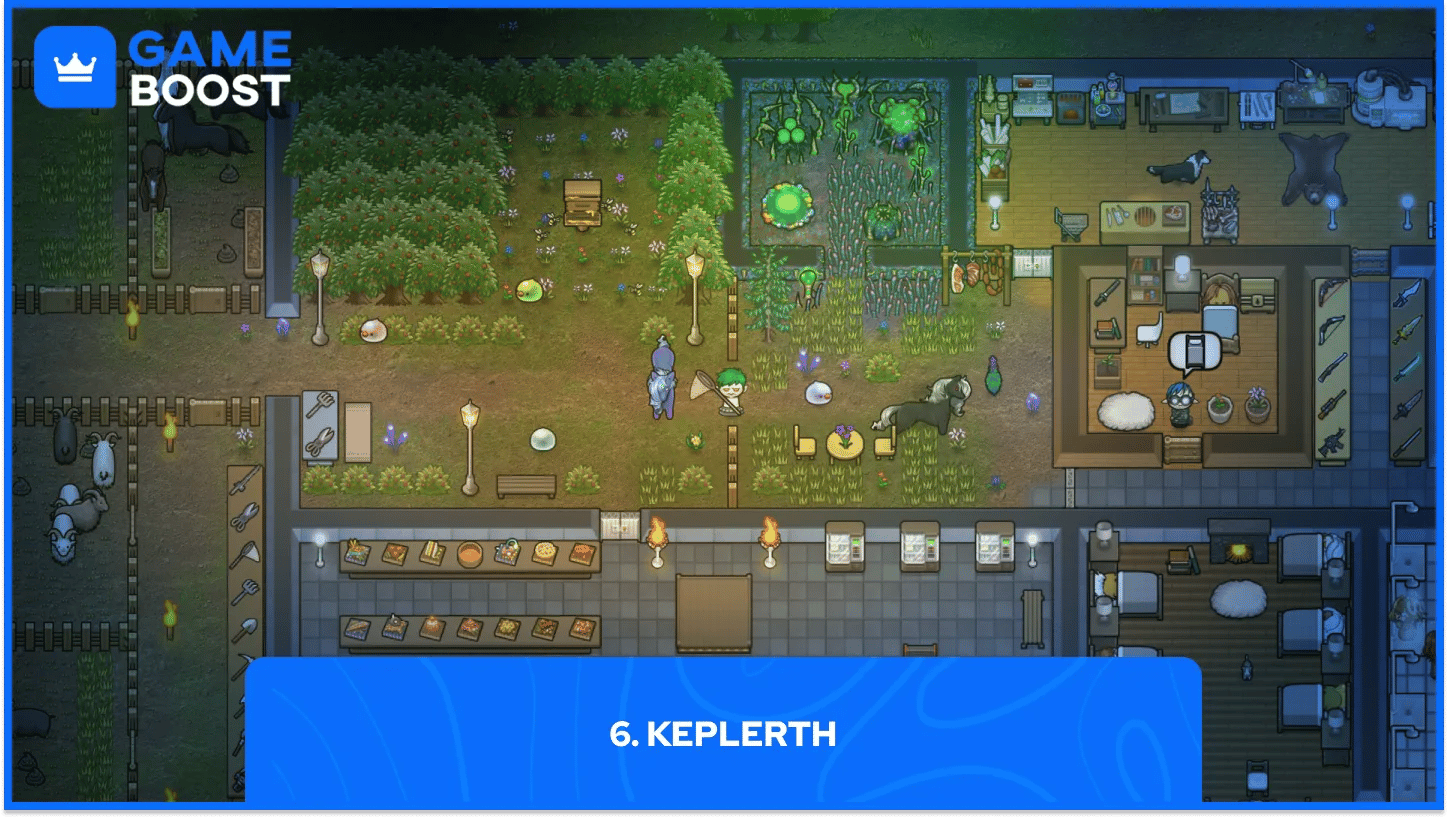
Buy Keplerth if you want Terraria-style sandbox progression with stronger survival mechanics and a science-fiction setting. You awaken inside an underground facility on an unfamiliar planet and must gather resources, produce equipment, and prepare for the dangers beyond its walls.
The procedurally generated world stretches across the surface and through multiple underground layers. You can mine, farm, construct a base, explore dungeons, fight hostile factions, defeat bosses, and capture creatures that provide companionship or transportation.
Character development includes equipment, genetic modifications, combat abilities, and numerous crafting options. Multiplayer allows friends to explore and build together, although the game can also be completed alone.
Why It’s Similar:
Procedurally generated sandbox
Surface and underground exploration
Mining, crafting, and farming
Base construction
Weapons and character upgrades
Dungeons and boss fights
Online cooperative play
Available on: PC
My Verdict: Keplerth is a strong choice for players who want Terraria’s freedom with more survival pressure and unusual character upgrades. The top-down perspective feels different, but its progression loop is immediately familiar.
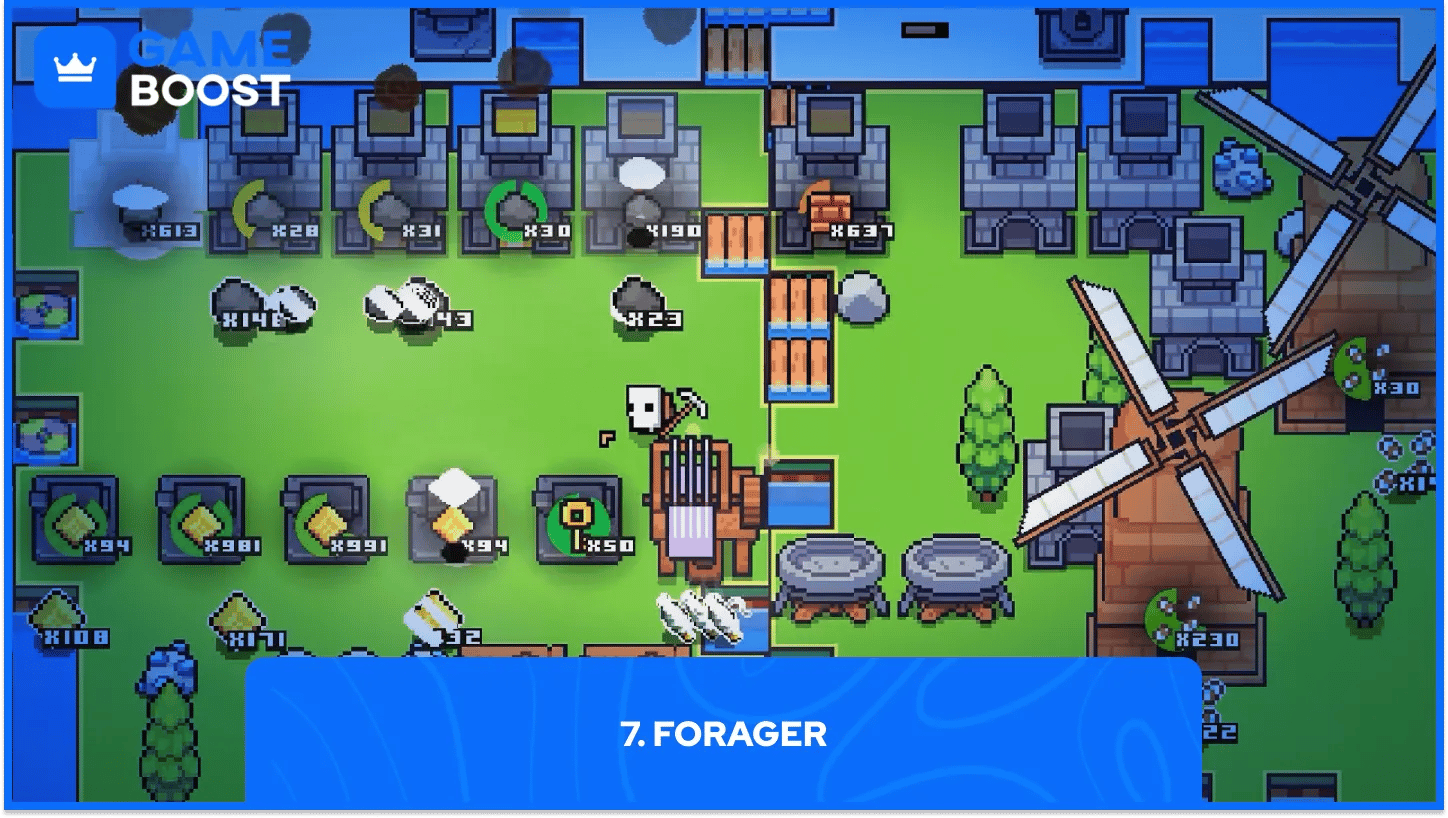
Forager compresses gathering, crafting, exploration, and base expansion into a faster and more concentrated experience. You begin on a tiny island with a pickaxe and gradually purchase additional land containing resources, enemies, puzzles, structures, and secrets.
Collected materials can be turned into tools, equipment, crafting stations, buildings, and automated production systems. A large skill tree unlocks new recipes and abilities, allowing you to focus on gathering, industry, magic, commerce, or combat.
Forager has dungeons and bosses, but it is considerably less combat-focused than Terraria. Its real strength is the constant sense of advancement: nearly every action produces resources, experience, money, or another upgrade that makes the next task faster.
Why It’s Similar:
2D open-world exploration
Gathering and crafting
Base building and automation
Character skills and equipment upgrades
Dungeons, puzzles, and bosses
Multiple progression paths
Open-ended objectives
Available on: PC, PS4, Xbox One, Nintendo Switch, Android, and iOS
My Verdict: Forager is ideal for Terraria players who enjoy collecting resources and continuously improving their production setup. It is smaller and more structured, but few games make incremental sandbox progression feel this satisfying.
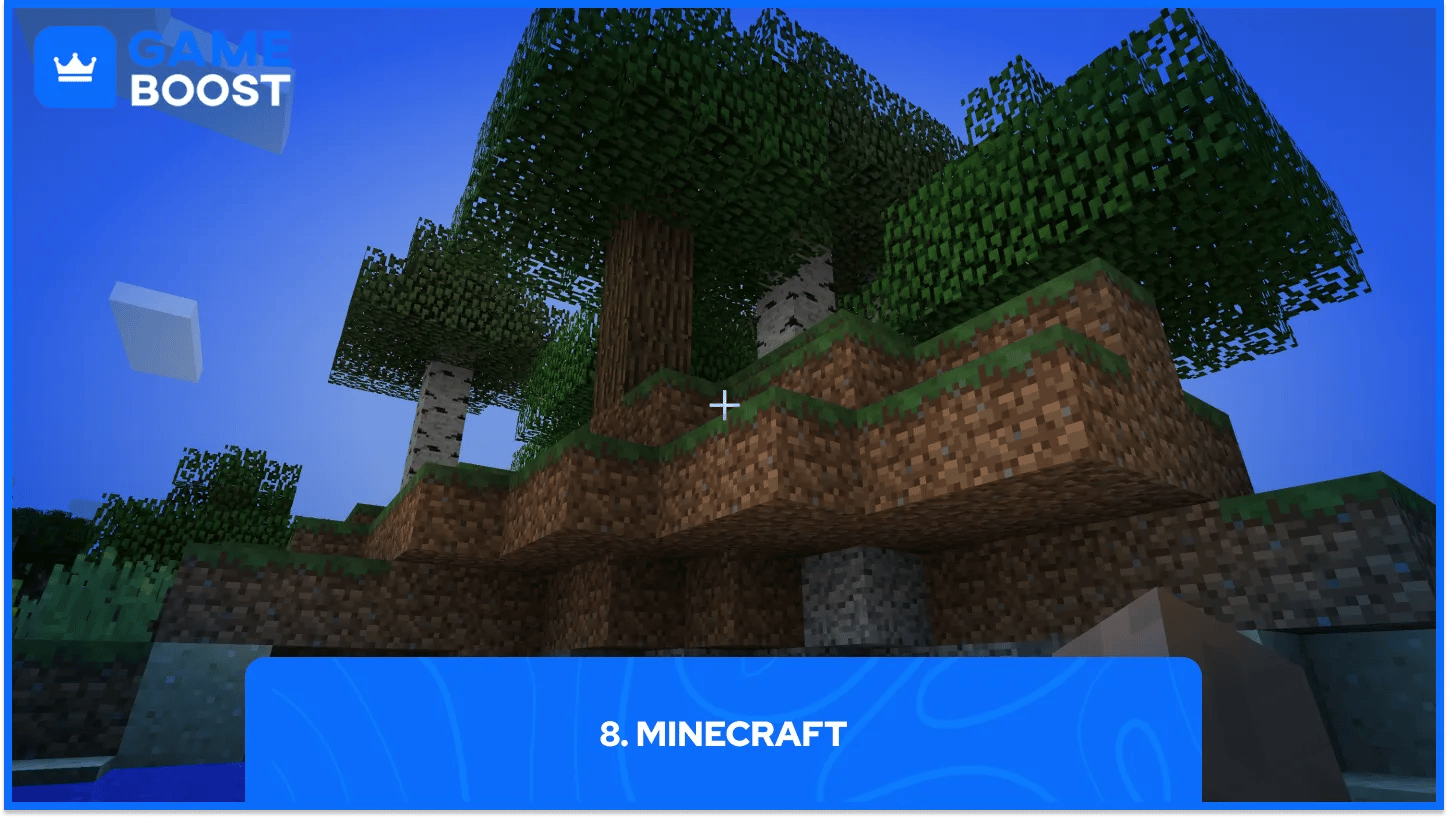
Get Minecraft if construction, exploration, mining, and player freedom matter more to you than Terraria’s combat progression. Its first-person 3D worlds are built from destructible blocks that can be gathered and rearranged into tools, shelters, farms, machinery, or enormous creative projects.
Survival mode follows a familiar early rhythm. You collect wood, construct basic tools, mine for ore, improve your equipment, and venture into increasingly dangerous locations. Different dimensions, generated structures, hostile creatures, enchantments, and bosses provide long-term objectives.
Minecraft has fewer bosses and less equipment variety than Terraria, so it does not offer the same tightly controlled advancement. However, its construction, redstone automation, multiplayer servers, custom maps, and extensive modding scene provide exceptional freedom and longevity.
Why It’s Similar:
Procedurally generated worlds
Mining and destructible terrain
Resource-based crafting
Flexible construction systems
Equipment upgrades and enchantments
Survival and creative modes
Multiplayer and extensive mod support
Available on: PC, macOS, Linux, PS4, PS5, Xbox One, Xbox Series X|S, Nintendo Switch, Android, and iOS
My Verdict: Minecraft is the best alternative for Terraria players who primarily enjoy building and freeform exploration. Its combat progression is lighter, but its creative possibilities and community content are almost impossible to match.
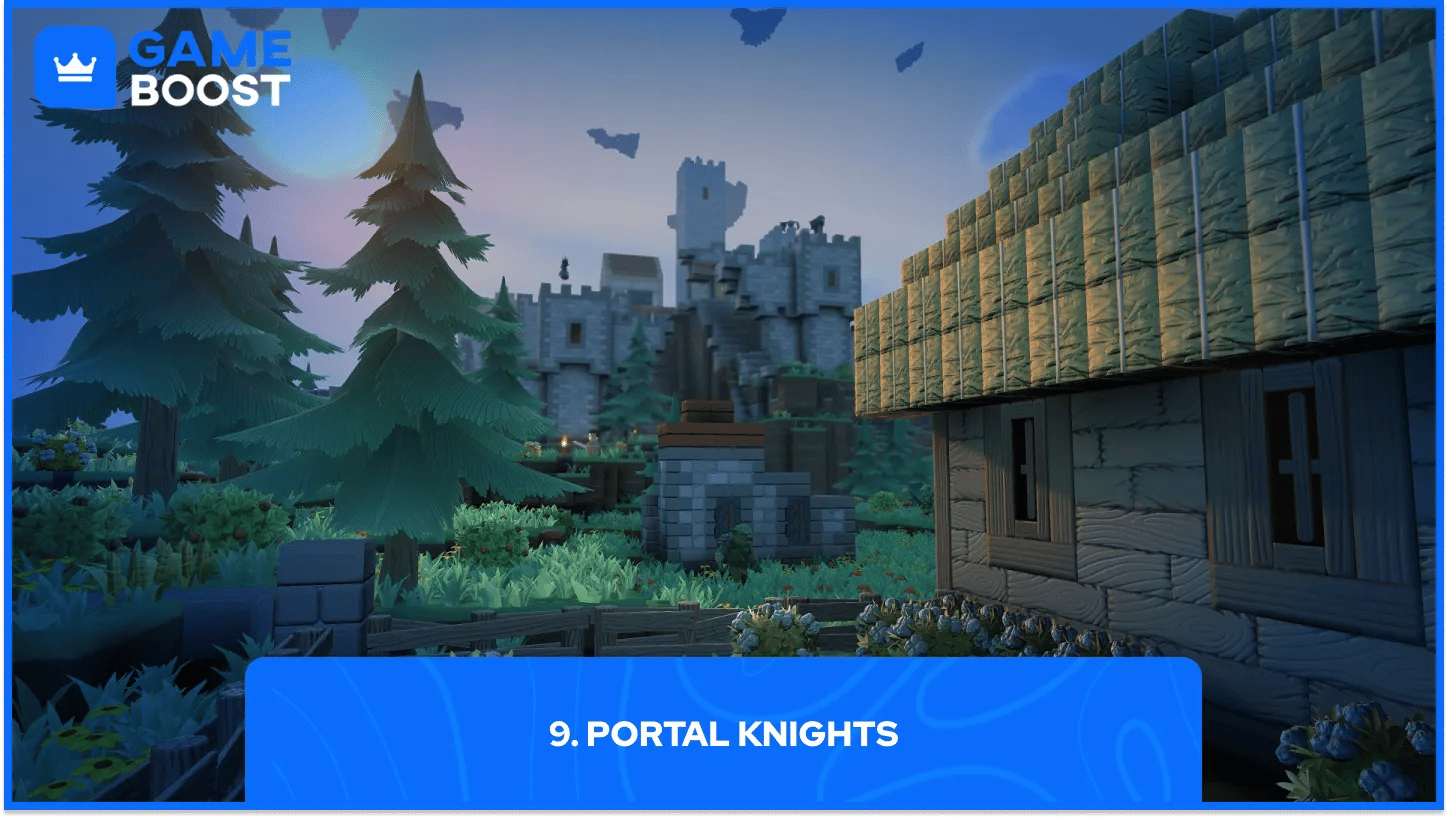
Portal Knights combines block-based construction with action-RPG combat and structured character classes. Its world is divided into numerous floating islands connected by portals, with each island containing different resources, enemies, quests, caves, and environmental conditions.
Players choose between combat roles such as Warrior, Ranger, and Mage before improving their attributes, abilities, weapons, and armor. Progression involves collecting materials, restoring portals, entering new regions, completing quests, and defeating increasingly powerful creatures.
Building remains an important part of the experience. You can claim islands, construct large bases, decorate rooms, relocate NPCs, and collaborate with friends through online or local multiplayer. The world is less open-ended than Terraria, but the clearer RPG structure may appeal to players who prefer defined classes and objectives.
Why It’s Similar:
Resource gathering and crafting
Block-based construction
Equipment and character progression
Different combat classes
Procedurally generated islands
Dungeons, quests, and bosses
Local and online multiplayer
Available on: PC, macOS, Linux, PS4, Xbox One, Nintendo Switch, Android, and iOS
My Verdict: Portal Knights is a good Terraria alternative for players who want a more accessible 3D adventure with traditional RPG classes. It offers less depth as a sandbox but provides a stronger sense of directed progression.
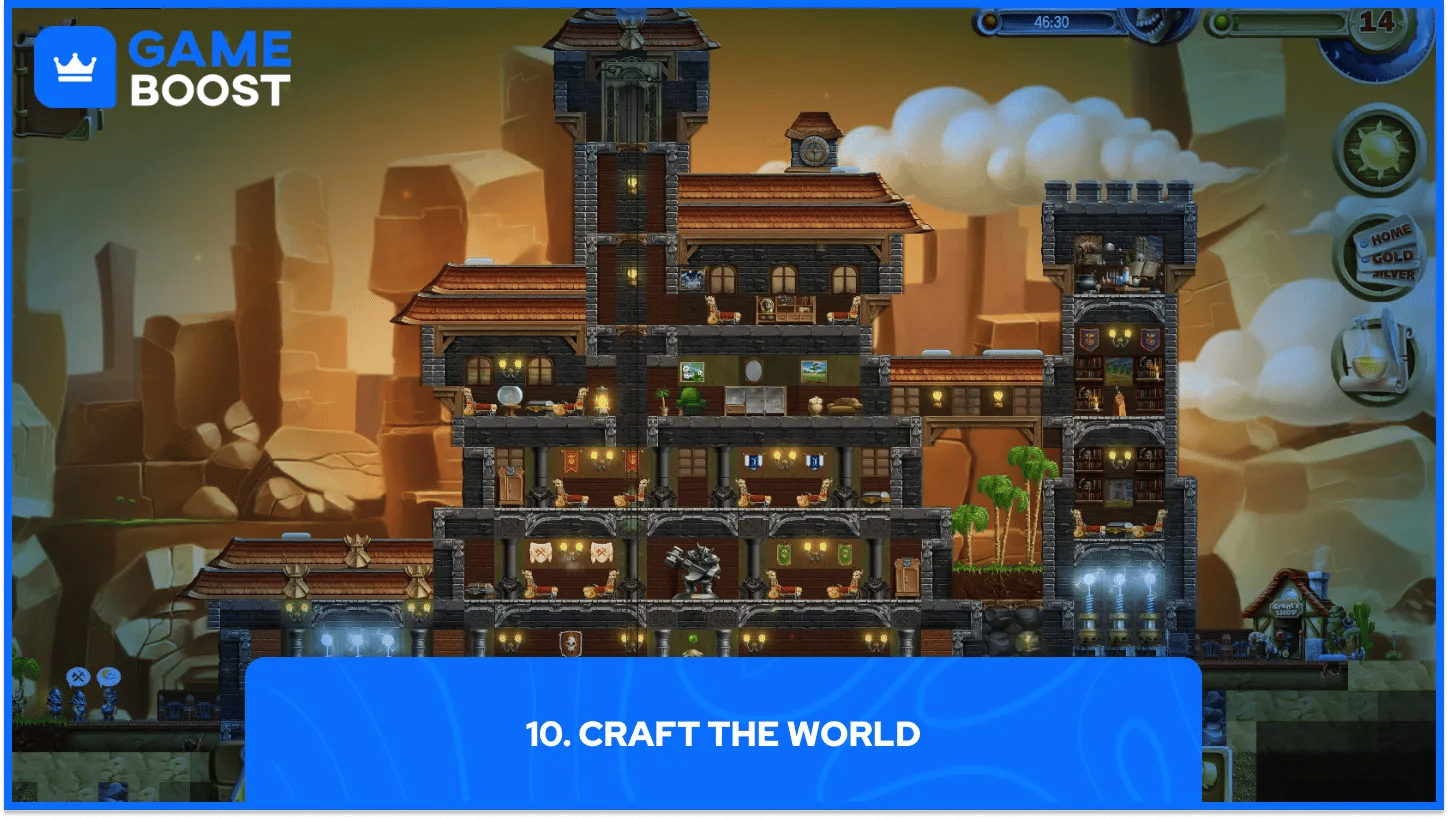
Buy Craft The World for a strategy-focused variation on Terraria’s mining and construction systems. Instead of directly controlling one adventurer, you manage a growing tribe of dwarves and assign them jobs involving excavation, crafting, combat, farming, and fortress construction.
Each world contains multiple underground layers filled with resources, abandoned rooms, enemies, and hidden treasure. The dwarves require tools, weapons, armor, food, shelter, and safe routes through the environment. Better materials unlock additional crafting recipes and allow the settlement to expand farther underground.
Monster waves periodically attack the fortress, making defensive construction particularly important. Walls, traps, towers, doors, and passages must be arranged carefully if the dwarves are going to survive. Magic provides limited direct control through abilities such as portals, lighting, healing, and offensive spells.
Why It’s Similar:
2D destructible environments
Procedurally generated worlds
Mining and underground exploration
Crafting and equipment tiers
Base construction and decoration
Fantasy enemies and combat
Defensive events and traps
Available on: PC, macOS, and iOS
My Verdict: Craft The World is the least direct Terraria alternative on the list because it plays primarily as a management game. However, its layered worlds, mining, crafting, equipment progression, and fortress defense make it a worthwhile strategic interpretation of the same ideas.
PC players can access all ten games on this list. Starbound and Crea are the closest side-view alternatives, while Core Keeper and Necesse provide the strongest combinations of exploration, crafting, bosses, and cooperative progression.
Players looking for more sandbox adventures can browse PC game keys for other crafting games, survival releases, and open-world RPGs.
Core Keeper has a native PS5 version and is the strongest overall Terraria alternative on the platform. Minecraft is another excellent option for construction and exploration, while the PS4 versions of Tinkertown, Forager, and Portal Knights can be played through backward compatibility.
The PlayStation game keys category can help players explore other sandbox and crafting games available across PS4 and PS5. Product platform and region details should be checked before buying.
Xbox players can choose from Starbound, Core Keeper, Tinkertown, Forager, Minecraft, and Portal Knights. Core Keeper offers the closest balance of mining, crafting, bosses, and co-op, while Starbound is the most similar choice for players who specifically want another 2D sandbox.
Additional options may be available through the Xbox game keys selection. Always confirm whether a product is intended for Xbox One, Xbox Series X|S, or both.
Core Keeper, Tinkertown, Forager, Minecraft, and Portal Knights are available on Nintendo Switch. Core Keeper is the strongest match for Terraria’s progression, while Minecraft provides the most freedom for creative construction.
Players can browse Nintendo Switch game keys for other portable crafting, building, and exploration games. Availability may vary by region.
Starbound is the closest direct alternative to Terraria, particularly for players who want another side-view sandbox with mining, crafting, construction, exploration, and multiplayer. Core Keeper captures the same progression loop from a top-down perspective and offers some of the strongest boss fights and cooperative systems on the list.
Necesse is better for settlement management, while Crea provides detailed RPG skills within a familiar 2D format. Minecraft remains the strongest choice for unrestricted construction, and Forager delivers a faster version of the resource-gathering and automation loop.
None of these games contains Terraria’s exact combination of systems, but each develops an important part of its formula in a different direction. Together, they offer hundreds of hours of worlds to explore, resources to collect, bases to build, and bosses to defeat.
“ Filip Premuš is a seasoned gaming content writer specializing in titles like Steal a Brainrot, Old School RuneScape, and other popular online games. With a sharp focus on accuracy, updates, and in-game strategy, he creates comprehensive guides that help players stay ahead of the meta and make informed decisions.”