


•Patrik Mršnik• 5 min read
Games
Graveyard Keeper 2 zombies carry the whole sequel on their rotting backs. The same undead that saw logs and dug clay also make up the zombie army you march into town battles, so every corpse on your table turns into a policy decision. Put it on a workbench, or hand it a pike?
Our Graveyard Keeper 2 review named the zombie workers the reason to keep playing past the opening hours and the zombie army battles the part it enjoyed least. Both halves draw on the same corpses and the same collars, so every body you give one side is a body the other side doesn't get.
Graveyard Keeper 2 launched on September 22, 2026, from Lazy Bear Games and tinyBuild, and zombies sit behind two of its biggest changes. Below, you'll find how resurrection works, why the worst corpses make the best zombies, how the Zombie Supplier Station changes the daily loop, and how the battles play once you get there.
Resurrection needs a complete corpse, a zombie collar and reanimation liquid, and it runs on Envy, the green day of the six-day week.
Red skulls hurt burial quality but open one perk slot each on the zombie, so sinful bodies make the strongest workers.
A fresh zombie has zero mastery. Tools teach it a trade: a rusty axe gives +1 Building, a bronze axe +2.
The Zombie Supplier Station turns one zombie into a courier for its own area, which cuts most of the manual hauling inside that area.
Suppliers never leave their area, and placed buildings can't be moved without tearing them down, so plan layouts early.
Graveyard Keeper 2 battles use squads of up to 4 zombies with armor and a pike or bow, backed by barricades and archer towers.
Winning clears infested parts of town and raises the town's gratitude cap, so the fights feed your economy.
The fights feel stiff and shallow next to the management side. Treat the army as a gratitude feeder.
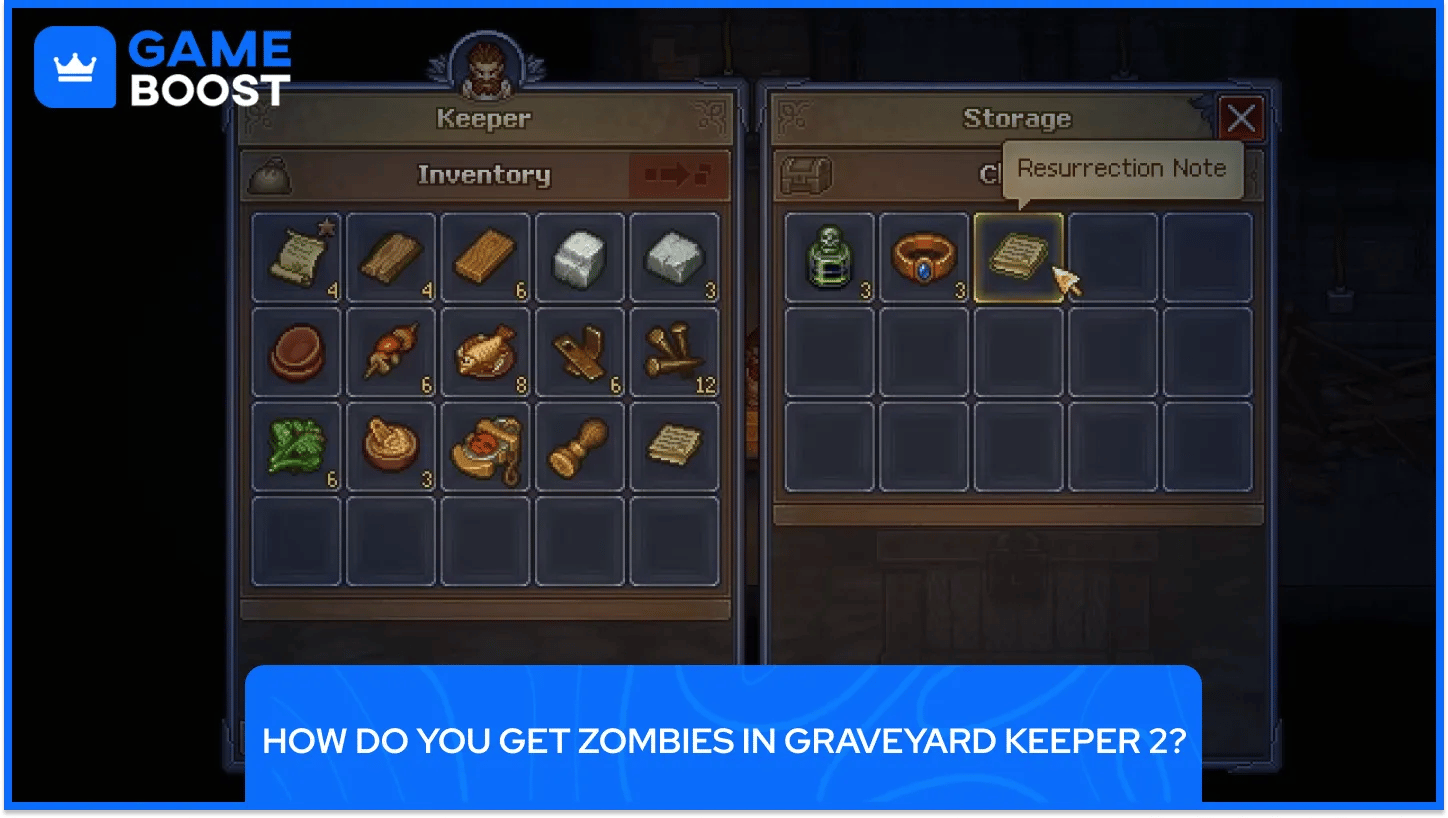
You get your first zombies from the story, then raise the rest yourself at the resurrection table. The opening pair arrives early, a few more come through later quests, and from that point every new worker or soldier is one you built from a body in your morgue.
Each resurrection asks for three things, plus the right day on the calendar:
Requirement | What it means in play |
|---|---|
Complete corpse | The body needs all its organs. The table refuses a body with parts missing |
Zombie collar | The collar has to match the corpse. A weak collar on a heavily corrupted body won't work |
Reanimation liquid | One unit per zombie, bought from merchants or brewed later through alchemy |
Envy | The green day of the six-day week and the regular day the device runs |
Envy sets the rhythm of your week. Prep corpses and collars on the days before, then raise everything in one go on green day. Miss it and your prepared bodies sit in the morgue for another six days.
Your zombie count has a soft ceiling. The table never refuses a resurrection over numbers. Going above the limit gives you an Excessive zombies debuff that cuts what your sermons pay, so raising bodies you can't use costs you faith.
Red skulls decide how good your Graveyard Keeper 2 zombies can get. In the first game, a red skull was a burial penalty you cut out at the autopsy table. The sequel keeps the penalty for burials and gives red skulls a second use: each one opens a perk slot on the zombie the body becomes.
That flips the value of a bad body. The corpse you'd have dreaded burying is now your best candidate for a factory hand. Clean bodies still go in the ground for graveyard quality, and the sinful ones get a collar.
Collars decide how many of those red skulls count. The early bronze collar caps a zombie at 5 red skulls, and the golden collar raises that to 10. You can also swap body parts at the autopsy table to push a corpse's skull count up before resurrection.
Perks open up as the zombie works and earns progress in its trade. A zombie with more slots simply has more room to grow, which is why the Keeper's morgue work now feeds straight into the factory.
Zombie workers are the reason the sequel's grind feels lighter. They need no food or pay, and they keep workstations running across your town as you do something else. Our review credits them, and the station that feeds them, with fixing the old hauling grind.
A freshly raised zombie knows nothing. It learns a trade from the tool you put in its hands:
Tool tier | Example | Mastery it gives |
|---|---|---|
Rusty | Rusty axe | +1 Building |
Bronze | Bronze axe | +2 Building |
Iron | Iron axe | +4 Building |
Better tools open better jobs, so metalwork progress and zombie progress move together. A zombie stuck on a rusty axe will sit idle at a station whose recipe asks for more mastery than it has.
Idle zombies come up again and again in negative Steam reviews. One player describes zombies sitting at their workstations unable to do anything, and another says they only learned from Reddit that zombies need specific tech tree levels to work. When a worker stops, check the tool, the mastery requirement, the recipe queue and whether its chests are empty or full. Most stalls trace back to one of those, or to a station sitting outside the supplier's area.
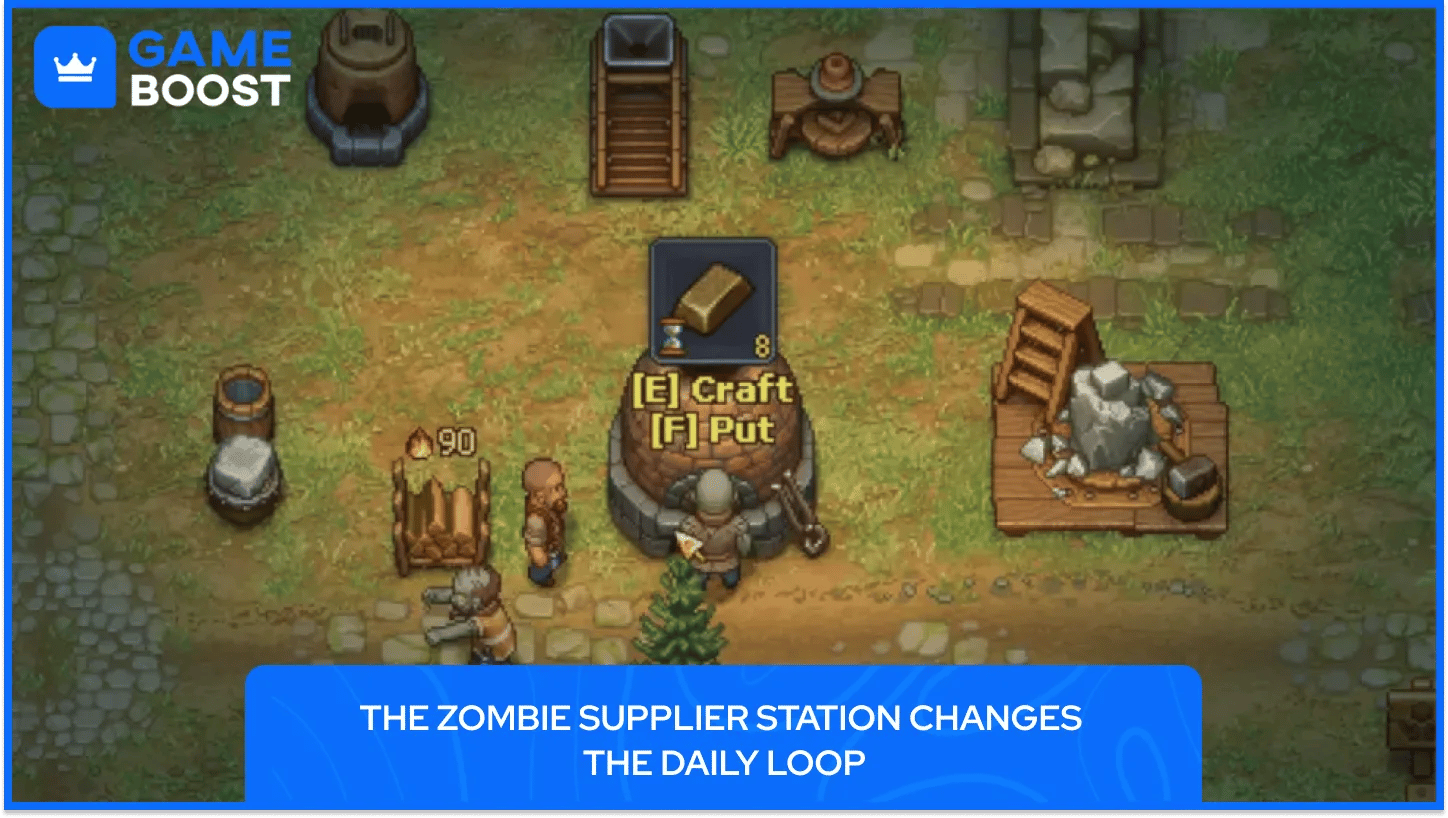
The Zombie Supplier Station does more for your daily routine than any other building in Graveyard Keeper 2. Place a zombie on it and that zombie becomes a courier. It pulls the materials a queued recipe needs from chests in its area, walks them to the workstation zombies, then carries the finished goods back to storage.
A sawmill that used to need you constantly now keeps running without you standing next to it. The supplier needs no tool and no mastery, so give the job to your weakest zombie and saving high-skull bodies for skilled stations.
Each supplier only serves its own area, such as the Yard, the Quarry or the Vineyard Basement, and moving goods between zones takes other stations, such as the Porter Station, or your own two hands. Placed buildings also can't be moved without tearing them down, so a badly placed bench means demolition and a rebuild. Lay out each area around its chests before you build.
Positive and negative Steam reviews alike say production buildings need you to collect each finished batch before the next one starts, and at least one player asks for shared storage between areas. Automation carries the materials, but your own feet still carry a lot of the rest.
The Graveyard Keeper 2 zombie army is the sequel's biggest new idea and, in our review, the part we enjoyed least. The official Graveyard Keeper 2 Steam page sells it as leading your undead into battle to save the Kingdom from a zombie apocalypse, with towers, fortifications, armor and weapons to build along the way.
Every battle runs on the same six pieces:
Battle element | How it works |
|---|---|
Squads | Up to 4 zombies per squad, each with armor and a pike or a bow |
Banner | A squad follows the banner the Keeper carries and holds wherever you plant it |
Defense | Barricades and archer towers built ahead of time, plus hired mercenaries, add to the squads you bring |
Victory | In most battles, capture every enemy flag and still hold them all when the waves end. A few only ask you to hold your base |
Defeat | Lose your base or run out of health as the Keeper |
Timing | Most battles start on Sloth, with a few exceptions |
Victories clear infested parts of town and raise the town's gratitude cap, so the army connects back to your economy. Later battles ask for more squads and stronger defenses, which pulls more of your crafting into weapons and armor.
The fighting itself lets the army down. Unit movement feels clumsy, and we rarely felt we were making real tactical choices. Player opinion is split on this: one Steam reviewer with over 50 hours called the city battles pretty fun and liked managing banners, and another described them as yet another slog that eats resources.
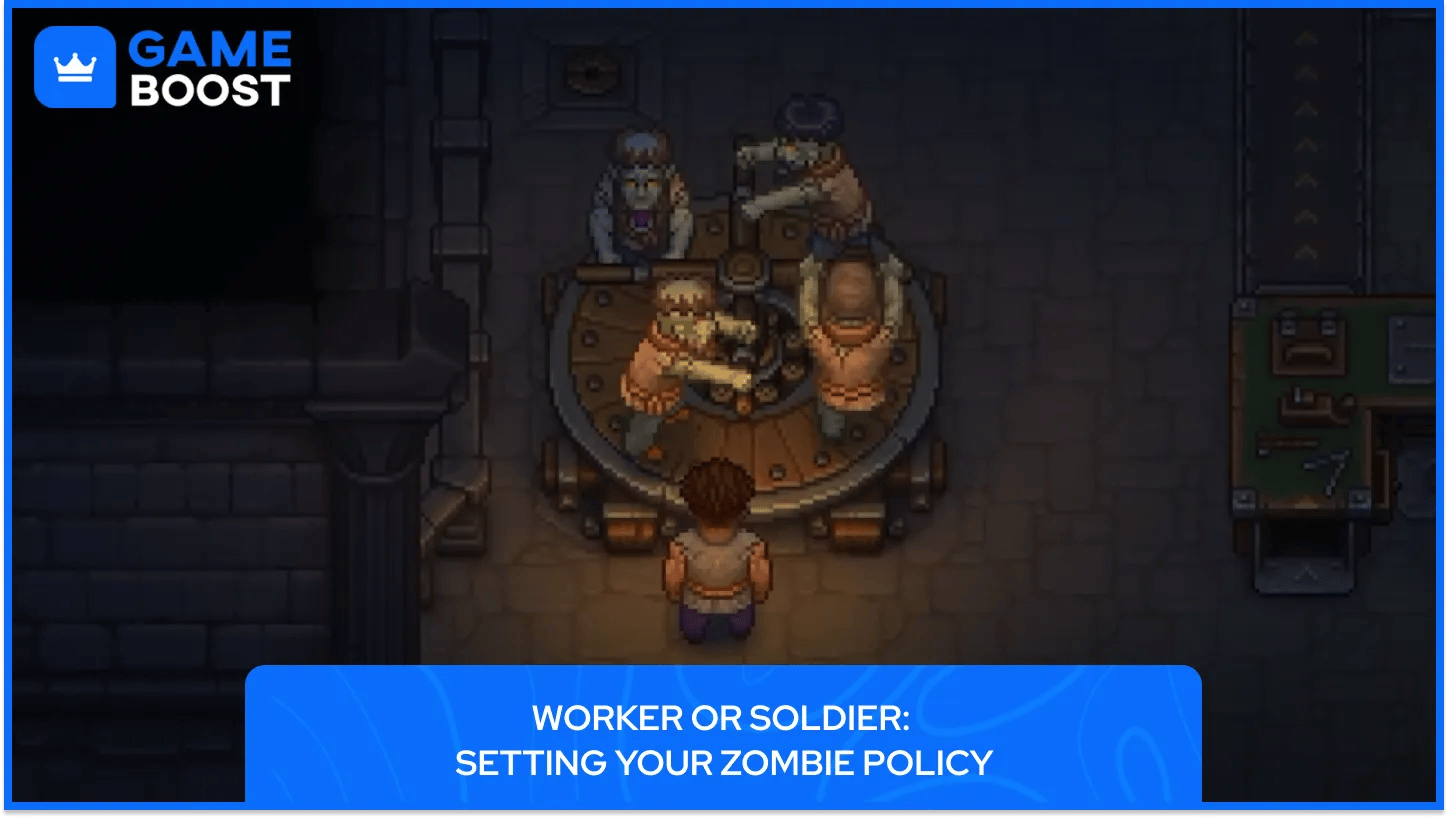
Your best corpses belong on workbenches first. Combat zombies also want high red skull bodies, so the two roles compete for the same corpses. The workshop pays you every day of the week, and the army only pays on battle days.
Decision | Worker zombie | Soldier zombie |
|---|---|---|
What it needs | The right tool and enough mastery | Armor plus a pike or a bow |
Where it pays off | Every day, across every production chain | On battle days, through gratitude |
Best corpse | High red skull count for more perks | Also high red skull bodies |
Weakest link | Idle stalls and area limits | Stiff, shallow combat |
Supplier duty is where weak bodies go. The courier uses no stats, so a low-skull corpse works fine there whenever you'd rather not bury it.
Build the army after your key areas run on their own. Once suppliers keep your sawmill and quarry moving, the extra zombies and gear for squads cost you far less, and the gratitude you win lands on a town that can use it.
The sequel's best and worst ideas share one resource. The same body can save you hours as a supplier or cost you an evening as a clumsy pikeman, and the game leaves that choice entirely to you.
Layout will decide more of your playthrough than any single perk. Suppliers only serve their own area and buildings don't move, so an hour spent planning your Yard and Quarry saves you a lot of demolition later.
Nobody outside the studio knows yet what Lazy Bear Games will do with battles and batch collection in patches. Both sit high in player feedback, and a smoother fight or a longer production queue would change how the whole zombie policy plays.
For now, staff the workshop first, then raise soldiers. A town that runs itself is the best army support you can build.
Graveyard Keeper 2 Game Key
View all GameBoost Game Keys
View all GameBoost Accounts
View all GameBoost Boosting Services
View all GameBoost Currencies
View all GameBoost Gift Cards
View all GameBoost Top Ups
View all GameBoost Items
“ A former sports journalist and editor, Patrik joined Gameboost SEO team in 2026. He has spent most of his life playing Football Manager, but his sphere of interests spreads through whole gaming universe.”