

.png)

•Hamza Rashid• 7 min read
Roblox

Ride a Pet places every player on a shared Roblox map built around one simple exchange. A player hatches a pet, rides it toward eggs, then sends the strongest hatches home to a ranch plot that pays out on its own. Two separate systems decide how quickly that cash grows once the basics click into place. One is which pets actually sit on the plot earning income, and the other is which upgrades a player spends that income on next.
A player who ignores either half of that loop ends up grinding far longer than necessary. Cheap food and an affordable radar can move a ranch forward just as fast as a lucky hatch, and a well-timed Rebirth adds a permanent Money Multiplier that raises every dollar earned afterward. Mutations sit on top of all of it, since a single lucky roll can double or even multiply a pet's income several times over.
What follows breaks ranch setup, food spending, radar tiers, mutations, and Rebirth timing into a single plan a player can repeat every session to earn cash fast in Ride a Pet.
Placed pets earn cash automatically every second, even with a player logged off, which makes ranch setup the real income engine behind the whole game.
Grass returns far more XP for every dollar spent than any other Food stall item, making it the cheapest way to level a main earner.
Radar tiers run from a $50 Advanced Radar up to a $30,000,000 Eternal Radar, and each tier only tracks eggs from a single rarity band.
Hatched Mutations raise money and speed together. Weather Traits from storms only change how fast a pet moves.
Seven total Rebirths each add a permanent Money Multiplier and an extra Pet Slot, though every reset wipes cash and any temporary Luck Multiplier back to zero.
The first Rebirth calls for a Horse and roughly $1,000,000 in cash, and later tiers demand rarer pets alongside far larger totals.
Cash in Ride a Pet comes from a small handful of sources, and knowing which one matters most saves a lot of wasted riding. A pet parked on the ranch plot pays out on its own on a fixed timer, second by second, with a player nearby or fully logged off, and that passive stream funds nearly everything else a player buys later in a session.
Selling spare pets and eggs at the Sell stall adds a smaller, one-time lump of cash for hatches that will never reach a plot, which keeps a Food or Radar purchase from getting wasted on a pet headed nowhere. Riding a pet across the map earns nothing directly, since movement only exists to find better eggs faster.
Speed and income live on separate stats, and a player chasing cash fast needs to treat egg hunting as an investment in future plot earnings instead of a paycheck on its own. Rebirths and mutations sit above both of these sources, since neither one hands out cash directly, yet both raise how much every dollar from a placed pet ends up being worth.
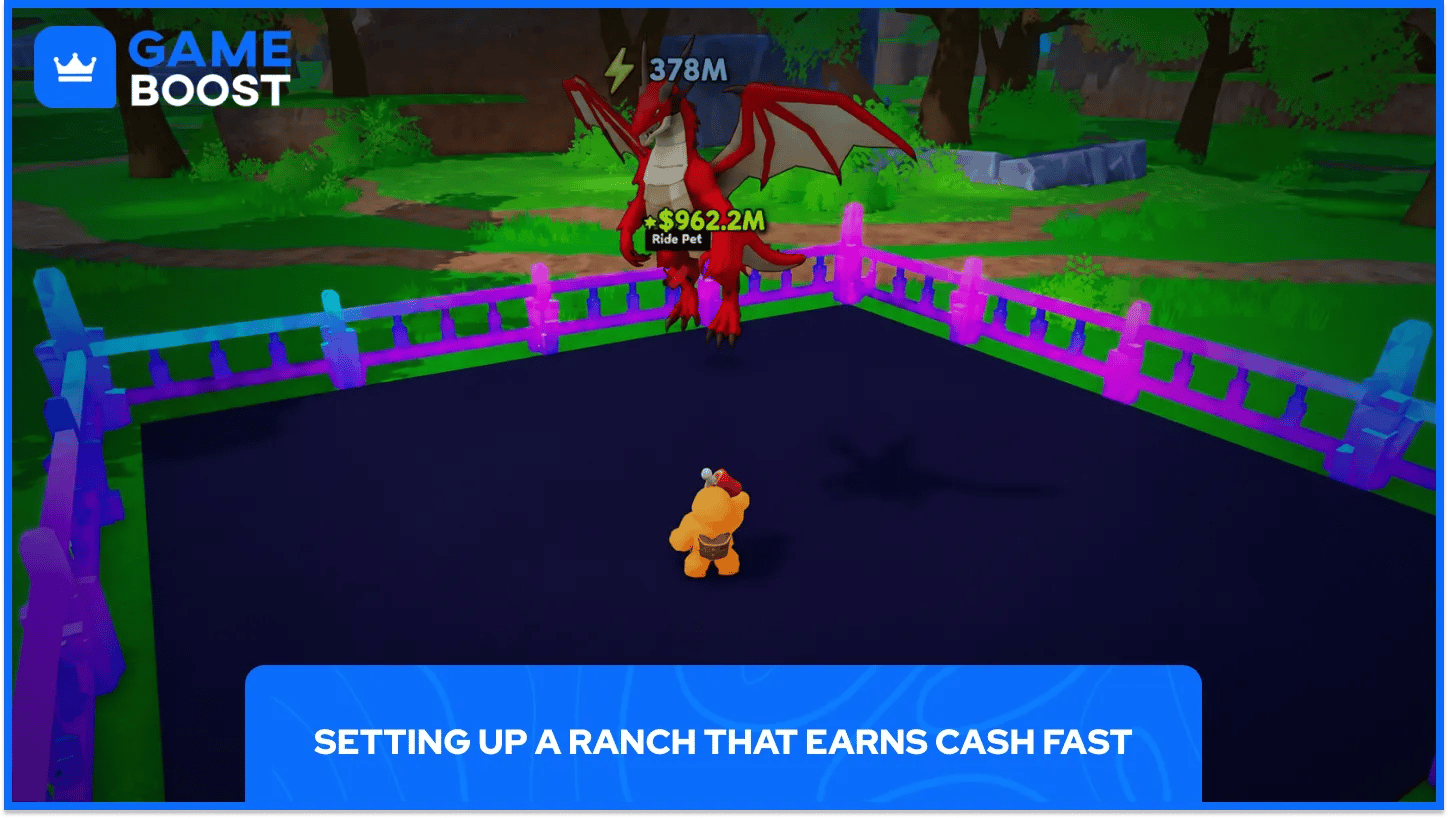
A new ranch starts out full of the weakest pets in the game, and starter hatches such as the Chicken, Snail, and Sloth produce very little income compared to almost anything hatched afterward. Replacing those early pets the moment a stronger egg opens matters more than holding out for a specific favorite.
The ranch screen includes a Place Best option that drops the strongest available pets into position without a player comparing every card by hand, and running that option after each new hatch keeps the plot earning as much as it can with whatever roster already exists. A full set of pet income stats makes the gap between the weakest and strongest earners easy to see once a player reaches the higher tiers.
Pet | Base Income | Base Speed |
|---|---|---|
Dragon | 300,000,000 | 300M |
Kitsune | 90,000,000 | 1B |
Cerberus | 30,000,000 | 100M |
Phoenix | 100,000 | 1M |
T-Rex | 50,000 | 266K |
Unicorn | 30,000 | 137K |
Cheetah | 3,500 | 38.4K |
Giraffe | 2,200 | 27.4K |
Fox | 1,200 | 19.5K |
Dragon earns more than any other pet on the plot, even though Kitsune rides far faster across the map, which is why most experienced players end up building toward two separate pets instead of one all-purpose favorite. A dedicated free dragon egg route can put that top earner on a plot well before its normal hatch odds would allow, and it deserves a real look once the mid-tier grind starts to slow down.
Food turns spare cash into permanent pet levels, and every item at the Food stall grants a fixed amount of XP the instant a pet eats it. Higher levels raise a pet's overall stats, which means a well-fed plot earner brings in more cash per second than the same pet left at its starting level.
Picking the right item comes down to comparing price against XP instead of chasing the biggest number on the shelf.
Food Item | Price | XP Per Serving | Cost Per 1,000 XP |
|---|---|---|---|
Grass | $10 | 500 | $20 |
Bone | $1,500 | 10,000 | $150 |
Meat | $30,000 | 100,000 | $300 |
Magic Apple | $7,000,000 | 300,000 | $23,333 |
Dragonfruit | $30,000,000 | 1,000,000 | $30,000 |
Grass wins on pure value by a wide margin, since two thousand servings of it match a single Dragonfruit for a fraction of the price. Dragonfruit and Magic Apple still earn a place in a well-stocked ranch, since a wealthy player saves real time by feeding one rare item instead of clicking through a long string of cheap servings. A closer look at every food item lines up rarity, restock timing, and leveling speed side by side for anyone planning a bigger spend.

Radar does not pay out cash on its own, but it decides how many rare eggs a player actually reaches before a server-mate grabs them first. Six separate tiers sit on the Gears stall, and each one only tracks eggs from one fixed rarity band instead of searching the whole map at once.
Matching a purchase to whichever egg type is actually missing from a collection keeps ranch cash from draining on a search that was never going to find anything new.
Radar Tier | Cost | Rarity Tracked |
|---|---|---|
Advanced Radar | $50 | Rare |
Jewel Radar | $3K | Epic |
Royal Radar | $20K | Legendary |
Magic Radar | $300K | Mythic |
Angelic Radar | $7M | Divine |
Eternal Radar | $30M | Ethereal |
Every Radar clears from inventory after a single use, and picking up its egg starts a separate thirty-second countdown that ends the run the moment it hits zero. A slow ride home undoes an otherwise perfect lock, so checking that a nest slot stays open before heading out saves a Radar and an egg in the same trip. A closer look at radar price tiers covers exactly which egg types each stall option tracks, along with the timing that keeps a hunt from ending in a wasted purchase.
Two separate systems apply mutations in Ride a Pet, and they touch different stats entirely. A Weather Trait comes from a storm event and raises a pet's speed alone, climbing from Shocked at double speed through Volted at triple speed and Rage at quadruple speed, then Void at ten times the original number, up to Eternal at a full hundred times the starting speed. A pet can only carry one Weather Trait at a time, and a stronger storm always replaces whatever trait was already sitting on that card.
A Hatched Mutation works on a completely different track, rolling the moment an egg opens instead of during a weather event, and it raises both income and speed on the same card at once. Comparing the three Hatched Mutations side by side shows exactly how rare each one is against the size of the reward it hands out.
Hatched Mutation | Hatch Chance | Money Multiplier | Speed Multiplier |
|---|---|---|---|
Gold | 10% | x2 | x2 |
Diamond | 1% | x3 | x3 |
Rainbow | 0.1% | x10 | x10 |
A single pet can carry one Weather Trait and one Hatched Mutation together, so a Rainbow pet that also gets caught in an Eternal storm stacks both bonuses on one card at the same time. A full look at mutation hatch odds explains exactly how rare each roll really is over a normal session, along with which pets are worth holding onto during a storm instead of selling early.
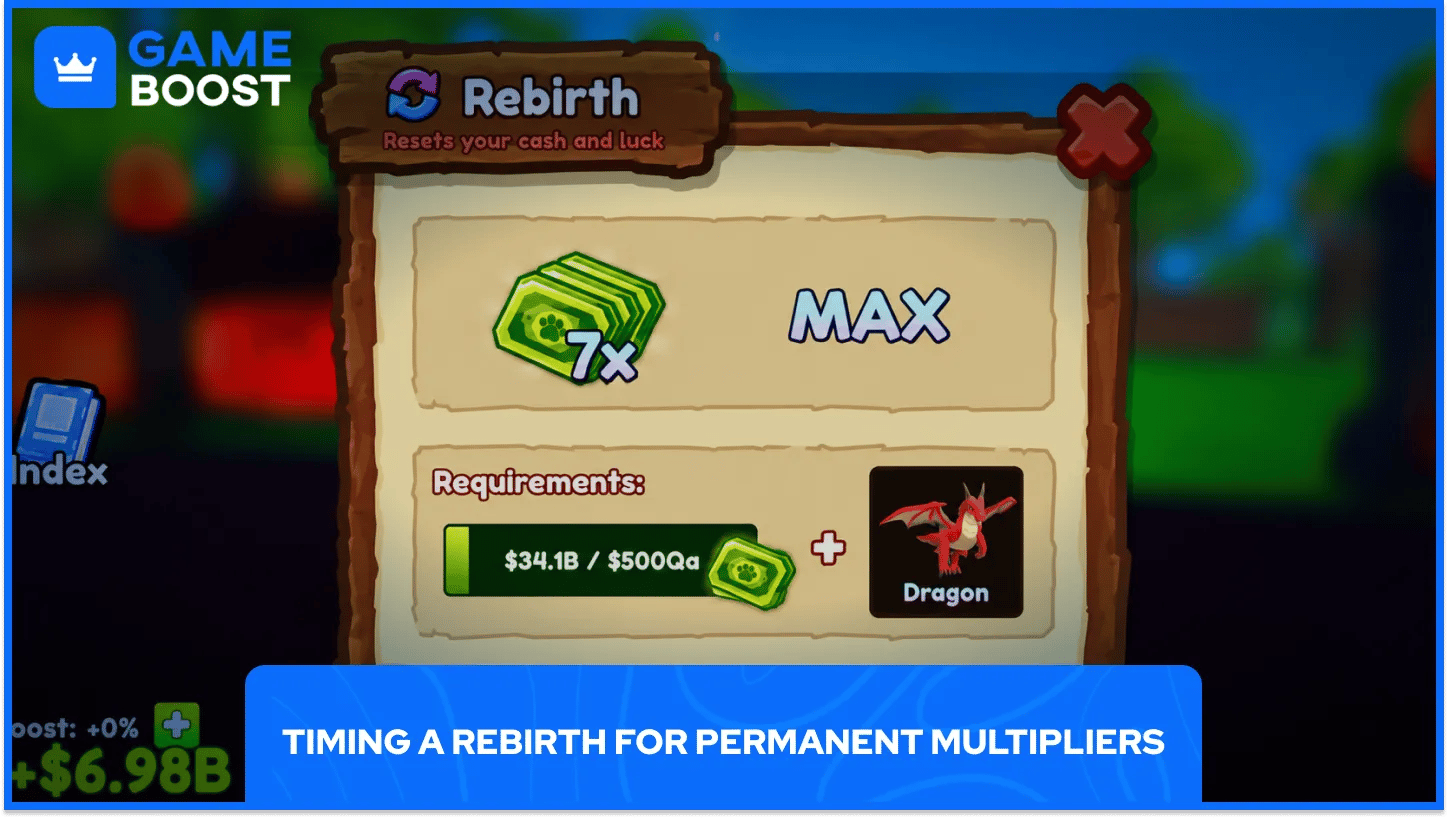
Rebirth resets a player's current cash and any temporary Luck Multiplier purchased that run, and it hands back two rewards that last for the rest of the account's history. Every completed Rebirth adds a permanent Money Multiplier worth one extra times the base rate, stacking up to seven times the original income once a player finishes all seven resets.
Each Rebirth also grants one extra Pet Slot on the ranch, raising the starting count of five up to twelve once a player clears every tier. Completing a tier calls for both a cash target and a specific pet sitting in the ranch or inventory at the moment of the reset.
Confirming the required pet stays in the ranch: selling it ahead of a reset locks out that tier until another matching pet gets hatched.
Spending leftover cash on food before pressing the button: a Rebirth wipes the balance to zero the moment the reset lands, so idle cash sitting there right before that point is cash wasted.
Checking the live Rebirth panel before committing: the exact cash target for the next tier shows up there, and it climbs sharply with each further reset.
The first Rebirth calls for a Horse alongside roughly one million dollars in cash, and the requirement keeps rising far past that point through the remaining six tiers. Planning a Food or Radar purchase around whichever Rebirth sits closest keeps a session moving instead of stalling on a target that is still several sessions away.
A handful of habits account for most of the wasted cash a new player runs into, and fixing them usually costs nothing beyond a little extra attention between egg runs. Small missteps compound fast once a ranch starts handling real money instead of pocket change.
Selling the pet a Rebirth still needs: a required pet gone from the ranch blocks that entire tier until a fresh copy hatches somewhere else.
Buying a Radar tier above the current egg need: a Magic, Angelic, or Eternal Radar wastes real cash on a search aimed at rarities a plot is not ready to use yet.
Overspending on Dragonfruit for routine leveling: Grass costs far less for the same XP total, and Dragonfruit only earns its price back through raw speed instead of value.
Ignoring the Egg Will Break countdown: a slow ride home costs both the egg and the Radar spent finding it, turning one slip into a double loss.
Leaving cash sitting untouched right before a Rebirth: every dollar not spent on food or a Radar disappears the moment the reset button gets pressed.
Fixing even one or two of these habits usually shows up in the very next session, since cash that used to leak out on a wasted purchase starts going toward Food, Radar, or the next Rebirth target instead.

Cash in Ride a Pet builds fastest once a player stops treating each system on its own and starts treating the ranch as one connected loop. A strong plot earner funds Food, Food funds levels, levels raise income, and the extra cash from all of it eventually clears the next Rebirth target.
None of the individual pieces raise income by much on their own, yet stacked together they turn a slow early ranch into one that clears Rebirth after Rebirth with very little wasted cash along the way. Players who want a running start instead of a slow climb can find ranch-ready GameBoost accounts and starter pets built for exactly that.
“ Hamza is your average video game enthusiast who’s always looking for his next game to play. Whether he’s diving into a competitive multiplayer match, exploring a massive open world, or getting completely hooked on a new release, gaming has always been one of his favorite ways to spend his time. Over the years, his love for games has grown into a passion for understanding and sharing everything about them. Through his articles, Hamza aims to help gamers discover new games, improve their skills, stay up to date with the latest gaming news, and get the most out of their favorite titles.”